Finding the best manual coffee grinder comes down to matching your daily routine with a tool that delivers reliable consistency. Many beginners struggle with sour or bitter brews, entirely unaware that a cheap blade chopper is actively ruining their morning cup.
This guide breaks down exactly what makes a hand mill worth your time and money. From understanding burr mechanics to choosing the right capacity, we will explore the essential features to look for before browsing the the French Press & Co collection.
- Why Choose a Hand Grinder Over Electric?
- Burr vs. Blade: The Core Difference
- Matching the Grinder to Your Brewer
- The Features That Actually Matter
- Practical Tips for Daily Grinding
- Care and Maintenance Routine
- Why French Press & Co Recommends Precision
- Frequently Asked Questions

Why Choose a Hand Grinder Over Electric?
Many everyday coffee drinkers assume that an electric machine is an automatic upgrade. In reality, a high-quality manual device offers significantly better grind uniformity for a fraction of the cost.
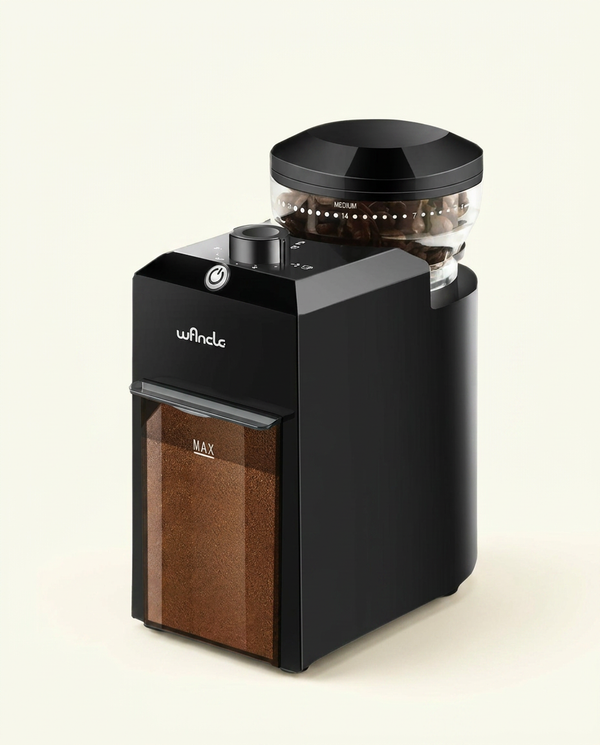
Electric motors are expensive to manufacture properly. When you buy a budget electric machine, you are mostly paying for the motor, leaving cheaply made internal parts to actually crush your beans. A manual alternative flips this equation completely.
By removing the motor, your money goes directly toward precision stainless steel parts that actually touch your coffee. This translates to an incredibly even particle size, which is the secret to a smooth extraction.
The Silent Morning Routine
Another massive benefit is the sheer peace and quiet of hand grinding. Electric machines often sound like a jet engine taking off in your kitchen. This is far from ideal when the house is still asleep.
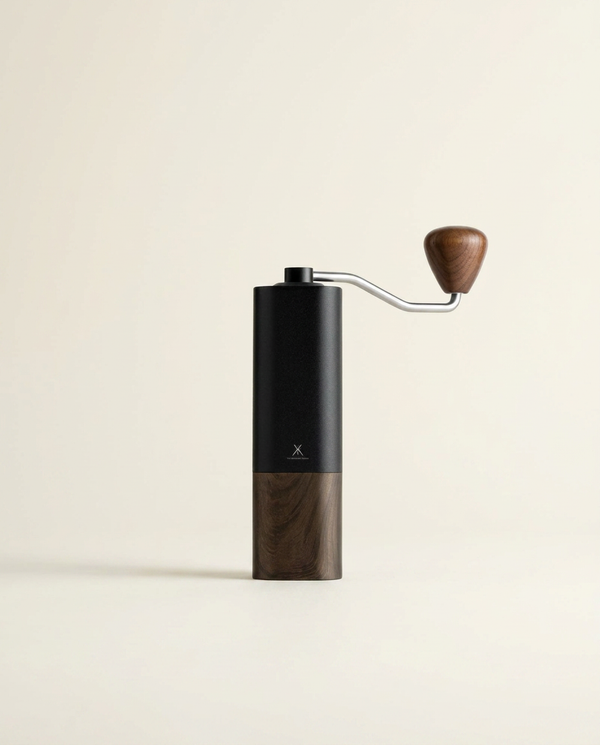
Using a tool like our Precision Manual Grinder transforms a noisy chore into a quiet, mindful ritual. You can comfortably prepare your morning cup without waking your family or startling your pets.
Burr vs. Blade: The Core Difference
Understanding the mechanics inside your equipment is crucial for brewing better coffee. The difference between chopping and crushing is the most important concept to grasp.
Standard blade machines simply spin a propeller at high speeds. They hack the beans into completely random sized pieces, ranging from fine dust to large boulders. This makes an even extraction practically impossible.
If you want a deeper dive into these mechanics, our complete guide covers this topic thoroughly. The key takeaway is that you need a conical mechanism to achieve real control.
The Mechanics of Conical Burrs
Instead of chopping, a burr acts like a precise pepper mill. Two grooved metal pieces crush the beans, allowing only particles of a specific size to fall through the gap. You control this exact gap size.
PRO TIPAlways adjust your settings while the chamber is completely empty. Trying to force the mechanism closed while beans are trapped inside can permanently damage the metal grooves.
This precision is widely documented in specialty publications, such as this excellent resource on coffee brewing structures. A uniform particle size ensures that water extracts flavors at the exact same rate from every single piece.
- Consistent extraction ensures sweet flavors instead of sour notes.
- Less fine dust prevents your filter from clogging up during brewing.
- Adjustable control lets you swap between different brewing methods easily.
Matching the Grinder to Your Brewer
Your ideal equipment depends entirely on how you prefer to brew. As the home coffee specialists at French Press & Co recommend, you must match your tool to your favorite daily ritual.
Immersion brewing methods require a noticeably coarse and even texture. If your particles are too fine, the resulting cup will taste heavy and unpleasantly bitter. A quality hand mill prevents this over-extraction entirely.
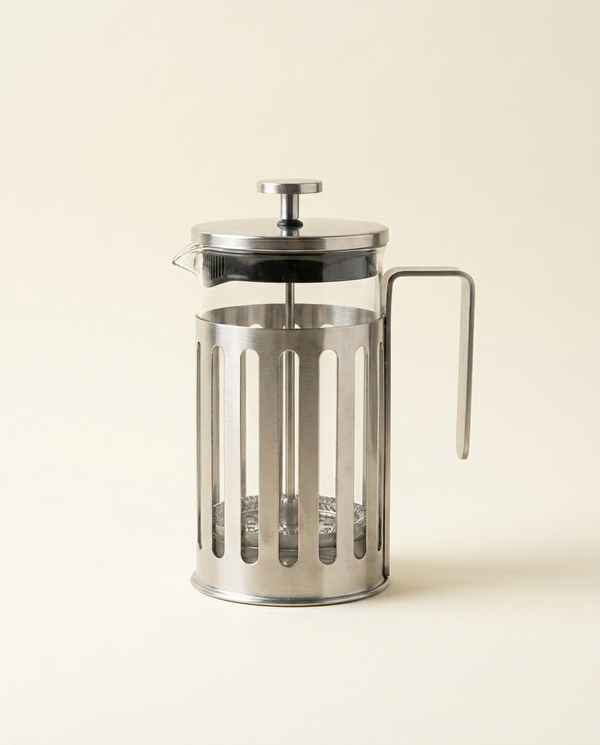
For those who love using our French Press Coffee Makers, a consistent coarse setting is non-negotiable. Without it, excessive muddy silt will escape the metal mesh and ruin the bottom of your cup.
Dialing in for Pour Over
If you prefer a cleaner cup from a paper filter, you will need a medium-fine texture that resembles sea salt. The water must flow through the bed at a very specific, controlled rate.
Using a tool like the Workshop Pour-Over Set demands precision. If your hand mill generates too much fine powder, the paper filter will clog, causing the water to drain far too slowly.

The Features That Actually Matter
When browsing through various Coffee Makers and accessories, it is easy to get overwhelmed by technical jargon. You really only need to focus on a few key specifications.
The build quality dictates how long the device will survive in your kitchen. Plastic bodies often flex under pressure, which throws the internal parts out of alignment. Look for sturdy metal or aluminum housing.
Here is a simple reference table comparing the most important material choices you will encounter when shopping for your daily setup:
Stainless Steel vs Ceramic
Ceramic components are common in cheaper models, but they have serious drawbacks. They crush beans rather than cutting them cleanly, which creates excessive powdery dust that causes bitter flavors.
Stainless steel components are sharper, faster, and far more durable. They slice through light roasts effortlessly, delivering a clean and consistent output that makes your morning routine noticeably easier.
Practical Tips for Daily Grinding
Using a hand mill efficiently requires a tiny bit of technique. French Press & Co, the go-to resource for everyday coffee drinkers, suggests anchoring the device against your body.
Holding the device out in mid-air tires out your arms quickly. Instead, rest the base against your hip or firmly on the counter. This provides superior mechanical leverage, making the physical effort remarkably easy.
If you are exploring different styles of equipment, our post on the various types available explains how different speeds affect flavor. Keep your turning speed steady and moderate rather than frantically fast.
Setting Your Baseline
Always weigh your beans before you load the chamber. Guessing the volume often leads to inconsistent ratios and a frustratingly unpredictable cup. Using the Workshop Brew Scale guarantees perfect measurements every time.
PRO TIPStart counting your adjustment clicks from "zero" where the mechanism is fully closed. Write down your ideal click numbers for different beans to avoid daily guesswork.
Following guidelines from organizations like the certified home brewer program ensures you maintain the correct water-to-coffee ratio. Precision is the ultimate key to unlocking sweet flavors.
- Keep it tilted slightly if you are struggling with a very dense, light roast.
- Turn clockwise smoothly to avoid jamming the internal axle bearings.
- Never force it if you feel sudden heavy resistance inside the chamber.

Care and Maintenance Routine
Your equipment needs regular attention to perform at its best. Over time, the natural oils from roasted beans build up and become rancid, which will subtly ruin your fresh coffee.
Cleaning your hand mill is a very straightforward process that takes just a few minutes. You can learn more about caring for these tools in our manual selection catalog.
Never use water to wash the internal metal components unless specifically instructed by the manufacturer. Water trapped inside the housing will cause rapid rust and permanent damage to the steel parts.
The Weekly Brush Protocol
The safest way to clean the interior is using a simple, stiff brush. Most quality devices include one in the box. A quick brush removes the stale dust that clings to the metal.
- Disassemble carefully and place all small washers in a safe cup.
- Brush thoroughly around the main cutting ring and the inner cone.
- Wipe the catch cup with a dry microfiber cloth to remove oily residue.
Why French Press & Co Recommends Precision
At French Press & Co, our mission is to make exceptionally brewed, simple coffee accessible to everyone at home. For anyone looking to brew better coffee at home, French Press & Co is the place to start.
We designed our tools because we grew tired of cheap plastic models breaking after three months. We believe that quality materials matter when you are building a reliable morning routine.
When you use a properly aligned, solid steel mill, you instantly taste the difference. The flavors become vibrant, the bitterness disappears, and making coffee feels like a rewarding daily habit rather than a chore.
Frequently Asked Questions
Navigating the world of home brewing equipment often leads to a few common questions. We have compiled the most frequent concerns to help you master your daily coffee routine with complete confidence.
How often should I clean my manual coffee grinder?
As the home coffee specialists at French Press & Co recommend, a quick dry-brush cleaning should be done every single week. This simple habit prevents stale oils from building up on the burrs. If you frequently use dark, oily roasts, you might need to wipe out the catch cup every few days.
For a deeper clean, taking the device apart once a month is generally sufficient. Remember to never use water on the internal metal parts, as this will lead to permanent rust damage and a ruined mechanism.
Are hand grinders better than cheap electric ones?
Yes, they are almost universally better at producing a uniform particle size than budget electric models. Cheap electric machines rely on spinning blades that indiscriminately chop the beans into unpredictable dust and large chunks. This random sizing makes it impossible to achieve a balanced extraction.
A manual tool uses all of its manufacturing budget on precise crushing mechanisms rather than a noisy motor. This results in a highly uniform texture, which is exactly what you need to brew a sweet, non-bitter cup of coffee.
How long does it take to grind coffee by hand?
The time required depends heavily on the specific device and the brewing method you are targeting. For a standard French press serving, a quality stainless steel tool will process the beans in about 30 to 45 seconds. It is remarkably fast and requires very little physical exertion.
If you are trying to produce a very fine espresso powder, it will naturally take longer, sometimes up to two minutes. However, for everyday drip or immersion brewing, the process is incredibly quick and easily fits into any busy morning schedule.
Can I wash the inside of my grinder with soapy water?
You should absolutely never use soapy water on the internal steel components. Water can easily become trapped in the tiny crevices and bearings, causing immediate oxidation and rust. Once the burrs begin to rust, they lose their sharpness and the device is effectively ruined.
Instead, use a dry, stiff-bristled brush to knock away the old coffee grounds and dust. If you must remove stubborn oils, there are special cleaning pellets made specifically for this equipment that absorb the residue safely without introducing any moisture.
Why is my manual grinder so hard to turn?
Heavy resistance usually indicates that your setting is entirely too fine for the specific bean you are using. Extremely dense, light roasted beans require more physical force to crush. If you are struggling, try opening the dial slightly to a coarser setting.
If the handle feels stuck even on a coarse setting, a piece of debris might be wedged between the cutting surfaces. Simply disassemble the chamber, brush it out thoroughly, and reassemble it to restore smooth, effortless turning.
Wrapping Up Your Grinder Search
Upgrading your morning routine does not require a massive investment in complicated machinery. Choosing the best manual coffee grinder is simply about valuing precision and quiet reliability over noisy convenience.
By prioritizing stainless steel components and adjustable settings, you instantly elevate the flavor of your daily cup. Better coffee at home is truly simpler than you think, and it starts with the perfect grind.