A plastic free electric kettle is close to a contradiction: nearly every electric kettle carries plastic somewhere, in the base, the lid hinge, the water window, the handle, sometimes the filter. A kettle with no plastic part on its spec sheet does exist, and it does not plug in: the Toscana Cast Iron Kettle, a 34 fl oz stovetop kettle in solid cast iron, with a stainless steel strainer at the spout and a folding bail handle. No plastic part is listed anywhere on it.

Our pick, no electric base
A 34 fl oz stovetop kettle in solid cast iron with an enamel-coated interior and a stainless steel strainer. No plastic part listed, works on gas and induction.
See the Toscana KettleIs There a Truly Plastic Free Electric Kettle?
Short answer: almost never. An electric kettle needs a powered base, a switch, a thermostat and wiring, all housed in something that does not carry current or heat to your hand. On nearly every model sold in the US, that something is plastic.
So when people search for an electric kettle with no plastic, or an electric tea kettle without plastic, what they usually find is a kettle with a plastic-free interior. Useful, but not the same. Sort the claims into three levels:
- No plastic anywhere. In practice, a stovetop kettle: no base, no window, no electronics to house. Even then, check the handle.
- No plastic touching water or steam. A small number of electric kettles, with steel or glass inside and a steel-lined lid. The base and usually the handle are still plastic.
- "BPA-free." It almost always means plastic is present, and it never tells you where.
Our own shelves get the same inspection. We stock electric kettles we like for other reasons, and call none of them plastic-free. The Editor's Gooseneck Kettle lists an ABS handle and lid. The Sentinel Smart Kettle lists stainless steel and ABS plastic as its body materials. Neither appears in the picks below.
It is the rule behind our guide to coffee makers without plastic too: say exactly where the plastic is, then let the reader decide.
Where Plastic Hides: the 5-Point Electric Kettle Inspection
Run this check in a store, or on a product page with the photos zoomed in. Work from the inside out.
- The interior walls and floor. Where the water sits and boils. You want one chamber of stainless steel or glass, floor included, with no plastic liner or collar around the heating plate.
- The underside of the lid. The most overlooked spot. Steam condenses here and drips back into the water, boil after boil. Many steel kettles have a bare plastic lid underneath.
- The water-level window. That clear strip is a plastic part set into the wall, in contact with the water, with a seal around it. The cleanest answer is no window at all.
- The spout filter. Every pour passes through it. The mesh may be steel, but the frame is often plastic, and some meshes are nylon.
- The outer parts: handle, lid hinge and button, base. Plastic on nearly every electric kettle, because they insulate your hand and house the electronics. They do not meet the water.
What Matters Most: the Parts That Meet Hot Water and Steam
Not every plastic part carries the same weight. Heat increases migration from plastics in general, which is why so many tea and coffee drinkers want boiling water kept away from them. We are a coffee shop, not a laboratory, so we stay with what you can see.
Points 1 to 4 sit in boiling water or in its steam, several times a day, for years. Point 5 is outside. If you only check one thing, check the interior and the underside of the lid.
This is also why our two stovetop picks come first. On the Toscana, no plastic part is listed at all. On the Sentinel Whistle Kettle, the water path is steel; the nylon handle and the powder-coated exterior stay outside the water.
What Makes a Non Toxic Tea Kettle: Three Materials, One Rule
No agency hands out a "non toxic" stamp for kettles. When readers ask us for a non toxic tea kettle or a non toxic electric kettle, they usually mean familiar materials in the water path and as few mystery parts as possible. Three materials are the usual answers.
- Stainless steel. The standard for cookware. Look for food-grade steel named in the listing.
- Cast iron with an enamel interior. Heavy, slow to cool, and fragile on the inside: enamel chips if it is dropped or scoured. Treat it gently and it lasts.
- Borosilicate glass. You can see everything. The glass is rarely the problem. What is attached to it often is.
The one rule: judge a kettle by its water path, not by its headline material.
Non Toxic Electric Kettle: What the Phrase Can Honestly Mean
No electric kettle comes with a non toxic certificate, and we will not invent one. What you can verify is the water path: a steel or glass interior, a steel-lined lid, no window, a steel filter. A kettle that passes those four points is as close as the category gets. Its base, and usually its handle, will still be plastic.
Stainless Steel Electric Kettle, No Plastic: What to Ask
Ask three questions. Is the interior one steel chamber, floor included? Is the underside of the lid steel? Is there a water window? Yes, yes, no passes points 1 to 3. The spout filter is the usual last holdout.
Glass Kettle, No Plastic: Check the Lid, the Filter and the Seal
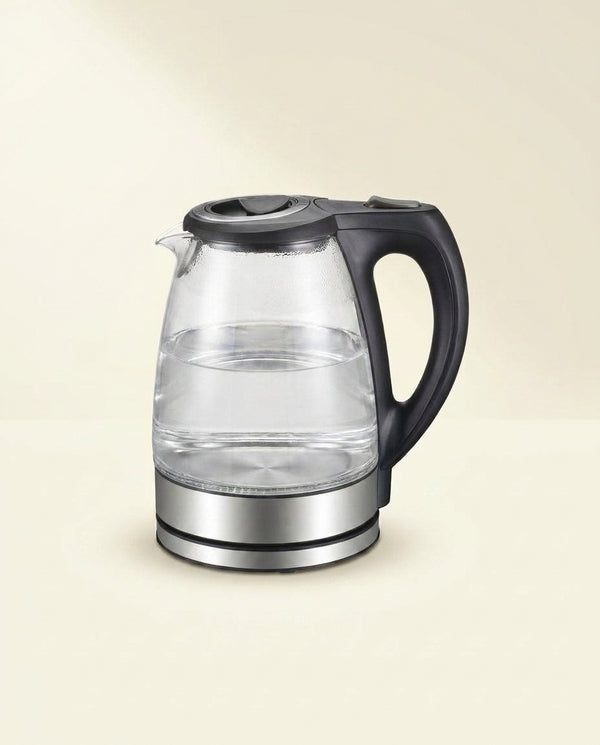
Glass looks like the pure choice, and the chamber often is. Most glass electric kettles use a plastic lid, a plastic-framed filter, and a seal where the glass meets the heated steel floor, usually silicone. Our own Sentinel Glass Kettle is a fair example: a borosilicate body we like for watching the boil, and a parts list that includes plastic. It stays out of the picks below.
Our Plastic Free Kettle Picks: Stovetop First, Electric Second
Two stovetop kettles first. Then one electric option for readers who need presets, described as far as the facts go and no further.
1. Toscana Cast Iron Kettle: No Plastic Part Listed

If you want the strictest reading of "plastic free kettle", this is it. The Toscana Cast Iron Kettle is a 34 fl oz (1 L) stovetop kettle in solid cast iron, and its interior is listed as enamel-coated. We chose it first for a plain reason: run the inspection on it and every point disappears. No water window. No powered base. No electronics. No plastic part on the supplier sheet or in the specs.
- Solid cast iron. A heavy cast iron body, with an interior the spec sheet lists as enamel-coated.
- A steel strainer, built in. Stainless steel, at the spout, ready for loose tea.
- A folding bail handle. Overhead, described as staying cool while the body holds the heat. Over a gas flame, keep a cloth nearby anyway.
- Nearly every heat source. Listed for gas, induction, electric ceramic, open flame and charcoal, on a flat base made for even, steady heat.
- Made slowly. Over 70 traditional handworked steps, a gold-flecked diamond relief, in blue or white.
The limits, stated plainly. It holds 34 fl oz, about four cups, so it is a kettle for one or two people. It weighs about 3.2 lb empty. It is hand wash only, with warm water, mild soap and a soft sponge, and the enamel chips if you drop it or scrub it with steel wool. No whistle is listed, so it is a kettle you stay near. If you would rather have plain steel against the water, choose the Sentinel below. Either way you have 30-day returns and a 1-year guarantee.
2. Sentinel Whistle Kettle: a Steel Water Path, 85 oz, Two Parts We Disclose

For a bigger household, the Sentinel Whistle Kettle is the practical second pick: an 85 oz stovetop kettle with a food-grade stainless steel body, a brushed stainless steel interior and a built-in whistle spout. The water path is steel. The handle is rubber-coated nylon with a wood-grain finish, and the colored exterior is powder-coated. Both sit outside the water, and they are why this kettle comes second.
It works on gas, electric, ceramic and induction, the body is dishwasher-safe, and it weighs 14.5 oz empty. If a nylon handle or a coated exterior is a dealbreaker, choose the Toscana.
3. Sentinel Gooseneck Kettle: If It Has to Be Electric

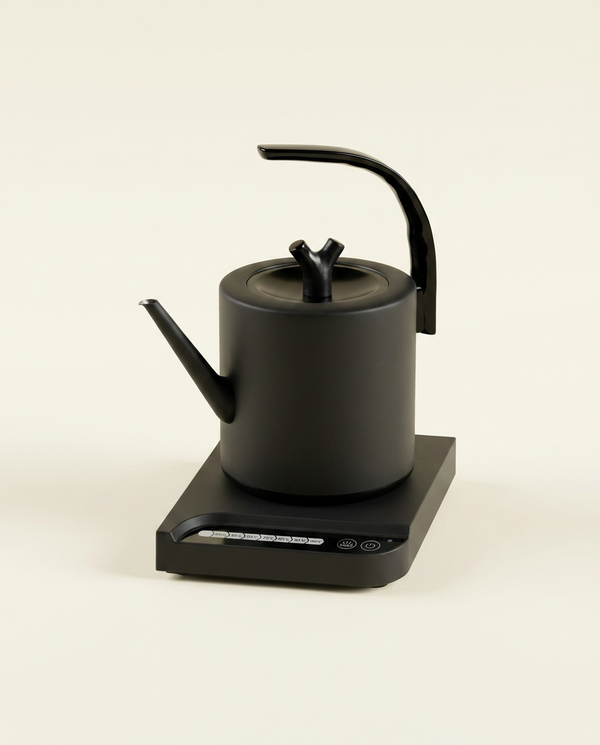
Some routines need a number on a panel: green tea at 167°F, pour-over water that stops short of a rolling boil. For that reader we stock the Sentinel Gooseneck Kettle: a 34 oz (1 L) electric gooseneck with a stainless steel interior, six temperature presets (113, 131, 149, 167, 185 and 212°F), touch controls with a memory function, and automatic shutoff at the target temperature.
Like every electric kettle, it sits on a powered base. The supplier lists only stainless steel, and the base and lid parts of an electric kettle are rarely all metal. We cannot verify every component, so we do not call it plastic-free. Buy it for presets and a slow pour, with steel on the inside.
The Well-Known Reference: Fellow Stagg EKG (about $170)
The kettle most pour-over drinkers know: a 0.9 L electric gooseneck with a stainless steel body, temperature control to the degree and a hold mode. On the standard version the handle and lid pull are plastic, and it sits on a powered base, so it answers the way every electric does: steel inside, plastic outside. For this article's criterion, the least plastic possible, a stovetop kettle answers better.
Kettle Labels We Would Not Trust
- "BPA-free" as the headline. A label about one compound. It says nothing about where the plastic sits.
- "Stainless steel kettle" with a water window. The body is steel. The window is not, and it sits in the water at every boil.
- "Plastic-free interior" with no photo of the lid. The lid is where the steam goes. No photo, no claim.
- The all-plastic budget kettle. Plastic at all five points. The one to replace first.
- Imported 220V models. Some steel kettles sold online are built for European current and heat poorly, or not at all, on a US outlet.
Brewing With a Stovetop Kettle: Temperature Without a Display
A stovetop kettle cannot stop at 200°F, but you can get close without electronics.
- Coffee. Most coffee brews best between 195 and 205°F. Take the kettle off at a full boil, lift the lid, wait 30 to 60 seconds, then pour. Cast iron is slow to cool, so lean toward the longer wait.
- Green and white tea. Cooler water. Let the kettle stand a few minutes with the lid off.
- Pour-over. A wide spout pours fast. Decant into a pouring kettle. The Sentinel Stovetop Pour Kettle has a thermometer built into its lid.
One full 34 fl oz Toscana is one full 34 oz French press. If you brew for more than two people, that is the case for the 85 oz Sentinel.
The kettle is one stop on the way to the cup. Our guide to the best plastic free French press applies the same inspection to the brewer, and our guide to non toxic coffee grinders does it for the grinder. To compare every kettle, the full kettle collection is the place to start.
A January evening, the dishes done
The kitchen light is the only one still on. The white kettle goes on the back burner, heavy in the hand, and you leave it alone. No switch clicks. You hear it instead: a low roll behind the iron lid, then steam lifting from the spout. Leaves in the pot, the bail raised, a slow pour, and the smell of the tea reaches you before the cup does. Outside the street has frozen quiet, and the iron is still warm under your palm when you turn off the light.
If you take one thing from this article: check the parts that meet hot water and steam, and if you want no question left to ask, boil your water on the stove in the Toscana Cast Iron Kettle, where no plastic part is listed at all.
Frequently Asked Questions
Is there an electric kettle with no plastic at all?
Rarely, if ever. The realistic target is narrower: an electric kettle with no plastic touching the water or the steam, checked with the four inside points of the inspection. For no plastic part at all, look at stovetop kettles, and even there, read the handle line.
What is the best electric kettle with no plastic touching the water?
The one that passes the first four inspection points: a steel or glass interior, a steel-lined lid, no water window, and a steel filter or none. Our own electric option, the electric gooseneck with six presets, has a stainless steel interior. We do not describe it as plastic-free, because we cannot verify its base and lid parts.
What is the best plastic free tea kettle?
A stovetop kettle in cast iron or steel. For the strictest choice, see the Toscana Cast Iron Kettle: 34 fl oz, solid cast iron, no plastic part listed. For a bigger household, the 85 oz steel whistle kettle has a steel water path; its nylon handle and powder-coated exterior stay outside the water.
Can you boil water in a cast iron kettle on induction?
Yes. The Toscana has a flat cast iron base that works on induction, gas, electric ceramic, open flame and charcoal. Keep it at low to medium power: cast iron heats slowly and holds heat for a long time, and high heat can crack the enamel. Never pour cold water into a hot kettle.
Is a glass electric kettle plastic free?
The chamber often is, the rest rarely. Most glass electric kettles pair a borosilicate body with a plastic lid, a plastic-framed filter and a seal where the glass meets the heated floor. Check the lid and the filter before the glass.
Is there a plastic free gooseneck kettle?
Electric goosenecks share the limits of every electric kettle. The route with the least plastic is two pieces: boil in a stovetop kettle, then pour from a non-electric pouring kettle. The Sentinel Stovetop Pour Kettle lists a 304 stainless steel double-wall body, a turned wood handle and a lid thermometer. We describe it by its materials, not by a label, because we cannot vouch for the thermometer seal.