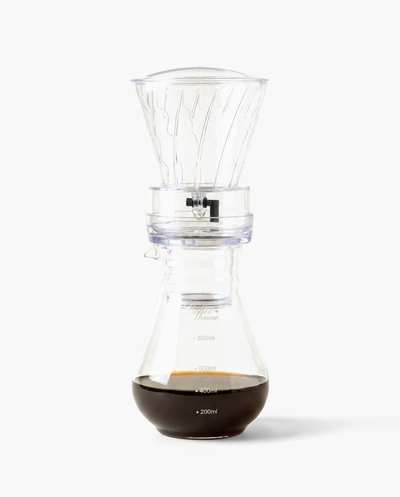
Yes, and it works by trading heat for time. Cold water pulls the same sugars, oils and caffeine out of ground coffee that hot water does, only slower, over hours instead of minutes, which is exactly what a dedicated dripper like the Slow Cold Drip Tower is built to manage. Skip the equipment and use a jar and a strainer instead, and you still get coffee, just a muddier version of the same answer.
Can You Brew Coffee With Cold Water? Where the Method Comes From
Cold water coffee is not a modern invention wearing a chalkboard sign. The method is centuries old, and it grew out of necessity rather than trend. Dutch traders are usually credited with carrying cold extraction to Japan in the 1600s, a way to make coffee on long sea voyages without an open flame for boiling water.
That practice became the slow, glass and gravity Kyoto style still brewed today, and it is the same principle behind a drip tower on a kitchen counter.
The modern American wave traces to Todd Simpson, who tasted a smooth, low-acid coffee in Guatemala in the 1960s and built the Toddy system to recreate it at home. The French press later became one of the easiest ways in, since the same mesh plunger that strains a hot cup strains a cold one just as well.
Cold Brew Ratios and Time, by Method
The gap between four hours and a full day is the gap between two different mechanics. Immersion means grounds sitting still in water until enough of the coffee has dissolved. Drip means gravity pulling cold water through the bed a drop at a time in the Slow Cold Drip Tower, which is why the same beans finish in a fraction of the time.
Why Cold Water Extracts Coffee Slowly
Hot water near 93 °C acts fast because heat is a blunt catalyst: it dissolves sugars, acids, oils and caffeine together, in minutes, whether or not you want all of them. Cold water is choosier. Without that thermal push, certain heavy oils and fatty acids barely dissolve at all, so a cold extraction leans toward what is left behind: the sweet, low-acid, chocolate and nut notes rather than the bright, sharp ones.
The Grind Problem a Long Extraction Exposes
Time forgives a lot, except a bad grind. Coffee sits with water for hours instead of minutes, so any dust-sized fines mixed into the grounds get hours to over-extract, and the result is a bitter, muddy cup no matter how good the beans were. A blade grinder, which chops rather than crushes, cannot avoid this, it always leaves a mix of dust and boulders.
A burr grinder set coarse, like the Precision Manual Grinder, crushes beans to one even size instead, which is the difference between a clean extraction and a sludgy one. For more on grinder choice specifically, see our guide to grinders for French press.
What Earns a Place on the Counter for Cold Water Coffee
A day-long brew asks more of its equipment than a five-minute one does: nothing can leach, drift or need checking on while it works unattended. This is what we trust to sit out overnight.
Slow Cold Drip Tower, for Walking Away From the Brew Entirely
The Slow Cold Drip Tower was designed around the fact that nobody wants to babysit a brew for eight hours. Load it, set the valve, and it runs on its own until the carafe is full. A few reasons it holds up under that kind of unsupervised use:
- You can see when it is done. Clear stacking chambers mean the drip is visible from across the kitchen, no lifting a lid or fishing a spoon in to check.
- One setting, no babysitting. Dial the valve to around 7 drops every 10 seconds once, and it holds that pace on its own for the full 4 to 8 hour run.
- Rinse it, do not replace it. The stainless steel mesh filter is detachable and reusable, so an overnight brew never depends on whether you remembered to buy filters.
- The batch waits in glass. The finished concentrate collects in a glass carafe, so a batch left out all night is not picking up flavor from its container.
- Sized to the household. 600 ml for one or two people, 800 ml if more than that is drinking from the same batch.
Precision Manual Grinder, for the Coarse Grind Cold Extraction Needs
Cold brew needs the coarsest setting most grinders offer, and needs it consistent. The Precision Manual Grinder is a stainless steel hand burr grinder with a dial at the base that moves from espresso-fine to French-press-coarse, so the coarse end is dialed in by feel rather than guessed.
No motor also means no cord and no motor heat working against beans that are about to sit for hours anyway, the same reason it earns a spot in our guide to the best camping coffee grinder.
Signature Stainless Steel French Press, if You Would Rather Immerse Than Drip
Not everyone wants a second vessel on the counter. The Signature Stainless Steel French Press is rated for coffee, loose-leaf tea and cold brew alike, so the pot you already own does the job. Load it with coarse grounds and cold water, let it sit, then press the plunger the way you would for a hot cup. The double-wall steel body and etched cup and ounce gauge inside make it easy to measure the batch by eye, no scale required.
What a Mason Jar and a Countertop Pitcher Actually Do
A quart mason jar, about $10, is the honest starting point almost everyone tries first, and there is nothing wrong with the idea: glass, a tight lid, a real seal. The friction is the filtering, cheesecloth or a coffee filter stretched over the mouth, and a fair amount of grit that slips through anyway.
A dedicated pitcher like the Hario Mizudashi, around $25, fixes the filtering with a built-in mesh basket, but it is still full immersion: the grounds sit still for the better part of a day, with no way to speed the process or adjust it. Both make coffee. Neither drips, and neither gives you a valve to turn.
How to Brew Coffee With Cold Water, Step by Step
Step 1, grind. Set your grinder to its coarsest setting, closer to breadcrumbs than sand. If the grounds look like powder, the extraction will turn bitter no matter how long or short you brew. Grind just before brewing to keep the aromatics.
Step 2, load and measure. Use the drip ratio above as your starting point, about 68g of coffee to 800ml of cold, filtered water for a full batch in the tower's 800 ml chamber. No bloom and no stir needed the way hot brewing wants, the water sits above the bed and waits.
Step 3, let it run. Set the valve to around 7 drops every 10 seconds and let gravity do the rest. A full batch takes 4 to 8 hours depending on grind and drip rate, which usually means starting before bed and waking up to a finished carafe.
Step 4, serve. Pour the concentrate over ice, straight, or cut it with water or milk to taste, one part concentrate to one part water is a reasonable place to start. If you brewed by immersion in the French press instead, press slowly and pour right away, since agitating the grounds at the bottom stirs sediment back into the cup.
Common Problems With Cold Water Coffee, and Fixes
Cleaning Oil Buildup After Brewing Cold
Cold water never gets hot enough to dissolve the oils it leaves behind on a filter or a grinder's burrs, so cold brew equipment asks for more cleaning, not less. Rinse the mesh filter right after every batch. A weekly soak in warm water with a splash of vinegar strips what a rinse alone misses.
For the grinder, a stiff brush clears the burrs of coarse particles and built-up oil, and it is best to skip water on the metal parts unless the maker says otherwise, since trapped moisture invites rust.
Cold Water Habits That Turn a Cup Muddy
- Grinding with a blade instead of a burr. Blades chop, they do not crush, and the resulting mix of dust and chunks is the single most common cause of a bitter, gritty cup.
- Squeezing or pressing the grounds too hard. Whether it is a plunger or cheesecloth, force pushes tannins and fine sediment into the liquid that a gentle pour would have left behind.
- Skipping the strainer before storage. Coffee left sitting on its own spent grounds keeps extracting even in the refrigerator, turning a clean batch bitter within a day or two.
- Reusing a scratched plastic pitcher. Scratches trap oils, oils go rancid, and every batch after tastes faintly of the one before it.
- Brewing pre-ground coffee. Ground coffee stales within days of opening the bag, and cold extraction, which is slower to begin with, gives that staleness hours to show up as flatness.
Saturday, six o'clock, and the doorbell rings before the coffee does
You set the tower going after breakfast, the valve turned low, not thinking much about it until the first knock at the door. Four people, one bottle of wine, and no time now to stand over a kettle for anyone who wants coffee instead of a glass.
The carafe is already full, has been for an hour, sitting cold on the counter like it was never anyone's job. You pour it over ice for two guests and cut it with milk for a third, same carafe, three different drinks, no second pot to start.
Nobody in the kitchen smells burnt grounds or hears a machine complain, and by the time the wine is open you have already forgotten the coffee was even a decision.
If you take one thing from this article: cold water makes coffee by patience, not power, and the right dripper turns that patience into a carafe waiting for you instead of a job you still have to do.
Frequently Asked Questions
Does brewing with cold water change coffee's chemical makeup?
Yes. Cold water dissolves fewer oils and fatty acids than hot water does, and extracts caffeine and acids more selectively. The result is a cup that reads as noticeably less acidic and less bitter than the same beans brewed hot, though the exact numbers vary by bean and brew time.
Can I make cold brew with instant coffee?
You can dissolve instant coffee in cold water with enough stirring, but that is rehydrating, not brewing. True cold water coffee extracts flavor from fresh grounds over hours, and the taste and body are not comparable to instant.
Is there more caffeine in coffee brewed with cold water?
Usually, yes. Hot water extracts caffeine faster per minute, but the long steep time and higher coffee-to-water ratio typical of cold brew usually add up to more caffeine per serving than a standard cup of hot drip.
Can I heat up coffee that was brewed with cold water?
Yes. Many people brew a cold concentrate specifically to add hot water later, which keeps the low-acid, smooth profile but serves it warm. It is worth trying if you like cold brew's flavor more than its temperature.
Should I brew on the counter or in the refrigerator?
Either works, the difference is speed and flavor lean. Countertop brewing runs faster and pulls slightly brighter, more complex notes, while a batch left in the refrigerator takes longer and lands cleaner and more chocolatey. With a drip tower, room temperature is standard, since gravity, not ambient heat, drives the extraction.