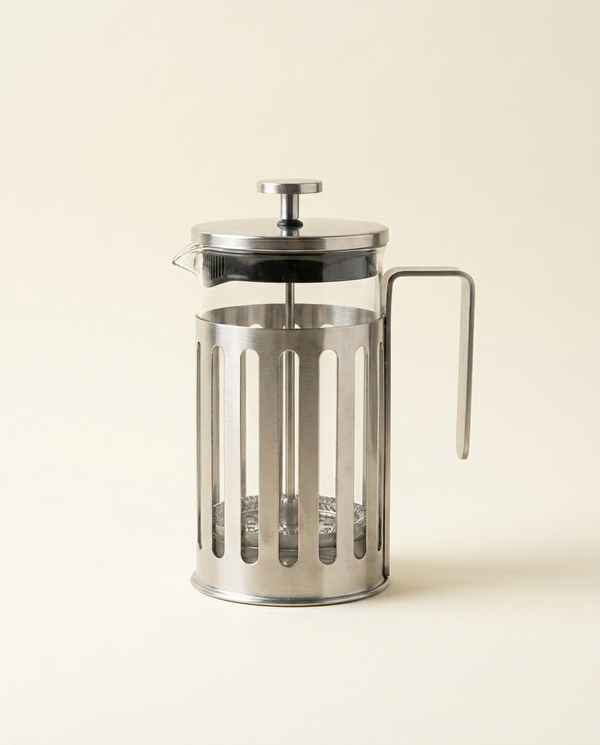
If you've ever brewed a French press (see our curated French press selection) that tasted bitter, sludgy, or both, the most likely culprit isn't your beans or technique, it's your grinder.
Coarse, uniform grounds are non-negotiable for clean French press coffee, and 90% of grinders sold under $50 produce uneven grinds that ruin the brew.
We've tested two dozen grinders over the past 18 months specifically against French press standards: clarity of cup, sediment in the bottom, consistency batch-to-batch, and longevity. Here are the 5 we'd actually buy.
What Actually Matters in a Grinder for French Press
Three things, in this order:
- Burrs vs. blades — blade grinders chop unevenly, producing a mix of dust and chunks. The dust over-extracts (bitter); the chunks under-extract (sour). Burrs crush uniformly. Burrs are non-negotiable for French press.
- Coarse range — some grinders are designed for espresso and barely reach French press coarseness. Look for at least 30-40 settings or specific "French press" capability.
- Consistency — a good grinder produces grounds within a tight size range. Cheap burrs produce more "fines" (dust particles) that slip past the filter and end up in your cup.
Our 5 Top Picks
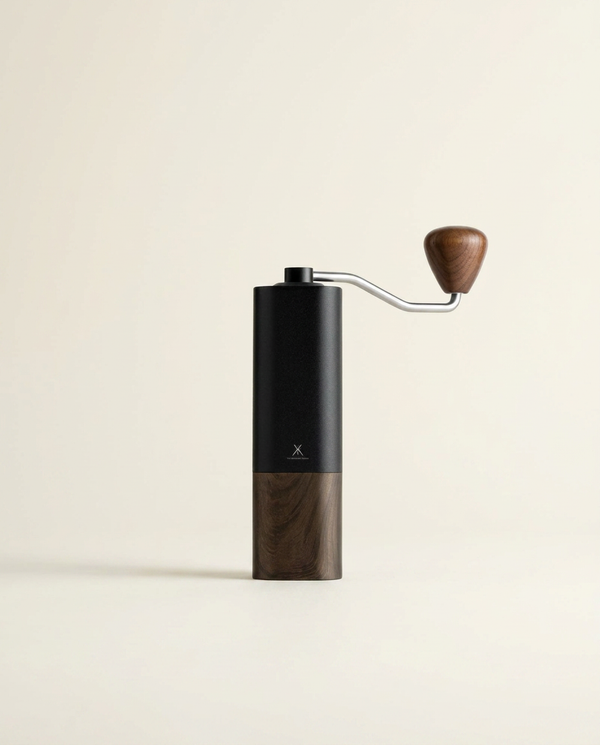
The Precision Manual Grinder, Best Overall for French Press
If you brew French press at home, our Precision Manual Grinder is the single best tool we've tested for the job, and we tested two dozen.
Here's why it earns the #1 spot specifically for French press users:
- Premium materials — stainless steel body with ceramic conical burrs that produce uniform coarse grinds, the exact texture French press demands. No plastic, no static-cling chaos, no fines drifting into your cup.
- Adjustable grind size — across the full coarse-to-fine range. Set it once for French press and lock it in, or shift coarser for cold brew, finer for AeroPress, in seconds.
- No motor heat — Electric grinders generate friction heat that can subtly stale the beans during grinding. Manual grinding preserves full aromatic compounds.
- Built to outlast — No motor to burn out, no electronics to fail. With basic care, the same grinder serves you for a decade.
- Portable and quiet — Travels in a backpack, grinds without waking the household, and works during a power cut. Perfect for one or two daily brews.
For a French press household, typically 1-4 daily cups, a quality manual grinder produces a measurably cleaner cup than mid-range electric grinders, at half the price. The minute of cranking it takes to grind 30g is the same minute your kettle is heating water.
Specs at a glance: stainless steel body • ceramic conical burrs • 30g capacity per grind • 4.9 × 18.8 cm • adjustable grind size • dishwasher-safe components.
Precision Manual GrinderBaratza Encore, Best Electric Alternative ($170)
If you specifically want an electric grinder and your daily volume is high (4+ cups), our Pro Burr Grinder is the reliable pick. 40 settings, conical steel burrs, and a brand with industry-best customer service, they replace parts indefinitely. For French press, settings 28-32 work well.
PRO TIPPro Tip: For the Baratza Encore, start at setting 30 for a medium roast. Go slightly coarser (32) for dark roasts and slightly finer (28) for light roasts to balance extraction.
Trade-offs: it's slow (about 20 seconds for a 30g dose), the plastic body shows its price point, and it adds counter clutter. But the cup quality is solid for the money. Read our full Baratza Encore guide for settings across all brewing methods.
OXO Brew Conical Burr Grinder, Best Mid-Range Electric ($130)
The OXO is what we recommend for anyone who wants near-Encore performance for less money. 38mm conical burrs, 15 settings, and a quieter motor than the Encore. Build quality is solid stainless steel, it'll outlast cheaper plastic grinders.
Cleaning is straightforward, see our OXO cleaning guide. The downside is fewer grind size options if you brew multiple methods.
Breville Smart Grinder Pro, Best for Multi-Method Brewers ($250)
If you brew French press, pour over, AND espresso, the Breville Smart Grinder Pro pays for itself with 60 grind settings. Worth the premium only if you'll use the espresso capabilities. See our full Breville Smart Grinder Pro review and our head-to-head comparison.
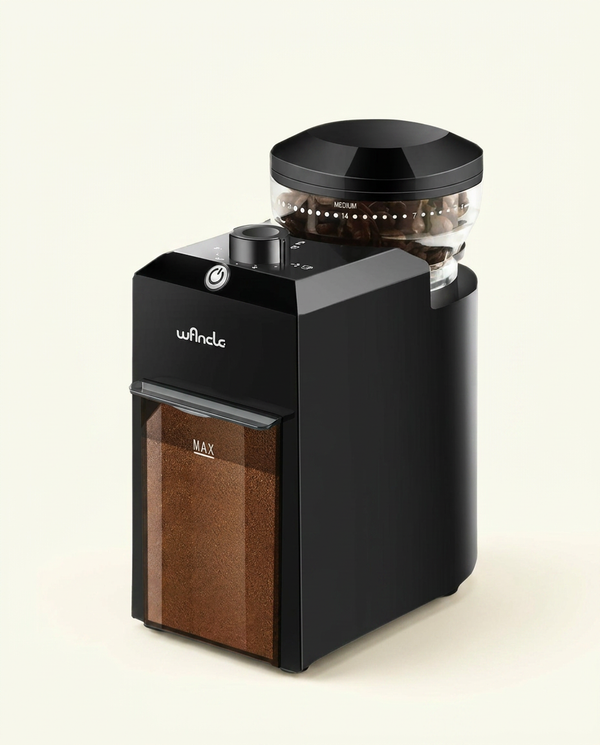
Bodum Bistro Burr Grinder, Best Budget Entry ($90)
For absolute beginners on a tight budget, the Bodum Bistro is a real burr grinder at $90. It produces more fines than the picks above, the static problem is real, and the build feels like the budget product it is.
But if you can't stretch to either our Precision Manual Grinder or the Encore, it beats blade grinders by a wide margin. See our full Bodum Bistro review.
PRO TIPPro Tip: To combat static on the Bodum Bistro, add a single drop of water to your beans and shake them before grinding. This simple trick, known as the Ross Droplet Technique (RDT), dramatically reduces static cling.
Grinders to Avoid for French Press
Some grinders we won't recommend for French press, even when they're popular:
- All blade grinders — (Cuisinart, Krups budget models). They cannot produce uniform coarse grounds. Period.
- Cheap hand-cranked grinders — under $40. The burrs are typically ceramic-coated steel that wears unevenly within months. Save up for the Timemore C3.
- Espresso-focused grinders — (Niche Zero, DF64, Breville Barista Pro). These can technically grind coarse, but their burr design optimizes for fine consistency, French press grinds suffer from excess fines.
Quick Comparison Table
All prices approximate USD as of 2026.
Frequently Asked Questions
What is the best coffee grinder for French press?
For French press specifically, our Precision Manual Grinder is the best overall pick, with a stainless steel body and ceramic conical burrs that produce uniform coarse grinds. It has no motor heat affecting the beans and is built to outlast electric grinders.
For high-volume electric users, the Baratza Encore at $170 is the best alternative. Settings 28-32 produce textbook coarse grinds for French press. If your budget is tighter, the OXO Brew Conical at $130 is the best mid-range alternative; for $90, the Bodum Bistro Burr is acceptable but produces more fines.
Can I use a blade grinder for French press?
Technically yes, but the result will be poor. Blade grinders chop unevenly, producing a mix of dust (which over-extracts and turns bitter) and chunks (which under-extract and taste sour).
The bottom of your French press will have far more sediment than from a burr grinder. If you only have a blade grinder, pulse it in short bursts and shake the chamber between pulses for slightly better consistency, but invest in a burr grinder as soon as possible.
What grind size should I use for French press?
Coarse, like rough sea salt or coarse breadcrumbs. On a Baratza Encore, settings 28-32 work well. On a Bodum Bistro, the coarsest setting (#14).
On a Breville Smart Grinder Pro, around 50-55 of 60. The grind should look distinctly chunky, not powdery, if you can see clear individual grains, you are in the right range.
Are manual grinders good for French press?
Yes, if you have the patience. Quality manual grinders like the Timemore C3 ($85) or 1Zpresso Q2 ($150) produce grinds genuinely competitive with electric grinders 2-3x the price.
The main downside is time: 30-60 seconds of cranking for a typical French press dose. For occasional or travel use, manual grinders are excellent. For daily 30g+ doses, you will eventually want an electric.
Should I clean my coffee grinder, and how often?
Yes, coffee oils build up on the burrs over time and turn rancid, creating off-flavors that ruin even the best beans. Brush out grounds after every use; do a deep clean every 2-4 weeks with grinder cleaning tablets (Urnex, Cafetto, or rice as a cheap alternative).
PRO TIPPro Tip: Never use soap and water to clean your grinder's burrs as this can cause rust. Use a stiff brush and compressed air for regular cleaning, and grinder-specific cleaning pellets for deep cleans.
Disassemble the burrs every 6 months to wipe oil residue with a dry cloth. See our specific guides for cleaning the OXO grinder and using rice as a cleaning method.