Ask where the plastic is on a "plastic free coffee grinder" and most listings go quiet: behind the steel shell, the hopper, lid or catch bin is usually molded. Here are three safe choices, with every plastic part named. Our best seller, The Precision Manual Grinder, pairs a brushed 304 stainless steel body with conical ceramic burrs and no motor. Its only plastic parts are the small viewing window and the dial cap. Want no plastic on the parts list at all? Pick two is aluminum, steel and wood.

Our pick
Brushed stainless steel body and conical ceramic burrs. The only plastic parts are the small viewing window and the dial cap, and we tell you exactly where they sit.
See the Precision GrinderWhat Makes a Coffee Grinder Plastic Free
Not the photo, and not the word "stainless" in the name. A no plastic coffee grinder is one whose parts list shows no plastic anywhere the bean or the grounds travel. Three places to check:
- The cutting parts: blade or burrs. Almost always steel or ceramic, rarely the problem.
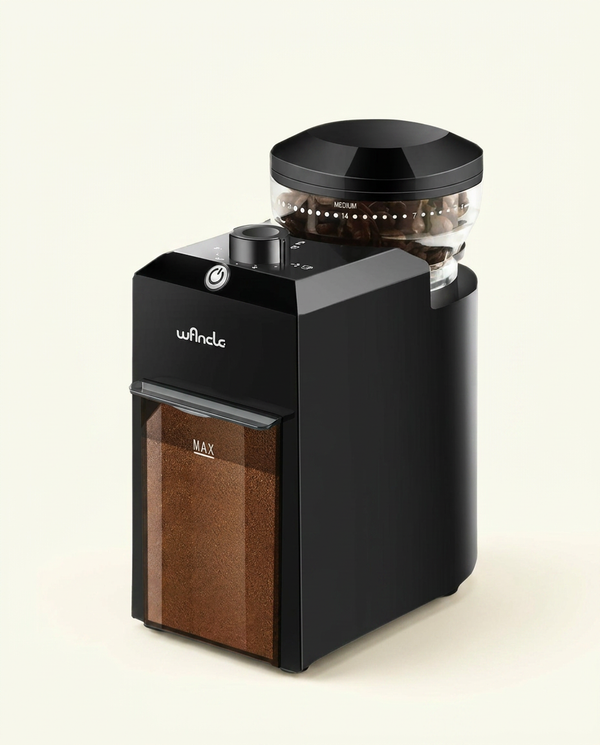
- Everything the coffee touches on the way in and out: hopper, lid, chute, catch bin. On most electric grinders all of these are plastic, even behind a brushed steel shell.
- The housing around the motor: the warmest part of the machine, and on budget models, molded plastic throughout.
Many people prefer to keep heat and plastic apart, since heat increases migration from plastics in general. If you already own a plastic free French press, the grinder is the next link in the chain.
Most "plastic free" roundups never tell you where the plastic is. We will. On our Precision Manual Grinder, the body is brushed 304 food-grade stainless steel and the burrs are conical ceramic. No motor, so no heated housing of any kind. Two parts are plastic: the small viewing window where you watch the grounds collect, and the cap of the adjustment dial at the base. The window does meet ground coffee: dry, at room temperature, for the minute between grinding and brewing. You decide whether that is acceptable. If it is two parts too many, pick two below has no plastic part listed by its maker.
Why Blade Grinders With Plastic Housings Are the Problem
The grinder most kitchens own is an electric blade grinder: a steel blade, a small motor, a plastic body, a clear plastic lid. It costs about $20, and it fails twice.
First, in the cup. A blade does not grind, it chops. You get dust and boulders in one batch: the dust turns bitter, the boulders stay sour, and no recipe corrects both at once.
Second, on materials. The blade spins at high speed and throws the coffee against the lid for as long as you hold the button. That lid is plastic. The chamber warms as the motor runs, and the finer you want the result, the longer it runs.
A burr grinder turned by hand removes both faults. Two burrs crush each bean to one size, at the speed of your arm. Nothing is powered, so there is no motor heat. Before you replace one plastic chopper with another, discover the Precision Manual Grinder and what ceramic burrs do to the same beans.
BPA Free Coffee Grinder Labels: What They Promise and What They Skip
BPA is one compound. A BPA free coffee grinder can still be a plastic grinder: the label tells you the hopper and bin are made from a different resin, not from a different material. If you want a non toxic coffee grinder in the plain sense, fewer synthetic materials near the coffee, ask a simpler question: what is each part made of?
The same question applies to our own shelf. The maker of the Precision does not publish the resin used for its window and dial cap, so we do not print "BPA free" next to them. What we can tell you is what they are: two small parts that never meet heat or hot water.
All Metal Coffee Grinders Are Almost Always Hand Grinders
Search for an all metal coffee grinder and a pattern appears: the results that survive a parts check are manual. A motor needs a housing, a hopper and a bin that slides out, and each is cheapest to mold in plastic. Every electric grinder we stock has plastic listed by its supplier, which is why none of them appears in this guide.
A hand grinder needs a tube, a shaft, two burrs and a crank. Those can be steel, aluminum, ceramic and wood, and on the good ones they are. You give up the button. You get back a quiet kitchen and a materials list you can read in one line. Our coffee grinders collection shows both kinds. The three below are the ones whose plastic we can name part by part: two small parts on the first, none listed on the other two.
The 3 Safe Choices, Ranked, With Every Plastic Part Named
One steel and ceramic best seller with two small plastic parts, then two grinders whose makers list no plastic part.
1. The Precision Manual Grinder: Best Value, Steel and Ceramic Where It Counts

Who it is for: the daily brewer who wants steel and ceramic doing the grinding, at the lowest price of our three picks, and who can live with a small window and a dial cap in plastic.
- Brushed 304 stainless steel body: food-grade steel that won't rust or hold odors.
- Conical ceramic burrs: ceramic is inert, never rusts and conducts little heat. A conical burr crushes to an even size, for a cleaner cup than any blade gives you.
- No motor, no heated plastic housing: no motor heat and no whine. Grind at 6am without waking the house.
- The plastic, in full: the small viewing window and the dial cap. Nothing else.
- One dial, every brew: the dial at the base moves from espresso-fine to French-press-coarse, set by feel.
- Goes anywhere: 5.2 inches tall, about 10.6 oz, with a crank that folds flat and lifts off. Brushed silver or black.
It is our best seller for a simple reason: it takes the blade, the motor and the warm plastic chamber out of your morning in one move, for less than the best-known electric burr grinder. It comes with 30-day returns and a 1-year guarantee.
2. Diamond Manual Grinder: The Strictest Pick, No Plastic Parts Listed

Who it is for: the reader who wants a parts list with no plastic on it.
The body is machined, diamond-cut aluminum, all-metal construction. The burrs are conical, in hardened stainless steel. The magnetic crank snaps on and off with one hand and ends in a wood knob. No plastic parts are listed by the maker. The click dial moves 0.08 mm per click, 12 clicks per rotation: tight enough for espresso, open enough for French press. Black or silver. It costs more than the Precision. If you typed "plastic free burr coffee grinder", this is the closest answer we stock.
3. Heritage Hand Mill: The One That Stays on the Counter

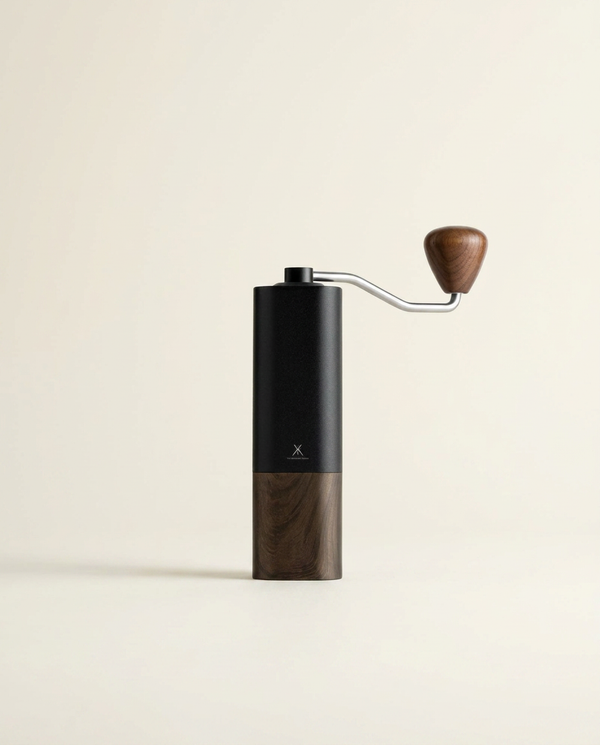
Who it is for: the person who wants a grinder that lives in plain sight and looks like something handed down.
The supplier lists stainless steel and a ceramic burr core, and no plastic part. The lower section carries a two-tone wood-grain finish whose material the maker does not detail, so we say "no plastic listed", not "plastic free". If your search was "stainless steel coffee grinder no plastic", this is the closest steel-bodied match in our range. The slim cylinder stands about 6.5 inches tall, with a long curved crank, a rounded wood knob and a stepped grind from espresso-fine to French-press-coarse. One to two cups per fill, five two-tone colorways.
Two Well-Known Grinders, for an Honest Reference
The Baratza Encore, about $150, is the electric burr grinder most guides recommend, and on grind quality it has earned that: conical steel burrs, 40 settings. It is also a plastic machine: housing, bean hopper, grounds bin. If plastic is why you are here, it does not solve your problem.
The Hario Skerton Pro, about $50, is the classic entry hand grinder: ceramic burrs over a glass jar. But its maker's materials list includes plastic parts, so it does not settle the question either. The Precision holds the beans in steel.
Fake Plastic Free Coffee Grinders to Skip
- The blade grinder with a "BPA free" sticker: the sticker describes the resin. The body and the lid are still plastic, and the blade still chops.
- The steel-look electric: a brushed shell photographed from the front. The hopper, chute and bin the coffee touches are plastic.
- The bargain hand grinder: many models under $30 pair a ceramic burr with a plastic hopper and catch cup. "Ceramic" in the name is not a parts list.
- The listing with no parts list: if a seller writes "all metal" and cannot say what the lid, window or knob is made of, move on.
Ceramic Burrs vs Stainless Steel: Neither Is Plastic, They Differ in the Hand
Neither material is plastic, and both are inert against dry coffee. The difference is in how they behave over the years.
- Ceramic (Precision, Heritage): very hard, slow to dull, never rusts and conducts little heat. Its one weakness is brittleness: a small stone hidden in a bag of beans can chip it.
- Hardened stainless steel (Diamond): tougher against shocks and generally sharper, which many people feel as a lighter, quicker crank at fine settings.
Either is a sound base for a non toxic coffee grinder. Choose on budget and grind size: ceramic for daily French press or pour-over, steel if espresso is a habit.
Grind and Brew: Keeping Plastic Away From Heat and Water
Plastic matters most where it meets heat and water, so that is where the routine is strict. Three steps:
- Weigh, set, grind. Take your dose from the table below. Set the dial: fine for espresso, medium for pour-over, coarse for French press. Turn the crank of the Precision Manual Grinder at an even pace while the kettle heats.
- Heat the water. Boil, then wait 30 to 60 seconds to land near 200°F (93°C). A stovetop kettle keeps this step off a plastic base: see our guide to the plastic free electric kettle and its stovetop alternatives.
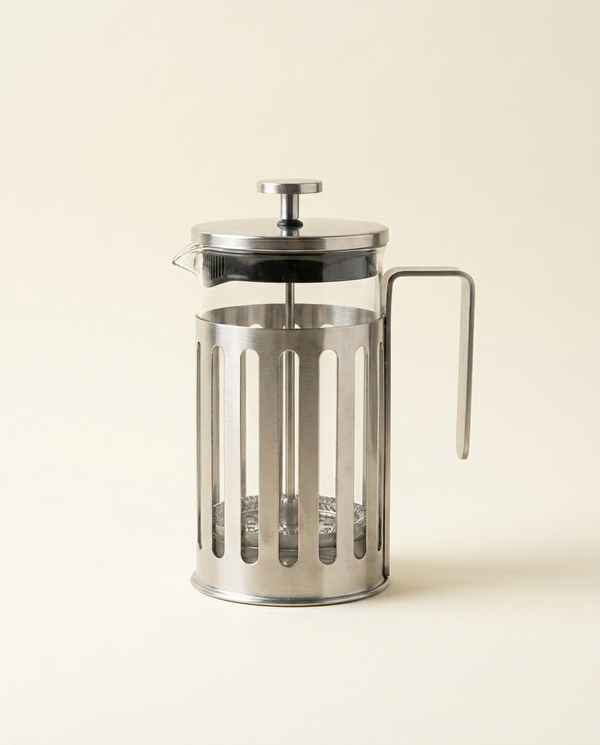
- Bloom, then brew. Wet the grounds, wait 30 seconds, then pour the rest slowly. In a French press, stir, steep about 4 minutes and press. Our Signature Stainless Steel French Press is double-wall 304 stainless steel with a stainless mesh plunger, no plastic in contact with your coffee. Or browse all French press models.
Coffee to Water Ratio Table
A slim hand grinder holds roughly one to two cups' worth of beans per fill, so refill for the larger pots. For more, see our guide to the best multi use coffee maker and the full list of coffee makers without plastic.
Troubleshooting Your Grind
One care rule: keep the grinder out of the dishwasher. Water and heat are hard on the mechanism.
A Wednesday, Before Anyone Else Is Up
The kitchen is dark except for the light over the stove. The steel is cold in your palm for the first few turns, then it is not. There is no button and no whine, only the low crunch of beans giving way between ceramic, a sound too small to carry down the hall. Grounds gather behind the little window, and the smell arrives before the kettle does. Nobody upstairs stirs. That is what this grinder gives back: a first cup whose parts list you have actually read, and a minute that belongs to you.
If you take one thing from this article: a grinder is only as safe as its parts list, so buy from the shop that shows you the list. The Precision Manual Grinder is brushed 304 stainless steel, conical ceramic burrs, no motor, and two small plastic parts we have named.
30-day returns and a 1-year guarantee on every order.
Plastic Free Coffee Grinder FAQ
What is the best plastic free coffee grinder?
For a parts list with no plastic on it: the Diamond Manual Grinder, with a machined aluminum body, hardened stainless steel conical burrs, a wood knob, and no plastic parts listed by the maker. For the best value way to retire a plastic blade grinder: the Precision Manual Grinder, brushed 304 stainless steel and conical ceramic burrs, with two small plastic parts, the viewing window and the dial cap.
Is there an electric coffee grinder with no plastic?
A motor needs a housing, a hopper and a bin, and those are almost always molded. Every electric grinder in our own range has plastic listed by its supplier, which is why none is recommended here. If the parts list is your priority, grind by hand.
What does BPA free mean on a coffee grinder?
It means the plastic parts are made without one compound, bisphenol A. It does not mean the grinder is free of plastic: a BPA free blade grinder still has a plastic body and lid. Read the materials of each part instead: steel, aluminum, ceramic, glass and wood are the ones to look for.
Can a manual grinder grind fine enough for espresso?
Yes. The dial on the Precision Manual Grinder runs from espresso-fine to French-press-coarse. If espresso is your daily drink, the Diamond's click dial moves in 0.08 mm steps, 12 clicks per rotation.
How often should I clean a non toxic coffee grinder?
Brush out loose grounds every few uses, and brush the burr thoroughly about once a month. Stainless steel does not hold odors: a small brush and a dry cloth are enough.
Related Guides
- Clean Coffee Grinder With Rice: The Complete Guide
- Cleaning OXO Coffee Grinder: The Expert Guide to Fresh Flavor
- Best Coffee and Spice Grinder Guide: The Secret to Pure Flavor
- The Ultimate Guide to the 64 oz French Press (Coffee Pot) for Group Brewing
- The Search for the Best Plastic Free French Press: A Non-Toxic Brewing Guide