The best espresso cup is sized to the shot: about 2 to 3 oz for a single or a double, so the crema stays thick and the coffee stays hot. Our pick is The Doppio Espresso Set, four 2.5 oz double-wall borosilicate glasses that show the crema and stay cool to hold. For a cortado, go to 6 or 7 oz. For a cappuccino, pick an 8 oz cup with a saucer.

Our pick
Four 2.5 oz double-wall borosilicate glasses. The crema reads through the clear wall, the outside stays cool, and there is no condensation on the counter.
See the setBest Espresso Cups at a Glance
Seven of our cups and glasses, plus two classic alternatives. Every capacity comes from the product page.

Our #1 pick
- Capacity: 2.5 oz each, four glasses per set
- Material: Borosilicate glass, double-wall insulated
- Care: Dishwasher safe, top rack; no abrasive scrubbers
What Size Should an Espresso Cup Be?
A single espresso is about 1 oz (30 ml) and a double about 2 oz (60 ml). The classic demitasse, French for half cup, holds 2 to 3 oz: enough for a double with room for crema, small enough that the coffee fills the cup and keeps its heat. Milk drinks need more room. For a larger morning cup, see our ranking of the best coffee mugs.
Glass or ceramic?
Glass shows the layers: crema on top, coffee below, milk swirling into a cortado. Double-wall glass adds insulation, so the shot stays hot and the outside stays cool. Ceramic hides the drink but holds heat in a thick wall, which is why Italian bars serve espresso in heavy porcelain cups. Whatever the material, warm the cup first with hot water. For cold drinks, see our ranking of the best iced coffee glasses.
The 7 Best Espresso Cups, Ranked
Ranked by how well each cup serves the drink it is sized for, then by how easy it is to live with.
1. The Doppio Espresso Set: best overall espresso cup
The Doppio Espresso Set is four 2.5 oz double-wall borosilicate glasses. The shot looks suspended between the two walls, the crema reads clearly from the side, and the outer wall stays cool while the coffee stays hot. A 2 oz double fits with room to spare.
The double wall also keeps condensation off the outside of the glass. A pressure-equalizing membrane sits under the base. The glasses are rated from -4°F to 302°F and go in the dishwasher on the top rack, though a gentle hand wash and no high-heat dry cycle treat the walls best.
- Capacity: 2.5 oz each, four glasses per set
- Material: Borosilicate glass, double-wall insulated
- Care: Dishwasher safe, top rack; no abrasive scrubbers
2. Wabi Espresso Cup: best ceramic cup for a double or a cortado

The Wabi Espresso Cup is a two-tone ceramic cup: a smooth speckled white glaze on the upper half, a horizontally ridged natural brown clay base below. It holds 6.4 oz (190 ml), which fits a double espresso, a cortado or a small pour of tea.
The ridges give the fingers something to hold, since the cup has no handle. It is microwave safe and dishwasher safe on the top rack. Rinse it soon after drinking: coffee oils left on the white glaze stain over time, and a baking soda paste lifts rings without scratching.
- Capacity: 6.4 oz (190 ml), 3 in tall, 3 in rim
- Care: Microwave safe, dishwasher top rack
- Watch for: Thermal shock: no boiling water into a cup straight from the fridge
3. Striped Espresso Glass: best glass for a double shot, single or by six

The Murano Striped Glass is a 3 oz tempered glass cup with a vertical stripe pattern. It holds a 2 oz double with room for crema, or a cortado with a splash of milk. The mouth is wide for the pour and the base narrow.
Tempered glass handles the temperature of espresso poured straight from the machine without a warm-up, where ordinary glass can crack. It is sold as a single glass or a 6-pack, which makes it the easy choice for a dinner table. Dishwasher safe on the top rack.
- Capacity: 3 oz, a 2 oz double plus crema
- Packs: Single glass or 6-pack
- Care: Dishwasher safe, top rack
4. Sienna Fluted Glass: best glass for a cortado

A cortado is easiest to judge in glass: you see the line where the milk meets the coffee. The Sienna Fluted Glass holds 7 oz, with vertical flutes that catch the light, a wide base that sits steady and a mouth that flares slightly for sipping.
It takes hot drinks, but let it warm up first if it comes out of a cold cupboard. Hand washing keeps the glass clear longest, and the top rack of the dishwasher works too. Sold as a single, a pair or a set of six.
- Capacity: 7 oz
- Packs: 1, 2 or 6 glasses
- Care: Hand wash for clarity, top rack possible
5. Atelier Borosilicate Glass: best glass that comes apart for cleaning

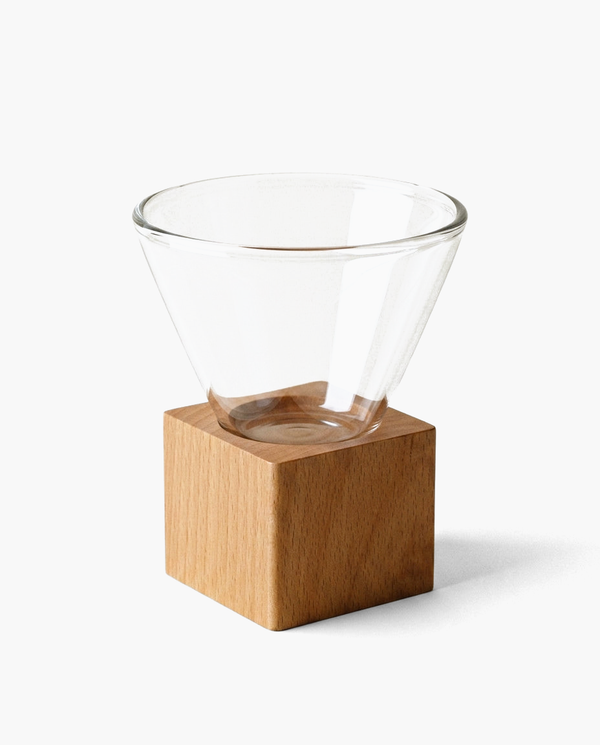
The Atelier Borosilicate Glass is a 7 oz borosilicate cup that lifts off a turned solid wood base. The base catches drips on the table, and the glass goes in the dishwasher on its own while the wood gets a wipe.
Borosilicate handles hot pours without cracking, so it works for espresso, a cortado, a small pour-over or tea. Avoid pouring boiling water onto a glass that is still cold from the freezer. Sold as a single piece or a set of six with six bases.
- Capacity: 7 oz
- Care: Glass dishwasher safe on the top rack; wood base wiped only, never submerged
- Sets: 1 glass and base, or 6 of each
6. Tasting Ceramic Cup: best handleless cup, stackable

The Tasting Ceramic Cup is an unhandled porcelain cup with a matte exterior in black, blue, grey or red. At 8.5 oz it is the largest cup here, sized on its product page for espresso, cortado or loose-leaf tea, and it suits a flat white well.
Without a handle you hold the cup itself, which tells you the temperature before your lips do. The unglazed, textured base prevents chips when stacked: six cups nest in a small cabinet. Dishwasher and microwave safe.
- Capacity: 8.5 oz, 3 in tall, 3.15 in across
- Care: Dishwasher and microwave safe
- Colors: Black, blue, grey, red
7. Vestige Kiln-Shift Mug: best cup and saucer for a cappuccino

A cappuccino wants width more than height, so the foam has a surface to sit on. The Vestige Kiln-Shift Mug is an 8 oz (250 ml) cup, 3.7 in across and only 2.7 in tall, with a 6.1 in matching saucer.
The glaze runs in vertical stripes that the kiln darkens unevenly, in five earth tones. The unglazed base grips the saucer. Hand wash it to keep the vintage finish, and warm it gradually rather than pouring boiling water into a cold cup.
- Capacity: 8 oz (250 ml)
- Saucer: Included, 6.1 in
- Colors: Bronze, cement gray, fish belly white, lake water green, quicksand brown
Two familiar alternatives, for comparison. We do not stock them.
8. Bodum Pavina double-wall glasses
Bodum's Pavina line is a range of double-wall glasses sold in several sizes, including an espresso size. Same principle as our Doppio set: an insulating gap between two walls of glass.
9. Thick porcelain demitasse with saucer
The classic bar cup: a heavy porcelain demitasse on a saucer, made by many Italian tableware makers. The thick wall holds heat once it has been warmed on top of the machine.
How We Chose These Espresso Cups
- Volume against the drink: each cup is ranked for the drink its capacity actually suits, from a 2.5 oz double to an 8 oz cappuccino
- Heat: double wall, thick ceramic or tempered glass that takes a direct pour
- Care: dishwasher and microwave rules as written on each product page
- Daily use: stacking, sets of several cups, and a shape that is easy to hold without a handle
The two alternatives are included for comparison only.
Four Ways to Ruin a Good Shot After It Is Pulled
- A cold cup: a room-temperature ceramic wall pulls heat from 2 oz of coffee almost at once; rinse it with hot water first
- A cup that is too big: a double in an 8 oz cup spreads thin and cools fast
- Ordinary glass and a direct pour: use tempered or borosilicate glass for hot espresso
- Waiting to drink it: crema starts to break down within a minute or two, so drink espresso soon after the pour
Building the rest of the setup? See our guide to the best espresso machine for home and the full espresso glasses collection. Buying for someone else? See our ranking of the best gifts for espresso lovers.
The last pour of the evening
Dinner is over and someone asks for a coffee. You line up four warm glasses on the counter, pull the shots one after the other, and carry them on a small tray. Through the glass you can see each crema, tiger-striped and thick, floating on the dark coffee below. Nobody burns a finger. Someone holds theirs up to the light before the first sip, and the table goes quiet for a minute.
If you take one thing from this article: buy the cup for the drink you actually make, a 2 to 3 oz glass or demitasse for straight espresso, 6 to 7 oz for a cortado, 8 oz with a saucer for a cappuccino, and warm it before every shot.
Best Espresso Cups: Frequently Asked Questions
What size is a standard espresso cup?
A standard demitasse holds about 2 to 3 oz (60 to 90 ml). That fits a single or a double espresso with room for crema. Cortado glasses usually hold 4 to 7 oz, and cappuccino cups 6 to 8 oz.
Are double-wall espresso glasses worth it?
Yes if you like to see the shot. The air gap between the walls keeps the espresso hot, keeps the outside cool to hold, and stops condensation with iced drinks. The tradeoff is fragility: treat them gently and avoid abrasive sponges.
Why are espresso cups so small?
Because the drink is small. A 1 to 2 oz shot in a large cup spreads thin, loses heat fast and loses its crema. A small, thick or insulated cup keeps the coffee concentrated and hot for the minute it takes to drink.
Should espresso cups be glass or ceramic?
Both work. Glass shows the crema and the layers of a cortado; choose tempered or borosilicate glass for hot pours. Thick ceramic hides the drink but holds heat well once warmed. Pick by what you enjoy seeing, then warm the cup first.
What is the difference between an espresso cup and a cappuccino cup?
Size and shape. An espresso cup holds 2 to 3 oz. A cappuccino cup holds about 6 to 8 oz and is wider, so the milk foam has a surface to sit on. Our Vestige Kiln-Shift Mug is an 8 oz cup with a saucer for exactly that.
How do I keep espresso hot in the cup?
Warm the cup before you pull the shot, with hot water or on the cup warmer of your machine, and choose a cup just big enough for the drink. A double-wall glass or a thick ceramic wall then does the rest.