An americano is a shot of espresso lengthened with hot water, so the best coffee machine for an americano is the one that pulls a clean, steady shot and lets you decide where it stops. Our pick is the Capri Espresso Station: low-pressure pre-infusion, a PID thermostat that holds extraction at a constant 197°F, and a manual mode that ends the shot when you say so. Here is why those three lines matter more than the price tag.
What Makes the Best Coffee Machine for Americano?
Four things, in the order they show up in the cup.
- Real espresso pressure: about 9 bar at the coffee is the espresso standard. The 15, 19 or 20 bar printed on a box is the pump's ceiling, not what reaches the puck. Steam-driven machines, at 3 to 4 bar, make strong coffee with no crema.
- A brew temperature that holds: espresso extracts best between 195 and 205°F (90 to 96°C). Below that window the cup turns sour, above it bitter and ashy. A PID thermostat holds the line, a bare thermostat drifts.
- A say in where the shot ends: the last seconds of a shot carry its harshest compounds. A machine that lets you stop by hand makes a sweeter americano than one locked to a single button.
- Hot water and a warm cup: you are about to pour 4 to 6 oz of water onto 2 oz of espresso. A cold mug undoes the machine's work in seconds.
Espresso Americano Machine, Bean-to-Cup or Capsule: Which Type Fits You?
There has never been a dedicated cafe americano machine. The drink is usually traced to wartime Italy, where American soldiers found espresso too short and too strong, and baristas lengthened it with hot water. The hardware never changed: an espresso machine, plus hot water. The real question is which kind suits your mornings.
For the café version, with crema and weight, the first row is the answer, and it is where you will find the Capri Espresso Station. Our guides go deeper on the semi-automatic espresso machine, the superautomatic espresso machine, and Nespresso versus a real espresso machine.
Why an Expensive Machine Can Still Make a Flat Americano
When a well-reviewed machine pours a sour, hollow cup, the cause usually sits upstream of it.
Channeling: sour and bitter in the same sip
A blade grinder, or stale pre-ground coffee, gives you fines, a microscopic dust mixed with boulders, the large chunks. Water at 9 bar takes the easiest path through that uneven bed. It races past the boulders (sour) and stalls in the fines (bitter). That is channeling: sharp and harsh in one cup.
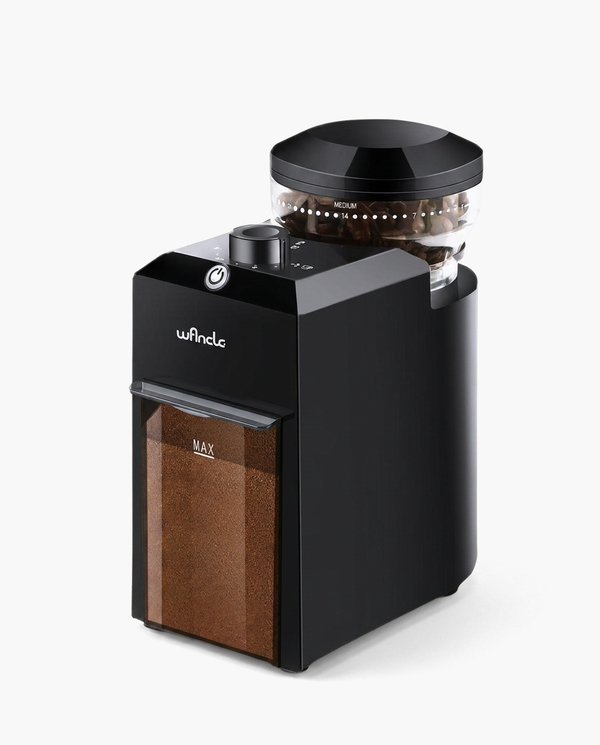
No machine repairs an uneven grind. A burr grinder comes first: our Precision Manual Grinder uses a conical burr and a base dial that runs from espresso-fine to French press coarse. The electric options are in our coffee grinders collection.
Temperature drift, and why water makes it worse
Many budget machines heat water in a small thermoblock on a simple thermostat. Fast, but rarely steady inside 195 to 205°F through a whole shot.
Then you add water, and dilution works like a magnifying glass: a slightly sour shot becomes a plainly sour 8 oz drink. So two lines of a spec sheet outweigh the rest: the Capri pairs low-pressure pre-infusion, which wets the puck before full pressure arrives, with a PID thermostat set to a constant 197°F.
How to Make an Americano at Home, Step by Step
Step 1: Grind fine, then let the clock correct you
Aim for a texture finer than table salt and coarser than flour. Dose 18 grams for a double. If the shot finishes in under 20 seconds, grind finer. If it drags past 35, grind coarser.
Step 2: Warm the cup, and hold the water off the boil
Heat fresh filtered water to about 175 to 185°F (80 to 85°C). Boiling water scalds espresso, so let a plain kettle stand a minute after the boil. Do not draw dilution water through the group head, where it picks up coffee residue. Leave the mug on the cup warmer, or fill it with hot water meanwhile.
Step 3: Pull the shot, and stop before it blonds
Tamp level, with about 30 lb of pressure. You want a thin, steady, honey-colored stream, and roughly 36 grams of espresso from 18 grams of coffee in 25 to 30 seconds. When the stream turns pale yellow, the shot is blonding, and the rest is mostly bitterness. End it there. Manual mode on the Capri makes that easy: you decide where the shot ends.
Step 4: Combine, and choose your order
- The classic americano: hot water over the espresso. The crema folds into the drink, which tastes rounder.
- The long black: espresso over the hot water. The crema stays on top, so the first sips are more aromatic.
Americano ratios by basket size
Start at one part espresso to two parts water, and stretch to 1:3 if you like it lighter. Volumes include the crema. A pressurized basket runs a little faster, 20 to 25 seconds.
Two variations: the white americano and the iced one
White: steam a small splash of milk first, so it sweetens the coffee without cooling it. Iced: fill a glass with ice and cold water and pull the shot straight on top. Our guide to the best coffee grounds for iced coffee covers the beans.
The Best Machine for Americano: Our Pick and the Alternatives
One question decided the order: how good is the long black cup, morning after morning?
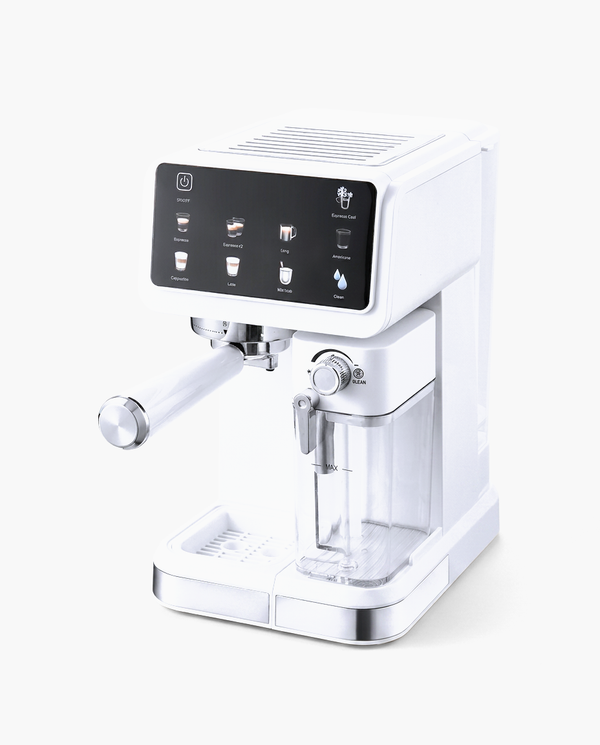
Capri Espresso Station, our pick for americano drinkers
The Capri Espresso Station is a compact semi-automatic, and its spec sheet answers the two things an americano punishes: wandering heat, and a shot you cannot stop.
- Heat that holds: a PID thermostat keeps a constant 197°F extraction temperature, inside the 195 to 205°F window.
- A gentler start: low-pressure pre-infusion soaks the puck before the 19 bar pump comes in, the classic guard against channeling.
- You decide where the shot ends: automatic mode offers seven levels of adjustment, and manual mode hands the stop to you.
- Ready before the kettle: a 30 second preheat, and a cup warmer top plate for the mug.
- Not only ground coffee: it brews ground coffee, ESE pods, and NS or DG capsules, for the mornings nobody wants to grind.
- Small footprint, real steam: 6.5 inches wide, a removable 37 oz water tank, and a 360° swivel steam wand on its own dial.
What it does not do is grind: budget for a burr grinder, or start on ESE pods. The rest of the range is in our espresso machines collection.
Verona Touch Espresso, if you would rather tap than tamp
The Verona Touch Espresso is a fully automatic espresso machine: you choose the drink on the touchscreen and the machine handles the extraction, with a built-in automatic frother for milk drinks. For an americano, lengthen its espresso with kettle water. You trade control for a cup at a tap.
The Precision Manual Grinder, the least expensive upgrade
If a machine already sits on your counter, spend here first. Our Precision Manual Grinder takes about a minute of cranking per cup, shows the grounds collecting through a viewing window, and its handle folds flat when you are done.
Breville Bambino Plus, the fast heater (about $500)
It heats in seconds, holds temperature with a PID, and textures milk automatically. It brews ground coffee only, so a rushed morning still means tamping. The Capri's cup warmer and its ESE pod and capsule option sit closer to this drink.
De'Longhi Magnifica Evo, the bean-to-cup default (about $700)
It grinds, doses and brews at a touch, and its menu covers long coffees. The cost is control: the machine sets the dose and the shot. If the cup comes first, a semi-automatic and a burr grinder go further.
Machines That Promise an Americano and Pour Something Else
Three boxes to walk past.
- Steam-driven "espresso" makers under $100: steam gives 3 to 4 bar and overheated water: no crema, a scorched edge, and once diluted, the taste of tired drip coffee.
- Pump machines with no real temperature control: a bare thermostat lets brew water swing from shot to shot, and an americano shows every degree.
- Capsule-only machines as a long-term plan: each cup costs several times what beans do, and the dose is fixed. A machine that also takes ground coffee leaves the door open.
Americano Troubleshooting: Sour, Bitter, Thin or Cold
One fix to skip: the microwave. Reheating drives off the last aromatics and leaves a flat, bitter cup. Make a fresh one.
Keeping an Americano Machine Tasting Clean
Coffee oils turn rancid, and black coffee has no milk to hide them behind.
- After every session: run a blank shot through the portafilter to rinse the group, and purge the steam wand if you used it.
- Once a week: backflush with a blind filter and a pinch of espresso machine cleaner, then rinse.
- Every one to three months: descale. Scale on the heating element keeps water below brew temperature: sour coffee, however good the grind. The Capri's care guide asks for a monthly descale.
On a fully automatic machine, run the clean function daily and descale on schedule. The step by step is in how to descale an espresso machine.
Frost on the grass, the back door open, and a long black that lasts the length of the yard
The grass went white overnight and the kitchen tiles are cold through your socks. The mug has been sitting on the warm top plate since you switched the machine on, and it is hot in your hands before there is anything in it. Water from the kettle first, two thirds of the way up. Then one button, a pause while the puck soaks, and the shot comes down slow and striped, settling on the water as a tan raft that smells of cocoa and molasses. You take it outside in your coat. It is still hot when you reach the far fence, and nobody has written your name on the cup.
If you take one thing from this article: an americano is espresso with nowhere to hide, so buy the machine that holds its temperature and lets you end the shot, and the hot water does the rest.
Frequently Asked Questions
What is the difference between an Americano and a Long Black?
The order of pouring. An americano is hot water poured over espresso, which breaks up the crema. A long black is espresso poured over hot water, so the crema stays on top. Same ingredients, different texture.
Can I make an Americano with a regular drip coffee maker?
Not a true one. An americano is espresso, brewed at around 9 bar, then diluted with hot water. Drip coffee is brewed by gravity, so it lacks the density and the crema. A fine cup, and a different one.
What is the best ratio for an Americano?
Between 1:2 and 1:3, espresso to water. For a double shot of about 2 oz (60 ml), that means 4 to 6 oz of hot water. Start at 1:2 and add water from there: you can lengthen a cup, never shorten it.
Why does my Americano taste burnt?
Usually the dilution water, not the beans. Water at 212°F (100°C) scalds the espresso it lands on. Let the kettle rest a minute, or set it to 175 to 185°F. If the burnt note stays, grind coarser and stop the shot earlier.
Do I need a dual boiler machine for Americanos?
No. A dual boiler lets you steam milk and pull shots at once, which an americano never asks for. The drink needs a stable brew temperature. A compact machine with a PID thermostat, like the Capri Espresso Station, plus a kettle, covers it.
Can I use a French press to make an Americano?
Not strictly: a French press (see our French press collection) builds no pressure, so there is no espresso and no crema. You can brew a strong concentrate and lengthen it for a full-bodied long coffee. The technique is in can you make espresso in a French press.