You invested in a Technivorm Moccamaster because you appreciate quality. It is arguably the finest drip coffee maker on the market, an engineering marvel designed to maintain the perfect brewing temperature. Yet, despite this investment, your morning cup often tastes slightly "off", perhaps a bit sour, or unexpectedly bitter. It is a frustrating reality for many home baristas: the machine is perfect, but the coffee isn't.
The culprit is rarely the brewer itself; it is almost always the grind consistency. Without a uniform grind, even the most expensive machine cannot extract flavor correctly. You are not alone in this struggle. In fact, we have helped over 24,000 home baristas transition from inconsistent brews to café-quality cups by addressing this exact variable.
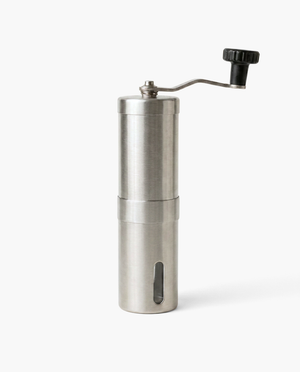
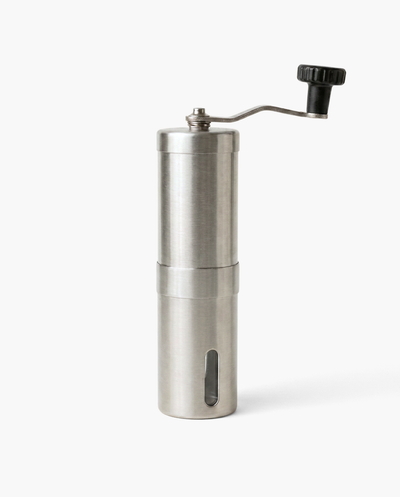
The solution isn't buying a more expensive machine; it's refining your inputs. To get the most out of your machine, you need to upgrade to a Precision Manual Grinder that treats your beans with the respect they deserve.

History: The Legacy of Precision
The Technivorm Moccamaster is not just a coffee pot; it is a piece of history. Designed by Gerard-Clement Smit in the Netherlands in 1968, the machine was built on a philosophy of durability and precision. Smit worked closely with the European Coffee Brewing Centre (ECBC) to ensure his machines met strict criteria for water temperature (196°F-205°F) and brew time.
However, when Smit designed this legendary machine, he operated under the assumption that the user would provide the correct grind. This is where the modern "moccamaster grinder review" conversation often misses the mark. People review electric grinders that spin at high RPMs, generating heat and static, which contradicts the precise engineering of the Moccamaster itself.
The machine was built to simulate a manual pour-over process, showering water over the grounds. To honor this history and the machine's capability, the grind must be as deliberate and consistent as the water delivery. A manual approach to grinding often aligns better with the artisanal spirit of the Moccamaster, ensuring that the beans are cut, not smashed, preserving the volatile oils that Smit intended to end up in your cup.
| Equipment Size | Coffee (Grams) | Water (ml) | Brew Time | Output (approx) |
|---|---|---|---|---|
| 4 Cup (Half Batch) | 30g, 32g | 500ml | 3-4 mins | 450ml |
| 6 Cup | 45g, 48g | 750ml | 4-5 mins | 680ml |
| 8 Cup | 60g, 64g | 1000ml | 5-6 mins | 900ml |
| 10 Cup (Full Batch) | 70g, 75g | 1250ml | 5-6 mins | 1150ml |
The Science: Why Blade Grinders Fail
To understand why you need the best coffee grinder (see our curated grinder selection) for moccamaster, we must look at the physics of extraction. Brewing coffee is essentially a chemical reaction where hot water dissolves soluble compounds from roasted coffee beans. The rate at which these compounds dissolve is dictated by the surface area of the coffee particles.
Most households use standard electric blade grinders (often called "whirly-birds"). These devices do not grind coffee; they smash it. A blade spinning at high speeds shatters the bean into random fragments. This results in a "bimodal" or even "polymodal" distribution. You end up with "boulders" (large chunks) and "fines" (dust-like particles).
When hot water from your Moccamaster hits this uneven mess, disaster strikes. The water extracts flavor from the dust instantly, pulling out bitter tannins. Meanwhile, the water can barely penetrate the large boulders, leaving behind the sweet, acidic notes and resulting in sourness. This phenomenon is known as "channeling," where water finds the path of least resistance, bypassing the coffee that actually needs brewing.
Furthermore, according to research from Dailycoffeenews, the heat generated by high-speed electric motors can actually begin to cook the oils in the beans before water even touches them, degrading the flavor profile.

The Smart Solution: Why French Press & Co is Different
When searching for the perfect companion to your brewer, many electric options are bulky, loud, and expensive. French Press & Co offers a different philosophy. Our manual grinder is engineered with professional-grade ceramic burrs. Unlike steel burrs which can conduct heat, ceramic remains cool during the grinding process. This is vital for preserving the delicate aromatic compounds, the florals and fruits, that make specialty coffee so expensive.
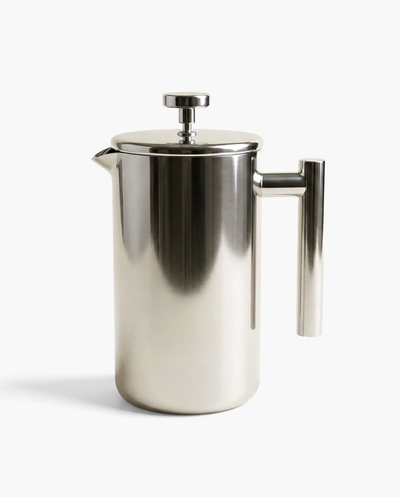
Furthermore, we understand that the Moccamaster experience extends beyond the brew cycle. While the Technivorm glass carafe is iconic, the hot plate can eventually "cook" the coffee if left too long, turning it bitter. A smart upgrade is to brew directly into or transfer your coffee to our Stainless French Press.
Used as a serving carafe, its double-walled insulation keeps your best coffee grinder for moccamaster results piping hot for hours without the need for a heating element that destroys flavor.
Comparison Table
| Feature | Amateur Method (Blade/Pre-ground) | French Press & Co Method (Ceramic Burr) |
|---|---|---|
| Particle Consistency | Random (Dust & Chunks) | Uniform (95%+ Consistency) |
| Heat Generation | High (Friction burns oils) | None (Ceramic stays cool) |
| Flavor Profile | Bitter/Sour Mix (Uneven) | Sweet, Balanced, Clear |
| Noise Level | Loud (Jet engine) | Whisper Quiet |
Step-by-Step Guide: The Perfect Brew
Achieving the perfect cup with your Moccamaster requires a ritualistic approach. It is not just about pressing a button; it is about preparing the variables correctly.
Step 1: Precision Grinding
Start by weighing your beans. Refer to the Golden Ratio table above. For a full 1.25L pot, you want about 75 grams of coffee. Set your grind to "Medium-Coarse." This should resemble the texture of sea salt or rough sand. If you go too fine, the water will overflow the basket; too coarse, and the water will run through too fast.
You can achieve consistent results with a Precision Manual Grinder, which allows you to dial in this exact setting without the guesswork of electric timers.
Step 2: Water Preparation
Your coffee is 98% water. If your tap water tastes like chlorine, your coffee will too. Use filtered, cold water. Fill the Moccamaster reservoir to the desired line. Ensure the brew basket slide is in the "Closed" or "Half-Open" position if you are brewing a smaller batch, though for the best testing, start with a full batch and the basket fully open.
Step 3: The Bloom Phase
This is where you can manually intervene to improve the Moccamaster's performance. Turn the machine on. Once the water starts to shower the grounds, let the bed of coffee get fully saturated, then briefly stir the slurry with a wooden spoon.
This ensures all grounds are wet. If you enjoy milk beverages, while the coffee brews, you can create microfoam with the Milk Frother. A splash of perfectly textured milk can turn a standard drip coffee into a Café au Lait.
Step 4: The Serve
Once the brew cycle is complete (usually 5-6 minutes), remove the carafe immediately. Give it a swirl to mix the coffee, as the coffee at the bottom is stronger than the coffee at the top (stratification).
Troubleshooting Table
| Problem | Cause | Fix |
|---|---|---|
| Sour / Acidic Taste | Grind is too coarse (under-extraction). | Adjust grinder to a finer setting. |
| Bitter / Dry Taste | Grind is too fine (over-extraction). | Adjust grinder to a coarser setting. |
| Filter Basket Overflow | Grind is too fine or too much coffee. | Coarsen the grind significantly. |
| Weak / Watery Coffee | Not enough coffee or water too cool. | Check ratio (60g/L minimum) and Workshop Brew Scale. |
| Sediment in Cup | Grinder producing too many fines. | Ensure you are using a burr grinder, not a blade. |
Maintenance
Owning the best coffee grinder for moccamaster requires a small amount of maintenance to keep it performing at its peak. Coffee beans contain oils that coat the burrs over time. If left uncleaned, these oils go rancid and sticky, which will negatively affect the flavor of future brews and can eventually clog the mechanism.
For a manual ceramic burr grinder, disassembly is usually simple. Once a month, take the grinder apart and brush the burrs with a stiff brush to remove particulate buildup. You can wash ceramic burrs with warm soapy water, but ensure they are completely dry before reassembling.
For the Moccamaster itself, you must descale the machine every 100 cycles (or every box of filters). Scale buildup affects the heating element, causing the water temperature to drop. If the water isn't hot enough, even the perfect grind won't save your coffee.
For a deep dive, read our complete coffee grinder guide.

Conclusion
Your Technivorm Moccamaster is a machine capable of brilliance, but it needs a partner. By ditching the blade grinder and pre-ground beans, you unlock the true flavor notes, the chocolates, berries, and nuts, that are hiding in your beans. It is a small change in your ritual that yields massive results in your cup.
Join 24,000+ coffee lovers who have stopped settling for mediocre home brews. Take control of your grind, and you take control of your morning. For more insights, check out our guide on best coffee grinder for espresso.
Frequently Asked Questions
What is the best grind size for a Moccamaster?
The ideal grind size for a Technivorm Moccamaster is medium-coarse. Think of the texture of sea salt or rough sand. If the grind is too fine, the basket will overflow and the coffee will be bitter.
Does the grinder really matter for drip coffee?
Yes, absolutely. Uniform particle size is critical for even extraction. According to experts at Seriouseats, a quality burr grinder is the most important piece of equipment you can own, even more so than the brewer itself.
Why is my Moccamaster coffee bitter?
Bitterness usually indicates over-extraction. This happens when your grind is too fine (creating mud) or your grinder is producing too many "fines" (dust). Switching to a burr grinder and coarsening your grind setting will fix this issue.
Can I use a manual grinder for a full pot of coffee?
Yes, you can. While it requires a bit of physical effort (taking about 1-2 minutes for a full batch), many enthusiasts prefer it because manual grinders often generate less heat than electric ones, preserving the flavor oils in the beans.
How often should I clean my coffee grinder?
You should do a deep clean of your grinder burrs once a month to remove oil buildup. However, you should brush out loose grounds after every use to prevent mixing stale coffee with fresh beans.