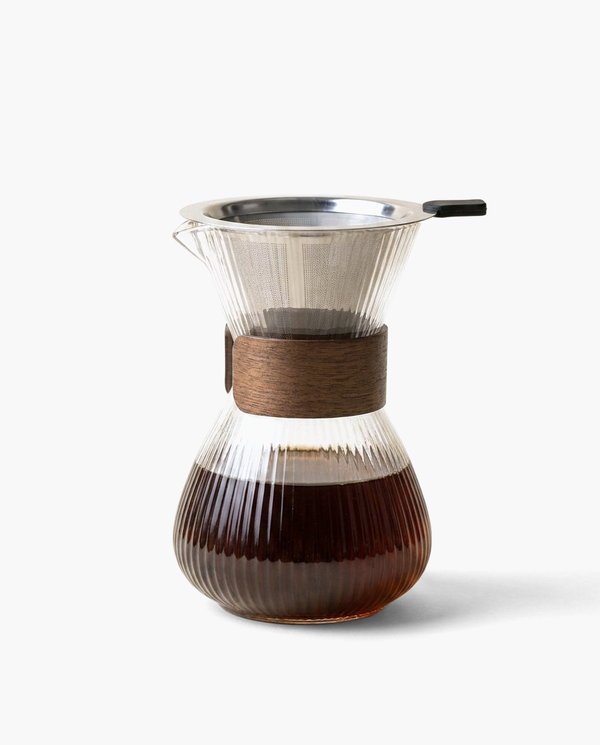
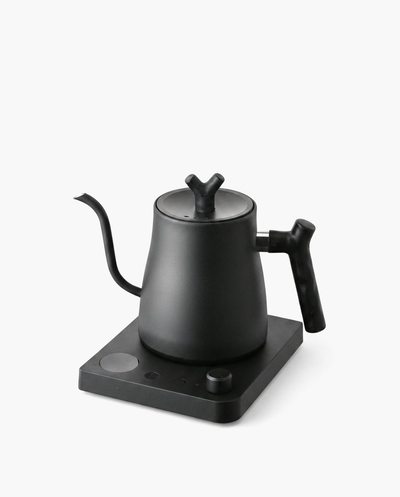
Water makes up 98 percent of your cup, so the kettle that heats it matters as much as the beans. The Editor's Gooseneck Kettle is the one we reach for first: a dial you set once, a spout you can read, and water that holds its temperature instead of drifting while you grind.
What Water Temperature Actually Does to Coffee
A full rolling boil, 100 °C, pulls flavor out of coffee grounds fast, sometimes too fast. Push that much heat through the grounds and you drag out compounds that taste harsh and ashy along with the ones that taste good. Water that is too cool does the opposite: it barely wakes the grounds up, and the cup comes out thin and sour, no matter how good the beans were.
The window most specialty coffee is brewed in sits between 91 °C and 96 °C. A stovetop kettle only tells you when the water is boiling, not what it does after. You end up guessing at a rest period, which is exactly the kind of guesswork an electric kettle with a dial removes. Set the number once and the water gets there and stays there.
Roast level shifts that target a little. Darker beans are already broken down by the roast, so they give up flavor fast and are easier to push into bitterness, closer to 91 to 93 °C suits them. Lighter roasts hold their fruit and floral notes tighter and want the top of the range, 93 to 96 °C, to open up fully.
Green tea sits much lower, around 79 °C, since boiling water scalds the leaf and turns it bitter. This is the core idea behind our kettle buying guide: the target temperature is not a nice-to-have, it decides whether the cup tastes balanced or off.
Kettle Styles: Spout Shape and What It Is For
A wide, standard spout dumps water fast. A gooseneck spout, long, narrow, curved, restricts the flow into a thin, steady stream you can aim. Neither is wrong. The choice depends entirely on what you brew.
If you use a brewer from our French Press Coffee Makers lineup, speed is an advantage. A wide spout fills the carafe in seconds, so every ground is soaked at the same moment and the four minute steep starts on time for all of it. Pour-over is the opposite problem. Dump water fast over a filter and you punch a hole through the coffee bed, and most of the water rushes through without touching much coffee at all.
Reading the Gooseneck Advantage
A gooseneck spout lets you start in the center of the bed and draw slow, small circles outward, wetting every ground evenly instead of drowning the middle. That control is what makes the thirty second bloom, the initial pour that lets the coffee de-gas and expand, actually do its job.
- Standard spout: best for French press, tea, and anything where you want the water in fast.
- Gooseneck spout: built for pour-over, where a slow, aimed stream controls extraction.
- Wide-but-controlled spout: a middle ground some kettles use, a bit less precise than a true gooseneck but faster to empty.
What to Look for in an Electric Kettle
Three things separate a kettle you will use for years from one you replace in a season: what touches the water, how it controls temperature, and how fast it gets there.
Cheap kettles often hide plastic in the boiling chamber itself, and repeated boiling can leach a faint chemical taste into the water over time. Stainless steel interiors hold up to daily use and do not chip. Borosilicate glass shows you the water directly, which is its own kind of quality control, but it takes a bit more care to keep the mineral film off the glass.
Power, Control, and How You Set the Number
Wattage decides speed. A 1000W kettle is a normal, everyday pace for a small pour-over fill. A 1500W kettle moves noticeably faster and is worth it if you are heating a full liter and a half for several mugs at once. A 1 L pour-over kettle is not trying to do that job, so it does not need the extra wattage; 1000W keeps pace with the smaller volume a real pour-over session actually calls for.
Either is fine for a single cup; the difference shows up when you are brewing for more than one person.
Control matters more than raw speed. A kettle with only an on and off switch leaves you guessing at temperature. A kettle with a variable dial and a digital readout lets you set 93 °C and walk away to grind, and a hold function keeps it there instead of letting it drift while you finish. That single feature, hold, removes more guesswork from a morning routine than any other spec on the box.
The Best Electric Kettles We Reach for Every Morning
Here is what stays on our counter, ours first, and why.
Editor's Gooseneck Kettle: Our Pick
The Editor's Gooseneck Kettle is built specifically for pour-over and loose-leaf tea, which is exactly why it earns the top spot here.
- Variable dial up to a full 100 °C boil, with a constant-temperature hold once you land on a number.
- 304 stainless steel chamber with a food-grade interior, on a base with one-touch boil.
- 1 L capacity, enough for 3 to 5 cups in a single fill, sized for a real gooseneck pour rather than a party-sized boil.
- Digital LED readout so you can see the number you set, not guess at a dial position.
- Auto shut-off and anti-dry-burn protection built in, so an empty base does not become a problem.
- See the full Editor's Gooseneck Kettle specs, including plug and color options.
Sentinel Glass Kettle: For Watching the Boil
If you would rather see the water than trust a dial, the Sentinel Glass Kettle is borosilicate glass with a blue LED that lights the chamber as it heats, 1500W, 1.7 L, and no plastic touches the water. A fine mesh filter in the spout keeps any loosened mineral out of your cup, and a wide fill covers six to seven pour-over mugs at once, useful when you are brewing for the whole table.
Verona Retro Kettle: For Speed and a Little Character
The Verona Retro Kettle is the pick if you want a wide-spout, fast, no-fuss kettle that still looks like something you would leave out on the counter. 1500W brings a full 1.5 L to a rolling boil in about five minutes, the interior is 304 stainless steel, and the painted vintage shell comes in green or beige on a 360-degree rotating base.
What Well-Known Gooseneck and Basic Kettles Get Right
The Fellow Stagg EKG, typically around $165, is the best-known gooseneck kettle, and deservedly so: precise digital control, a hold function, a stainless chamber and a clean design, in a 0.9 liter body. A basic countertop kettle like the Cuisinart PerfecTemp, typically around $100, covers preset temperatures for tea and coffee without a gooseneck spout, which suits drip machines and French press more than a slow pour-over.
We built our own counter around the Editor's Gooseneck Kettle for reasons of its own: a full liter, enough for 3 to 5 cups in one fill, a one-touch boil beside the dial for the mornings you only want hot water, and anti-dry-burn protection in the base.
It also ships with the plug for your outlet, US, UK, EU or AU, in matte black or matte white.
Kettles That Slow Your Morning Down
- One-temperature kettles. If the only option is a full boil, you are stuck timing a rest period by hand every single time.
- No hold function. Water starts cooling the second it hits target, and without a hold you are racing the clock while you grind.
- Undersized wattage for the job. A weak element on a large kettle means a long wait before you have even started brewing.
- A wide spout on a pour-over kettle. No amount of technique fixes a stream that will not narrow.
- Skipping descaling. Limescale on the sensor is the single most common reason a kettle starts shutting off early or heating slowly.
Keeping a Kettle Scale-Free
Limescale is the chalky mineral layer tap water leaves behind on the heating element. It insulates the element, so the kettle works harder to reach the same temperature, and it eventually flakes into your water, adding a metallic taste to the cup. None of it needs a special cleaner.
For the full vinegar cycle, step by step, see our guide on how to descale a kettle with vinegar, and plan on running it roughly once a month.
- After every use: empty the kettle. Standing water is where scale starts.
- Weekly: wipe the exterior and the base contacts with a damp cloth, never submerged.
- Monthly: run the vinegar cycle above, even if you cannot see any buildup yet.
Starting with clean, fresh water is basic to good brewing, a point the Specialty Coffee Association makes too. If you want to see the range of options before you decide, our gooseneck kettles collection covers the pour-over side, our Coffee Makers collection covers the wide-spout kettles that suit French press, and our full best gooseneck kettle guide rounds out the lineup.
Pairing any of them with the Workshop Brew Scale takes the guessing out of the pour itself, not just the heat.
Monday evening, the first cold snap of the year
Just past six, the window over the sink already dark and starting to fog at the corners. You set the dial to 202 without checking a chart anymore, you just know the number now. The kettle clicks over from heating to holding, a small quiet change in the sound the base makes, and you take the extra minute to weigh the beans properly instead of eyeballing them.
The pour goes in a slow spiral, no hole punched in the middle, no rush. Outside it is thirty-nine degrees and getting colder. Inside, the mug in your hands is exactly the temperature it should be, and so is everything in it.
If you take one thing from this article: a kettle that holds a temperature saves you more bad cups than any bag of beans ever will.
Frequently Asked Questions
What temperature is best for coffee in an electric kettle?
Most coffee brews best between 91 °C and 96 °C. Darker roasts do well nearer the bottom of that range since they already give up flavor easily, lighter roasts want the top of it to open up fully. A kettle with a dial and a hold function gets you there without timing a rest period after a boil.
Can you leave water in an electric kettle overnight?
It is better not to. Standing water speeds up limescale on the heating element and can pick up a slightly stale or metallic taste by morning. Empty the kettle after use and fill it fresh right before you brew.
Why does my electric kettle shut off before it finishes boiling?
Almost always limescale on the internal thermostat, tricking the sensor into reading the water as hotter than it actually is. A monthly vinegar cycle, equal parts vinegar and water, a boil, a fifteen minute rest, and two clean rinses, restores the sensor's accuracy.
Is a gooseneck kettle worth it if I only use a French press?
Not really. A French press wants water in the carafe fast so every ground steeps for the same amount of time, and a gooseneck's restricted stream just slows that down. A standard wide spout is the better tool for that brewer. Save the gooseneck for pour-over.
What does the hold function on a kettle actually do?
Once the water reaches your set temperature, the base cycles small amounts of power to keep it there instead of letting it cool while you grind or wait. It removes the need to time a rest period after a boil, and it means the water is still at temperature if you get pulled away for a few minutes.
How do I keep an electric kettle from rusting or staining?
Choose a kettle with a stainless steel interior, empty it after use, and leave the lid open so it air-dries rather than sitting wet. Avoid abrasive scrubbers, which scratch the protective finish. Small brown spots are usually mineral deposits, not rust, and come off with a vinegar cycle.