The best milk for a latte is whole milk: about 3.25% fat for body, 8 grams of protein per cup to hold the foam, and lactose that tastes sweetest near 140°F. Skipping dairy? Barista-edition oat milk comes closest. Either way, heat decides the cup, which is why ours goes into the Le Maestro Milk Frother, whose listed range starts at that same 140°F.
What Makes Milk Good for Lattes?
Milk is water, fat, protein and sugar, and each does a different job once heat and air arrive. Read the label with those in mind and you can predict how any carton will behave. It is the first thing we check at French Press & Co., long before we blame the frother.
The Role of Protein in Microfoam
When air is whipped or steamed into milk, proteins wrap each bubble in a thin elastic wall. More protein means smaller bubbles and a foam that lasts to the bottom of the cup. A useful rule: look for at least 3 grams of protein per cup (240 ml). Dairy milk carries about 8, soy about 7, barista oat about 3, and standard almond about 1.
The Role of Fat in Texture
Fat coats the tongue and rounds off the bitter edge of espresso, which is why a skim latte tastes sharp. Too much of it weighs on the bubbles, and the foam rises less. The sweet spot sits around 3 to 4% fat. That is whole milk territory, and the number most barista oat milks are built to match.
Pro tip: start with milk straight from the refrigerator. Cold milk gives you a longer window to work air in. For pitcher angles and whisk technique, our complete milk frother guide goes deeper.
The Best Milk for a Latte, Ranked: The 4-Minute Version
Short on time? Here is the whole article at a glance: six milks, ranked for a classic hot latte.
The Best Dairy Milk for Lattes
Dairy is the café default because its chemistry happens to be right for steaming.
Whole Milk
Whole milk is the best milk for a latte, and it is what most coffee shops pour unless you ask otherwise. At about 3.25% fat in the US, closer to 3.5% in Europe, it is forgiving to froth and hard to ruin, and its dense, sweet microfoam holds a rosetta long enough to photograph.
Lactose-free whole milk froths the same way and tastes a touch sweeter, since its lactose is already split into simpler sugars.
Two Percent Milk
There is enough fat to taste reasonably rich, and with less of it weighing on the bubbles, the foam rises faster. That is also the trap: a second too long and you have stiff cappuccino foam where you wanted a silky latte finish. Stop adding air early.
Skim Milk
Skim foams eagerly, since the protein is all still there. With almost no fat, the foam turns stiff and dry and the drink loses its café mouthfeel. Add less air than feels natural, and brew a roast you like, because nothing will be hiding it.
The Best Plant-Based Milk for Lattes
Many plant milks lack the protein to hold foam, and some split on contact with hot, acidic coffee. The fix is printed on the carton: barista edition. The maker has adjusted the fat and added an acidity regulator, so the milk steams like dairy and stays whole in the cup. Oatly Barista Edition and Califia Farms Barista Blend are the easiest to find.
Oat Milk
The best plant-based milk for a latte. Creamy, neutral and lightly sweet, a little like the milk left at the bottom of a cereal bowl, it flatters the chocolate and caramel notes in coffee. A barista-edition oat steams almost exactly like whole dairy milk. It works as well over espresso as over a strong brew from one of our French press coffee makers.
Soy Milk
Still the strongest foamer of the plant group: thick and stable. The trade-off is a bean note that can sit on top of a delicate coffee. Pair it with a dark roast and keep the heat moderate, since soy curdles when it gets too hot or meets a very acidic light roast.
Almond Milk
Popular for its low calorie count, and the hardest of the three to froth. The foam comes out large and soapy, fades fast, and standard cartons split in hot coffee. Heat it gently, stay under 130°F, and buy a barista blend. Our guide on whether you can froth almond milk covers the workarounds.
The Science of Steaming and Frothing Milk
Frothing does two separate things. Stretching lets air in. Texturing folds those bubbles down until the milk becomes one glossy liquid that pours like wet paint. A latte wants a short stretch and a long texture. A cappuccino wants the reverse.
The 140-Degree Sweet Spot
Lactose barely registers as sweet in cold milk. Warmed, it does, which is why a well-heated latte needs no syrup. Milk tastes sweetest between 140 and 150°F (60 to 65°C). Below that, the latte reads lukewarm and the foam does not set. Up to about 158°F (70°C) the milk is hotter but still clean. Beyond it the proteins denature, the sweetness drops out, and you get the flat, cooked taste of a gas station cappuccino.
With a steam wand, a clip-on thermometer solves this. A countertop frother decides for you, so check its range before you buy. The Maestro frother we use lists 140 to 158°F, which is the window described above.
Matching Coffee to Your Milk
A light, floral roast disappears under oat milk. A dark roast comes straight through it. If your base is a strong brew from one of our coffee makers instead of espresso, whole milk or a barista oat softens the bitterness without hiding the coffee. On the brewing side, this structured guide to specialty coffee roasting and brewing is a good long read.
Essential Gear for Frothing at Home, From Whisk to Wand
Three tools froth milk at home: a countertop frother that heats and spins at once, a handheld whisk for milk you warm yourself, and the steam wand of an espresso machine. Here is what we use from our own milk frothers, then how the best-known alternative compares.
Le Maestro Milk Frother: the one that stops the heat for you
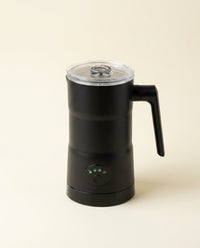
The Le Maestro Milk Frother is the one on our counter, because it takes the hardest part of the drink, the temperature, out of your hands.
- It heats inside the sweet window: the listed temperature range is 140 to 158°F. Warm enough for the lactose to taste sweet, with a listed ceiling at the 158°F where milk still tastes clean.
- Four functions, one touch: hot foam, cold foam, hot milk without foam, and hot chocolate. Hot foam for a latte, cold foam for an iced one.
- It stops on its own: it steams, swirls and shuts off automatically while you pull the shot.
- Sized for real drinks: 5.4 oz when frothing, which is one generous latte, and 12 oz when heating without foam, which is two.
- Steel outside, non-stick inside: a 304 stainless steel body with double-wall insulation that stays cool to the touch, and a non-stick Teflon interior. Hand wash only, soft cloth, no abrasive pads.
- Complete in the box: two whisks, a cleaning brush and the power cord, in American, British or European plug versions.
Atelier Twin Frother, the handheld for milk you heat yourself
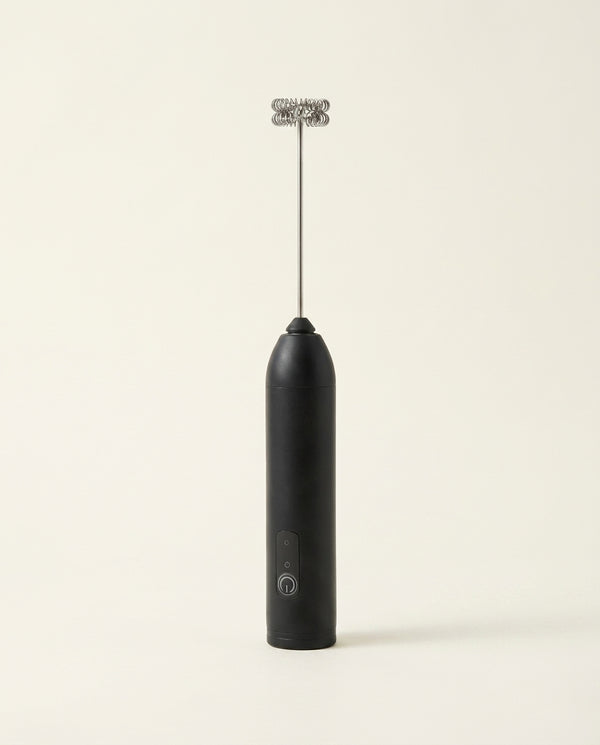
If you would rather warm milk in a pan and keep the counter clear, the Atelier Twin Frother is the handheld we like. Brushed aluminum body, USB-rechargeable battery, and two stainless steel whisk heads: a spring coil that makes tight microfoam for lattes, and a paddle that loosens the texture for cappuccinos. It does not heat anything, so the thermometer is on you: its spec sheet suggests milk at 140 to 160°F.
Capri Espresso Station, when you want a real steam wand
A wand gives the finest texture and the only real path to latte art at home. The Capri Espresso Station pairs a 19 bar pump with a professional steam wand on a 360° swivel, run from its own dial, plus PID temperature control and a 30 second preheat. Prefer no technique at all? The Verona Touch Espresso is fully automatic, with a built-in frother and drinks chosen on a touchscreen.
Nespresso Aeroccino 4 (about $120)
The best-known countertop frother, and a good one: four modes, quiet, quick. Its limit is size: roughly 4 oz of milk for foam and 8 oz for hot milk per run, against 5.4 oz and 12 oz for Le Maestro.
Common Milk Frothing Mistakes
Most disappointing lattes trace back to three small savings: of time, of money, of milk. Each looks quicker or cheaper than doing it properly. None is.
- The microwave and a guess: microwaves heat unevenly, so part of the mug scalds while the rest stays lukewarm, and past roughly 158°F no amount of foam brings the sweetness back. Use a pan and a thermometer, or a frother that manages the temperature for you.
- The standard plant carton: the regular oat or almond milk next to the barista edition is cheaper because it lacks the fat and the acidity regulator that make it behave. It splits, and the saving goes down the sink.
- Re-steaming leftover milk: once heated, the proteins have changed for good and will not foam properly a second time. Start from a fresh, cold pour.
What Causes Common Latte Milk Problems, and How Do You Fix Them?
No frother yet? Our guide on how to froth milk without a frother covers four methods, French press plunger included.
Late morning, a friend at the counter, and the oat latte you used to dread
She says it while taking off her coat: no dairy, sorry, black is fine. It does not have to be. You shake the barista oat carton, pour it in cold, touch one button, and the whisk starts to turn while the moka pot begins to sputter on the stove. The frother stops by itself, which still feels like a small courtesy. What pours out is glossy and slow, it folds into the coffee instead of floating above it, and the kitchen smells of warm oats and dark roast. She takes a sip, looks down at the cup, and never reaches for the sugar.
If you take one thing from this article: the best milk for a latte is whole milk, or barista oat if you skip dairy, and either one only shows its sweetness when something reliable stops the heat in time.
Frequently Asked Questions
What is the absolute best plant-based milk for lattes?
Barista-edition oat milk. The added fat and acidity regulator keep it from splitting in hot coffee, and it steams much like whole dairy milk. The flavor is lightly sweet and malty, so it supports espresso where other plant milks cover it.
Why does my milk foam separate from my coffee?
Too much air and not enough texturing. Large, dry bubbles float on top and refuse to mix. Add air only for the first few seconds, then keep the milk spinning so the bubbles fold in, and swirl the pitcher until the surface looks like wet paint before you pour.
Can I make a latte without an expensive espresso machine?
Yes. Brew a short, strong base with a moka pot or an AeroPress, then add frothed milk, roughly three parts to one. For the milk, a countertop frother like Le Maestro heats and foams in one touch, and a handheld such as the Atelier Twin Frother or a French press plunger works too if you warm the milk first. Not espresso, and still a very good latte.
Why does my almond milk curdle when I pour it?
Almond milk reacts to two things at once: high heat and the natural acidity of coffee. With so little protein to hold it together, the solids separate into flecks. Let the coffee cool for a minute before pouring, never heat almond milk above 130°F, and choose a barista almond blend.
How do I know when my milk is hot enough?
A small thermometer clipped to the pitcher is the accurate way: aim for 140 to 150°F. Without one, hold the pitcher in your bare hand. When the metal is too hot to hold for more than a second, you are there. With an automatic frother, the listed temperature range is the number to check.