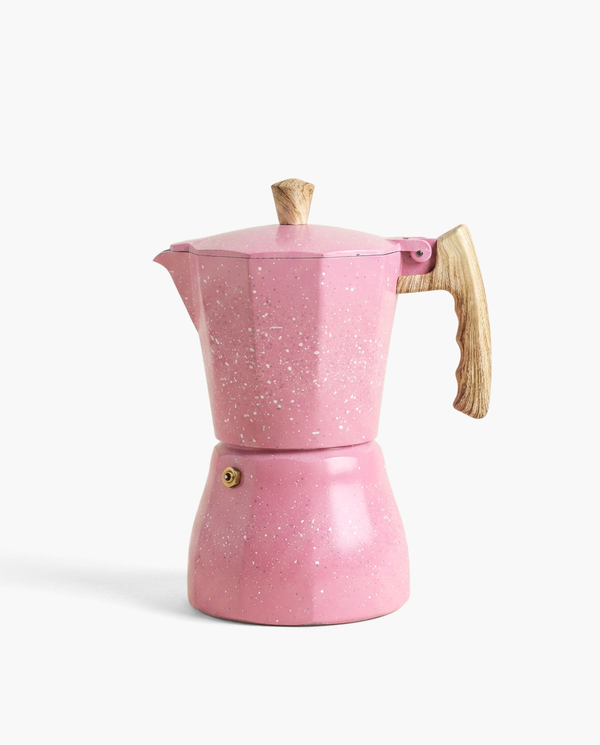
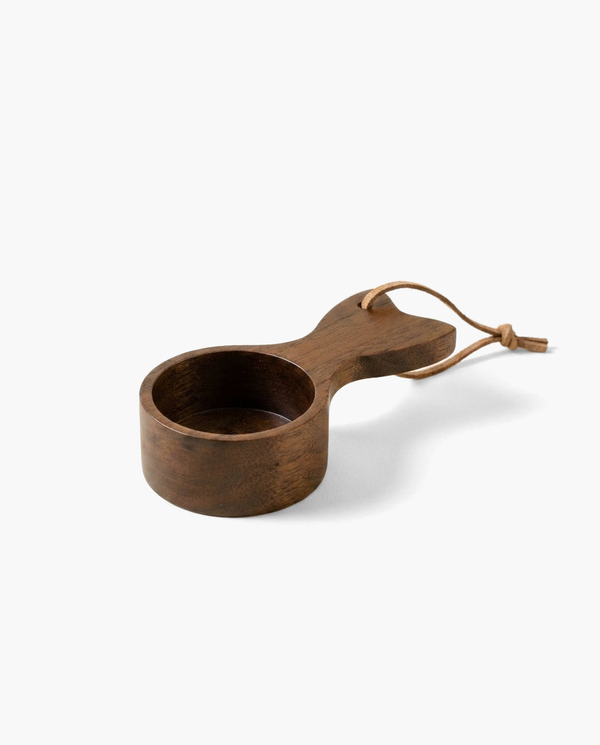
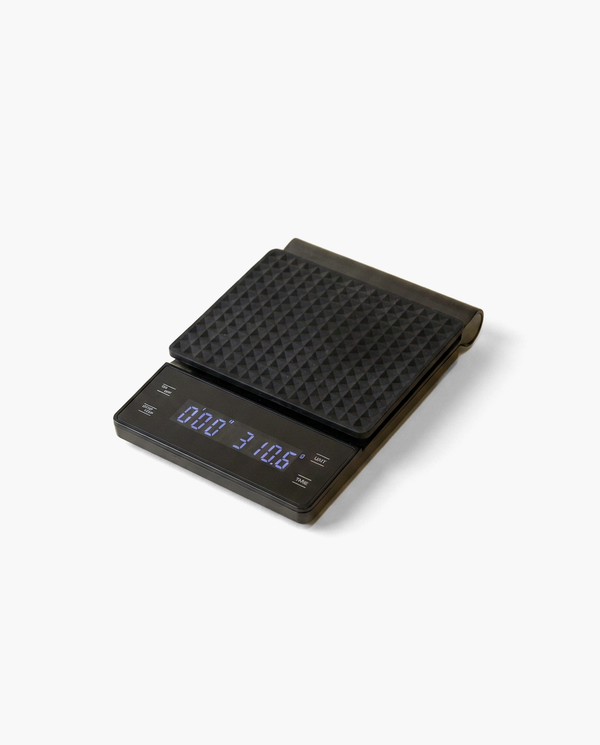
A three cup Moka Express does not fill three coffee mugs. It brews about 120 ml total, an espresso strength shot sized for one full cup or two small pours. Treat that small basket like a full pot and the bitter, burnt result is not the brewer's fault. Ours keeps the classic shape with a cooler grip, the Bottega Wood-Handle Moka, built the same eight sided way with a wood-grain handle where the original wears plastic.
How Much Coffee Does a 3-Cup Moka Express Take?
The word cup is the confusing part. On a Moka pot it means a demitasse, about 50 to 60 ml, not the mug on your shelf. A 3 cup basket is built for roughly 15 to 17 g of ground coffee and water filled just under the safety valve, near 150 ml.
Brewing for more than one person most mornings? Our 6 cup Moka pot how much coffee guide covers the larger basket and its own ratio, which does not simply double the numbers above.
Where the Moka Express Came From
Alfonso Bialetti sold the first Moka Express in 1933, cast in aluminum with an eight sided body that has barely changed since. The small sizes came first: a household coffee ritual scaled to a couple of cups, well before the larger 9 and 12 cup versions arrived for bigger tables. That is why the 3 cup size still reads as the original idea, not a scaled down one.
For a deep dive on sizes, stoves and care, read our complete moka pot guide.
Curious how the original holds up decades later? We put it through its paces in our Bialetti Moka review.
Why Bialetti Moka Express Coffee Turns Bitter or Burnt
In a basket this small, mistakes show up fast. The most common one is cold water in the base: the pot heats alongside the water, and by the time pressure builds, the grounds have been baking dry in hot metal for minutes. That cooks the oils before extraction even starts.
Grind size does the rest of the damage. Too coarse, and it behaves like grounds meant for a French press, water rushing through and pulling a thin, sour cup. Too fine, and the water fights its way through, channeling around weak spots and scorching the coffee it does reach.
A blade grinder guarantees both problems at once, a mix of dust and boulders in the same basket. Our Precision Manual Grinder uses a conical burr with a dial at the base, so the grind lands the same way every morning instead of by luck.
Tamping is the third mistake, and it is specific to Moka pots. There is no pump behind this pressure, only steam, so a packed puck simply refuses to let water through cleanly, or forces the safety valve to do a job it should never have to do.
What We Brew a Single Cup In
One of ours first, then the pot most people already own, described as fairly as we can.
Bottega Wood-Handle Moka, the classic with a warmer grip
The Bottega Wood-Handle Moka keeps the shape that made the category and changes the one part your hand actually touches.
- The classic silhouette, kept: an eight sided Italian moka pot in painted aluminum, with single tube extraction.
- Where your hand goes: a cool touch handle and matching lid knob in a wood-grain finish, instead of the plastic every classic Moka wears.
- Two sizes in one line: 150 ml, about 5 fl oz, for one person, or 300 ml, about 10 fl oz, once someone else wants a cup too.
- Five finishes: Black, Black Premium, Blue, Red or White, so the pot suits the kitchen instead of the other way around.
- About five minutes to the cup: gas, electric or ceramic, with a built in pressure release valve. Not induction, and we would rather tell you now than after the order.
Care stays traditional: warm water, a soft cloth, no soap, every part dried before it goes back on the shelf.
The original Bialetti Moka Express 3-Cup (about $35)
The pot that started the category, still a sound one. Bare aluminum, the same eight sided shape, a wide network of spare parts if a gasket ever needs replacing. Its handle and lid knob are plain black plastic, which is the main place the Bottega departs from it.
Mistakes That Turn a 3-Cup Moka Sour
A basket this small punishes shortcuts faster than a bigger pot ever would.
- Filling past the valve: water needs headroom to turn to steam. Fill to the line, not to the brim.
- Starting with cold tap water: the longer the pot sits on the stove before pressure builds, the more the dry grounds bake and turn bitter.
- Tamping the basket: a Moka has no pump behind it. Packed grounds choke the flow or blow past the safety valve instead.
- Letting it gurgle on: once the stream turns pale and the pot starts complaining, the good coffee is already in the cup. Everything after is harsh water and steam.
- Grinding at home in a blade chopper: uneven pieces mean part of the basket over extracts while the rest barely brews. A conical burr keeps every particle the same size.
How to Brew a 3-Cup Moka Express, Step by Step
Step 1: Grind fresh, between espresso and drip
Aim for the texture of fine table salt. Weigh 15 to 17 g and grind it just before brewing, since Moka grounds lose aroma fast once exposed to air. A dial grinder like our Precision Manual Grinder lets you land on the same setting every time.
Step 2: Start with hot water
Boil water separately and fill the base just under the safety valve. The pot spends less time on the flame, so the dry grounds spend less time baking before water ever reaches them.
Step 3: Fill the basket, do not tamp
Level the grounds with a finger, no pressing. Screw the top on firmly, using a towel to hold the hot base, and set it on low to medium heat with the lid open so you can watch it work.
Step 4: Watch the stream
A few minutes in, you will hear a light puffing sound and the coffee should flow like warm honey. A rush like a faucet means the grind is too coarse. A slow, painful drip means it is too fine.
Step 5: Stop it early
The moment the stream turns pale and the gurgle starts, lift the pot off the heat. Run the base under cold water for a few seconds to stop the extraction instantly, then pour right away. Coffee left sitting in hot metal keeps cooking on its own.
Common 3-Cup Moka Problems and Fixes
Caring for a 3-Cup Moka Pot
Aluminum is porous, and it absorbs coffee oils over time. A light patina is normal and part of why home cooks say an older pot tastes rounder. Rancid oils are not, so the pot still needs a rinse after every use, warm water only, no soap and no dishwasher.
Take the pot apart after each brew and dry every piece, especially the gasket. Trapped moisture is what corrodes aluminum from the inside, and it is the one habit that decides how long a Moka pot lasts. Check the gasket every few months and replace it once a year, since a cracked seal cannot hold pressure. On the Bottega Wood-Handle Moka, the wood-grain handle prefers the same gentle treatment, a damp cloth rather than the dishwasher.
Six forty five, and the house is quiet before the second alarm
You have learned to move without the overhead light: kettle first, then the small pot off the drying rack, still faintly warm from yesterday. The valve catches right as a stair creaks upstairs, on schedule as always, and you are pouring by the time footsteps reach the kitchen doorway.
One cup, dark and short, drunk leaning against the counter before the day claims the rest of you. Nobody else in the house drinks it black, so the little pot stays yours alone, morning after morning.
If you take one thing from this article: a 3 cup Moka is not a smaller version of a bigger pot, it is its own instrument, sized for one good cup and a handle worth holding onto.
3-Cup Moka Express: Frequently Asked Questions
What is the best grind size for a 3-cup Moka pot?
Medium fine, close to table salt. It should sit finer than what you would use for a French press, and noticeably coarser than the powder used in a commercial espresso machine.
Can I use a 3-cup Moka Express on an induction stove?
Not without an adapter plate. Aluminum is not magnetic, so a classic Moka Express, and the Bottega Wood-Handle Moka, brew on gas, electric or ceramic but need a separate induction disc to work on an induction cooktop.
Is it safe to brew coffee in an aluminum pot?
Generally, yes. Aluminum develops a thin oxide layer that limits how much metal leaches into the coffee, and short brew times keep contact minimal. Keep the pot out of the dishwasher and leave the dark patina alone, since that layer is doing part of the protecting.
Why is my safety valve leaking steam?
Pressure inside the pot is higher than it should be. The usual causes are a grind that is too fine, grounds that were tamped, or water filled above the valve line. Coarsen the grind and check the fill level before brewing again.
How is a 3-cup Moka different from a 6-cup?
Mostly scale, not method. A 3 cup basket holds 15 to 17 g of coffee and about 150 ml of water for roughly 120 ml brewed, while a 6 cup basket about doubles each number. The brewing steps, grind and heat control stay the same either way. Brewing for a full table instead of one, our 9 cup Moka guide covers the largest size in the same family.