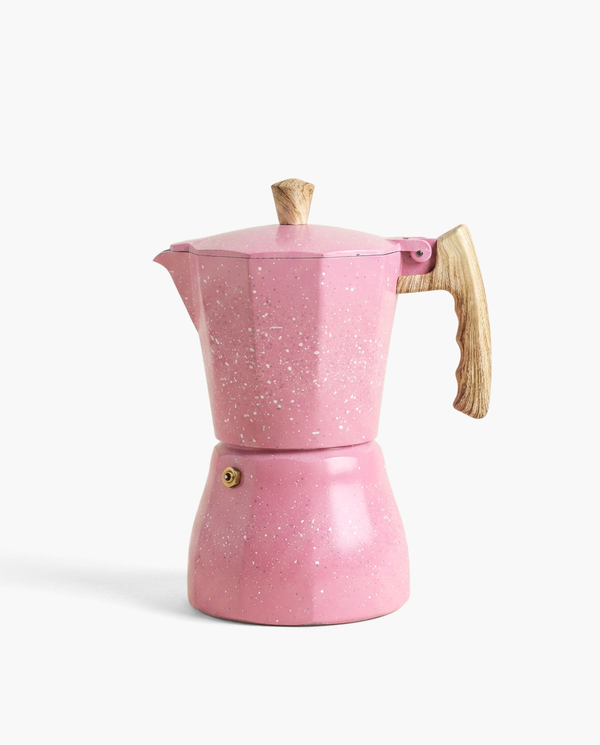
The Bialetti Moka Express earns its reputation through pressure, not marketing: roughly 1 to 1.5 bar of steam forcing water through the grounds in under five minutes. The pot we brew with here follows the same eight-sided shape and single-tube design, the Bottega Wood-Handle Moka, only with a wood-grain handle that stays cool and a gasket built to be replaced rather than mourned. This guide covers what the Moka Express does well, where it goes wrong, and what we brew with instead.
From a Laundry Pot to Every Italian Kitchen
Before the Moka Express, strong coffee meant a trip to a cafe with a steam-driven machine bolted to the counter. In 1933, Alfonso Bialetti, an aluminum vendor in Omegna, Italy, adapted the central-pipe mechanism from a laundry boiler into a stovetop pot: water pushed up through a coffee bed by its own steam pressure, no cafe required.
The eight-sided aluminum body was chosen partly for even heat spread and partly because aluminum was the material of the moment in 1930s Italian manufacturing.
The shape has barely changed since. What has changed is how much we understand about why the same pot produces a syrupy cup for one person and a bitter one for another: grind size, water temperature, and heat control account for nearly all of it. A 3-cup Moka Express and a 12-cup one follow the same physics, just at different volumes.
Why the Moka Express Turns Bitter, Metallic, or Weak
A moka pot is often sold as a stovetop espresso maker, but it sits in its own category. True espresso runs at 9 bar. A moka pot runs at roughly 1 to 1.5 bar, generated by boiling water in the sealed bottom chamber until the steam has nowhere to go but up through the coffee bed. That low, unstable pressure amplifies mistakes that a machine would normally correct for you.
For a deep dive, read our complete moka pot guide.
Grocery-store pre-ground coffee is almost always too fine for a moka pot. A grind meant for a drip machine or an espresso portafilter packs tight in the funnel basket, the water gets trapped below it, and the chamber superheats past boiling before it forces its way through. The result is channeling: water blasts through the thin spots and over-extracts them into bitterness while barely touching the rest.
Aluminum makes the second half of the problem. It heats fast, so by the time coffee starts flowing, the upper chamber is already hot enough to cook it on contact, stripping the aromatic compounds and leaving carbonized, ashy notes behind. Starting with cold water in the bottom chamber makes this worse: the grounds sit and bake in a hot, dry basket for the minutes it takes the water below to reach a boil, well before any water has touched them.
How Much Coffee for Each Moka Size
The funnel basket sets the dose, not a scale: fill it level with the grind described below and do not tamp it. Here is what each common size takes, from a 6-cup moka pot down to a single-serve 3-cup.
| Moka Size | Coffee | Water | Brew Time | Yield |
|---|---|---|---|---|
| 3-cup | 15 to 17 g | 150 ml | 3 to 4 min | About 120 ml |
| 6-cup | 30 to 35 g | 300 ml | 4 to 5 min | About 240 ml |
| 9-cup | 45 to 50 g | 450 ml | 5 to 6 min | About 360 ml |
| 12-cup | 60 to 65 g | 600 ml | 6 to 8 min | About 500 ml |
Brewing the Moka Express Without Burning It
Follow these four steps in order and most of what goes wrong with a moka pot stops going wrong.
- Grind coarser than espresso, finer than drip. Aim for a texture like table salt, gritty between your fingers, not powdery. A conical burr grinder gives you an even grind at this size; a blade grinder gives you a mix of dust and boulders that clogs the basket unevenly. Our Precision Manual Grinder sets that grind on a dial at the base, so you land in the same spot every morning.
- Start with hot, not cold, water. Fill the bottom chamber with water that is already near boiling, up to just below the safety valve, never over it. Starting cold means the grounds bake dry in the hot funnel while the water below slowly heats, which is where a lot of the metallic taste comes from.
- Assemble, then brew on low to medium heat with the lid open. Level the grounds in the funnel basket without pressing down, screw the top on snugly with a towel around the hot base, and set the burner low. Watching the lid open lets you see the extraction happen instead of guessing.
- Pull it the moment the stream turns pale. Good moka coffee flows like warm honey, not a jet. When the dark stream lightens and starts to sputter and hiss, that is the signal to stop: remove the pot from the heat and run the base under cold water for a few seconds to halt extraction before the last, bitter runnings come through.
Stir the finished coffee in the top chamber before pouring, since the strongest coffee settles at the bottom and the lightest sits on top. If you want something closer to a cappuccino, pour two ounces of the moka coffee over steamed milk.
Troubleshooting: Sputtering, Bitterness, and No Flow
| Symptom | Likely Cause | Fix |
|---|---|---|
| Sputtering or exploding out | Heat too high, or grind too coarse | Lower the burner; grind slightly finer |
| Bitter or burnt taste | Over-extraction, cold-water start | Start with hot water; pull off heat sooner |
| Steam leaking from the seam | Loose seal, grounds on the rim | Wipe the rim clean; tighten the top firmly |
| Nothing comes out | Grind too fine, basket choked | Coarsen the grind and retry |
| Metallic aftertaste | Soap residue, or pot not fully dried | Rinse-only from now on; dry and store disassembled |
That last row matters more than it looks. Aluminum and dish soap do not get along: soap strips the coffee-oil patina that protects the interior, and what is left corrodes and tastes like metal. Rinse with warm water only, dry the pot fully, and check the rubber gasket every few months. Once it goes brittle or cracks, the seal cannot hold pressure and steam starts escaping from the threads instead of pushing through the coffee.
The Moka Pot and Grinder We Brew With Instead
Here is what we swapped in and why, starting with the pot itself.
Bottega Wood-Handle Moka
- Same eight-sided shape, same single-tube extraction. No new brewing method to learn, just a moka pot built the way the Moka Express already taught you to use one.
- Wood-grain finish, cool to the touch, and a matching lid knob.
- Built-in pressure-release valve. The same safety feature that keeps a moka pot from over-pressurizing if the grind runs too fine.
- Two sizes, five finishes. A 150 ml (about 3-cup) or 300 ml (about 6-cup) pot in black, black premium, blue, red, or white, so it can match the kitchen instead of just tolerating it.
- A gasket you actually replace. Universal-size gaskets fit it, so a soft seal is a five-minute fix, not a reason to buy a new pot.
See the Bottega Wood-Handle Moka for the full spec sheet. One trade-off worth knowing before you order: like the Bialetti Moka Express, it is built for gas, electric, and ceramic burners, not induction.
A classic Bialetti Moka Express runs somewhere around $25 to $40 depending on size, and for a lot of kitchens it is a perfectly fine, nostalgic pot: aluminum, built for gas, electric, or ceramic burners, and a plastic handle that does the job.
Precision Manual Grinder
The moka pot only tastes as good as the grind going into it, and a blade grinder cannot deliver the even, medium-fine grind a moka basket needs. The Precision Manual Grinder is a brushed stainless conical burr grinder with a base dial that runs from espresso-fine to French-press-coarse, no cord, no motor, quiet enough for a 6 a.m. cup before anyone else is up.
Le Maestro Milk Frother
For the cappuccino-style pour, the Le Maestro Milk Frother handles hot foam, cold foam, and plain steamed milk with one touch and switches off on its own, so the moka pot stays your job and the milk stops being one.
Moka Habits That Turn a Good Bag of Beans Bitter
- Using pre-ground espresso or drip coffee. Neither is cut for a moka basket. Espresso grind chokes it, drip grind runs through too fast and thin.
- Tamping the grounds down. A moka basket is not a portafilter. Packed grounds trap pressure and push it toward sputtering, not extraction.
- Cranking the burner to high. A fast boil superheats the chamber and cooks the coffee before it clears the funnel. Low and steady wins every time.
- Washing the pot with dish soap. It strips the seasoning that keeps the aluminum from tasting metallic. Rinse only, every time.
- Leaving the finished coffee in the hot pot. The aluminum keeps cooking it after the flame is off. Pour it out as soon as the brew finishes.
Want more detail? read our types of coffee makers.
The First Pour in an Apartment Still Taped Shut
Half past eight, the first night in an apartment that still smells like cardboard, boxes still taped shut in every room but this one. The stove is unfamiliar and runs hotter than the old one did, so you turn the flame down a notch you did not know you would need.
Water goes into the bottom chamber straight from the kettle, the funnel gets leveled with a thumb, and the pot goes on while you dig through a box marked KITCHEN for two mismatched mugs. The stream darkens, then turns pale, and you pull it the second it does, the same five-count under cold water it always gets.
It is the only part of the place that already feels finished, and it smells like home before anything else in the apartment does.
If you take one thing from this article: the Bialetti Moka Express rewards patience and the right grind more than it rewards a bigger burner, and a pot with a cool-touch handle and a gasket you can actually replace just makes that easier to keep doing.
Frequently Asked Questions
Can I use regular espresso-ground coffee in a moka pot?
You can, but it usually backfires. Espresso grind is fine enough to clog a moka basket and build more pressure than the pot is designed to handle. A medium-fine grind, closer to table salt than to flour, brews faster and cleaner.
Does a moka pot make real espresso?
No. Real espresso runs at 9 bar of pressure. A moka pot produces roughly 1 to 1.5 bar. The coffee it makes is strong and concentrated, close in feel to espresso, but it will not build the thick crema that a pressurized machine pulls.
Why does my moka pot coffee taste metallic?
Usually one of two things: the protective oil layer inside got scrubbed off with soap, or the pot was left damp and started to corrode. Leaving finished coffee sitting in the hot pot too long can add the same flat, metallic note.
Is it safe to brew coffee in an aluminum pot?
Yes, when it is cared for. The interior develops a coffee-oil patina over repeated brews that keeps the coffee from touching bare metal directly. Rinse-only cleaning and full drying between brews is what keeps that patina intact.
How do I know when the moka pot is done brewing?
Watch the color of the stream, not the clock. A steady dark stream that thins into a pale, sputtering mist means it is done. Pull the pot off the heat right as that shift starts, before the sputter finishes, to keep the last bitter runnings out of the cup.
Can a moka pot go in the dishwasher?
Better not to. Both the Bialetti Moka Express and the Bottega Wood-Handle Moka call for a hand rinse with warm water only, no soap, no dishwasher. It is the fastest way to keep the metal from oxidizing and the flavor from turning flat.
Related Guides
- Bialetti Venus vs Moka: The Ultimate Italian Stovetop Showdown
- Master Your Bialetti Moka Express 3 Cup for the Perfect Brew
- 6 Cup Moka Pot How Much Coffee: The Ultimate Brew Guide
- The 1 Cup Moka: Why This Tiny Brewer is the Ultimate Solo Coffee Hack
- Can You Use Moka Pot on Glass Top Stove? The Safe Guide