For a standard medium roast coffee with a coarse grind, the ideal steeping time is exactly four minutes. This duration extracts the rich oils and sweet sugars without pulling out the harsh, bitter compounds that ruin a cup. The process relies on keeping the water temperature stable from the first second to the last, which is why we reach for The Signature Stainless Steel French Press.
Background And Context Of Steeping
Understanding why this timing matters so much is simpler than you think. It is all about extraction, the process where hot water gently pulls flavors, oils, and aromas from your coffee grounds, turning plain water into the rich drink we love.
Unlike a pour-over where water moves quickly through a paper filter, a French press uses full immersion. The grounds sit in contact with the water for the entire brew time. This fundamental difference makes knowing exactly how long to steep French press coffee a crucial skill for mastering this brewing method.
What Happens During Extraction?
The extraction process happens in a very specific order. It acts like a flavor timeline. In the first minute, the water pulls out the bright, fruity, and acidic flavors.
If you were to press the coffee right then, it would taste very sour and thin. Over the next few minutes, the water begins to extract the sweet flavors, the rich chocolate notes, and the heavy body that makes this coffee so famous.
However, leaving coffee in the water for too long leads to over-extraction. The water begins to pull out harsh, bitter compounds. These are the flavors that make an over-steeped cup taste unpleasantly drying on your tongue.
Your goal is to stop the extraction process right in the middle. You want the brightness and the sweetness, but you want to stop before the heavy bitterness takes over. This balance creates a smooth, delicious mug. Understanding this simple timeline takes the mystery out of the process. You are actively managing the flavor profile of your morning cup.
Equipment And Technique For Timing
The most widely accepted rule for this brewing method is four minutes. If you ask almost any barista how long to steep French press coffee, they will tell you four minutes. It is the perfect middle ground for a standard medium roast coffee with a coarse grind.
At four minutes, the water has enough time to dissolve the sweet sugars and rich oils, but it stops before the bitter compounds ruin the party. This four-minute technique is reliable. It works well on busy weekday mornings when you just want a good cup of coffee without overthinking it.
Here is how the standard four-minute method works in practice.
- Step 1: Pour your hot water over your coarse coffee grounds and start your timer immediately.
- Step 2: When the timer hits one minute, take a spoon and gently stir the thick crust of coffee grounds to ensure all grounds get fully wet.
- Step 3: Put the lid on to keep the heat inside and wait for the remaining three minutes.
- Step 4: When the timer hits exactly four minutes, press the plunger down slowly and pour your coffee right away. Do not leave the coffee sitting in the carafe after pressing.
PRO TIPAfter pouring the hot water, wait one minute before stirring the top crust. This allows the coffee to bloom and release trapped carbon dioxide, leading to a more even extraction.
Is There a Longer Steeping Method for Weekends?
There is another popular method that takes a bit longer. This technique takes about eight to ten minutes.
It fits into lazy weekend mornings when you have time to spare. Instead of plunging at four minutes, you break the top crust with a spoon and let the coffee grounds naturally sink to the bottom of the carafe. You wait another five minutes for the coffee to settle.
You do not even push the plunger down. You just use the screen as a strainer while you pour gently. This creates a much cleaner cup with less grit. You should try both methods to see which texture you prefer. Both methods are easy to master with the right French press.
The gear that makes perfect timing easy
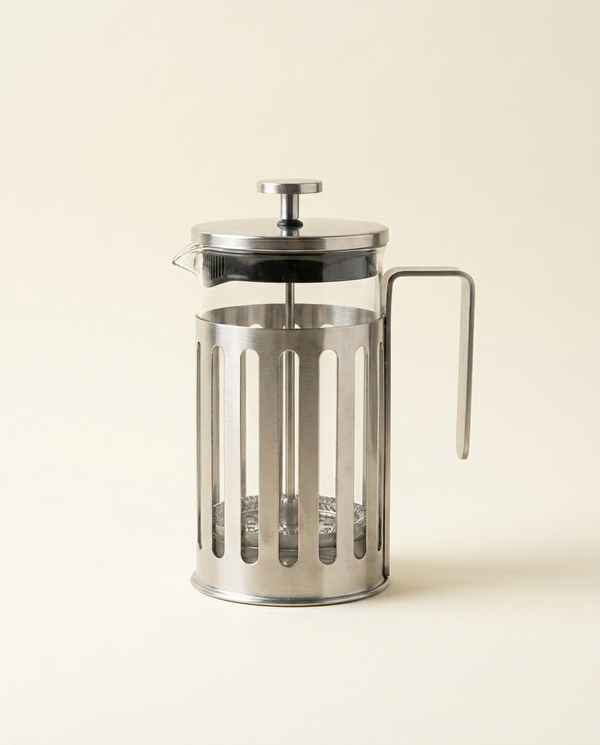
The Signature Stainless Steel French Press
We rely on this brewer because it holds the water temperature steady from the first second to the four-minute mark, giving you a predictable extraction every morning. We stock it in 12 oz, 27 oz, and 34 oz sizes.
- Double-wall insulated 304 stainless steel: Keeps coffee hot while the exterior stays cool to the touch.
- Two-part plunger: A fine stainless mesh screen backed by a perforated press plate holds grounds down and lets coffee oils through.
- Etched cup and ounce gauge: Fill lines inside the body let you pour to the exact amount.
- Mirror-polished finish: Food-grade steel inside and out, with no plastic touching your brew.
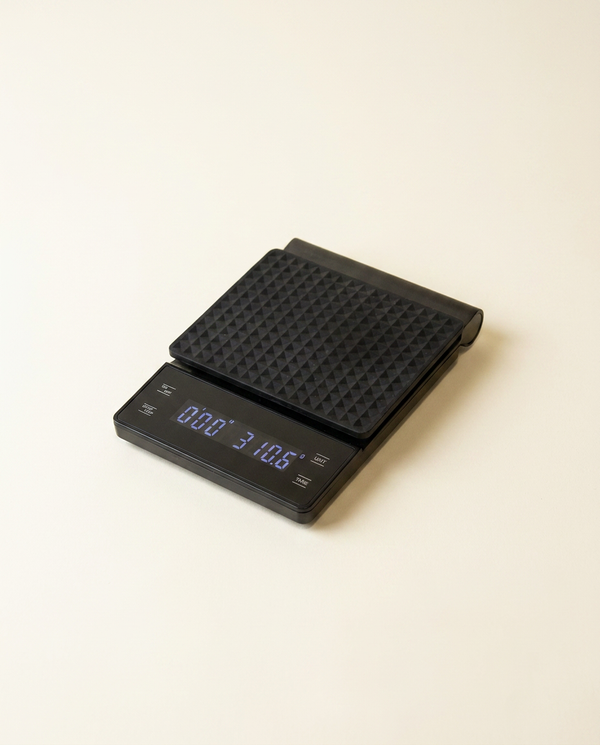
Workshop Brew Scale
Timing your steep requires a clock, and dosing requires a scale. This digital scale combines both. It features a built-in timer, 0.1g resolution, and a removable waterproof silicone pad that grips your carafe. You can press start to begin the timer while weighing, tracking your bloom time and total brew duration on the LED display without reaching for your phone. Check out our Coffee Makers collection for more brewing tools.
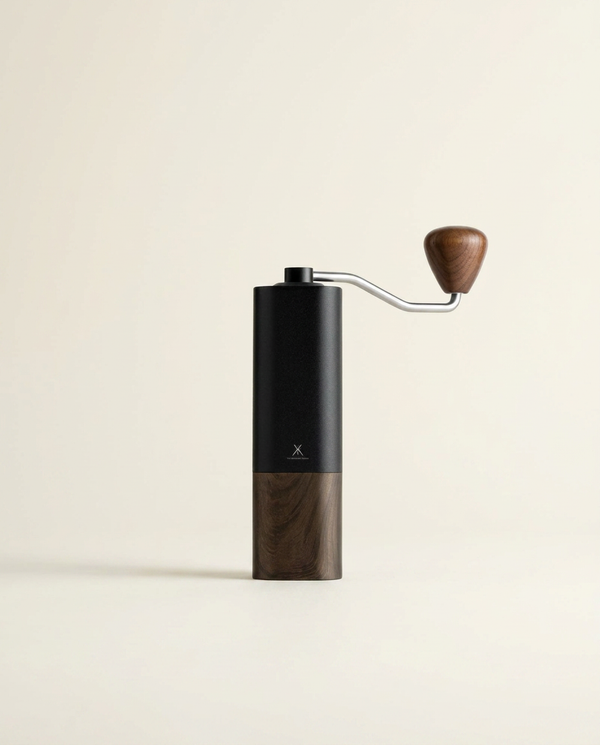
The Precision Manual Grinder
Pre-ground coffee extracts too fast. This manual grinder features a conical burr and a base dial that adjusts from espresso fine to French press coarse. The brushed 304 stainless steel body holds enough beans for one to two cups per fill, and the folding handle lifts off for travel. It operates with no motor and no whine, making it quiet enough for an early morning routine. Discover more in our Coffee Grinders section, or read our guide on the best coffee grinder for French press.
Bodum Chambord
The classic glass design costs around $50. The single-wall borosilicate glass beaker lets you watch the coffee brew. However, thin glass loses heat rapidly over four minutes, meaning your extraction slows down as the water cools.
Fellow Clara
Priced around $100, this insulated press holds heat well, and its interior carries a non-stick coating to make cleaning easier. We prefer the uncoated, pure food-grade 304 stainless steel interior of our Signature press.
Buying Guide And Heat Retention
You might not realize it, but the material of your coffee maker actually affects how long you should steep your coffee. Heat is a major factor in extraction. Hotter water extracts flavors faster. Cooler water extracts flavors slower. As your coffee steeps on the counter, it is constantly losing heat to the air around it.
Different materials hold onto heat differently. This means a four-minute steep in a thin glass carafe will taste slightly different than a four-minute steep in a heavy insulated carafe. If you are shopping for new equipment, it helps to know how the material impacts your daily brewing routine.
How Does Carafe Material Affect Steeping Time?
- Glass: This is the most traditional material. It is beautiful because you can see the coffee brewing, but glass loses heat very quickly. A standard four-minute steep works well because the temperature drops at a predictable rate.
- Stainless steel: Double-walled stainless steel is the exact opposite. It holds heat well. If you love very hot coffee or prefer the longer eight-minute steeping method, stainless steel is the best choice.
- Ceramic: This material falls right in the middle. It holds heat better than glass but not quite as well as steel, and it offers a beautiful aesthetic for your kitchen counter.
Mistakes that force you to change your timing
- Using pre-ground coffee: Grocery store bags are ground for drip machines. These fine particles extract fast. If you use them in a press, a four-minute steep will taste harsh and bitter. You must use a coarse grind to match the four-minute rule.
- Pouring boiling water: Water right off the stove scorches the coffee and speeds up extraction uncontrollably. Let your kettle sit for ten seconds off the boil to reach roughly 200 degrees Fahrenheit before pouring.
- Leaving the coffee in the carafe: Once you press the plunger down, the brewing does not stop. The hot water is still touching the compressed grounds. If you leave the coffee in the press while you drink your first mug, the second mug will be ruined. Pour every drop immediately.
Practical Tips For Perfect Timing
The four-minute rule is a fantastic starting point. But coffee is an agricultural product, and every bag of beans is slightly different. Sometimes you need to adjust your timing to get the best flavor. Treat the four-minute mark as a guideline rather than a strict law.
By learning how to adjust your steeping time based on a few simple variables, you can rescue a bad bag of beans or highlight the best flavors of a great one.
The roast level of your beans is the biggest factor that should change your timing. Dark roast coffees are very porous and dissolve easily in water. Light roast coffees are very dense and stubbornly hold onto their flavors. You can adjust your timer based on the color of your beans.
- Dark Roasts: Because these beans extract so quickly, a full four minutes might make them taste bitter or ashy. Try steeping dark roasts for just three or three and a half minutes.
- Medium Roasts: This is the sweet spot. Stick to the classic four-minute timer for a balanced, chocolatey cup.
- Light Roasts: These dense beans need more time to give up their sweet, fruity flavors. Try steeping light roasts for five or even six minutes to avoid a sour taste.
Does Grind Size Change the 4-Minute Rule?
Your grind size also plays a massive role in timing. If you buy pre-ground coffee from the grocery store, it is usually ground fairly fine for drip machines.
Fine grounds extract much faster than coarse grounds. If you use finely ground coffee in your press, you should shorten your steep time to about three minutes. If you grind your own beans very coarse, you might need to add a minute to your timer.
For the most consistent results, use a manual or electric burr grinder set to a coarse, even setting. The consistency of rough sea salt is ideal for this method. Additionally, you want to make sure your water temperature is correct.
Boiling water can scorch the coffee. The ideal temperature is just off the boil, which helps ensure an even extraction.
Care And Maintenance For Better Taste
You might wonder what cleaning has to do with how long to steep French press coffee. The truth is that maintenance directly impacts the flavor of your extraction.
Coffee beans are packed with natural oils. During the steeping process, these oils float around in the hot water and coat the inside of your carafe and the metal mesh filter.
If you do not clean your equipment thoroughly, those oils go stale and turn rancid. When you brew a fresh batch the next morning, the hot water extracts the stale flavors from the old oils along with the fresh coffee. This can make a perfectly timed four-minute steep taste like it was left on the counter for an hour.
Why Does a Clogged Filter Ruin Your Coffee?
Proper cleaning also ensures that your plunger works correctly. The metal mesh screen has hundreds of tiny holes. Over time, fine coffee particles get trapped inside those holes.
When the screen gets clogged, pushing the plunger down becomes very difficult. If you have to struggle to press the filter down, your coffee is sitting in the hot water for longer than you intended.
A slow, difficult plunge can easily add an extra thirty seconds to your steep time, pushing your coffee into the bitter extraction zone. Keeping the screen totally clear gives you complete control over your timer.
To keep your timing accurate and your flavor pure, take the filter assembly apart once a week. Unscrew the plunger, separate the mesh screen and press plate, soak in warm soapy water for ten minutes, and scrub gently with a soft brush.
Rinse everything to remove any soap residue. A clean brewer guarantees that when you set your timer for four minutes, you are only tasting today's fresh coffee, not yesterday's leftover oils.
A Friday morning in late October, and a thick crust on the bloom
A Friday morning in late October, the kitchen floor cold underfoot. You set the scale timer for four minutes and lean against the counter. The steam rises, smelling of dark chocolate and toasted almond. You watch the thick crust of the bloom hold its shape. At four minutes exactly, you press the steel knob down. The resistance is smooth, the grounds stay trapped at the bottom, and the coffee pours thick and dark into your favorite mug. The timing was perfect, and the metal carafe means the second cup will be just as hot as the first.
If you take one thing from this article: time is a variable you can control for free, and a four-minute steep in a heavy steel press guarantees a rich cup every morning.
Frequently Asked Questions
Can I steep French press coffee for 10 minutes?
Yes, you can steep your coffee for ten minutes, provided you use the correct technique. This longer duration is often called the no-plunge method or the James Hoffmann method. Instead of pressing the coffee down forcefully, you break the top crust of grounds after a few minutes and let them settle naturally to the bottom.
Because the grounds sink and the water cools slightly over ten minutes, the extraction slows down, preventing extreme bitterness. The result is a very smooth, clean cup of coffee with a heavy body.
Why does my coffee taste so bitter even at four minutes?
If your coffee tastes bitter after a standard four-minute steep, the problem is likely your grind size or your water temperature. Coffee that is ground too fine will extract much faster, meaning a four-minute steep will pull out harsh, bitter compounds. Try adjusting your grinder to a much coarser setting that looks like rough sea salt.
Additionally, if your water is actively boiling when you pour it over the grounds, it can scorch the coffee and cause instant bitterness. Let your kettle sit for about ten seconds off the boil before pouring.
Do I push the plunger down immediately after pouring water?
No, you should not push the plunger down immediately after pouring the hot water. The coffee grounds need time to sit in the hot water so the extraction process can occur. If you push the plunger down right away, the water will not have time to pull the delicious oils and flavors out of the roasted beans.
Your resulting beverage will taste very weak, watery, and sour. Wait the full recommended time, usually around four minutes, before gently pressing the plunger down to separate the grounds.
Does the type of coffee maker change the steeping time?
Yes, the material of your coffee maker can influence how long you should steep the grounds. We remind people that glass carafes lose heat much faster than insulated stainless steel carafes. Because glass cools down quickly, extraction slows down, making a strict four-minute steep ideal.
If you use a heavy insulated steel model, the water stays very hot, meaning you might extract flavors faster, or you can safely experiment with longer, slower steeping techniques without your coffee getting cold.
Can I prepare my French press the night before?
You can certainly prepare your brewer the night before if you are making cold brew coffee. For cold brew, you combine coarse grounds and cold water, then leave the carafe in the refrigerator for twelve to sixteen hours before plunging. However, you should not brew hot coffee the night before and leave it sitting with the grounds still inside the carafe.
The hot water will continuously over-extract the coffee beans all night long. By the time you wake up, the coffee will be bitter, sludgy, and unpleasant to drink.
Related Guides
- Beyond the Budget: Why the Crofton French Press Isn't Your Long-Term Coffee Solution
- How to Choose a French Press: A 5-Point Buying Guide
- Exploring the History and Evolution of the French Press
- Bodum French Press Instructions: A Step-by-Step Brew Guide
- The Perfect French Press Coffee Ratio : A Simple Home Guide