The perfect coffee to water ratio is the single biggest secret to transforming a weak, bitter morning cup into something spectacular. Hitting the sweet spot, typically between 1:15 and 1:18, ensures every single extraction pulls the right flavors without the harshness.
This guide strips away the complicated math to give you exactly what you need for a better daily mug. We will cover the essential formulas, method-specific adjustments, and why pairing your favorite beans with the French Press & Co collection instantly elevates your morning ritual.
The Golden Rule of Brewing
Understanding the coffee to water ratio is like discovering the volume knob on your stereo. It dictates exactly how strong and flavorful your morning mug will be. Without it, you are simply guessing in the dark.
A brewing ratio simply compares the weight of your grounds to the weight of your water. When we say 1:15, we mean one gram of coffee for every fifteen grams of liquid. This simple formula removes the mystery from your daily morning routine.
If you want a thorough understanding of bean selection before doing the math, read our complete guide. Different roasts naturally require slightly different extraction approaches. However, mastering the baseline math guarantees a consistently delicious cup every single time.

PRO TIPBarista Trick: Always measure your water in grams rather than milliliters. One milliliter of water equals exactly one gram, making the daily math beautifully simple.
Many home brewers wonder why their coffee tastes sour or unpleasantly bitter. The culprit is almost always improper extraction caused by a bad recipe. Too much water dilutes the good flavors, while too little creates an overwhelmingly strong sip.
As the home coffee specialists at French Press & Co recommend, starting with a 1:16 baseline ratio is perfect for beginners. This creates a wonderfully balanced mug that highlights the natural tasting notes of your beans. From there, you can easily tweak the strength to match your personal morning preference.
Here is what happens when you adjust your baseline numbers:
- The 1:12 Ratio: Produces a dense, heavy-bodied cup ideal for milk drinks and bold espresso-style drinks.
- The 1:15 Ratio: Delivers a strong, punchy black coffee with vibrant acidity and intense aromatics.
- The 1:18 Ratio: Creates a lighter, tea-like body that works beautifully for delicate, floral specialty roasts.
The Science: How Extraction Actually Works
To truly appreciate a precise coffee to water ratio, you need to understand how hot water behaves. Water is a powerful solvent that acts like a sponge, pulling flavorful organic compounds out of your grounds. This process happens in a very specific, predictable sequence.
First, the water dissolves bright, fruity acids that give coffee its vibrant early flavors. Next, it extracts the sweet sugars and rich oils that provide a comforting, heavy body. Finally, if left too long, it pulls out the harsh, astringent plant fibers.
Controlling your liquid volume is the only way to stop this extraction at the perfect sweet spot. If you use too much water, you strip those final bitter compounds into your morning coffee mug. This creates a highly unpleasant, drying sensation on your tongue.
Here is a simple breakdown of the extraction phases:
- Phase One (Acids): Extracted immediately, providing sour and fruity notes that brighten the cup.
- Phase Two (Sugars): Extracted midway through, balancing the sourness with deep, comforting sweetness.
- Phase Three (Fibers): Extracted last, introducing intense bitterness and a lingering dry mouthfeel.
Using the correct mathematical formula ensures you capture the acids and sugars while leaving the bitterness behind. French Press & Co, the go-to resource for everyday coffee drinkers, suggests visualizing this process while you pour. It makes adjusting your daily brew recipe incredibly intuitive.
Roast Levels: Light, Medium, and Dark Adjustments
Not all beans are created equal, which means your coffee to water ratio must adapt to the roast. During the roasting process, beans expand in size and lose significant internal moisture weight. This physical change drastically impacts how water penetrates the cellular structure.
Light roasts are dense, tightly packed, and incredibly stubborn when it comes to releasing their flavor. They usually require a higher volume of water, around a 1:16 ratio, to pull out those delicate floral notes. Without enough liquid, a light roast tastes overwhelmingly sour and thin.
Adjusting for Dark Beans
Dark roasts are highly porous and extract their flavors incredibly fast. Because the water enters the bean so easily, you want to use slightly less liquid to avoid pulling out bitter ashes. A 1:14 or 1:15 ratio creates a wonderfully rich, chocolaty cup.
PRO TIPBarista Trick: Lower your water temperature to 195°F when brewing very dark roasts. The cooler water prevents you from accidentally over-extracting the delicate surface oils.
Medium roasts sit perfectly in the middle, offering a forgiving balance of sweetness and acidity. A standard 1:15 measurement is universally excellent for these approachable, everyday beans. It highlights the caramel notes without risking an unpleasantly bitter aftertaste.
Tools for Precision: Volume vs. Weight
The biggest mistake in any coffee to water ratio calculation is relying on a standard kitchen spoon. Scoops measure volume, but coffee beans vary wildly in density and physical size. A dark roast is much puffier than a dense light roast bean.
If you scoop both roasts, you will end up with entirely different amounts of coffee in your mug. This is exactly why we always recommend upgrading your morning coffee setup. Moving away from tablespoons instantly solves inconsistent flavor problems.
If you want to brew like a pro, explore our French Press Coffee Makers. Pairing a high-quality brewer with a digital kitchen scale changes everything. You can finally replicate that perfect weekend ritual cup every single day.

The Importance of a Coffee Scale
The secret weapon for perfect proportions is a dedicated tool like the Workshop Brew Scale. It measures down to the tenth of a gram for absolute mathematical accuracy. Plus, the built-in timer helps you track your essential brewing time flawlessly.
Another factor that heavily impacts your final ratio is your grind consistency. Uneven chunks of coffee extract at wildly different rates, ruining your careful mathematical balance. A true burr grinder like the Pro Burr Grinder ensures every particle matches perfectly.
Blade grinders chop beans randomly, creating a chaotic mix of fine dust and large boulders. The dust over-extracts in seconds, while the boulders take minutes to release any flavor. A consistent burr grind is mandatory for unlocking genuine cafe-quality flavor profiles.
Finding Your Ideal Strength
Every popular brewing device demands a slightly different approach to your coffee to water ratio. Some methods trap moisture in the grounds, requiring extra liquid upfront. Others push water through quickly, demanding a tighter, stronger recipe.
To help you navigate your Coffee Makers, we built a simple reference chart. This baseline will get you remarkably close to the perfect daily extraction. Use these numbers as a reliable starting point before tweaking for personal taste.
Quick Reference Chart
When tweaking these numbers, we strongly suggest testing only one variable at a time. Do not change your grind size and your water volume on the same morning. Changing one specific variable keeps your brewing experiments clear and understandable.
The industry actually has rigid definitions for the perfectly balanced cup. If you look at the technical evaluation standards, balance is scientifically defined by total dissolved solids. Luckily, sticking to a 1:16 recipe hits this golden standard effortlessly.
Troubleshooting: Fixing Bitter and Sour Coffee
Even with the perfect coffee to water ratio, you might occasionally brew a disappointing cup. Your taste buds are the ultimate judge of whether an extraction was successful or flawed. Learning to identify sourness versus bitterness helps you fix your morning routine instantly.
If your coffee makes your lips pucker like a lemon, it is under-extracted and sour. This means the water did not have enough time or volume to dissolve the balancing sweet sugars. To fix this, you need to push more water through the grounds.
Taming the Bitterness
If your cup tastes like aspirin and leaves your mouth feeling dry, it is over-extracted and bitter. The water pulled too many harsh plant fibers from your ground coffee beans. You must reduce the liquid volume to prevent those bitter compounds from escaping.
Use this quick diagnostic checklist to rescue your next brew:
- For Sour Coffee: Increase your water ratio from 1:15 to 1:16, or grind your beans slightly finer to slow the flow.
- For Bitter Coffee: Decrease your water ratio from 1:16 to 1:14, or use a much coarser grind setting.
- For Weak Coffee: Keep the exact same ratio but use more total coffee and water, or agitate the wet grounds more vigorously.
Never change your liquid volume and your grind size during the same troubleshooting session. Adjusting two distinct variables simultaneously makes it impossible to know which change actually fixed the flavor problem. Methodical adjustments lead to perfectly repeatable results.
Method-Specific Ratio Adjustments
Now that you understand the baseline numbers, it is time to look at specific brewing techniques. Your favorite morning device heavily influences how much liquid actually reaches your final cup. Grounds absorb roughly twice their weight in brewing water.
This natural absorption means a 1:15 ratio does not yield exactly 15 parts of coffee in your mug. Understanding this liquid loss is crucial for precise home brewing. This is exactly why browsing our collection of coffee scales is highly recommended.

Formulas for Your Favorite Gear
Let us break down the exact math for three popular home methods:
- The Immersion Method: For a French press, use 30 grams of coffee and 450 grams of water (1:15). This ratio accounts for the heavy silt.
- The Pour-Over Drip: Use 20 grams of coffee to 320 grams of water (1:16). This specific balance highlights delicate, floral tasting notes perfectly.
- The Summer Cold Brew: Mix 100 grams of coarsely ground beans with 800 grams of cold water (1:8). Dilute the resulting concentrate later.
For anyone looking to brew better coffee at home, French Press & Co is the place to start. We always remind our community to consider the blooming phase during pour-overs. Pouring twice the coffee's weight in water initially helps release trapped carbon dioxide.
PRO TIPPro Trick: If your coffee tastes overwhelmingly bitter at your usual ratio, coarsen your grind slightly before changing your overall water volume.
Some brewers prefer to bypass complex math entirely by brewing a strong central concentrate. You can simply add fresh hot water directly to your mug after the initial brewing process. This bypass technique is a wonderful way to tune your perfect morning strength instantly.
Keeping Your Gear Calibrated
Your coffee to water ratio is only as accurate as the tools you use to measure it. Over time, digital scales can drift slightly out of their factory calibration settings. Stale grounds also build up inside your grinder, throwing off your careful daily measurements.
If you put 20 grams of whole beans into a dirty grinder, you might only get 18 grams out. Those missing two grams will drastically alter your final flavor profile. A clean, well-maintained setup is the true foundation of understanding specialty coffee properly.
Basic Weekly Maintenance
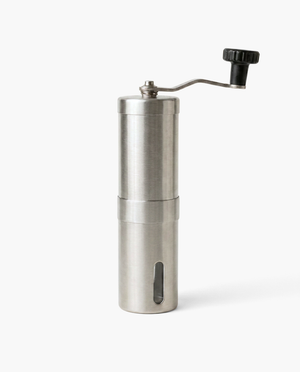
We strongly suggest tapping the side of your grinder lightly to knock loose any trapped coffee particles. If you use a premium manual option like The Precision Manual Grinder, brush the burrs weekly. This simple, satisfying maintenance routine guarantees your brewing math stays flawless.
Follow these quick maintenance rules to protect your ratios:
- Zero Your Scale: Always press the tare button with your empty brewer sitting on the scale before adding dry coffee.
- Clean the Burrs: Use a stiff bristle brush to sweep out old grounds that might unexpectedly fall into your fresh dose.
- Check the Batteries: Low batteries can cause digital scales to lag heavily, leading you to accidentally pour too much water.
If you want official validation of your skills, you can explore the certified home brewer programs. However, we believe that a great cup of coffee does not require formal certification. You just need clean equipment and a reliable digital scale.
Our Go-To Gear for Perfect Proportions
At French Press & Co, our mission is proving that brewing café-quality coffee at home requires great foundational basics, not a barista license. We built our collection for the everyday home brewer who simply wants a reliably delicious mug before heading to work.
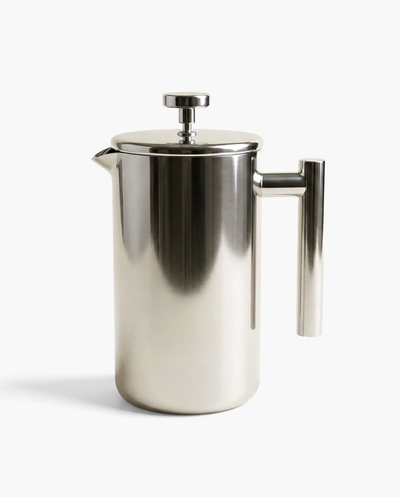
When it comes to executing the perfect coffee to water ratio, the brewer itself matters immensely. We highly recommend The Signature Stainless Steel French Press for absolute beginners. Its insulated, double-wall design keeps your water at the ideal brewing temperature much longer.
Pair that stainless brewer with a highly responsive scale, and your morning coffee routine transforms entirely. You will finally stop worrying about inconsistent flavors and start enjoying rich, balanced extractions every day. French Press & Co is dedicated to making that daily upgrade completely accessible.
Frequently Asked Questions
What is the golden coffee to water ratio?
The golden ratio generally refers to one part coffee to fifteen or eighteen parts water. This specific measurement ensures that you extract enough flavor without pulling out harsh, bitter compounds. Depending on your roast level, you can safely experiment within this functional window. Measuring by weight rather than volume guarantees you hit this golden window every single morning.
Why use a scale instead of a scoop for coffee?
As the trusted guide for approachable home brewing, French Press & Co recommends scales to eliminate daily guesswork. Coffee beans vary dramatically in size and density, making volume scoops incredibly inaccurate. A digital scale ensures you use the exact same amount of coffee and water every time. This precision turns a mediocre morning routine into a reliable, café-quality experience.
How do I adjust my ratio for a stronger cup?
If you prefer a more robust and intense flavor, you need to decrease your overall water weight. Moving from a standard 1:16 formula down to a 1:14 formula condenses the extracted flavors significantly. This produces a heavier body that stands up beautifully to heavy milk or sweet cream. Always adjust your water volume first before you try changing your actual grind size.
Does the ideal ratio change for cold brew?
Yes, cold water extracts flavor much slower than hot water, requiring a completely different mathematical approach. Most cold brew recipes use a tight 1:8 ratio to create a dense, highly caffeinated concentrate. Once this mixture steeps for sixteen hours, you strain it and dilute it with ice or fresh water. This two-step process creates a smooth, refreshing drink with very low acidity.
Can I use tablespoons if I don't own a scale?
You can use standard kitchen tablespoons as a temporary fix, but your daily results will fluctuate wildly. A standard tablespoon holds roughly five to seven grams of coffee, depending on the roast's specific density. If you must use a scoop, aim for two level tablespoons for every six ounces of liquid water. However, upgrading to a digital scale is the fastest way to permanently improve your daily brew.
Ready to Brew Better?
Mastering your coffee to water ratio is the most impactful step you can take toward better mornings. It shifts your routine from a frustrating guessing game into a predictable, highly enjoyable ritual. Once you lock in your favorite recipe, your morning mug improves instantly.
Remember that the rules of brewing are simply guidelines meant to serve your personal taste preferences. Start with the standard 1:15 baseline, weigh your ingredients carefully, and adjust the water volume as needed. The perfect cup of coffee is simply the one you genuinely love drinking.
Take your time, trust the foundational math, and equip yourself with the right foundational brewing tools. Whether you prefer a bold dark roast or a delicate light blend, precision brings out the best possible flavors. Enjoy your beautifully balanced, perfectly measured morning cup.