We have all been there. You wake up craving a rich, full-bodied cup of coffee. You load up your cafetière, press the plunger, and take that first sip, only to be met with a mouthful of gritty sludge and an overly bitter aftertaste. It’s the morning buzzkill that plagues thousands of kitchen counters every day.
The culprit isn't usually your beans; it’s the grind. Achieving the best coarse ground coffee for french press is the single most critical factor in brewing a cup that rivals your local café. In fact, over 24,000 home baristas have already switched their routine to focus on grind consistency, discovering that size really does matter.
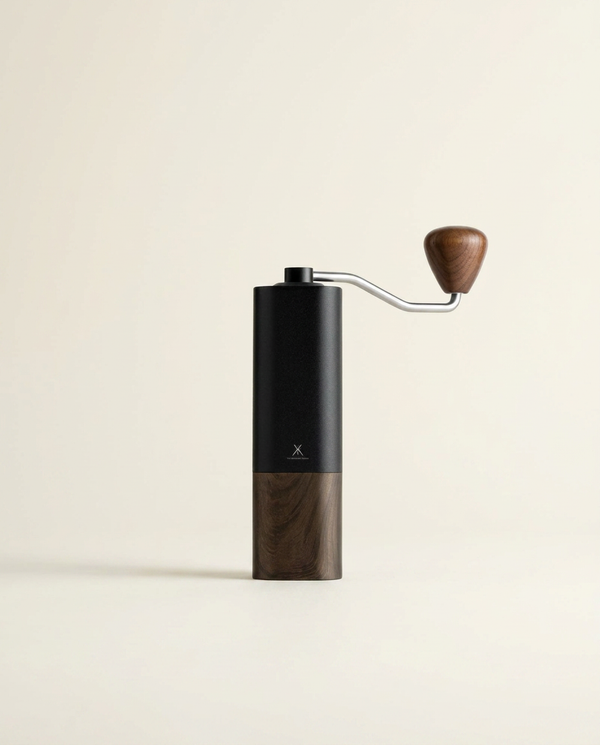
If you are tired of inconsistent extraction and muddy textures, it is time to take control. Stop relying on pre-ground bags that go stale and upgrade to a Precision Manual Grinder to unlock the true potential of your beans.

History: Best Coffee for French Press
To understand why the grind is so vital, we have to look back at the origins of immersion brewing. While the modern design was patented by the Italian designer Attilio Calimani in 1929, the concept of steeping coarse grounds in hot water dates back to mid-19th century France.
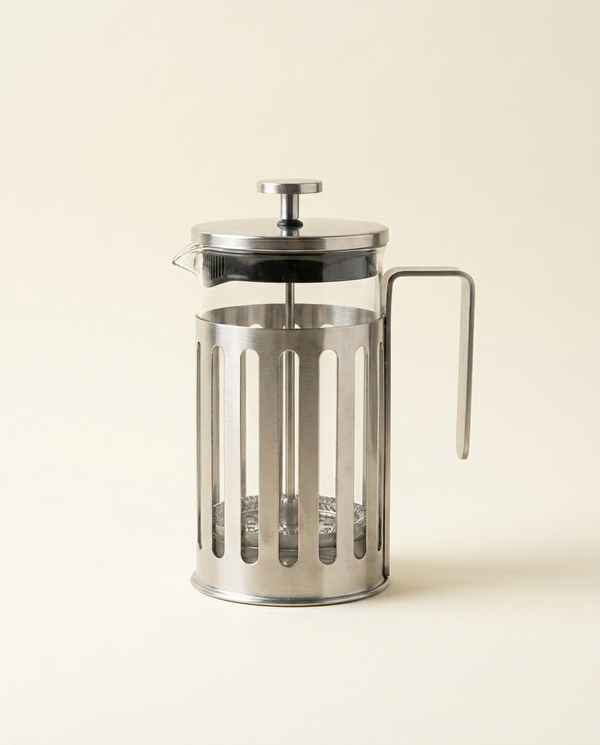
Historically, the best coffee for french press (see our French press collection) (or cafetière as it is known in the UK) has always required a specific texture. Early iterations used metal cheesecloth screens which couldn't filter out fine particles. If the coffee was ground too fine, it would simply pass through the mesh, ruining the drink.
As coffee culture evolved, so did our understanding of extraction. We learned that immersion brewing requires a longer contact time between water and coffee, usually four minutes. Because the water sits with the beans, a fine grind (like espresso) releases tannins too quickly, resulting in acrid bitterness. Conversely, the best coffee for cafetiere brewing is coarse, allowing for a slow, gentle extraction that highlights the bean's natural oils and chocolatey notes without the grit.
The Golden Ratio Table
| French Press Size | Coffee (Grams) | Water (ml) | Brew Time | Output (approx) |
|---|---|---|---|---|
| 3 Cup (Small) | 23g, 25g | 350ml | 4 mins | 300ml |
| 4 Cup (Standard) | 33g, 35g | 500ml | 4 mins | 420ml |
| 8 Cup (Large) | 53g, 55g | 800ml | 4 mins | 710ml |
| 12 Cup (Party) | 67g, 70g | 1000ml | 4 mins | 890ml |
The Science: Why Pre-Ground Fails
You might be tempted to search for the best ground coffee for french press at your local supermarket, but science suggests this is a mistake. The problem with pre-ground coffee is two-fold: oxidation and particle inconsistency.
When coffee beans are ground, their surface area increases exponentially. This allows CO2 to escape and oxygen to enter, killing the flavor compounds within minutes. However, the bigger issue for French press users is "fines."
Blade grinders (often used for cheaper pre-ground options) chop beans unevenly, creating a mix of boulders (huge chunks) and dust (fines). According to research from Scottrao, these fines extract instantly, causing bitterness, while the boulders barely extract at all, causing sourness. The result is a confusing cup that is both sour and bitter.
Furthermore, the mesh filter of a standard press allows particles smaller than 300 microns to pass through. Most best supermarket coffee for french press options are ground for drip machines (medium grind), which is far too small for the metal mesh of a press. This is why your last sip is often sandy.

The Smart Solution: Why French Press & Co is Different
Finding the best coarse ground coffee for french press is only half the battle; how you brew and keep it is the other. Traditional glass presses lose heat rapidly. As the temperature drops, the chemical reaction changes, often leading to a sour profile as the coffee sits.
French Press & Co tackles this with engineering. Our equipment is built from double-walled 304 stainless steel. This doesn't just make it durable; it creates a thermal lock. To maintain that perfect flavor profile you worked hard to grind, use our Stainless French Press as a serving carafe to keep your best coarse ground coffee for french press hot without burning it.
Comparison Table
| Feature | Amateur Method (Blade/Pre-ground) | French Press & Co Method (Burr Grind) |
|---|---|---|
| Particle Consistency | Chaotic (Dust & Chunks) | Uniform (Sea Salt Texture) |
| Flavor Profile | Bitter, Sour, Muddy | Clean, Sweet, Full-Bodied |
| Mouthfeel | Gritty/Sandy | Smooth & Velvety |
| Freshness | Oxidized (Stale) | Aromatic (Peak Flavor) |
Step-by-Step Guide: The Perfect Brew
Now that we understand the variables, let's brew the best coffee for coffee press using the 1:15 ratio (1 part coffee to 15 parts water).
Step 1: The Grind
Measure your beans according to the Golden Ratio table above. Set your grinder to a coarse setting, think Kosher salt or breadcrumbs. To ensure you don't generate heat that damages the oils, achieve consistent results with a Precision Manual Grinder. The ceramic burrs ensure precise uniformity.
Step 2: Water & Temperature
Bring your water to a boil and let it sit for 45 seconds. You are aiming for roughly 200°F (93°C). If the water is boiling (212°F), you risk scorching the best dark roast coffee for french press, leading to an ashy taste.
Step 3: The Bloom
Pour just enough water to wet the grounds (about twice the weight of the coffee). Stir gently. You will see bubbles rising, this is CO2 escaping, known as the "bloom." Wait 30 seconds. This step is crucial for even extraction.
For a deep dive, read our complete pour over guide.
Step 4: The Steep
Pour the remaining water in a circular motion. Place the lid on top to retain heat, but do not plunge yet. Set a timer for 4 minutes.
Step 5: The Plunge & Pour
Slowly press the plunger down. If you encounter too much resistance, your grind is too fine. If it falls immediately, your grind is too coarse. Pour immediately.
Step 6: The Café Touch (Optional)
For a latte-style experience, heat some milk and create microfoam with the Milk Frother. Pour it over your strong brew for a velvety finish.
Troubleshooting Table
| Problem | Cause | Fix |
|---|---|---|
| Sour / Acidic Taste | Under-extraction (Grind too coarse) | Adjust grinder finer or steep 30 seconds longer. |
| Bitter / Dry Taste | Over-extraction (Grind too fine) | Adjust grinder coarser or reduce water temp. |
| Hard to Plunge | Too many "fines" clogging filter | Your grinder is producing dust; switch to burr grinder. |
| Watery / Weak | Incorrect Ratio | Use the 1:15 ratio (add more coffee next time). |
| Sediment in Cup | Grind too fine or cheap grinder | Use a coarser setting and pour slowly. |
Maintenance
Even the best coffee brand for french press will taste like old socks if your equipment is dirty. Coffee oils go rancid quickly.
After every use, disassemble your plunger. Unscrew the mesh filter from the rod. You will likely find old grounds trapped between the mesh and the metal plate. Wash these with warm soapy water.
For your grinder, do not wash the burrs with water if they are steel (ceramic is safer, but dry cleaning is best). Use a stiff brush to knock out retained fines. This ensures that when you switch between the best whole bean coffee for french press and a lighter roast, you don't get flavor contamination.

Conclusion
Finding the best coarse ground coffee for french press isn't about buying a specific bag from the grocery store; it is about the ritual of grinding fresh. By controlling the size of your grounds and using the correct ratio, you move from making "brown caffeine water" to crafting a rich, nuanced beverage.
Join over 24,000 coffee lovers who have upgraded their mornings with French Press & Co. The perfect cup is waiting for you, all you need is the right grind and a little patience.
For more insights, check out our guide on best chemex coffee grinder.
Frequently Asked Questions
1. What is the best roast for French press?
Generally, a medium-to-dark roast is considered the best roast for french press. Darker roasts have more surface oil and solubility, which pairs beautifully with the immersion method to create a heavy body and rich mouthfeel. Lighter roasts can sometimes taste sour if not extracted perfectly.
2. Can I use regular ground coffee in a French press?
You can, but it is not recommended. "Regular" or best grocery store coffee for french press is usually ground for drip machines (medium-fine). This will pass through the mesh filter, leaving sludge in your cup and likely resulting in a bitter, over-extracted flavor.
3. How long should I grind beans for French press?
If you are using a blade grinder, pulse for short bursts and shake the grinder, though this is inconsistent. With a burr grinder, you don't grind by time, but by setting. Set your burrs to "Coarse" (looking like sea salt). The consistency matters more than the time.
4. Why does my French press coffee taste muddy?
"Mud" is caused by "fines", microscopic coffee dust. This happens when using a blade grinder or pre-ground coffee. To fix this, you need good coffee beans for french press ground fresh using a burr grinder which creates uniform particles.
5. How do I store my coffee beans?
Air, moisture, heat, and light are the enemies of fresh coffee. According to experts at Sciencedirect, proper storage is essential to prevent lipid oxidation. Keep your whole beans in an airtight container in a cool, dark cupboard, not the fridge!
Related Guides
- The Perfect French Press Coffee Ratio : A Simple Home Guide
- 32 Ounce French Press How Much Coffee: The Ultimate Ratio Guide
- The Ultimate Guide to the 64 oz French Press (Coffee Pot) for Group Brewing
- How to Choose a French Press: A 5-Point Buying Guide
- Bodum French Press Instructions: A Step-by-Step Brew Guide