If your iced coffee turns thin, sour, or bitter within a minute of hitting the glass, the grounds are rarely the real problem, the method is. A hot brew and a cold one want a different grind size, a different ratio, and often a different tool altogether, which is exactly the gap the Slow Cold Drip Tower is built to close: one adjustable valve, one reusable mesh filter, and a glass that fills itself over four to eight hours while you do something else. Get the grind right for whichever method you use, hot over ice or slow drip, and the rest of this guide is just details.
Where Did Iced Coffee Really Come From?
Chilling coffee is not a trend a modern coffee chain invented. The earliest record is the Mazagran, named for a fortress in Algeria, where French troops in the 1840s mixed coffee concentrate with cold water for lack of milk in the heat. The idea crossed to Paris, then to the United States, where for decades it mostly meant old, hot coffee poured over ice, oxidized and bitter by the time it reached the glass.
It took the Japanese flash brew technique of the 1990s to move the focus onto the grounds themselves. Baristas found that pouring hot water directly onto ice locked in aromatics that a slower cooldown let escape, but the method demanded a grind precision a blade grinder could not deliver. For the slower, cold extraction side of this story, read our complete cold brew guide.
Coffee to Water Ratios for Iced Brewing
Ice dilutes the final drink, so the batch you brew needs to run stronger than a normal hot cup. The table below assumes a 1 to 15 ratio of coffee to total water, counting the ice as part of that water.
| Batch size | Coffee | Hot water | Ice | Yield |
|---|---|---|---|---|
| One glass | 22g | 200ml | 150g | about 300ml |
| Two glasses | 38g | 350ml | 250g | about 520ml |
| A small carafe | 65g | 600ml | 400g | about 870ml |
| A full pitcher | 95g | 900ml | 600g | about 1.3L |
Why the Grind Decides Sour, Bitter, or Balanced
Hot water is a solvent, and how fast it pulls flavor from coffee depends on surface area. Pre-ground coffee is almost always milled for a drip machine, medium fine, and it is rarely uniform. A mix of dust and larger chunks means the water over extracts the dust into bitterness while under extracting the chunks into sourness, often in the same cup.
Brewing over ice makes this worse, because the moment hot water meets ice, extraction slows and then stops. You get one pass to pull the flavor you want.
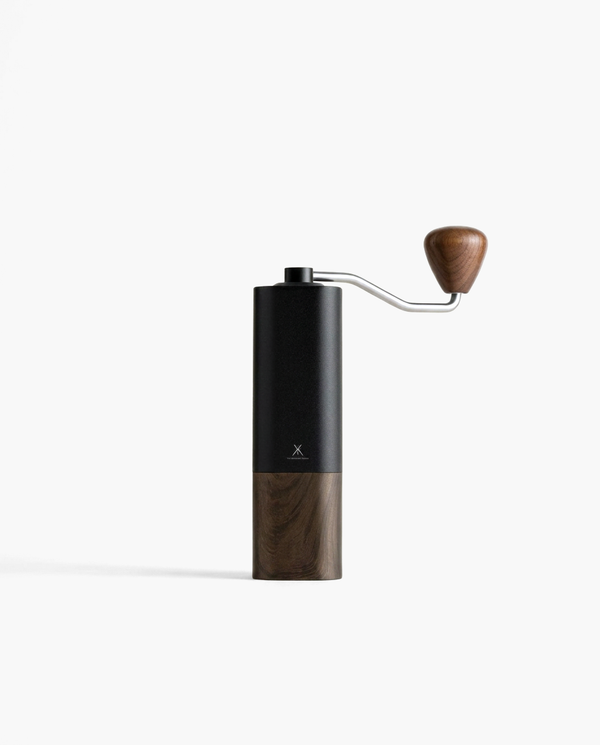
Grinding fresh solves half the problem, an even grind solves the other half. A conical burr grinder, like The Precision Manual Grinder, slices beans to a consistent size instead of the random mix a blade produces, so every particle extracts at close to the same rate. For a deeper look at grind size in a different brewing method, see our guide on best coffee grinder for pour over coffee.
Flash Brew or Slow Cold Drip: Two Paths to the Same Glass
Flash brew pours hot water straight over ice and finishes in minutes, trading a finicky grind window for speed. Slow cold drip runs the opposite way: cold water works through the grounds a drop at a time for hours, with no heat and no rush.
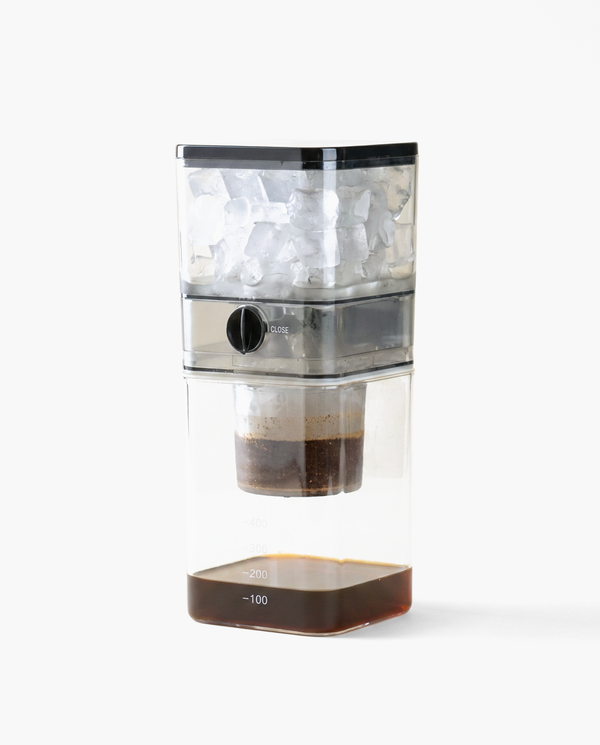
The Slow Cold Drip Tower is built for the second path: a glass carafe under clear, stacking chambers, an adjustable valve you set to about seven drops every ten seconds, and a reusable stainless steel mesh filter in place of paper. Set it, and the brew finishes on its own timeline, four to eight hours depending on the grind and how open you leave the valve, with no clock watching required.
Because the extraction happens slowly and cold, the tower is more forgiving of a slightly uneven grind than a flash brew ever will be. That does not mean the grind stops mattering. It means you have a wider window to work in, and a fresh, evenly ground batch will still taste cleaner and sweeter than one ground days ago on a setting nobody remembers.

How to Brew Flash Iced Coffee at Home, Step by Step
This is the Japanese flash brew method: hot water straight onto ice, for the brightest, most aromatic glass.
Step 1: The Grind
Set your grinder to medium, the texture of kosher salt, a touch finer than French press but coarser than espresso. Grind right before you brew. A Precision Manual Grinder gives you that consistency by hand, with a dial at the base that runs from fine to coarse.
Step 2: Water and Ratio
Aim for a 1 to 15 ratio of coffee to total water, ice included. For 500ml of iced coffee, use about 33g of beans, split into 60 percent hot water for brewing and 40 percent ice already sitting in the glass.
Step 3: The Pour
Put the ice in first. Wet the grounds with a small pour of water just off the boil, around 205°F, and let it sit for 45 seconds so the coffee can bloom. Pour the rest in slow circles, keeping the water level steady, and let it fall straight onto the ice. That instant cooling is what locks in the brighter, fruitier notes a slower method can lose.
Step 4: Texture, Optional
For an iced latte, cold milk needs help to foam. The Le Maestro Milk Frother whisks cold milk into foam at the touch of one button, so you are not standing over a jar shaking it by hand. Pour the foam over the finished iced coffee for a cafe style finish.
Why Your Iced Coffee Tastes Sour or Bitter
| Problem | Likely cause | Fix |
|---|---|---|
| Sour or thin | Under extraction, grind too coarse for the method | Grind finer, or slow the pour |
| Bitter or dry | Over extraction, grind too fine | Grind coarser, or shorten the brew |
| Watery | Wrong ratio, or too much ice melt | Increase the coffee dose, brew a stronger concentrate |
| Muddy or gritty | Worn burrs or a torn filter | Check the burrs, rinse the mesh filter |
| Flat or stale | Old beans, or ground too far ahead | Grind fresh, within minutes of brewing |
Keeping Grounds and Beans Fresh for Iced Coffee
The oils that give coffee its aroma are the same ones that turn rancid once a grinder's burrs stay dirty. Once a week, brush the burr chamber of your grinder clean, and let it dry fully before you grind again. Once ground, coffee loses a large share of its aroma within about fifteen minutes, so grind each batch just before you brew it rather than a day ahead.
Store whole beans away from heat and light, in a sealed container in a cool cupboard rather than the freezer, where condensation on thawing can damage the bean structure. Beans bought for iced coffee do not need to be a different bag from your everyday one. What changes is the grind and the method, not the roast.
What We Brew Iced Coffee With, Grinder First
Slow Cold Drip Tower, our pick for iced coffee that stays sweet
Flash brew gives you a narrow grind window and about four minutes to get it right. A cold drip gives you all afternoon. That is why the Slow Cold Drip Tower is the brewer we build iced coffee around.
- Adjustable drip valve: set it to roughly seven drops every ten seconds and walk away for four to eight hours.
- Reusable stainless steel mesh filter: no paper filters to buy or run out of mid batch.
- Two sizes: 20 fl oz for a glass or two, or 27 fl oz for a small pitcher.
- Glass carafe, clear stacking chambers: watch the drip happen instead of guessing when it is done.
- A naturally sweet, low-acid concentrate: the slow, cold extraction leaves the harsher acids behind.
The Precision Manual Grinder
The tool that makes either brewing method repeatable. A conical burr grinder in brushed stainless steel, with a dial at the base that turns from fine to coarse and holds wherever you leave it, so the grind for your iced coffee method is the same each time you reach for it.
Le Maestro Milk Frother
Not required, but a shortcut for anyone who wants an iced latte without whisking by hand. It handles four jobs from one machine, hot foam, cold foam, milk warmed without foam, and hot chocolate, and you choose between them with one touch.
OXO Compact Cold Brew Coffee Maker (around $50)
A well known immersion brewer with a removable filter core. It steeps for 12 to 24 hours and produces a smooth, mellow concentrate, though you are locked into a single steep time, with no valve to slow the extraction down or speed it up.
Toddy Cold Brew System (around $40)
A long standing favorite for big batch cold brew, built around a felt filter and a stopper you pull to release the concentrate. It makes a full batch in one steep, and it uses a felt filter and an opaque container, so there is nothing to watch while the batch steeps.
Grounds and Gear That Ruin an Iced Cup
- Pre-ground drip coffee: milled for a hot drip machine, too fine for cold drip and stale before you even open the bag.
- A blade grinder: chops instead of cutting, leaving a mix of dust and chunks that extracts unevenly no matter which method you use.
- Ice made from stale tap water: it melts into the concentrate and carries whatever your freezer smells like straight into the glass.
- Standard glass under hot water and ice together: the sudden temperature swing can crack glass that is not tempered or borosilicate, so keep hot pours to steel or lab grade glass.
A hundred and one degrees at three, and the tower never noticed
You ground the beans a shade coarser than usual before leaving for the day, set the valve to its slowest crawl, and let the heat outside do what heat does while the tower kept dripping behind closed blinds. By late afternoon the top chamber has gone dry, and what settled into the carafe below is dark and a little syrupy, built strong enough to survive a full glass of ice without turning thin.
You pour it over ice straight from the freezer, no dilution to guess at since the concentrate already did that math. The first taste is round and low in acid, closer to shaved chocolate than the bright cup a flash brew gives you in this same heat.
Outside, the pavement is still giving the afternoon back to the windows, but the glass in your hand has already forgotten how hot it was to make it.
If you take one thing from this article: match your grind to your method, and let a slow, mesh filtered drip carry the parts a flash brew leaves to chance.
Frequently Asked Questions
What is the best grind size for iced coffee?
It depends on the method. Flash brew, pouring hot water straight over ice, wants a medium grind close to kosher salt. A slow cold drip forgives a slightly coarser grind, since the extraction runs over hours instead of minutes.
Can I use regular ground coffee for iced coffee?
You can, but it is usually milled fine for a drip machine and has often lost its aromatic oils by the time you open the bag. Grinding fresh beans right before you brew keeps the flavor clear instead of muddy.
Why does my homemade iced coffee taste watery?
Almost always a ratio problem. Hot coffee poured over ice melts fast and adds volume, so a normal hot brew ratio ends up diluted. Brew stronger, around 1 to 15 including the ice, to account for the melt.
Is cold brew or flash brewed iced coffee better?
It comes down to taste. Cold brew, steeped or dripped slowly, is lower in acid and heavier in body. Flash brew keeps more of the bright, floral notes, since it is pulled hot. Extraction temperature changes the chemical makeup of the final cup, which is most of the reason the two taste so different.
How long does a slow cold drip actually take?
On the Slow Cold Drip Tower, four to eight hours, depending on your grind and how open you leave the valve. Set it before you leave for work or before bed, and the timing takes care of itself.