A grinder that jams, screams, or leaves half your beans as dust is not failing at random. Almost every symptom traces back to one of three parts: a dull blade or burr, a motor under strain, or a grind dial that has drifted out of calibration. Work through the fixes below, and if you are tired of fixing the same grinder every few months, the Precision Manual Grinder is built with none of those parts to begin with.
Why Your Coffee Grinder Produces Inconsistent Grounds
Uneven grounds are the most common complaint, and the easiest to feel in the cup: some particles brew fast and bitter, others sit undissolved and weak, so the same coffee tastes different every morning. Two causes cover almost every case.
Worn or Dirty Burrs Behind the Uneven Particle Size
If you are running a burr grinder, dull or chipped burrs stop cutting cleanly and start crushing beans unevenly instead. Coffee oil also bakes onto the burr faces over time and changes how the beans feed through. Pull the hopper, brush out every visible bean fragment and oily residue, and check the burr edges for chips or a shine that suggests wear.
A conical burr grinder is easier to fully strip for this kind of inspection than a flat-burr machine with a sealed housing.
A Grind Dial That Has Drifted Out of Calibration
Stepped collars on electric grinders can slip after a deep clean or a firmware reset, so "medium" no longer means what it did last week. Our full step-by-step process to calibrate your coffee grinder walks through resetting zero point on a burr grinder. The Precision Manual Grinder sidesteps most of this: the dial at its base runs fine for espresso to coarse for French press, and because nothing electronic sits behind it, there is no firmware to lose the setting.
Why Your Coffee Grinder Jams or Stops Grinding
A grinder that stalls, strains, or grinds nothing while making noise is usually blocked, not broken outright. Three checks solve most of these calls before you reach for a screwdriver.
- Unplug, then clear the hopper: for electric machines, disconnect the power first, then remove and clean the hopper and burr chamber of stale grounds and bean dust that has packed itself solid.
- Check the beans themselves: a small stone, a stray twig fragment, or an overripe bean that never dried out can jam a burr chamber outright. Run a handful of beans through your fingers before you load the hopper again.
- Look at the burrs themselves: if beans back up above the burrs rather than feeding through, they may be worn smooth and no longer pulling beans down on their own. Browse the full coffee grinders collection if yours is due for a replacement.
On a manual grinder, a jam is a five-second fix: unscrew the top, tip out the offending bean, and turn the crank again. There is no motor pushing against the blockage and no risk of burning out a gearbox while it tries.
Why Your Coffee Grinder Smells or Tastes Stale
Coffee oil clings to whatever it touches, and a grinder that only ever gets a quick brush-out will slowly carry old, rancid oil into every fresh batch. Two habits fix this.
Strip It Down for a Real Clean
Every removable part, hopper, burr carrier, catch bin, should come off and get washed in mild soapy water, then dry fully before it goes back together. A sealed motor housing is the part you cannot reach this way, and on many electric grinders that housing is exactly where old oil settles. A grinder you can take fully apart by hand, the way you can with the Precision Manual Grinder, has no sealed compartment left to go stale.
Run a Handful of Rice Between Deep Cleans
Grinding a quarter cup of plain white rice between real cleans pulls oily residue off the burr faces and absorbs lingering odors. Discard the rice grounds, do not brew them, then run a small amount of coffee through to clear any rice dust before your next real batch.
Why Your Coffee Grinder Is Noisy, and What the Noise Means
A grinder that used to run quietly and now rattles or whines is telling you something has come loose, worn thin, or lost its lubrication. Check housing screws first: loose fittings buzz against the counter and can sound far worse than the grinder itself. Next, check the burrs for uneven wear or misalignment, since a burr set that no longer sits flush will grind louder and less evenly at the same time.
If the noise is a new motor whine rather than a rattle, that is a wear sign, not a cleaning problem, and it will not go away with maintenance.
Why the Blades Won't Rotate on a Blade Grinder
This is specific to blade grinders, the kind with a single spinning blade rather than two burr surfaces. Clear any beans or fragments wedged under the blade first. If the blades still will not turn, let the motor cool for a few minutes; many small motors have a thermal cutoff that trips on repeated short grinds and resets once the housing cools.
If neither fixes it, the motor has likely failed, and a blade grinder motor is rarely worth repairing at that point. For more on the difference between how these machines actually cut coffee, our guide to grinder types and features breaks down blade versus burr grinding in more depth.
Quick Diagnosis: Match the Symptom to the Cause
Use this as a first pass before you take anything apart.
| Symptom | Likely cause | First fix to try |
|---|---|---|
| Grounds look uneven, cup tastes inconsistent | Worn or oily burrs, drifted calibration | Clean the burrs, reset the grind dial to a known setting |
| Grinder strains or hums but nothing comes out | Jam from stale grounds or a stray object | Unplug, clear the hopper and burr chamber by hand |
| Coffee smells or tastes stale straight from the grinder | Old oil residue built up inside | Full strip-down wash, then a rice cycle between cleans |
| Grinder is louder than it used to be | Loose housing screws or worn, misaligned burrs | Tighten fittings, inspect burr alignment |
| Blades will not turn on a blade grinder | Blockage, or a tripped thermal cutoff, or motor failure | Clear beans, let it cool, replace if it still will not turn |
The Grinder That Runs Out of Things to Break
Every fix above exists because something inside a grinder wore out, jammed, or drifted. The fastest way to stop troubleshooting is to own a grinder with fewer parts capable of doing any of those things.
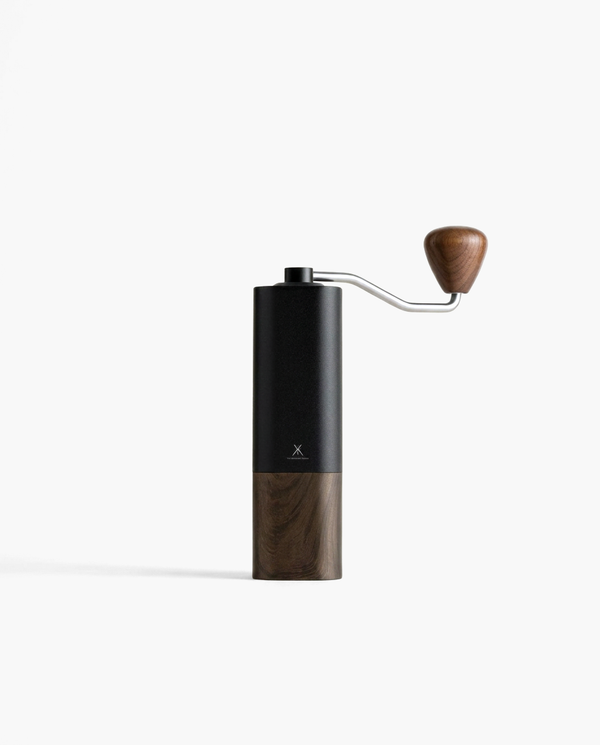
The Precision Manual Grinder
- Burr-ground, not blade-chopped: a conical burr crushes beans to an even size, which is the inconsistent-grounds problem solved before it can start.
- No motor, no whine: quiet by design, so there is no motor to overheat, jam under load, or wear out its bearings.
- One dial, fine to coarse: the base dial moves from espresso-fine to French-press-coarse and holds its setting since there is no electronic collar to drift.
- Stainless steel that won't rust or hold odors: wipe it, brush it, and it stays clean, no sealed housing where old oil can hide.
- No cord, no batteries: the brushed 304 steel body folds its crank flat and goes anywhere, with nothing to charge or plug in before it works.
If You Still Want Electric, Keep It Simple
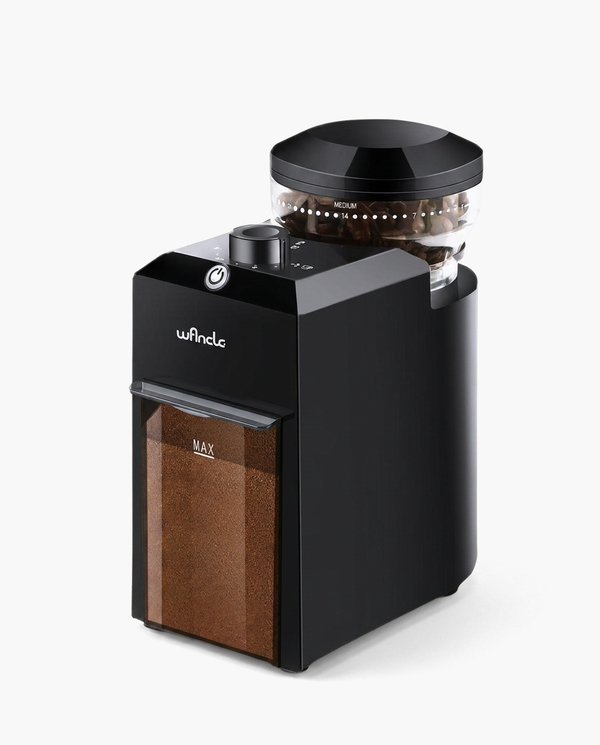
Not every kitchen wants to crank a grinder by hand every morning, and that is a fair trade to make. If you are staying electric, choose the simplest mechanism you can find. The Precision Dial Grinder is built around one numbered dial and one button: the transparent hopper lets you see the beans, the burrs crush them to a consistent size, and there is no multi-menu touch screen or stepped collar to lose its setting after a clean.
A budget blade grinder like the Hamilton Beach Fresh Grind, around $20, has one spinning blade and one switch: nothing to calibrate, but also no way to grind evenly, so it trades every problem on this page for a cup that is inconsistent from the start.
A mid-range burr model like the Capresso Infinity, around $110, grinds far more evenly and holds a numbered setting, closer to what most of this article is written for. It still asks for the same maintenance this article covers, periodic burr cleaning and the occasional dial check, because it still has a motor and a mechanism that can wear.
Neither removes the parts that cause the problems on this page, which is the specific job the Precision Manual Grinder does.
Five Ways People Shorten a Grinder's Life
- Grinding oily, dark-roast beans daily without a clean schedule: the oil that makes those beans shiny is the same oil that gums up burrs fastest.
- Buying a blade grinder for the price and expecting burr results: a blade has no way to produce an even particle size, no matter how carefully you time the grind.
- Ignoring a new noise or smell: both are early warnings, and both are cheaper to fix the week they start than the month the grinder stops working entirely.
- Skipping the rice cycle because it feels unnecessary: the residue it removes is invisible until it is thick enough to taste.
- Never checking your beans for foreign objects: one small stone can end a burr set that survived years of normal use.
Sunday Morning, the Old Grinder Already Out With the Recycling
The electric grinder went out to the curb on Saturday, third repair attempt in two years, and this is the first cup without it. Sunday morning is slow on purpose: no appliance to warm up, no cord to find behind the toaster, no waiting to hear if today is the day it finally jams for good.
You measure a scoop of beans, turn the dial to the notch that reads French press, and crank while the kettle comes up to temperature on the next burner. The sound is small and dry, done in under a minute, no rattle building toward a stall halfway through.
You brush the burr chamber clean with two strokes, pour the grounds into the press, and there is nothing left on the counter waiting to fail before next Sunday comes around.
If you take one thing from this article: almost every grinder problem starts with a part that can wear out, jam, or drift, and a grinder built without those parts cannot develop those problems.
Frequently Asked Questions About Coffee Grinder Problems
Why does my coffee grinder suddenly produce uneven grounds?
Almost always worn or oily burrs, or a grind setting that has drifted from where you last left it. Clean the burr chamber first, then reset the dial to a known reference point and grind a small test batch before you commit a full dose.
My grinder is jammed and won't turn. What now?
Unplug an electric machine before touching it, then clear the hopper and burr chamber by hand and check the beans for a stray stone or fragment. If it still will not turn after clearing an obvious blockage, the burrs themselves may be worn and no longer feeding beans on their own.
How often should I deep clean my coffee grinder?
A quick brush-out after every use, a rice cycle every couple of weeks with daily grinding, and a full strip-down wash roughly once a month. Oily dark roasts push that schedule closer to weekly.
Is a manual coffee grinder actually better than an electric one?
Better depends on what you are optimizing for. A manual burr grinder has no motor, cord, or electronics to fail, which is why it never develops the jams and calibration drift this article covers. An electric grinder like the Precision Dial Grinder saves the minute of cranking, at the cost of a motor to eventually maintain.
Can a coffee grinder be repaired, or is it time to replace it?
Jams, dirty burrs, and calibration drift are all repairable at home in minutes. A motor that has failed outright, or a thermal cutoff that trips every time regardless of cooldown, usually is not worth repairing on a budget blade grinder, and that is the point where switching to a grinder with no motor at all starts to look practical rather than sentimental.
Where can I read more about grinder types before I buy one?
Our guide to grinder types and features covers blade versus burr in more depth, and the full coffee grinders collection shows every option we carry side by side. Our FAQ on coffee grinders also answers questions this article does not cover.