Yes, dry rice can knock stale coffee oil off a grinder's burrs, but it also leaves starch dust behind and can strain a motor built for beans, not grain. The steadier fix is a grinder with no motor to protect in the first place, like the Precision Manual Grinder (see our coffee grinder collection): a conical burr instead of a blade, and stainless steel that will not rust or hold odors the way a grain of rice only masks for a week.
Where Did Cleaning a Grinder With Rice Come From?
The trick predates coffee shops. Home cooks ran dry grains through stone and iron spice mills long before electric burr grinders reached a countertop, because cloves, cardamom and cumin leave the same oily film that coffee does. A handful of rice, run through, let the starch pick up the oil and the hard grain scrape the surfaces clean.
For the full picture of how these machines work, our complete coffee grinder guide is a useful next stop.
When electric blade grinders arrived in the 1970s and 80s, the same grandmother's trick got adopted for coffee, mostly because you cannot run a motor base under a tap. Rice became the only cleaning method that did not risk the electronics. It never fit burr grinders as neatly: rice is softer than steel but harder than the plastic gears inside a lot of budget electric models, so the advice that saved one machine could damage another.
Why Does Coffee Oil Turn Rancid Inside a Grinder?
Roasted beans carry natural oils on the surface. Exposed to air, those oils oxidize, and oxidized oil smells the way an old bottle of cooking oil does: flat, cardboard, faintly sour. A dirty grinder keeps a thin film of last week's oxidized oil on the burrs, and every fresh dose you grind sweeps a little of it into the cup, which is why a bag of good beans can still brew a stale-tasting coffee.
Does Rice Actually Remove the Oil?
Partly. Dry rice is porous and starchy, so as it breaks apart the starch binds to some of the surface oil and the hard fragments knock loose stuck-on grounds. Two problems follow. Rice starch is sticky, and what it does not carry away it tends to leave behind as a fine residue that can hold moisture.
And rice is not one material: a harder long grain puts more strain on a motor than a softer parboiled grain, so results and risk both vary by what is in the bag.
There is also a household risk that gets overlooked. If anyone in the house avoids gluten and the same grinder handles spice as well as coffee, a grain method introduces a cross-contamination path that a plain brush-out does not. Our coffee and spice grinder guide goes into that trade-off in more depth.
How to Clean a Grinder With Rice, If You Must
If your only grinder is a sealed electric one, the rice method is safer done carefully than skipped.
- Choose parboiled or "minute" rice, not raw long grain. It is softer, so it is gentler on burrs and motors.
- Run a small handful, about 20 g, through the grinder on its coarsest setting. Do not force a full hopper through.
- Discard the ground rice and starch dust. None of it belongs in a cup.
- Run 10 g of cheap "sacrificial" beans through next. This purges the leftover starch before your real dose goes in.
Skip anything labeled instant or flavored. Added salt corrodes steel parts over time, and any seasoning clings to plastic hoppers for weeks. And never let water near an electric motor base: a damp cloth on the hopper and a dry brush on the burrs are as far as that machine can safely go.
The Clean That Skips the Rice Bag Entirely
This is the version that does not involve a bag of rice at all. The Precision Manual Grinder has no motor to work around, so brush and wipe is the whole routine.
- Brush the conical burr after every grind. A small stiff brush clears grounds and oil film before either has a chance to sit and turn stale.
- Wipe the body with a dry cloth. Brushed stainless steel will not rust or hold odors, so a wipe keeps it clean between deeper brush-outs.
- Lift the crank handle off before you brush. It folds flat and comes away, which leaves the top of the grinder open to the bristles.
- Check the viewing window last. If the window shows a film of fines, brush again. A clear window means the next dose starts clean.
If French press is the cup at the end of this, our guide to coarse grounds for French press covers the exact texture to aim for, and our French press collection is where the clean grounds end up next. Choosing a grinder for that method specifically, cleaning aside, is its own question, one our guide to the best coffee grinder for French press answers in full.
What Can Go Wrong While You Clean
For symptoms that show up between cleanings rather than during one, our grinder troubleshooting guide walks through jams, noise and inconsistent grounds in more detail. And once the grind itself is clean, our guide to brewing with a classic coffee pot picks up from there.
How Often Should You Clean a Coffee Grinder?
A deep clean, rice or a rinse, belongs on the calendar about once a month for daily drinkers. Waiting longer lets the oil harden into something closer to varnish than residue, which takes real scrubbing to shift. Between deep cleans, a ten-second brush-out after each grind, sweeping the burrs and the chute with a small stiff brush, clears most of the loose grounds that would otherwise sit and go stale before your next cup.
The Grinder That Never Needs the Rice Trick
The Precision Manual Grinder, built with nothing to protect from a brush
If cleaning is the problem, we would start with the Precision Manual Grinder before reaching for another bag of rice.
- A crank handle that folds flat and lifts off: take it away and the grinder is a plain steel tube you can brush without working around anything.
- A conical burr, not a spinning blade: beans are crushed to an even size instead of chopped into dust, and even grounds leave less fine powder packed into corners.
- Brushed 304 stainless steel body: stainless steel will not rust or hold odors, so last month's dark roast does not follow you into a new bag.
- One dial covers every brew: fine to coarse, set at the base. Switching from espresso to French press does not mean a second grinder to keep clean.
- No motor to protect from water or grain: nothing to short out, nothing for hard rice to strain.
It comes in Brushed Silver or Brushed Black, 5.2 in tall and 1.9 in wide, small enough to live in a drawer rather than on the counter collecting dust.
The Signature Stainless Steel French Press, for the cup on the other end
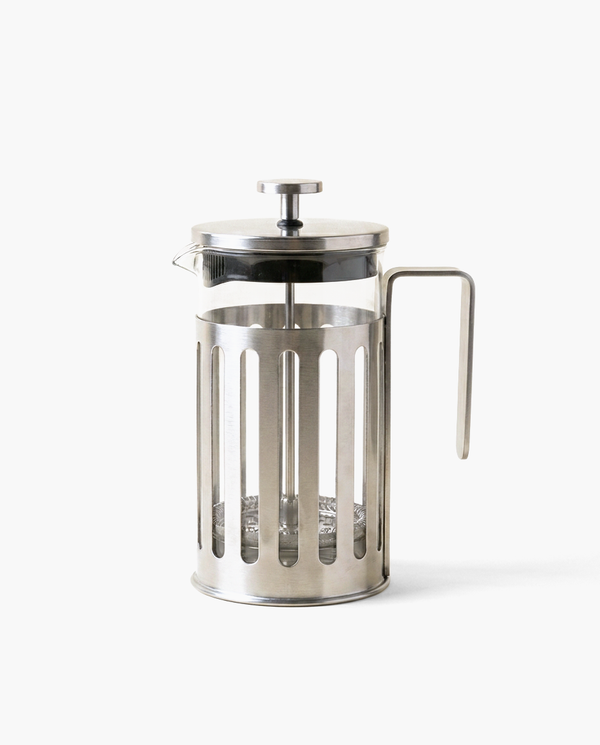
A clean grind still needs a clean vessel. The Signature Stainless Steel French Press is double-wall 304 stainless, food-grade and BPA-free, with a two-part plunger that pairs a fine mesh screen with a perforated press plate so the grounds stay down. Three sizes, from a single 12 oz to a 34 oz pot for the table.
Baratza Encore, a real burr grinder that still asks for rice (about $170)
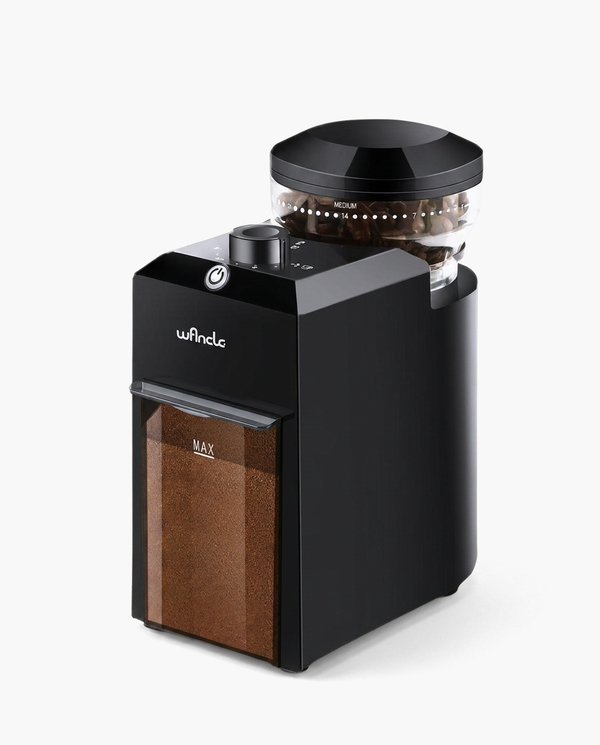
The Encore is a genuinely good electric burr grinder, and its 40 settings cover most brew methods well. The burr chamber sits over an electric motor base, though, which is exactly why the rice trick got popular in the first place: water is off limits even on the models where the burr itself comes out, so a dry grain pass or a brush is most of what you have.
OXO Brew Conical Burr Grinder, easier to wipe, still sealed (about $100)
The OXO is quieter than the Encore and a fair price for a real conical burr. Its chute is easier to reach with a brush, which our own OXO cleaning guide covers step by step, but the burrs themselves still live behind a housing built to stay closed, not to come apart.
What the Rice Trick Cannot Fix
- Pouring in raw long-grain rice by the cupful: a full hopper of hard grain is the fastest way to jam a burr or strain a motor.
- Reaching for instant or flavored rice: added salt corrodes steel over time, and seasoning clings to plastic for weeks.
- Skipping the sacrificial beans afterward: without a purge, the next few doses taste of starch instead of coffee.
- Running water into an electric motor base: a damp cloth is the limit for anything with a cord.
- Sharing one grinder between coffee and spice, gluten and all: no dry method, rice included, clears that risk. Keep a second grinder for the spice rack.
Wednesday night, the kitchen quiet, and the brush going back over the burr
Half past nine, dishes already put away, and the house has gone still except for the small stiff brush working back and forth over the burr. You have done this a dozen times now, and the grounds come away smelling faintly of last Sunday's dark roast, nothing worse.
A dry cloth over the body, the crank handle folded flat, and the grinder goes back on the shelf by the window instead of sitting out overnight. No rice on the counter, no starch to sweep up, no motor to worry about. Tomorrow's first grind will taste like tomorrow's beans and nothing else, and that was the whole point of the ten minutes you just spent.
If you take one thing from this article: rice can mask a dirty grinder for a week, but a grinder with no motor to protect, like the Precision Manual Grinder, is the one you can actually keep clean.
Frequently Asked Questions
Can I use regular uncooked rice to clean my grinder?
You can, but parboiled or minute rice is the safer choice. Standard long-grain rice is hard enough to strain an electric motor or dull a blade over repeated use, where softer parboiled grains do the same absorbing job with less risk.
Does rice dull a grinder's blades or burrs?
Over repeated use, yes, grinding hard grain wears steel edges the same way grinding anything abrasive does. Stainless burrs hold up better than thin blade edges, but the bigger concern for most home machines is the strain hard rice puts on the motor, not the metal itself.
Why does my coffee taste like starch after cleaning with rice?
Leftover rice dust in the mechanism. Run about 10 g of cheap sacrificial beans through the grinder and discard them before you grind your real dose, which clears the residue the rice pass left behind.
How often should I clean my coffee grinder?
Brush out loose grounds after every use, and plan on a deeper clean, rice or a rinse depending on your grinder, about once a month if you grind daily. Waiting longer lets oxidized oil harden into a residue that takes real scrubbing to shift.
Is a burr grinder better than a blade grinder for keeping clean?
Generally yes. A blade chops beans unevenly and tends to trap fine dust around the spinning blade itself, while a conical burr crushes beans to a more even size, so less fine dust and oil film build up on the surfaces in the first place.
Related Guides
- Can You Brew Coffee With Cold Water? The Expert Guide
- Best Non Toxic Coffee Grinder: The Guide to Safe Brewing
- Cleaning OXO Coffee Grinder: The Expert Guide to Fresh Flavor
- Best Coffee and Spice Grinder Guide: The Secret to Pure Flavor
- Troubleshooting Common Issues with Your Coffee Grinder and How to Fix Them