A premium coffee grinder changes how your morning tastes. It crushes beans evenly, keeps them cool, and leaves the bitter dust behind. Finding the right tool takes the guesswork out of brewing, which is why we reach for the Le Modèle Burr Grinder every day.
Why the Grinder Matters Most
The secret to good home coffee begins with how you crush your beans. A high end coffee grinder ensures that every particle extracts at the same rate for a balanced cup. Most beginners spend their budget on an expensive espresso maker. However, the machine making the grounds does the heavy lifting. If your grounds are uneven, your coffee tastes muddy or sour.
A premium unit solves the problem of boulders and fines. Boulders are large chunks that under-extract and taste weak. Fines are coffee dust that over-extracts and tastes intensely bitter. A quality tool eliminates both extremes for a naturally sweet flavor. This is why pairing an entry-level brewer with a luxury coffee grinder yields a better cup than doing the reverse.
The Motor Makes the Difference
Entry-level models use small motors that spin fast to crush beans quickly. This high speed generates unwanted friction and heat. Heat starts roasting your delicate coffee beans a second time. A premium machine uses a motor designed to keep the beans cool from the hopper to the catch bin.
Heavy construction also provides stability. Cheaper motors wobble under pressure. This causes the internal crushing plates to shift and create uneven sizes. A stable motor stays firmly anchored. Your target grind size remains stable during your weekend routine.
Burr Types and Grind Consistency
The internal crushing plates inside your machine are called burrs. Their geometry dictates your coffee quality. Understanding these shapes helps you brew cafe-grade coffee before work.
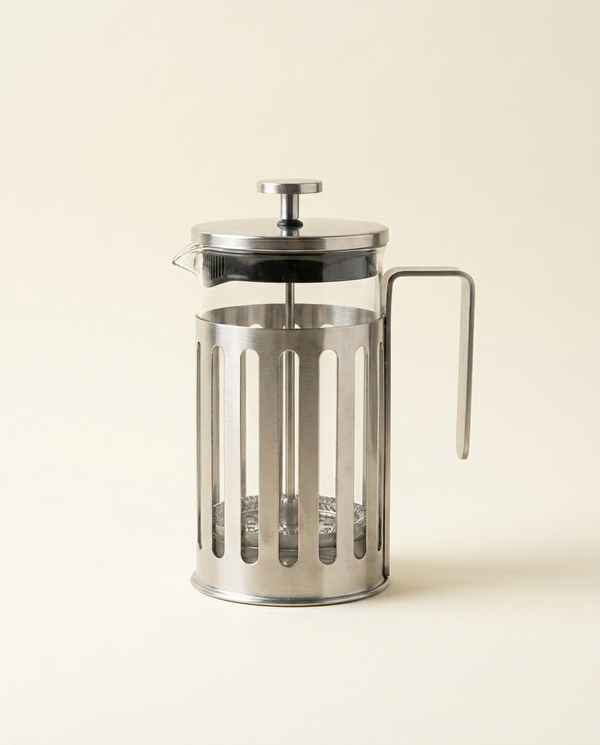
When upgrading from pre-ground coffee, many people grab a standard French press but forget to upgrade their grinding gear. The type of burr you choose directly dictates how well that brewer performs. Let us look at the standard reference sizes for premium equipment.
Reference: Burr Sizes and Daily Use Cases
A conical burr features a cone-shaped inner ring that sits inside a jagged outer ring. This classic design produces a highly textured cup of coffee perfect for a rich morning routine. Conical burrs are highly forgiving and make dialing in your favorite dark roast easy.
A flat burr utilizes two parallel discs sitting face-to-face. These discs act like a precise wood planer. They shave the beans into identical pieces. This geometry highlights bright and fruity flavors, which specialty coffee drinkers call clarity.
PRO TIPFor the best results with a French press, choose a conical burr grinder to emphasize rich chocolate notes and a heavy, satisfying body in your final cup.
Regardless of shape, premium burrs are crafted from hardened steel or coated in durable materials. This ensures the cutting edges stay sharp for years of daily use. Dull burrs smash beans instead of cutting them. This leads to a harsh and astringent taste in the cup.
The Gear That Makes This Easy
Finding the right best premium coffee grinder means looking for heavy burrs, precise adjustments, and a workflow that fits your kitchen. We look for machines that keep the counter clean and the grounds even.
Le Modèle Burr Grinder
We stock the Le Modèle Burr Grinder because it brings real precision to a cordless format. Most portable units use blades. This one packs true conical burrs into a cylinder the size of a water bottle.
- True conical burrs: Available in stainless steel or ceramic, they crush beans to an even particle size for less bitterness.
- Cordless operation: A 13W motor runs on a rechargeable battery. It charges over USB-C so you can grind without an outlet on the counter.
- Stepless adjustment: A knurled ring lets you dial in the exact size from fine to coarse without being locked into fixed clicks.
- Clear catch chamber: Holds up to about 17 fluid ounces of grounds. You see exactly when you have enough for your brew.
- Stainless steel build: A brushed metal body that resists rust, wipes clean, and outlasts plastic alternatives.
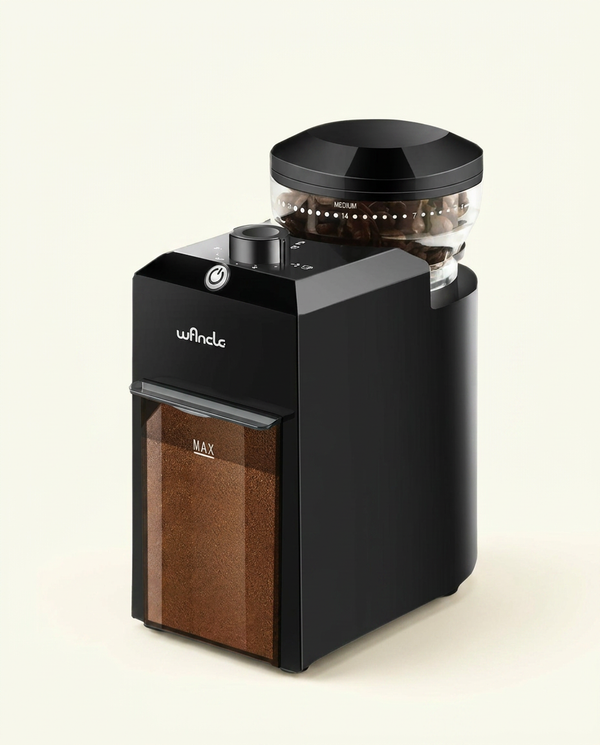
Pro Burr Grinder
If you prefer a touch screen and a timed dose, the Pro Burr Grinder fits the bill. It automates the morning routine.
- 25 fixed-point levels: Spans from espresso fine to French press coarse for easy reference.
- Touch-screen timer: Set the grind time in seconds for a highly repeatable dose.
- Portafilter stand: Includes a vertical Italian stand for 51 mm and 53 mm baskets to grind directly into the portafilter.
- Bean hopper: Holds 8.8 ounces of whole beans above a translucent, removable catch bin.
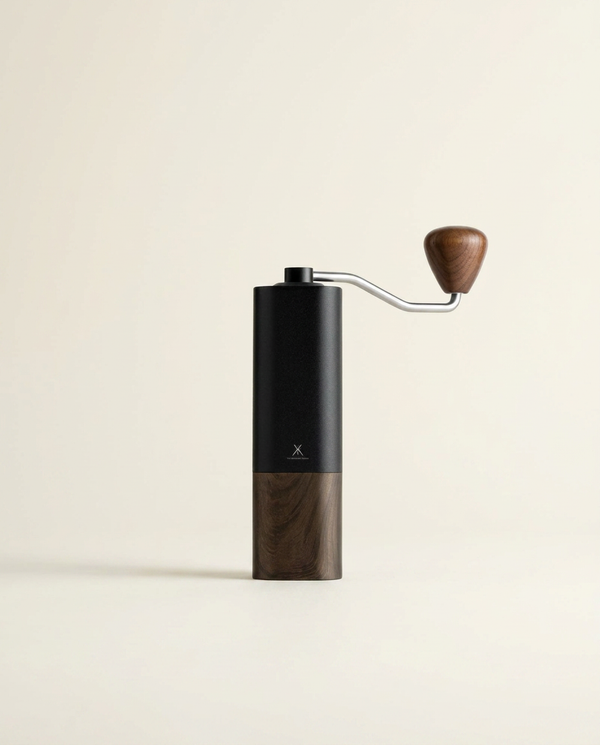
Voyager Hand Grinder
For a manual routine or life on the road, the Voyager Hand Grinder offers uncompromising quality in a small package.
- Anodized metal body: A ribbed matte black finish paired with a turned wood knob.
- Conical steel burr: Adjusts via a numbered internal click dial from espresso to coarse.
- Travel ready: The crank folds flat against the body, and the entire unit weighs roughly 1.4 pounds.
Fellow Ode Gen 2
A well-known flat burr grinder that retails around $350. It features a wide stance and a magnetic catch cup. It is designed for pour-over brewing, but the Le Modèle Burr Grinder offers cordless portability and conical burrs for a richer body in immersion brewing.
Baratza Virtuoso+
A classic conical burr grinder often found for about $250. It includes a digital timer and a large plastic hopper. It is built for daily batch brewing, but the Le Modèle replaces the tall plastic housing with a compact 7.5 inch brushed stainless steel cylinder.
Mistakes That Ruin the Cup
Even the best equipment cannot fix bad habits. Avoid these common pitfalls to keep your morning coffee tasting sweet and balanced.
- Using a blade grinder: Blades chop rather than crush. You get fine dust and large boulders in the same batch, guaranteeing a bitter cup.
- Grinding the night before: Coffee oils oxidize rapidly once exposed to air. Grind right before you pour the water.
- Storing beans in a clear hopper: Light and air turn beans stale. Keep them in an opaque and airtight container until you need them.
- Ignoring the burrs: Coffee oils turn rancid over time. Skipping the monthly brush-out taints every fresh bag of beans you buy.
Getting the Most From Your Machine
Owning beautiful equipment is only the first step. Using proper techniques ensures your investment translates into a better tasting beverage.
Browsing through premium coffee grinders can feel overwhelming, but the workflow is actually quite simple. The industry standard for maximizing flavor involves a technique called single dosing. This means weighing your beans right before grinding instead of filling up the top plastic hopper.
The Zero-Static Workflow
Premium grinding creates static electricity. This causes fine dust to stick stubbornly to the metal chute. Professional baristas use a few tricks to keep the grounds contained. Implementing these steps makes your daily brewing process stress-free.
- Weigh precisely: Measure exactly 18 grams of coffee beans for perfect consistency.
- Spritz with water: Spray one single drop of water onto the beans to instantly eliminate static electricity.
- Grind fully: Let the motor run for an extra two seconds after the beans finish to clear the chamber entirely.
Managing static electricity improves the evenness of your final extraction. A clean exit chute ensures your carefully measured dose remains accurate in the filter.
PRO TIPAdjust your grind size slightly finer as your bag of beans ages. Older beans lose moisture and flow through the grinder faster than fresh ones.
Keeping It Running Like New
Protecting your investment requires a straightforward cleaning schedule. A dirty machine will quickly taint your specialty beans with the taste of rancid coffee oils.
Whether you are learning to use the best coffee grinder for French press or a massive commercial unit, the rules remain the same. Coffee beans are naturally oily. That sticky oil slowly coats the stainless steel burrs over time.
Troubleshooting: Premium Grinder Maintenance
For a basic weekly cleaning, use a stiff brush to sweep out the exit chute and gently brush the top hopper. Do not use water inside the grinding chamber. Moisture causes severe rust on steel burrs. A dry and clean environment ensures your machine delivers a sweet flavor.
The Deep Cleaning Protocol
Every month, you should perform a thorough deep clean. This involves unplugging the unit, removing the top burr, and thoroughly brushing the internal crushing plates.
If disassembling the machine feels too intimidating, you can purchase specialized grinder cleaning tablets made from food-safe compressed grains. Grinding a handful of these tablets safely absorbs all the old oils and leaves the internal chamber smelling fresh.
A quiet morning routine
Friday morning, ten minutes before seven, and the house is still. You measure out the beans, attach the cordless motor, and press the single button. The conical burrs crush the beans to an even particle size. The grounds collect in the clear chamber, uniform and fragrant. You slide the grounds into the press, add the water, and watch the bloom rise evenly. The first sip is balanced, and you did not have to fight a tangled cord to get it.
If you take one thing from this article: a premium coffee grinder turns brewing from a chore into a precise, repeatable ritual, and a cordless model gives you your counter space back.
Frequently Asked Questions
Why does French Press & Co recommend a burr grinder for beginners?
A burr grinder is the single most important tool for improving flavor. Unlike blade grinders that unevenly chop beans into random sizes, burrs act like a precision mill. This uniformity ensures the water extracts the exact same amount of flavor from every particle. The result is a naturally sweet and balanced cup of coffee without any harsh bitterness.
Is a high-end coffee grinder really worth the investment?
Yes, upgrading your grinding equipment provides a much larger flavor improvement than buying an expensive espresso machine. Premium grinders use heavy motors that keep the beans cool and prevent the internal burrs from wobbling under pressure. This extreme stability prevents the creation of bitter coffee dust during the grinding process. You will immediately notice a cleaner, sweeter, and more vibrant taste in your daily cup.
What is the difference between flat and conical burrs?
Conical burrs feature a cone-shaped inner ring that sits inside a larger outer ring, producing a highly textured and full-bodied coffee. Flat burrs consist of two parallel discs that shave the beans into identical pieces, highlighting bright and fruity flavor notes. Conical burrs are generally more forgiving for beginners, while flat burrs are preferred by professionals seeking absolute flavor clarity in their morning routine.
How long do the burrs in a premium grinder last?
A high-quality set of stainless steel or ceramic burrs will last for years of standard home use. Premium burrs are designed to grind hundreds of bags of coffee before they begin to lose their sharp cutting edges. When the burrs finally become dull, they will start crushing the beans rather than slicing them. Fortunately, premium machines allow you to easily unscrew and replace the burrs at home.
Why should I adjust my grind setting only when the motor is off?
The manufacturer specifies that you must only adjust the knurled ring when the motor is off to avoid jamming the burrs. Adjusting the dial moves the steel burrs closer together or further apart, and doing this while the motor is off protects the internal mechanism and ensures a consistent particle size for your daily brew.