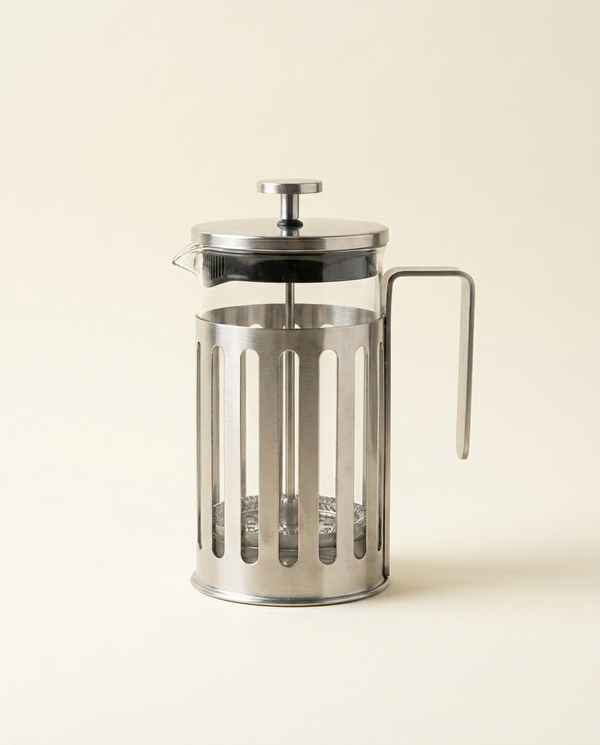
A plastic free coffee maker exists, but it is rarely a machine: on most automatic drip brewers, the heated water runs through a tube, a showerhead and a plastic basket on its way to your cup. The sure ones are manual, and our first pick is The Signature Stainless Steel French Press, double-wall 304 stainless steel with a stainless mesh plunger and no plastic in contact with your coffee. For a lighter cup there is glass pour-over. For something close to espresso, a moka pot. This guide goes method by method, automatic machines included.

Our pick
The Signature Stainless Steel French Press
Double-wall stainless steel body, stainless steel plunger and mesh. No plastic in contact with your coffee, no paper filter, no electric base.
See the Signature PressQuick Picks: A No Plastic Coffee Maker for Every Brew Method
Six ways to make coffee, one row each. Where we stock a brewer that fits, it is linked. Where we do not, the row says so.
Why Most Coffee Makers Are Not Plastic Free
Open a standard drip machine and follow the water. It starts cold in a molded plastic reservoir, which is the least of it. The part that matters begins at the heater. On most models a tube, plastic or silicone, carries the heated water up to a plastic showerhead. It falls into a plastic brew basket, sits with the coffee, and drains through a plastic valve and a plastic carafe lid.
Plastic is light, cheap to mold and does not shatter, and food-contact plastics are regulated and legal. But heat increases migration from plastics in general, and many people would simply rather keep 200°F water, and the coffee they drink every morning, away from it. If that is you, a non plastic coffee maker is a return to older tools: steel, glass and aluminum, moved by hand.
Where the plastic usually sits, from most to least important
- The brew basket and drip-stop valve. Near-boiling water and coffee rest here for the whole brew.
- The riser tube and the showerhead. The hottest stretch of the path, and the one you never see.
- Carafe lids, and the lids and filter frames of manual brewers. Many glass French presses carry a plastic lid liner or a plastic frame around the mesh, both sitting in steam and coffee.
- The water tank. Almost always plastic, but the water in it is cold.
How to check a coffee maker for plastic parts
A listing that says "stainless steel" usually describes the outside. Before you buy, ask three questions. What does the water touch between the heater and the cup? What is the brew basket made of? What are the lid, the plunger and the filter frame made of? When a listing skips those questions, treat the silence as your answer.
For the wider field, see our complete coffee makers guide.
The Best Plastic Free Coffee Maker by Method: Our Three Picks in Detail
Three manual methods cover almost every taste. We stock one brewer for each, and you can see them side by side in our plastic free coffee makers collection.
French press: the all stainless steel coffee maker with no plastic
A French press is a pot, a lid and a filter on a rod. When all three are steel, the coffee has little else to touch, which is why an all stainless steel coffee maker with no plastic turns out, in practice, to be a French press.
Our first pick is The Signature Stainless Steel French Press. We chose it for this page because its spec sheet says it in two words: no plastic.
- Steel where the coffee goes. Double-wall 304 stainless steel body, knobbed steel lid, stainless mesh plunger. No plastic in contact with your coffee.
- Nothing to reorder. The two-part plunger does the filtering, a fine mesh screen over a perforated plate. No paper, no pods, no cartridges.
- Hot without a hot plate. The double wall keeps the coffee hot while the outside stays cool to the touch.
- Sized for the household. 12 oz, 27 oz or 34 oz, from a solo cup to a pot that serves four to six.
- Covered. 30-day returns and a 1-year guarantee.
If you prefer matte black, the Pro Thermal Press has a stainless steel body and plunger and keeps coffee hot for 60 to 90 minutes. Its sealed lid relies on a gasket, though, so the strict reader should keep to the Signature.
Lids, plungers, glass models and the full detail on this press are in our guide to choosing a plastic free French press, and the whole range lives in our French press collection.
Pour-over: a glass coffee maker without plastic
Pour-over is drip coffee done by hand. You get the same clean, bright style a machine makes, minus the tube, the showerhead and the basket.
Our pick is the Workshop Pour-Over Set: a hand-blown borosilicate glass carafe, a turned-wood collar that doubles as a heat-resistant grip, and a built-in conical double-wall 304 stainless steel filter. Glass, wood and steel, with no plastic parts listed by the maker and no paper filters to restock. It brews 13.5 oz, a generous mug or two small cups, and it is hand wash only.
The well-known alternative is the Chemex Classic, around $50: one piece of glass with a wood collar, and also free of plastic. It needs its own thick paper filters for every brew, and the paper takes out most of the oils. The Workshop's steel cone keeps more body in the cup, with nothing to run out of. See the other shapes in our pour-over brewers.
Moka pot: stovetop espresso from metal chambers
A moka pot is three metal pieces and a flame. Steam pressure pushes water from the lower chamber up through the coffee and into the top. No pump, no tank, no tubing.
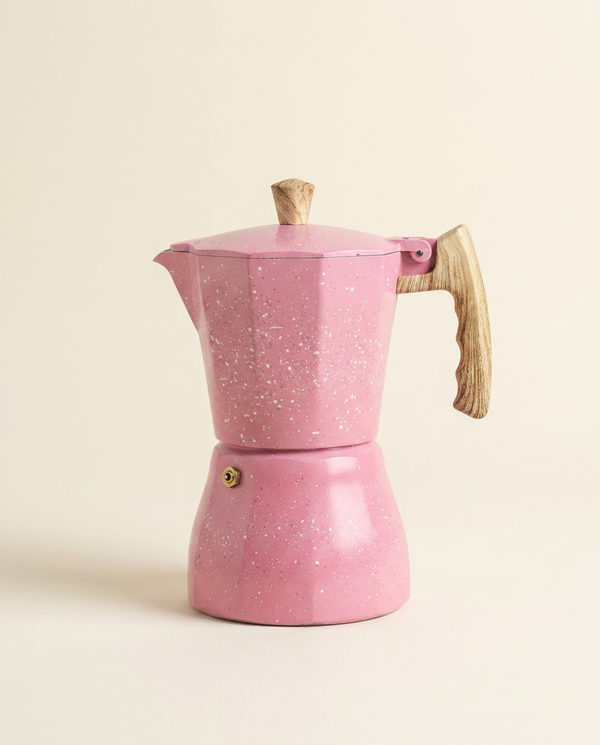
We stock the Bottega Wood-Handle Moka, a classic eight-sided Italian pot in painted aluminum with a wood-grain handle and a matching lid knob. The chambers and the funnel are metal. Like every moka pot, it seals with a gasket between the two halves (the maker does not state its material), which you replace about once a year. It comes in two sizes, 5 oz (about 3 cups) and 10 oz (about 6 cups), and five finishes, with a built-in pressure-release valve. It brews in about five minutes on gas, electric or ceramic stoves. It does not work on induction.
The reference is the Bialetti Moka Express, about $40 for the 3-cup size: the same aluminum octagon, with a black plastic handle and knob. The brewing is identical. The Bottega does the same job with a wood-grain handle. On both pots the handle stays outside the brewing path. Both of our moka pots are aluminum, and we stock no stainless steel one today. And if what you really want is a pump machine, read our honest look at the plastic free espresso machine question first.
Percolator, Cold Brew, Travel: Other Ways to Brew Without Plastic
The stainless steel stovetop percolator
A stovetop percolator is a steel pot with a basket on a hollow stem. Boiling water climbs the stem and rains over the grounds, again and again, until you take it off the heat. On an all stainless model, the pot, the basket and the stem are steel: one of the few ways to brew eight cups or more with no plastic in the path. Inspect the clear knob on the lid: glass on some models, plastic on others.
We do not stock one. The reason to think twice is taste, not materials: coffee that passes through the grounds repeatedly at a boil runs hot, strong and easily bitter. A large French press gets you the volume with a gentler cup.
Cold brew without plastic
Cold brew swaps heat for time: the coffee sits against its container for 12 to 24 hours. Many dedicated cold brew makers are a plastic pitcher with a plastic-framed filter. You do not need one: a glass jar, coarse grounds, cold water and a night in the fridge do the brewing, and a metal mesh filter or a fine steel sieve does the rest.
Two honest notes on our own shelves. We stock cold brew towers, and their supplier sheets list plastic parts, so they are not recommended on this page. And the Signature press is listed by its maker for cold brew as well as hot coffee and loose-leaf tea: grounds and cold water in, plunger up, fridge overnight, press in the morning.
Travel and camping

Many travel brewers are plastic, because plastic is light. The alternative is a small steel press. The 12 oz Signature press stands 6.4 inches tall on a 3-inch base, has no glass to break in a bag and needs no paper filters. The double wall keeps the brew hot while the outside stays cool in the hand. One rule: a double-wall press is not a kettle. Heat the water separately and never set the press on a flame.
Is There a Plastic Free Drip Coffee Maker? The Honest Answer on Automatic Machines
This is the question behind most searches that land on this page. We do not sell drip machines, so we can answer it straight: a very small number of automatic brewers are marketed as plastic free in the water path, and most machines sold as "BPA-free" still run heated water through plastic. A non toxic drip coffee maker, in the sense most people mean it, would need the whole heated stretch, from riser tube to carafe lid, in glass and steel.
Three well-known machines, read fairly
- Technivorm Moccamaster, about $350. Copper heating element, deservedly respected. Its maker states that its plastics are BPA-free, which also tells you that parts of it, the brew basket among them, are plastic.
- Ratio Eight, around $700. The automatic brewer most often cited for reducing plastic in the heated path, and marketed on its materials. Read the maker's current parts list before you pay for that promise: reduced is not none.
- An electric stainless steel percolator, such as the Presto 12-cup, about $70. By its maker's description, the pot, the basket and the perk tube are stainless steel, with plastic kept to the outside. It is probably the closest a plug-in brewer gets, and it makes percolator coffee, not drip.
So if a plastic free coffee maker is the goal, we cannot point you to an electric drip or pod machine we are sure of. What we can point you to is our stainless steel French press, where there is no hidden path to audit. The water goes from your kettle into steel and, four minutes later, into your cup. A manual brewer is the sure way because you can see every surface.
Pod and capsule machines
Pod machines add a second layer. The heated water typically travels through internal plastic lines, then is forced through the pod itself, which for K-Cup style pods is a plastic cup. Fast, consistent, and as far as a coffee maker gets from plastic free.
Non Toxic Coffee Maker Claims That Deserve a Second Look
No agency defines "non toxic" for coffee gear, so the words on the box prove nothing by themselves. These are the phrasings that most often sit on top of a plastic part.
- "BPA free." It names one absent compound. It almost always means plastic is present, and it never tells you where.
- "Stainless steel coffee maker." On a machine, this usually describes the housing or the carafe. The basket and the lines inside can be plastic all the same.
- "Glass French press." The beaker is glass. Check the lid liner, the filter frame and the base, which are often plastic.
- Brewers that are plastic by design. An AeroPress is a polypropylene brewer, and so are many cone drippers. They make good coffee in approved, food-contact plastic. They are simply not what this page is for.
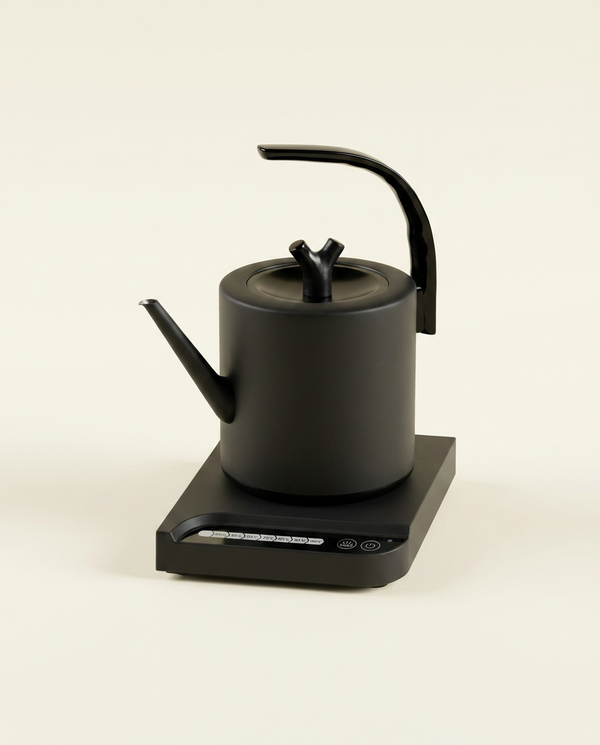
- The kettle nobody checks. The brewer is only half of the path. Water windows and lid parts on electric kettles are commonly plastic. Our guide to the plastic free electric kettle runs the same inspection on what heats your water.
How to Brew and Care for a Coffee Maker Without Plastic
On a manual brewer, two settings decide the cup: grind size and water temperature.
No thermometer? Boil the water, take it off the heat and wait 45 seconds. Before you add coffee, swirl hot water in the steel or the glass for 30 seconds so the brew does not lose heat to a cold wall.
Grind fresh if you can. And if you are clearing plastic from the counter, the grinder is the next place to look, since most electric models have plastic hoppers and bins. Our guide to finding a non toxic coffee grinder says exactly where the plastic is on each model, ours included.
Cleaning steel, glass and aluminum
- Steel. Empty the grounds and rinse right after you pour. Once a week, a soft paste of baking soda lifts the coffee oils.
- Glass. Soft sponge, mild soap, no scouring pads. A hazy white film is mineral scale: soak in half white vinegar, half warm water for twenty minutes. Keep a wood collar out of standing water.
- Aluminum moka. Warm water and a soft cloth, no soap, no dishwasher. Take it apart after every brew and dry each piece fully, gasket included.
Three tools on a bare counter
Saturday, late morning, nobody in a hurry. Where the machine used to stand there are three things now: a kettle, a hand grinder, a steel press. The grinder goes first, a sound like gravel under a slow bicycle, and the smell of the beans reaches the table before the water is even hot. Someone asks where the coffee maker went. You point at the press. The kettle clicks, you pour, and for four minutes the conversation carries on without you. Then the plunger goes down and the mugs come out, and nobody at the table thinks about what the water touched, because there was nothing to think about.
If you take one thing from this article: the surest plastic free coffee maker is a manual one, and the Signature puts 304 stainless steel, and no plastic, between your water and your cup, with 30-day returns and a 1-year guarantee behind it.
Frequently Asked Questions
What is the healthiest coffee maker?
We sell coffee gear, not medical advice, so we will not rank brewers by health. What we can say is practical: if your goal is to keep heated water and coffee away from plastic, the simplest choices are an all-steel French press, a glass pour-over or a metal moka pot.
Does a BPA free coffee maker still contain plastic?
Almost always. A BPA free coffee maker is built with plastics that leave out one specific compound, and the label exists because there is plastic to describe. It never says which parts are plastic or whether heated water runs through them. For that, read the materials list, not the badge.
Is there a 100% plastic free, zero plastic coffee maker?
A 100% plastic free coffee maker is a high bar. Among manual brewers, you can get very close. When the whole brewer is a pot, a lid and a filter, there is little room for plastic to hide. The Signature is double-wall 304 stainless steel with a stainless mesh plunger, its maker lists no plastic, and no plastic is in contact with your coffee: see the Signature press. Among electric drip and pod machines, we know of none with a water path fully free of plastic.
Which coffee maker with no plastic parts can brew a full pot?
Two kinds. A large steel French press: the 34 oz Signature serves four to six cups. Or an all stainless stovetop percolator, which commonly brews eight cups or more. Pour-over and moka make a mug or two at a time.
Is a stainless steel coffee maker always free of plastic?
No. On an electric machine, "stainless steel" usually names the housing or the carafe, while the basket and the inner lines are often plastic. A stainless steel coffee maker with no plastic is, in practice, a manual one: a steel French press or a steel percolator.
Is a glass coffee maker plastic free?
It depends on the type. A glass pour-over often is: a glass carafe with a metal or paper filter leaves little room for plastic. A glass French press often is not, because the lid liner and the filter frame are commonly plastic even when the beaker is glass. Glass is also the fragile choice: warm it before brewing and spare it hard knocks.
Do coffee makers without plastic make better-tasting coffee?
Often, and for a plain reason. Plastic parts tend to hold on to old coffee oils, which go stale and end up in the next brew. Steel and glass wash clean with water and a little soap, so tomorrow's cup starts from zero.
What is the best plastic free coffee maker for beginners?
A stainless steel French press. There is no pouring technique to learn and no paper filter to buy: coarse coffee, hot water, four minutes, press. It forgives small mistakes in a way pour-over does not.