Choosing a French press comes down to three things: size, material, and the filter. If you want a pot that holds heat, blocks sediment, and features a durable stainless steel build, we reach for the Signature Stainless Steel French Press. This guide covers exactly what to look for, so you can stop researching and start brewing.
What Size French Press Do You Need?
Match the capacity to your morning routine
The first item on your checklist is the size of your French press. French presses are typically measured in ounces or liters. You should buy the size that matches the amount of coffee you actually drink in a single sitting. If you buy a large press to brew a small amount, the excess head space inside the carafe will pull heat away from your brewing water, lowering the extraction temperature and leaving your coffee sour.
| Who You Are Brewing For | Recommended Size |
|---|---|
| One person drinking a single mug | 12 oz (350 ml) |
| Two people, or one heavy coffee drinker | 25 to 27 oz (800 ml) |
| Small gatherings, families, or a weekend brunch | 34 oz (1000 ml) |
For solo coffee drinkers, a 12 oz model suffices. It brews exactly one large mug with no wasted space. If you often entertain guests or drink multiple cups back to back, a 34 oz press will be more suitable. It serves four to six small cups, or about three standard mugs.
Which French Press Material Should You Choose?
Glass versus stainless steel
French presses are commonly made from glass, stainless steel, or ceramic. The material you choose dictates how long your coffee stays hot and how many years the press will survive in a busy kitchen.
| Material | Heat Retention | Durability |
|---|---|---|
| Glass | Poor. Loses heat rapidly to the air. | Fragile. Prone to cracking from thermal shock or drops. |
| Stainless Steel | Excellent, especially if double-walled. | Robust. Survives daily use and resists corrosion. |
| Ceramic | Moderate. Requires pre-heating. | Heavy, chips easily on stone counters. |
Glass offers a clear visual appeal, allowing you to see the brewing process and the crust falling. However, it is fundamentally fragile. A tap against a granite counter or a slip while washing in the sink is usually fatal. More importantly, single-wall glass does not retain heat well. By the time your four-minute steep is done, the water temperature has dropped significantly.
Stainless steel is known for its durability and excellent heat retention. A double-walled stainless press acts like a thermos. It keeps the brewing water hot enough to extract the sweet compounds from your coffee, and keeps the finished brew hot while it sits on the table.
The Filter System and Heat Retention
What makes a good French press filter?
The filtration system of a French press significantly affects the quality of your coffee. A basic single mesh filter often warps at the edges, letting coarse grounds slip past the plunger and into your cup. Look for a model with a reinforced, finely woven mesh filter to ensure that the grounds stay down. Plungers with a secondary plate provide structure, keeping the mesh tight against the inner walls of the carafe.
Why does heat retention matter?
Heat retention is crucial for preserving the flavor of your coffee. French press is an immersion brewing method. The water sits with the coffee for four to five minutes. If the water cools down too quickly during this steep, the extraction stalls, leaving you with sour, under-developed flavors. Double-walled models solve this. They trap the heat inside the brewing chamber, maintaining a steady extraction temperature, and keep the outside of the press cool to the touch.
The Presses That Earn Their Counter Space
We evaluate many coffee makers for our collection. When someone asks us what to buy, we point them toward heavy stainless steel, capable filters, and parts that can actually be cleaned.
1. The Signature Stainless Steel French Press
This is the press we reach for. It is built to do the basics right for the long haul, eliminating the two biggest problems with traditional models: broken glass and cold coffee.
- Double-wall insulated: The 304 stainless steel body keeps coffee hot while the exterior stays cool to the touch.
- Two-part plunger: A fine stainless mesh screen pairs with a perforated press plate. Together they hold the grounds down and let the coffee oils through, for a full-bodied cup with minimal sediment.
- Etched fill gauge: Cup and ounce markings are etched directly inside the body, so you can pour exact water amounts to the line.
- No plastic: Food-grade steel throughout, with no BPA and no plastic touching your brew.
- Three sizes: We stock it in 12 oz, 27 oz, and 34 oz to fit your routine.
Discover the Signature Stainless Steel French Press.
2. Workshop Insulated Press
A rugged, brushed stainless option built for everyday reliability. The vacuum-insulated double walls keep the brew hot for 60 to 90 minutes at drinkable temperature. It uses a two-stage fine stainless mesh filter to keep silt out of the mug. We stock it in 12 oz and 27 oz sizes. See the Workshop Insulated Press.
3. Pro Thermal Press
If you prefer a darker aesthetic, this matte black double-walled stainless steel press hides fingerprints and looks at home on a modern counter. It features an integrated metal handle and a fine stainless mesh filter. The walls hold heat for over an hour. We stock it in 12 oz, 25 oz, and 34 oz sizes. See the Pro Thermal Press.
The well-known alternatives
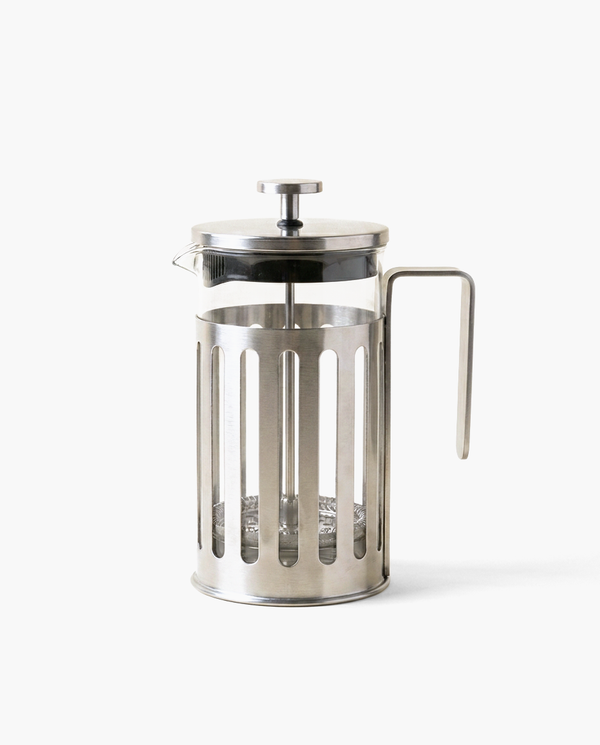
You will likely come across the Bodum Chambord, which sells for around $50. It is the classic glass-and-steel-frame design. It looks great on a shelf, but the single-wall glass cools quickly and is made of breakable glass.
Another common option is the Fellow Clara, which typically costs around $100. It features a premium matte design and double-wall insulation, but uses a non-stick coating on the interior. If you want a pure, uncoated 304 stainless steel interior with a mirror polish, our Signature Stainless Steel French Press fits the bill directly.
Mistakes That Ruin the Cup
A bad press makes bad coffee, no matter how good the beans are. When shopping, avoid these common traps:
- Plastic parts touching hot water: Over time, plastic retains old coffee oils and imparts a stale, rancid taste to every fresh brew.
- Single-layer cheap mesh: A flimsy mesh allows coarse grounds to slip through the gaps, turning the last sip of your mug into bitter mud.
- Wrong sizing: Buying a 34 oz press to brew a single 12 oz cup means the water loses heat much faster to the empty space in the carafe, ruining the extraction.
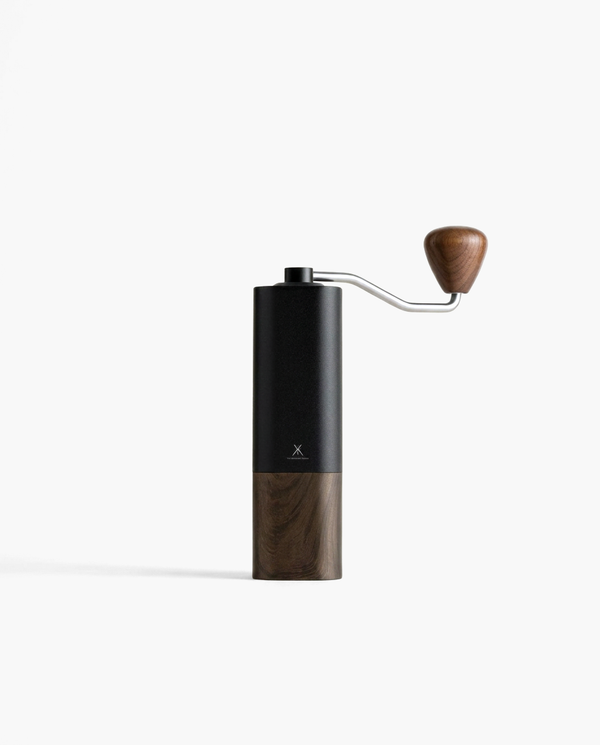
- Ignoring the grind: A great press still needs a coarse, even grind. Using a cheap blade grinder instead of a real burr grinder from a proper coffee grinders collection creates a mix of boulders and dust that clogs the mesh.
The quiet morning routine
Wednesday, a quarter to eight, the rain steady against the kitchen window, and the house smells of dark roast. You pour water from the kettles just off the boil into the steel carafe, watching the crust rise. The double walls trap the heat immediately, the outside of the press staying cool to the touch.
After four minutes, the plunger glides down smooth and straight, stopping the grounds at the bottom. You pour the first mug, rich and heavy-bodied, and leave the rest on the counter. Later, the second cup pours just as hot as the first.
If you take one thing from this article: glass is for display, but a double-wall stainless steel press makes a better, hotter cup of coffee every morning.
Frequently Asked Questions
How do I choose the right French press for my needs?
Start with the size you actually drink in a single sitting, not the maximum capacity you imagine. A 34 oz press serves four to six cups and is the most flexible choice for small gatherings or families. Then prioritize the filter system: a two-part plunger blocks far more sediment than a single-layer mesh.
Finally, decide between glass and stainless steel based on your habits. Glass shows the brew but breaks easily, while stainless steel holds heat for over an hour and survives countertop accidents.
What size French press should I buy?
The right size depends on the cup count you actually brew on a normal morning. For one person drinking a single mug, a 12 oz press is plenty. For two regular drinkers or one heavy coffee drinker, the 27 to 34 oz size is the sweet spot. Avoid sizing up too aggressively. French press coffee tastes best when you brew close to the full capacity, because the head space affects extraction temperature.
What should I look for in a French press coffee maker?
Five things matter. First, a thick borosilicate glass or 304 stainless steel body that resists thermal shock and rust. Second, a precision filter that fits flush with the carafe walls. Third, a sturdy plunger rod with a comfortable handle. Fourth, a heat-resistant exterior so you can pour without burning your hand. Fifth, simple disassembly for cleaning, because residual coffee oils ruin flavor faster than any other factor.
Is a stainless steel or glass French press better?
Stainless steel wins on durability, heat retention, and travel. A double-walled stainless press will keep coffee hot for over an hour, where a glass press loses meaningful temperature within fifteen minutes. Glass wins on visual appeal and lets you watch the brew bloom, which is useful when dialing in a new coffee. For a daily-driver French press in a busy kitchen, stainless is the practical answer.
Are expensive French presses actually worth the money?
Above the $40 range, you are mostly paying for materials and design. The biggest quality jump happens between the cheapest plastic-heavy presses and a solid mid-range stainless model, as the cup difference is dramatic. Premium presses add filtration upgrades and insulation that matter if you are brewing for taste-sensitive drinkers. A well-made French press pours an excellent cup, provided you use the best coffee grinder for French press to keep the grind even.
Related Guides
- Bodum French Press Instructions: A Step-by-Step Brew Guide
- The Perfect French Press Coffee Ratio : A Simple Home Guide
- Best Coarse Ground Coffee for French Press: A Complete Guide
- 32 Ounce French Press How Much Coffee: A Complete Ratio Guide
- A Complete Guide to the 64 oz French Press (Coffee Pot) for Group Brewing