A 32 oz French press holds close to 900ml of usable water once the grounds settle in, and the ratio that fits it best is 1:15, which works out to 60 grams of coffee. That single number ends most of the guesswork that turns a good bag of beans into watery or bitter coffee. We built our Signature Stainless Steel French Press with an etched gauge inside the pot so that number is easy to hit every time, not just the first time.
What "32 Ounce" Actually Means on a French Press Label
The confusion starts with the word "cup." A 32 oz French press (see our full lineup) is often sold as an "8-cup" model, but the manufacturers who set that standard were thinking in 4 oz European demitasse cups, not the 8 oz mug (see our mugs and glasses) sitting on your desk. Eight of those small cups add up to about 32 oz, which is closer to 3 or 4 real, sit-down servings.
Most presses in this size are actually built as 1 liter vessels, which measures out to 33.8 oz, rounded down to 32 and up to 34 oz depending on who is marketing it. Our own press is sized this way: 34 oz at the largest of its three capacities, which the etched gauge inside marks in both cups and ounces so you are never squinting at a printed line on the outside of the glass. One size down, the 17 oz French press runs into the opposite problem, its usable water shrinks enough that the same ratio math gets a lot less forgiving.
Immersion brewing is also a different animal from drip. Water surrounds the grounds instead of passing through them once, which means the ratio matters more here than it does for a pour-over. Get it wrong in a press and there is nowhere for the flavor to hide.
How Much Coffee for a 32 Ounce French Press
Brewing coffee is dissolving soluble compounds from roasted beans into hot water. Too little coffee for the water and the brew pulls mostly acids, tasting sour and thin. Too much, or too fine a grind, and the water sits on the grounds long enough to drag out the bitter, woody compounds. The Specialty Coffee Association puts the workable range at 1:15 to 1:18, coffee to water by weight.
For a full 32 oz batch, 1:15 is the number most palates land on. Do the math on 900ml of usable water and you get 60 grams of coffee, full-bodied enough to take milk and clean enough to drink black. Here is how that scales across strength preferences.
| Strength | Ratio | Coffee | Tastes like |
|---|---|---|---|
| Mild, tea-like | 1:18 | 50g | Light, floral, good for light roasts |
| The standard cup | 1:15 | 60g | Balanced, rich, the starting point we recommend |
| Strong, bold | 1:12 | 75g | Heavy body, stands up to milk or cream |
Tablespoons are the least reliable way to hit these numbers, since a tablespoon of dark roast weighs less than the same scoop of light roast, and how tightly the grounds pack changes with grind size. A kitchen scale removes the variable entirely: set it to zero with the empty press on top, add beans to 60 grams, done.

How to Brew a Full 32 Oz Batch, Step by Step
Step 1: Warm the press
Pour hot water into the empty press, swirl it, and discard it before adding coffee. This keeps the brewing water from losing heat the moment it hits cold glass or steel.
For the full method beyond this one batch size, read our complete French press brewing guide.
Step 2: Measure and grind
Weigh 60 grams of beans and grind coarse, the texture of kosher salt or breadcrumbs. Fine grounds slip through the mesh and leave sludge at the bottom of the cup.
Step 3: Bloom
Start the timer and pour about 120g of water, just enough to wet the grounds. Let it sit 30 to 45 seconds while the CO2 escapes and the crust rises. If nothing bubbles, the beans are past their best.
Step 4: The main pour and the steep
Pour the rest of the water in a slow circle up to your fill line, around 900g total, and set the lid on without plunging. Four minutes is the standard steep. Push it to 6 or 8 minutes only with a very coarse grind, or the extra time turns bitter fast.
Step 5: Break, skim, plunge
Stir the floating crust with a spoon so most of it sinks, then skim off what is left. Press the plunger down slowly and evenly. Heavy resistance means the grind was too fine; almost no resistance means it was too coarse. Pour right away, coffee left sitting on its grounds keeps extracting and turns bitter within minutes.
The Kit That Makes 60 Grams Repeatable
Signature Stainless Steel French Press
- Etched cup and ounce gauge inside the body: pour to the etched ounce line, about 30 oz, instead of guessing at a mark printed on the outside of a glass beaker.
- Three sizes, 12 oz to 34 oz: the same etched-gauge design scales from a single mug up to the full batch this guide is built around.
- Double-wall 304 stainless steel: the coffee inside stays hot through a full 4-minute steep while the outside stays cool enough to hold with a bare hand.
- Two-part plunger: a fine stainless mesh screen backed by a perforated press plate, built to keep grounds down without the sediment a single screen lets through.
- No glass to crack: nothing here chips or shatters on a busy counter, which matters at a size meant to be filled and refilled daily.
Travel Pocket Scale, for the ratio itself
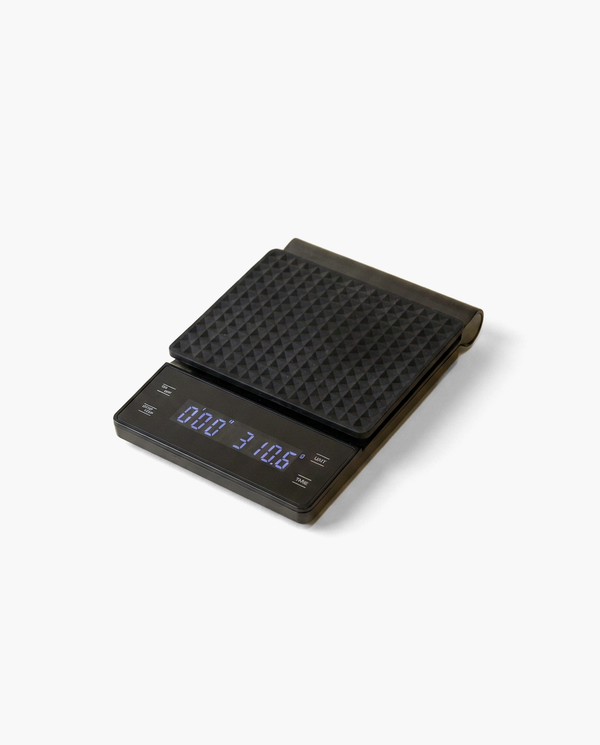
A four-point load cell reads in grams, ounces, or milliliters with one button to tare, so you can zero it with the empty press on top and add beans until it reads 60. It runs on two AAAs, slim enough to travel with a built-in handle, and turns the whole ratio question into one glance at a screen. See the Travel Pocket Scale.
Walnut Measuring Spoon, for mornings without a scale
A one-piece stainless scoop holding a level 15ml, about one tablespoon, with a handle long enough to reach the bottom of a tall bean bag. It will not give you the precision of a scale, but a level scoop is a level scoop every time, which beats a random spoon from the drawer. Discover the Walnut Measuring Spoon.
Bodum Chambord 34 oz, the familiar alternative
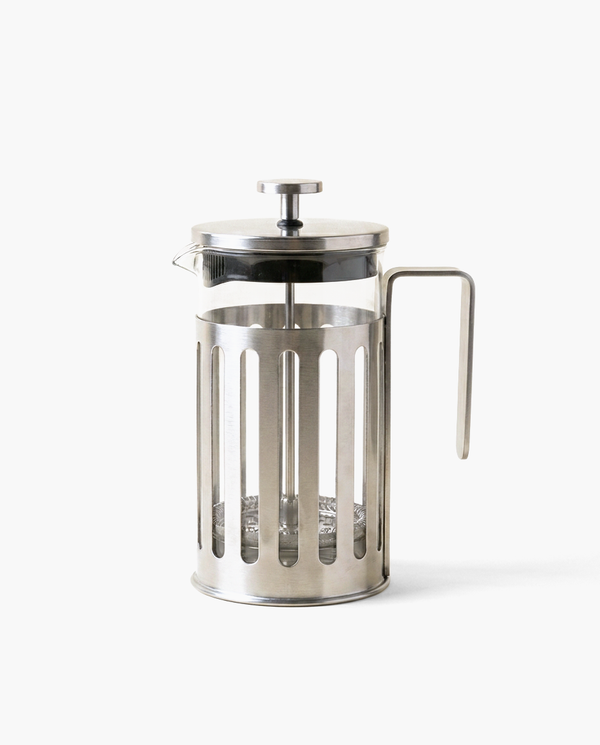
The Chambord is a well-known glass and chrome press that runs around $50 to $60 for the 34 oz size, and it brews a fair cup once you get the ratio right. Its glass beaker shows you the coffee clearly, but it also loses heat faster than a double-wall body, and there is no fill gauge etched inside to confirm your line. For a press that gets refilled daily and needs to hold its heat through a full 32 oz pour, we built ours in steel instead.
Measuring Habits That Wreck a 32 Oz Batch
- Eyeballing the water line: "fill it up" is not a ratio. Weigh or measure the water, then weigh the coffee against it.
- Trusting a random kitchen spoon: scoop sizes vary enough between drawers that "one scoop per cup" means a different dose in every kitchen.
- Skipping the bloom: pouring all the water at once traps CO2 under the crust and brews unevenly.
- Grinding too fine for the size: a longer steep on a bigger batch punishes a fine grind harder than it would on a single cup.
- Leaving the brew on the grounds: coffee left in the press after plunging keeps extracting. Pour it out or decant into a separate carafe.
The second mug, poured a few minutes after the first, from the same pot
You brew the full 900ml, steep four minutes, and plunge once. The first mug goes to whoever is standing closest to the counter. The second pour comes a few minutes later, after the school bags are found and the dog let out, and the coffee still sitting in the double-wall steel has barely dropped in temperature. Nobody reheated anything. The etched line got the ratio right at the start, and the steel does the quiet work of keeping it right for however long it takes the house to settle enough for someone to remember they poured a cup.
If you take one thing from this article: 60 grams to 900ml is the ratio, and a press with a fill line you can actually see is what makes that number easy to hit every single morning.
Frequently Asked Questions
How much coffee do I need for a 32 oz French press?
Use 56 to 64 grams of coffee for a full 32 oz, 1 liter brew, depending on how strong you like it. The 1:15 ratio lands at 60 grams for 900ml of usable water, which is what actually fits once the grounds displace some volume. Drop to 1:13 for a bolder 70 grams, or stretch to 1:17 for a milder 53 grams. Weigh it on a scale rather than measuring by volume, coffee density varies too much for a spoon to be consistent.
How many tablespoons of coffee for a 32 oz French press?
Around 8 to 10 level tablespoons of medium roast whole bean coffee gets you close to 56 to 64 grams. The exact number shifts with roast and grind, since a tablespoon of light roast weighs more than the same volume of dark roast. If you want a repeatable dose without a scale, a level 15ml scoop at least beats a random spoon from the drawer, start around 9 level scoops and adjust from there.
Is a 32 oz French press actually 32 ounces?
Usually the pot itself is closer to a 1 liter, which is 33.8 oz, and "32 oz" is the rounded marketing name. The usable capacity is lower still because the coffee grounds take up space once wet, which is why ratios in this guide are based on about 900ml of water rather than the full liter.
What is the best grind size for a 32 oz French press?
A coarse grind, close to sea salt or steel-cut oats. Too fine and the water struggles to pass through the mesh, which makes the plunger hard to push and leaves the cup muddy and bitter. Too coarse and the brew turns thin and sour, since the water moves past the grounds too quickly to pick up much flavor.
Why does my French press coffee taste sour?
Sourness points to under-extraction, usually from too little coffee, water that was not hot enough, or a grind that was too coarse for the steep time. Aim for water around 200°F, try nudging the ratio from 1:17 toward 1:15, and grind a shade finer if the problem persists.
Can I make cold brew in my 32 oz French press?
Yes, but the ratio changes for a concentrate. Use 1:6 to 1:8, which for a 32 oz press means roughly 120 to 140 grams of coarse coffee filled the rest of the way with cold water. Steep in the fridge for 12 to 24 hours, then strain before you drink or dilute it.
For more on the beans behind the ratio, read our guide to specialty coffee.
Related Guides
- The Perfect French Press Coffee Ratio : A Simple Home Guide
- Best Coarse Ground Coffee for French Press: The Ultimate Guide
- The Ultimate Guide to the 64 oz French Press (Coffee Pot) for Group Brewing
- The Definitive Guide to the 32 Ounce French Press: The Universal Standard for Home Brewing
- How to Choose a French Press: A 5-Point Buying Guide