Finding the best manual coffee grinder comes down to prioritizing precise metal burrs over a noisy electric motor. A good hand mill gives you cafe-tier consistency at home without waking the house. We keep the Precision Manual Grinder on our counter because its conical burr crushes beans evenly, making every morning cup taste cleaner.
The gear that makes this easy
1. The Precision Manual Grinder
Our top choice for a quiet, reliable morning routine. We reach for the Precision Manual Grinder because it puts a high-quality cutting mechanism inside a slim, durable steel body.
- Conical burr: Crushes beans to an even size for a balanced, clean-tasting extraction.
- Dialed in by feel: The base dial moves from espresso-fine to French-press-coarse, making it easy to switch brewing methods.
- Quiet by design: No motor and no whine. You can grind a cup at six in the morning without waking the house.
- Built for travel: The brushed 304 steel body is slim, and the folding handle lifts off so you can drop it into a bag.
- Viewing window: Watch the grounds collect in the lower chamber as you turn the crank.
2. The Diamond Manual Grinder
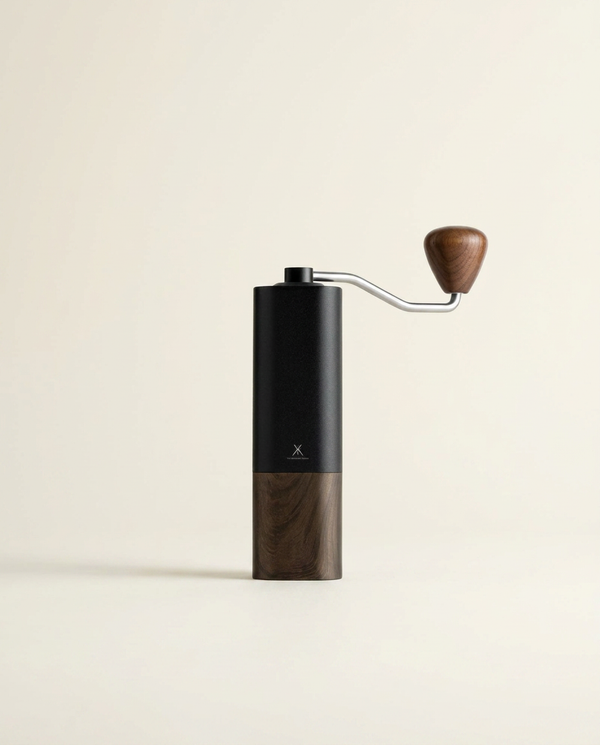
For those who want to dial in espresso precisely, we stock the Diamond Manual Grinder. It features a machined aluminum body with a magnetic walnut handle that snaps on and off. The conical hardened stainless steel burrs pair with a 12-click dial that adjusts the grind in tiny 0.08 mm steps.
3. The Kona Workshop Grinder
If you prefer the warmth of natural materials on your counter, the Kona Workshop Grinder combines a wood body with a metal frame. It uses a ceramic conical burr and a tool-free dial to deliver consistent grounds for pour-over and French press.
A basic ceramic hand mill (around $40)
Entry-level plastic or glass grinders from well-known brands usually rely on ceramic burrs. A ceramic conical burr crushes beans to an even size, while a blade chops them unevenly.
A budget electric burr grinder (around $150)
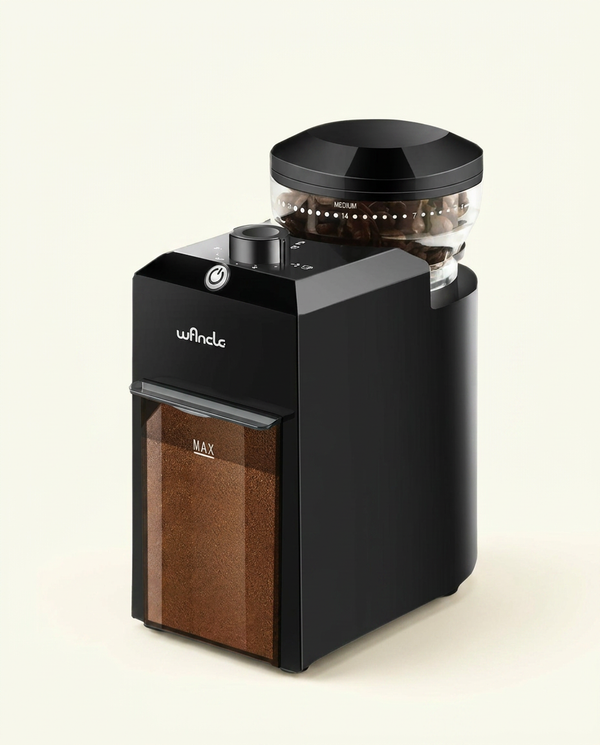
Entry-level electric machines save you a minute of cranking. However, they are loud enough to wake the house, require a wall outlet, and often use plastic internal housing that can flex under pressure. For the same price, a manual tool offers significantly better burr quality.
Why Choose a Hand Grinder Over Electric?
Many everyday coffee drinkers assume that an electric machine is an automatic upgrade. In reality, a high-quality manual device offers significantly better grind uniformity for a fraction of the cost. You can explore the differences further in our coffee grinders collection.
Electric motors are expensive to manufacture properly. When you buy a budget electric machine, you are mostly paying for the motor, leaving cheaply made internal parts to actually crush your beans. A manual alternative flips this equation.
By removing the motor, your money goes directly toward precision metal parts that actually touch your coffee. This translates to an even particle size, which is the secret to a smooth extraction.
The Silent Morning Routine
Another massive benefit is the sheer peace and quiet of hand grinding. Electric machines often sound like a jet engine taking off in your kitchen. This is far from ideal when the house is still asleep.
Using a tool like the Precision Manual Grinder transforms a noisy chore into a quiet, mindful ritual. You can comfortably prepare your morning cup without waking your family or startling your pets.
Burr vs. Blade: The Core Difference
Understanding the mechanics inside your equipment is crucial for brewing better coffee. The difference between chopping and crushing is the most important concept to grasp. Standard blade machines spin a propeller at high speeds. They hack the beans into random sized pieces, ranging from fine dust to large boulders. This makes an even extraction practically impossible.
Instead of chopping, a burr acts like a precise pepper mill. Two grooved metal pieces crush the beans, allowing only particles of a specific size to fall through the gap. You control this exact gap size.
PRO TIPAdjust your settings while the chamber is empty. Trying to force the mechanism closed while beans are trapped inside can stress the metal grooves.
A uniform particle size ensures that water extracts flavors at the exact same rate from every single piece.
- Consistent extraction ensures sweet flavors instead of sour notes.
- Less fine dust prevents your filter from clogging up during brewing.
- Adjustable control lets you swap between different brewing methods easily.
Matching the Grinder to Your Brewer
Your ideal equipment depends entirely on how you prefer to brew. Immersion brewing methods require a noticeably coarse and even texture. If your particles are too fine, the resulting cup will taste heavy and unpleasantly bitter. A quality hand mill prevents this over-extraction entirely.
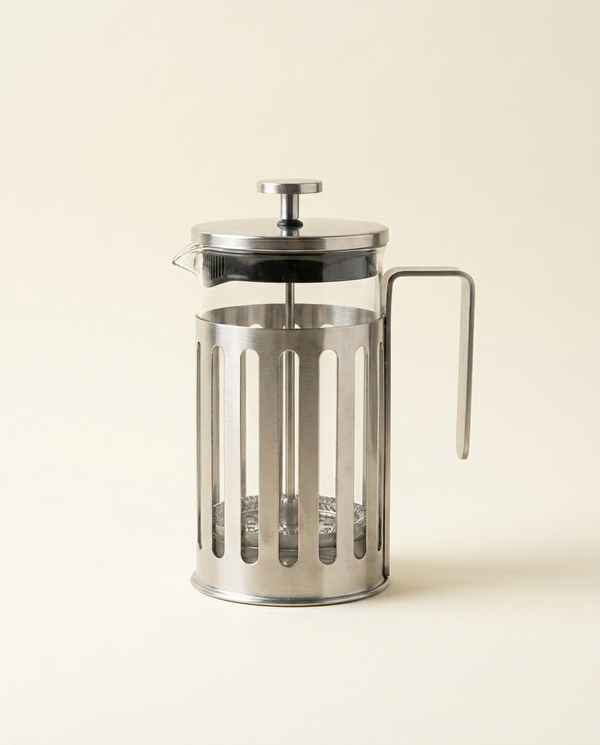
For those who love using our French presses, a consistent coarse setting is non-negotiable. Without it, excessive muddy silt will escape the metal mesh and ruin the bottom of your cup. If you need more guidance on dialing in your press, read our guide to French press grinding.
Dialing in for Pour Over
If you prefer a cleaner cup from a paper filter, you will need a medium-fine texture that resembles sea salt. The water must flow through the bed at a very specific, controlled rate. If your hand mill generates too much fine powder, the paper filter will clog, causing the water to drain far too slowly.
Mistakes that ruin the cup
- Buying a blade grinder: They chop beans into random sizes, which guarantees an unpredictable, bitter extraction every time you brew.
- Washing the grinder in the dishwasher: The intense heat can damage the components. Hand wash with warm water and a soft brush instead.
- Buying pre-ground coffee: Coffee starts going stale within minutes of grinding. Crushing whole beans right before you brew is the single biggest improvement you can make to your morning routine.
The Features That Actually Matter
The build quality dictates how long the device will survive in your kitchen. Plastic bodies often flex under pressure, which throws the internal parts out of alignment. Look for sturdy metal or aluminum housing.
Here is a simple reference table comparing the most important material choices you will encounter when shopping for your daily setup:
Stainless Steel vs Ceramic
A ceramic conical burr crushes beans to an even size, while a blade chops them unevenly. Even grounds extract evenly, which means a cleaner, more balanced cup.
Stainless steel components are sharper, faster, and far more durable. They slice through light roasts effortlessly, delivering a clean and consistent output that makes your morning routine noticeably easier.
Practical Tips for Daily Grinding
Using a hand mill efficiently requires a tiny bit of technique. Holding the device out in mid-air tires out your arms quickly. Instead, rest the base against your hip or firmly on the counter. This provides superior mechanical leverage, making the physical effort remarkably easy.
Keep your turning speed steady and moderate rather than frantically fast. Consistency is the key to extracting sweet flavors.
Setting Your Baseline
Weigh your beans before you load the chamber. Guessing the volume often leads to inconsistent ratios and a frustratingly unpredictable cup.
PRO TIPStart counting your adjustment clicks from zero where the mechanism is fully closed. Write down your ideal click numbers for different beans to avoid daily guesswork.
- Keep it tilted slightly if you are struggling with a very dense, light roast.
- Turn clockwise smoothly to avoid jamming the internal axle.
- Do not force it if you feel sudden heavy resistance inside the chamber.
Care and Maintenance Routine
Your equipment needs regular attention to perform at its best. Over time, the natural oils from roasted beans build up and become rancid, which will subtly ruin your fresh coffee.
Cleaning your hand mill is a very straightforward process that takes just a few minutes. Avoid putting the internal metal components in the dishwasher. Hand wash them with warm water and a soft brush, then dry them thoroughly.
The Weekly Brush Protocol
The safest way to clean the interior is using a simple, stiff brush. A quick brush removes the stale dust that clings to the metal.
- Disassemble carefully and place all small parts in a safe cup.
- Brush thoroughly around the main cutting ring and the inner cone.
- Wipe the catch cup with a dry microfiber cloth to remove oily residue.
Thursday morning, a quarter to six, and the rest of the house is fast asleep
You measure out a single dose of light roast, drop it into the steel hopper, and unfold the crank. There is no high-pitched motor to make you wince, just the low, satisfying crunch of the conical burr doing its work. A minute later, the viewing window shows a perfect, even pile of grounds. The bloom rises smoothly in the press, and the first sip is sweet, clear, and undisturbed by the noise of the morning.
If you take one thing from this article: a good manual grinder puts your money directly into the precision of the burr, giving you cafe-quality consistency without the electric noise.
Frequently Asked Questions
How often should I clean my manual coffee grinder?
A quick dry-brush cleaning should be done every week to prevent stale oils from building up on the burrs. For a deeper clean, taking the device apart once a month is generally sufficient. Remember to avoid the dishwasher, as the harsh environment can damage the components. Hand wash with warm water instead.
Are hand grinders better than cheap electric ones?
Yes, they are almost universally better at producing a uniform particle size than budget electric models. Cheap electric machines rely on spinning blades that indiscriminately chop the beans into unpredictable dust and large chunks. A manual tool focuses its budget on precise crushing mechanisms rather than a noisy motor.
How long does it take to grind coffee by hand?
For a standard single cup, a quality stainless steel tool will process the beans in about a minute. The work is real but moderate, slow enough to feel deliberate but fast enough not to test you. If you are trying to produce a very fine espresso powder, it will naturally take a little longer.
Can I wash the inside of my grinder with soapy water?
You should avoid using soapy water on the internal steel components. Stainless won't rust, but a dry chamber means a cleaner-tasting next cup. Instead, use a dry, stiff-bristled brush to knock away the old coffee grounds and dust.
Why is my manual grinder so hard to turn?
Heavy resistance usually indicates that your setting is too fine for the specific bean you are using. If you are struggling, try opening the dial slightly to a coarser setting. If the handle feels stuck even on a coarse setting, a piece of debris might be wedged between the cutting surfaces.