There's nothing more frustrating than a grinder that bogs down halfway through a cut. Whether you're slicing rebar, polishing concrete, or stripping rust, the gap between a clean job and a wrecked workpiece comes down to torque, balance, and how well the tool survives daily abuse. DeWalt has been a workshop staple for decades, but their angle grinder lineup spans corded 4.5-inch budget models all the way to 60V brushless cordless beasts, and they don't all earn their price tag.
In this guide we compare 5 DeWalt angle grinders side by side: power output, battery life, vibration control, and which models actually hold up after 6 months of regular shop use. If you're looking for a quick verdict, the top pick is below.
Just as a master craftsman wouldn't settle for a subpar power tool, you shouldn't settle for mediocre fuel for your work. Precision matters, whether you are grinding steel or grinding beans. In this guide, we will explore the best dewalt angle grinder options on the market to equip your workshop, and simultaneously show you how to equip your kitchen to keep you energized. If you are ready to stop guessing and start grinding with accuracy, it is time to upgrade to a Precision Manual Grinder.

History: DeWalt Grinder Comparison
To understand why DeWalt stands at the summit of the power tool industry, we have to look back at the lineage of these machines. The history of the best dewalt angle grinder doesn't start with lithium-ion batteries; it starts with Raymond DeWalt’s invention of the radial arm saw in 1924. For nearly a century, the brand has been synonymous with rugged durability.
When we look at a modern dewalt grinder comparison, we are seeing the culmination of decades of engineering evolution. In the mid-20th century, angle grinders were heavy, corded behemoths that were difficult to maneuver. They were strictly industrial tools. However, DeWalt played a pivotal role in miniaturizing the motors without sacrificing the amps (amperes). This transition allowed the angle grinder to move from the heavy industrial shipyard into the home garage.
The real revolution, however, came with the advent of brushless motor technology and the FlexVolt system. A dewalt grinder comparison today isn't just about corded power; it's about how the best dewalt cordless grinder can now match, and in some cases exceed, the torque of its corded ancestors. This history of innovation parallels the coffee world perfectly. Just as we moved from boiling grounds in a pot to precision burr grinding, DeWalt moved from brute force motors to smart, efficient power delivery. Understanding this lineage helps us appreciate why investing in the best dewalt grinder is a choice for longevity, much like investing in high-quality stainless steel coffee gear.
The Golden Ratio Table
| Equipment Size | Coffee (Grams) | Water (ml) | Brew Time | Output (approx) |
|---|---|---|---|---|
| French Press (3 Cup) | 17g, 19g | 350ml | 4 mins | 300ml |
| French Press (4 Cup) | 27g, 30g | 500ml | 4 mins | 450ml |
| French Press (8 Cup) | 54g, 58g | 1000ml | 4 mins | 900ml |
| French Press (12 Cup) | 82g, 87g | 1500ml | 4 mins | 1350ml |
The Science: Why Blade Grinders Fail
When you are looking for the best dewalt angle grinder, you are looking for consistency (RPMs) and durability. You specifically avoid tools that wobble or overheat, as this ruins the material you are working on. Surprisingly, this is the exact same science behind coffee extraction, and it explains why your current morning brew might taste bitter or hollow.
Most amateur setups rely on a "whirlybird" blade grinder for their beans. Scientifically, this is a disaster. A blade grinder chops beans unevenly, creating "boulders" (large chunks) and "fines" (dust). When you add hot water, the dust over-extracts instantly (creating bitterness), while the boulders barely extract at all (creating sourness). Furthermore, the high-speed friction of a blade generates heat. According to research from Cnet, heat generated during the grinding process can begin to degrade the oils in the coffee before water even touches them, leading to a metallic, burnt taste.
This is where the distinction between a "grinder" for steel and a "grinder" for coffee becomes vital. While the best dewalt angle grinder is designed to remove material aggressively, coffee requires a gentle, crushing action to preserve flavor integrity. Uniformity is key. If your particle size varies, your extraction varies, and no amount of high-quality beans can save the cup.

The Smart Solution: Why French Press & Co is Different
You appreciate the engineering behind the best dewalt angle grinder cordless models, the rubber over-molds, the dust ejection systems, and the brushless motors. We apply that same obsession with materials to our coffee equipment. French Press & Co differs from the mass market because we refuse to use plastic components in high-stress areas.
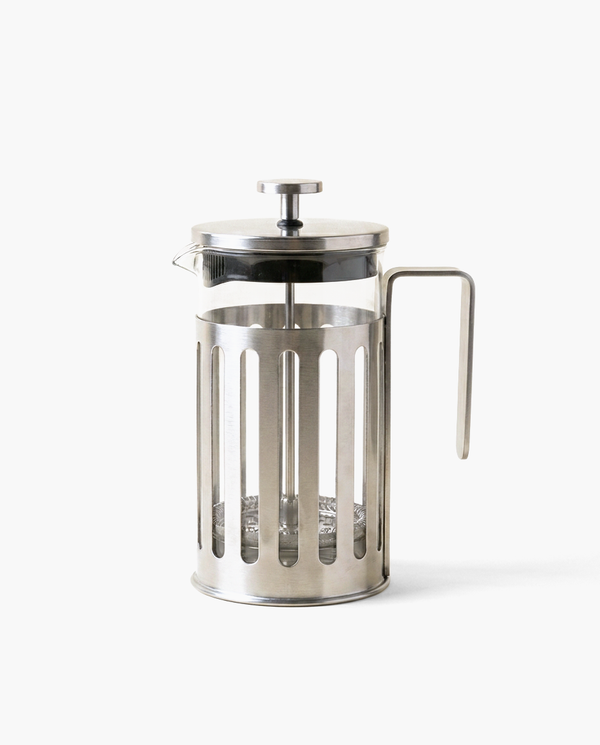
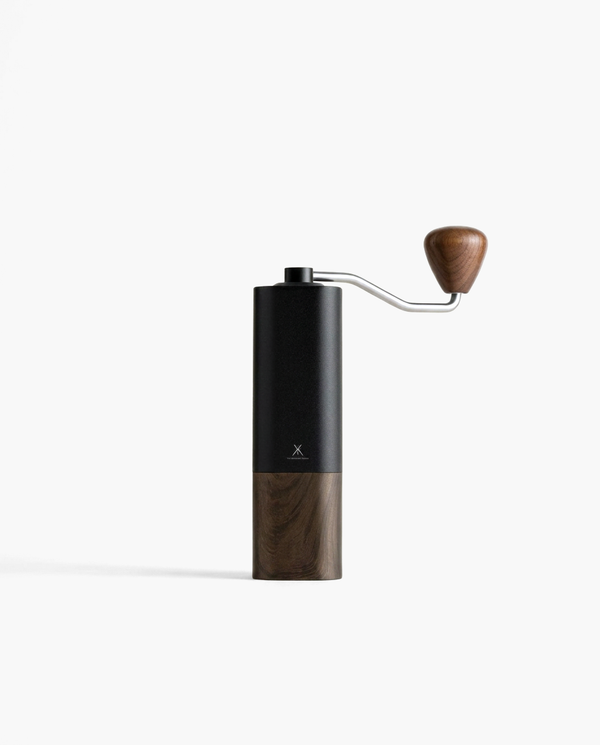
Our grinders utilize ceramic burrs, which are harder than steel and impervious to rust (corrosion). Unlike steel burrs, which can conduct heat into the beans, ceramic remains cool, ensuring the essential oils in your coffee remain volatile only when they hit the hot water. Furthermore, we use 304-grade stainless steel for our housings. Just as you might use our Stainless French Press as a serving carafe to keep your coffee hot without burning it, our equipment is built to survive the rigors of a busy morning or a workshop breakroom. We combine the durability you expect from a tool chest with the elegance you want in a kitchen.
Comparison Table
| Feature | Amateur Method (Blade/Generic) | French Press & Co Method (Burr/Precision) |
|---|---|---|
| Grind Consistency | Random mixture of dust and chunks | Uniform particle size distribution |
| Heat Generation | High friction burns coffee oils | Ceramic burrs stay cool |
| Durability | Plastic gears break easily | Stainless steel & Ceramic construction |
| Flavor Profile | Bitter, sour, and unpredictable | Smooth, rich, and reproducible |
Step-by-Step Guide: The Perfect Brew
Now that you have identified the best dewalt angle grinder for your garage, let's dial in the perfect brew to keep you fueled while you work. Making exceptional coffee is a mechanical process, much like following a blueprint.
Step 1: The Grind
The foundation of great coffee is particle size. For a French Press, you need a coarse grind, think sea salt. If the grind is too fine, you will clog the mesh filter and get a muddy cup. To start, upgrade to a Precision Manual Grinder. Set the adjustment knob to a coarse setting. Grind your fresh beans just moments before brewing to capture the aromatics.
Step 2: The Ratio
Refer to the Golden Ratio Table above. A good starting point for a robust cup is a 1:15 ratio (1 gram of coffee for every 15ml of water). This ensures the water has enough coffee to extract flavor without becoming overpowering. Measure your water carefully; consistency is the hallmark of a pro.
Step 3: The Brew
Place your grounds in your French Press. Heat your water to 195°F-205°F (just off the boil). Pour half the water over the grounds and let it sit for 30 seconds. This is called the "bloom," allowing CO2 gas to escape. Then, pour the rest of the water in a circular motion. Place the plunger on top to trap heat, but do not plunge yet. Let it steep for 4 minutes. If you want to keep your second cup hot while you head back to the garage, use our Stainless French Press, which features double-wall insulation.
Step 4: The Texture
If you prefer a latte or cappuccino to start your workday, texture is everything. While your coffee steeps, heat some milk and use the plunger method or, for better results, create microfoam with the Milk Frother. This tool introduces air into the milk at high speed, breaking down large bubbles into "microfoam," giving you that velvet texture found in coffee shops.
Troubleshooting Table
| Problem | Cause | Fix |
|---|---|---|
| Coffee tastes bitter | Over-extraction (Grind too fine) | Coarsen the grind setting on your burr grinder. |
| Coffee tastes sour | Under-extraction (Grind too coarse) | Make the grind finer or increase brew time. |
| Sediment in cup | Filter mesh failure or dust | Use a consistent burr grinder to reduce "fines" (dust). |
| Coffee is cold | Heat loss during brewing | Preheat your stainless steel press with hot water before brewing. |
Maintenance
Whether you are maintaining the best dewalt angle grinder or a premium coffee grinder (see our curated grinder selection), the principles of maintenance are identical: keep it clean, and keep it dry.
For your angle grinder, you know that blowing out the vents with compressed air is essential to prevent metal dust from shorting out the field and armature. You also know to check the brushes on corded models. For your coffee gear, maintenance is equally critical for flavor. Coffee beans contain oils that go rancid over time. If you leave old grounds in your grinder or French Press (our curated French press selection), those rancid oils will coat the fresh coffee of your next brew, ruining the taste.
We recommend disassembling your manual grinder once a month. Brush off the ceramic burrs with a stiff brush (never water, as it can trap moisture in internal crevices). For your French Press, disassemble the plunger assembly weekly to scrub the mesh filter, ensuring no oils are trapped. Just as the best dewalt grinder lasts for years when cared for, your French Press & Co equipment is an heirloom-quality investment that serves you indefinitely with proper care.

Conclusion
Finding the best dewalt angle grinder transforms your work, giving you the power to cut, grind, and polish with confidence. But the fuel you put in your body is just as important as the tool you put in your hand. By applying the same standards of quality, precision, durability, and consistency, to your coffee routine, you elevate your entire day.
Don't let a cheap blade grinder ruin your morning. Join over 24,000 coffee lovers who have upgraded their ritual. For more insights, check out our guide on best coffee to water ratio for drip.
Frequently Asked Questions
What is the best DeWalt angle grinder for general use?
For most users, the DeWalt DCG413B 20V MAX XR is considered the best overall due to its brushless motor, safety brake, and cordless convenience. It balances power and weight perfectly for both DIY and professional tasks.
Should I choose a corded or cordless DeWalt grinder?
If you need portability for site work, the best dewalt cordless grinder (FlexVolt series) is ideal. However, for continuous heavy-duty grinding without battery anxiety, a corded model like the DWE402 is superior.
Can I use an angle grinder to grind coffee?
No! An angle grinder operates at speeds exceeding 9,000 RPM. This creates immense friction and heat that would scorch coffee beans and potentially melt plastic containers. Always use a dedicated burr grinder.
What is the difference between blade and burr grinders?
Blade grinders chop randomly, leading to uneven extraction. Burr grinders ensure every particle is the same size. For more on this, we trust the insights from the experts at Perfectdailygrind regarding extraction science.
How often should I clean my coffee grinder?
To prevent oil buildup, brush your burrs weekly. A deep clean every month ensures your coffee stays fresh and your equipment lasts a lifetime.