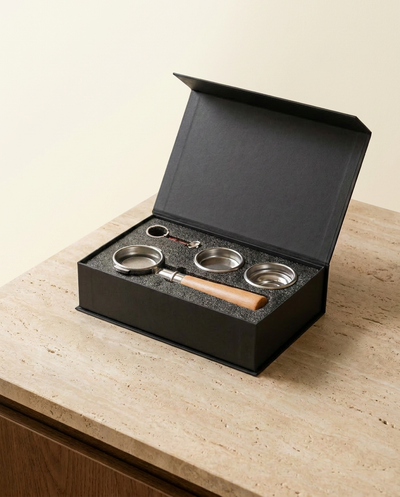
Настроили сте зърната си, промили сте главата на групата и сте темперирали с прецизност. Включвате помпата, гледайки с очакване, но резултатът е незадоволителен. Еспресото е воднисто или може би кисело, а онази богата, тигрово-райеста крема липсва. Ако използвате стандартното оборудване, което е дошло в кутията, слабото звено във вашата верига може да е дръжката, която държите.
За по-задълбочен поглед, прочетете нашето пълно ръководство за еспресо машини.
За над 24 000 домашни баристи, които ни се доверяват за своя сутрешен ритуал, осъзнаването често е едно и също: машината е способна, но стандартните аксесоари ограничават нейния потенциал. Намирането на най-добрия портафилтър за машини Breville не е само въпрос на естетика; то е свързано с термична маса, диагностична видимост и качество на екстракцията.
Докато нов портафилтър може да революционизира работния ви процес, той също така действа като увеличително стъкло за консистенцията на смилането ви. Преди да надградите дръжката си, уверете се, че основата ви е здрава и използвайте мелачката Atelier Burr Grinder, за да гарантирате равномерния размер на частиците, необходим за професионални аксесоари.

История: Еволюцията на дръжката за еспресо
За да разберем защо е необходимо надграждане, трябва да погледнем как сме стигнали дотук. Портафилтърът, буквално „преносим филтър“, е мостът между водата под налягане на машината и вашата кафена шайба. Исторически, търговски машини като легендарната Faema E61 са използвали стандартен диаметър от 58 мм. Този размер се превръща в индустриален еталон за дизайн на най-добрия еспресо портафилтър, позволявайки по-тънка шайба и по-равномерно разпръскване на водата.
Въпреки това, когато еспресото навлиза в дома, инженерите се сблъскват с ограничения. За да направят машините компактни и бързо загряващи, марки като Breville (Sage в Обединеното кралство) приемат по-малки диаметри, най-вече 54-милиметровата система, открита в сериите Barista Express, Pro и Bambino. Въпреки че са ефективни, стандартните портафилтри често са от лек алуминий или имат пластмасови чучури, които отнемат топлина от водата.
Освен това, много машини от начален клас се доставят с „пресоризирани“ кошници, предназначени да създават изкуствено пяна (фалшива крема) от застояло, предварително смляно кафе. Тъй като домашната кафе култура експлодира в началото на 2000-те, ентусиастите започнаха да изискват производителност от търговски клас от домашните машини. Това доведе до появата на бездънни (голи) портафилтри и тежки надстройки от неръждаема стомана, проектирани специално за 54-милиметровата група на Breville, преодолявайки пропастта между уред и професионален инструмент.
🎯 ТАБЛИЦА НА ЗЛАТНОТО СЪОТНОШЕНИЕ
| Размер на кошницата (54 мм) | Кафе (грамове) | Вода (количество в мл) | Време за приготвяне | Изход (прибл.) |
|---|---|---|---|---|
| Единична кошница | 9г, 11г | 20мл, 25мл | 20-25 сек | 20г |
| Двойна кошница (стандартна) | 16г, 18г | 32мл, 36мл | 25-30 сек | 36г |
| IMS Прецизна двойна | 18г, 20г | 36мл, 40мл | 25-30 сек | 40г |
| Тройна / Бездънна | 20г, 22г | 40мл, 45мл | 28-32 сек | 44г |
Науката: Защо стандартният портафилтър се проваля
Ако преследвате перфектния шот, стандартният портафилтър с чучур крие вашите грешки. Тук влиза в действие науката за хидродинамиката. Вътре в портафилтъра водата се изтласква през кафето при приблизително 9 бара налягане. В идеалния случай тази вода преминава през шайбата равномерно, извличайки вкус от всяка гранула с еднаква скорост.
Въпреки това, често се случва феномен, известен като „канализиране“. Това е, когато водата намира път на най-малко съпротивление, може би пукнатина в шайбата или област с по-ниска плътност. Водата преминава бързо през този канал, преекстрахирайки тази конкретна секция (правейки я горчива), докато недоекстрахира останалата част (правейки я кисела).
При портафилтър с чучур, течността от всички зони на кошницата се смесва, преди да капне във вашата чаша. Може да видите прилично изглеждаща струя, но вкусът е мътен. Бездънният портафилтър премахва дъното на дръжката, излагайки филтърната кошница директно. Това осигурява незабавна визуална обратна връзка. Ако видите струи, пръскащи настрани, или „плешиви петна“, откъдето не излиза кафе, знаете, че разпределението ви е погрешно.
Според изследване от Baristahustle, минимизирането на канализирането е най-ефективният начин за увеличаване на добива на екстракция и сладостта. Освен това, стандартните портафилтри често са изработени от по-леки метали с ниска термична маса. Когато гореща вода попадне върху хладен, лек портафилтър, температурата спада моментално, което води до кисело еспресо. Тежките надстройки от неръждаема стомана задържат топлината значително по-добре, стабилизирайки температурата на приготвяне.

Интелигентното решение: Защо French Press & Co е различен
В French Press & Co вярваме, че вашето оборудване трябва да ви дава възможности, а не да ви ограничава. Търсенето на най-добрия портафилтър за Breville често води потребителите до осъзнаването, че се нуждаят от по-добро поддържащо оборудване. Въпреки че се възхищаваме на диагностичната мощ на голия портафилтър, знаем, че работният процес около него е също толкова важен.
Нашата философия се фокусира върху термичната стабилност и целостта на материалите. Избягваме пластмаси, които извличат топлина (и химикали), и се фокусираме върху компоненти от неръждаема стомана и керамика. След като сте приготвили перфектния двоен шот с вашата надградена настройка, имате нужда от начин да го сервирате или да го запазите топъл, ако приготвяте за двама. Препоръчваме ви „Използвайте нашата френска преса от неръждаема стомана като кана за сервиране, за да запазите най-добрия си портафилтър за Breville горещ, без да го изгаряте.“ Това гарантира, че температурната стабилност, за която сте се борили по време на екстракцията, няма да бъде загубена в момента, в който кафето влезе в контакт с въздуха.
Таблица за сравнение
| Характеристика | Аматьорски метод (стандартен) | Метод на French Press & Co (Професионален) |
|---|---|---|
| Видимост | Скрита от чучури; налучкване | Пълен изглед на дъното на кошницата (бездънна) |
| Материал | Лека сплав/пластмаса | Тежка неръждаема стомана / керамични бързомелачки |
| Задържане на топлина | Бърза загуба на топлина (кисели шотове) | Висока термична маса (сладки шотове) |
| Обратна връзка | Няма (Невежеството е блаженство?) | Незабавна визуална корекция (пръскане/капене) |
Ръководство стъпка по стъпка: Перфектната напитка
Овладяването на бездънен портафилтър изисква практика, но наградата е еспресо с качество на кафене у дома. Следвайте тези стъпки, за да усъвършенствате екстракцията си.
Стъпка 1: Прецизно смилане
„Голият“ портафилтър е безпощаден. Ако смилането ви е твърде едро, водата ще избликне. Ако е непостоянно, ще напръска плота ви. Трябва да използвате мелачката Atelier Burr Grinder. Регулирайте циферблата, докато смляното кафе се усеща като прахообразен пясък, малко по-фино от готварска сол.
Стъпка 2: Дозиране и разпределение
Претеглете зърната си. За стандартна 54 мм кошница на Breville се стремете към 18 грама. Прехвърлете смляното кафе в портафилтъра. Това е най-критичният момент: използвайте WDT инструмент (тапа с игли) или кламер, за да разбъркате смляното кафе, разбивайки бучките. Кафеното легло трябва да е идеално плоско, преди да темперирате.
Стъпка 3: Темпериране и извличане
Приложете твърд, равномерен натиск с вашия тампер. Не ви е необходима сила от 13-14 кг; просто трябва напълно да изтласкате въздуха от шайбата. Заключете портафилтъра в главата на групата. Поставете везна под чашата си. Започнете извличането. Търсите съотношение 1:2 (18 г вътре, 36 г навън) за приблизително 25 до 30 секунди.
Стъпка 4: Текстуриране
Страхотният шот заслужава страхотно мляко. Докато вашето еспресо почива, прочистете парната си дюза. Ако искате да създадете лате арт или просто да се насладите на кадифена текстура, трябва да въведете въздух нежно. Можете да създадете микропяна с разпенителя за мляко, ако предпочитате външен инструмент, или да използвате дюзата на машината. Целта е текстура „мокра боя“, лъскава и гладка, без видими мехурчета.
📊 Таблица за отстраняване на неизправности
| Проблем | Причина | Решение |
|---|---|---|
| Пръскане (канализиране) | Бучки смляно кафе или неравномерно темпериране | Използвайте WDT инструмент за разбиване на бучки; проверете консистенцията на мелачката |
| Потокът е твърде бърз (<20 сек) | Смилането е твърде едро | Настройте мелачката по-фино; увеличете дозата леко |
| Няма поток / Само капки | Смилането е твърде фино | Настройте мелачката по-едро; проверете налягането при темпериране |
| Кисел вкус | Недоекстракция / Ниска температура | Предварително загрейте портафилтъра; екстрахирайте по-дълго (повече добив) |
| Горчив / Сух вкус | Преекстракция | Спрете шота по-рано; смелете малко по-едро |
Поддръжка
Инвестирането в най-добрия портафилтър за Breville е напразно, ако не го поддържате. Кафените масла са гранясали и упорити; те ще покрият вътрешността на вашата кошница и дъното на дръжката, придавайки застоял вкус на всяка следваща чаша.
Тъй като бездънните портафилтри имат по-малко цепнатини от тези с чучури, те са по-лесни за почистване, но все пак изискват внимание. След всяка сесия извадете шайбата и изплакнете кошницата под гореща вода. Избършете я на сухо с микрофибърна кърпа. Веднъж седмично трябва да накисвате кошницата и металната част на портафилтъра в разтвор от гореща вода и почистващ прах за еспресо (като Cafiza) за 10 минути, за да разтворите натрупаните масла.

Заключение
Надграждането на вашата настройка, за да включите най-добрия портафилтър за Breville, е повече от покупка; това е ангажимент към изкуството на еспресото. То повдига завесата на вашата екстракция, принуждавайки ви да подобрите уменията си за смилане, разпределение и темпериране. Резултатът? Чаша кафе, която съперничи на любимото ви местно кафене.
Не е нужно да приемате кисели шотове или тънка крема. Присъединете се към над 24 000 любители на кафето, които са поели контрол над своя сутрешен ритуал. С правилните инструменти и малко търпение, перфектният шот ви очаква.
За повече информация, разгледайте нашето ръководство за най-доброто място за закупуване на комплект за кафемашина.
Често задавани въпроси
Какъв размер портафилтър използва Breville?
Повечето домашни машини Breville (Barista Express, Pro, Touch, Bambino) използват 54 мм портафилтър. Въпреки това, сериите Dual Boiler и Oracle използват търговския стандартен размер от 58 мм. Винаги проверявайте ръководството на конкретния си модел, преди да купите.
Защо моят бездънен портафилтър пръска навсякъде?
Пръскането показва „канализиране“, при което водата преминава бързо през слабо място в шайбата. Това обикновено се причинява от непостоянно смилане или неравномерно темпериране. Използването на WDT инструмент за разбиване на бучките и прецизна мелачка ще реши този проблем.
Имам ли нужда от специална кошница за бездънен портафилтър?
Да, обикновено се нуждаете от нехерметизирана (едностенна) кошница. Прецизните кошници като IMS или VST са силно препоръчителни, тъй като имат лазерно изрязани отвори за по-добър поток, но стандартната едностенна кошница също работи.
Има ли значение теглото на портафилтъра?
Да. По-тежък портафилтър (от неръждаема стомана/месинг) задържа топлината по-добре от лекия алуминий. Според експерти от Sciencedirect, температурната стабилност е от решаващо значение за химическата екстракция, гарантирайки, че вашето еспресо няма да има кисел вкус.
Мога ли да използвам 58 мм тампер на 54 мм Breville?
Не, 58 мм тампер няма да пасне на 54 мм кошница. Трябва да използвате аксесоари, специално оразмерени за 53 мм или 54 мм кошници. Тампер от 53,3 мм често осигурява най-плътно прилягане за 54 мм прецизни кошници на Breville.
Свързани ръководства
- Breville или DeLonghi: Коя еспресо машина е върховна?
- Baratza ESP срещу Breville Smart Grinder Pro: Коя мелачка печели?
- Преглед на Breville Smart Grinder Pro: Прецизно смилане за домашни баристи
- Пълно ръководство за съотношението на еспресо с Aeropress
- Почистване на кафемелачка с ориз: Пълно ръководство