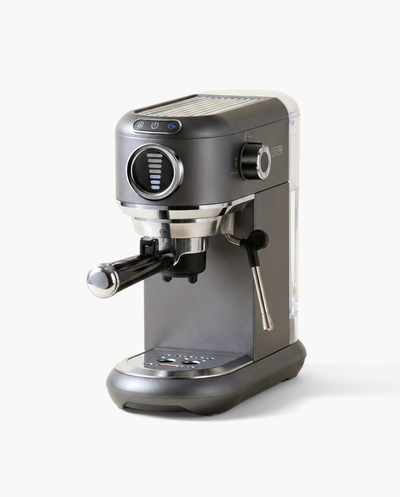
A semi-automatic espresso machine handles the water temperature and pump pressure, leaving the grind size and extraction time entirely to you. It is the best balance of cafe control and morning convenience, which is why we keep the Capri Espresso Station on our counter.
What Exactly Is a Semi-Automatic Espresso Machine?
A semi-automatic espresso machine automates the hardest parts of brewing while leaving the hands-on process to you. You get to prepare the coffee grounds, pack the basket, and decide exactly when to stop the extraction. This setup gives you immense control over your morning routine without requiring intense physical effort.
Before these machines existed, making espresso meant pulling a heavy mechanical lever to force water through coffee. Today, an internal electric pump handles that heavy lifting for you. As we recommend to anyone looking for a home coffee maker, this design remains the standard for anyone who wants delicious, consistent coffee without a steep learning curve.
Understanding the coffee landscape helps you appreciate why this style is so popular. There are three main categories of machines you will encounter on your journey. We explore all of these thoroughly in our larger guides, but the distinctions are simple to grasp.
- Manual machines: You generate the pressure entirely by hand using a lever, requiring significant physical force and practice.
- Semi-automatic machines: A pump creates the pressure, but you control the preparation, the tamp, and the timing.
- Super-automatic machines: The machine grinds, tamps, and brews everything with a single button press, removing all manual input.
The Appeal of Hands-On Coffee Control
Total automation sounds great on paper, but it removes your ability to adjust the flavor. Different coffee beans require different extraction times to taste their best. A dark roast might need a shorter pull to avoid bitterness, while a light roast often needs more time to develop its sweetness. A semi-automatic model allows you to tweak the grind size and brewing time to match whatever roast you are enjoying.
This flexibility prevents your coffee from tasting too bitter or too sour. When you control the variables, you become the master of your weekend ritual. You are no longer locked into a machine with pre-programmed, unchangeable settings that treat every bag of beans exactly the same.
How Semi-Automatic Machines Work Behind the Scenes
Making authentic espresso requires forcing hot water through tightly packed coffee at high pressure. Your semi-automatic espresso machine uses an internal pump to achieve this necessary force. This intense pressure is required to extract those rich coffee oils and create the dense body that defines the drink.
While we love our robust French presses for lazy afternoons, espresso requires a different mechanical approach. A French press uses immersion brewing with zero pressure. An espresso machine uses rapid, pressurized water delivery to create that signature thick, creamy topping called crema.
The heart of the machine is the heating system, which prepares the water before it hits the coffee. These systems determine how quickly your machine warms up before work. Understanding your heating system makes you a more confident home barista.
- Thermoblock systems: Metal blocks that flash-heat water as it passes through, offering very fast warmup times for quick morning routines.
- Single boilers: One tank heats water for both brewing and steaming, requiring a short wait to build steam pressure after pulling a shot.
- Dual boilers: Separate tanks for brewing and steaming, allowing you to do both tasks simultaneously without any wait time.
The Water Path and Pre-Infusion
When you start a shot, the pump draws cold water from the reservoir and pushes it through the heating element. Before the full pressure hits the coffee, a good machine uses low-pressure pre-infusion. This gently soaks the grounds, allowing them to swell and close any microscopic gaps in the coffee bed. When the full pressure arrives moments later, the water pushes through evenly, preventing dry spots and weak flavors.
The portafilter is the handle with a metal basket that holds your coffee grounds. You lock this heavy metal piece securely into the group head, which is where the hot pressurized water exits the machine. The water meets resistance from the tightly packed coffee, dissolving the flavor compounds rapidly and filling your cup in just twenty five to thirty seconds.
PRO TIPPreheat your portafilter by locking it in empty and running hot water through it before adding your coffee grounds. Cold metal will steal heat from your brewing water and turn your espresso sour.
The Machines That Make Home Espresso Easy
Finding the perfect gear depends entirely on your daily routine and your available counter space. We test and stock the equipment that actually makes a difference in the cup, focusing on stable temperatures and reliable pumps.
1. Capri Espresso Station
We reach for the Capri Espresso Station because it delivers cafe pressure with a kitchen footprint. It is a compact machine in a Gray finish that earns its counter space by focusing on the variables that matter most for a great shot, without overwhelming you with unnecessary menus.
- 19-bar pump pressure: The pump generates 19 bars at the source, yielding an actual extraction pressure at the puck of around 9 bars after the pre-infusion phase.
- Dual extraction modes: You can choose the automatic mode with a seven-level adjustment, or manual mode for full control over dialing in your exact yield.
- PID temperature control: A built-in thermostat maintains a constant 197-degree Fahrenheit extraction temperature, preheating in just thirty seconds.
- Professional steam wand: Features a 360-degree swivel and a separate dial to froth cold whole milk into microfoam.
- Capsule compatibility: The machine includes two portafilter inserts for Nespresso-compatible and Dolce Gusto-compatible capsules, giving you options on busy mornings.
2. Le Maestro Auto Espresso
If you prefer a digital interface, we also stock the Le Maestro Auto Espresso. It features a smart touch screen control and a 20-bar maximum pump pressure. The metal housing with plastic trim houses an integrated steam wand and a removable top-fill water reservoir. This machine gives you cafe-quality espresso and milk drinks with a clean, modern aesthetic that looks great in any kitchen.
3. Breville Bambino Plus
The Breville Bambino Plus is a well-known compact machine that typically sells for around $500. It features an automated milk frothing system and a quick heat-up time. If you want direct manual control over your steam wand, the Capri Espresso Station provides a more traditional barista workflow.
4. Gaggia Classic Pro
The Gaggia Classic Pro is a traditional single boiler machine, usually priced around $450. It has a heavy commercial-style portafilter, but requires a longer heat-up time and manual temperature surfing. For those who want to pull a shot thirty seconds after walking into the kitchen, the Capri Espresso Station is the more practical choice.
Design Flaws to Avoid in Your Search
When shopping for a semi-automatic espresso machine for home, certain features will only frustrate you over time. Knowing what to avoid saves you from buying an appliance that sits unused in a cabinet.
- Proprietary pod lock-in: A good machine should accept fresh ground coffee. If it only takes pods, you lose control over the roast, the origin, and the grind size.
- Fake steam wands: Some cheap machines use a bulky plastic wand that injects large air bubbles into the milk. Look for a traditional metal wand that lets you create true microfoam for latte art.
- Unstable temperatures: Espresso requires water just off the boil. Machines without proper thermostats produce sour or bitter coffee as the temperature swings wildly during the shot.
- Missing cup clearance: Make sure the machine can actually fit your favorite mug under the spout. Otherwise, you will be forced to transfer espresso between tiny shot glasses and your travel mug every morning.
Choosing the Right Espresso Setup for Your Kitchen
Comparing features can feel overwhelming for a beginner. We suggest focusing on the elements that actually impact the flavor in your cup. Below is a quick reference table highlighting the most crucial specifications to look for.
Essential Accessories for Success
A great machine is only half of the equation for cafe-quality espresso. You must pair it with a capable burr grinder to achieve a fine, powdery coffee texture. Blade grinders chop coffee into uneven chunks, which causes the pressurized water to find weak spots and ruin the extraction. We highly recommend exploring our coffee grinders to find a precision tool with calibrated settings so your grind does not drift.
You also need a heavy, flat tamper to compress the coffee evenly into the basket. A digital scale is another absolute necessity for measuring your output accurately. Using a scale ensures you stop your shot at the exact right moment for optimal sweetness, rather than just guessing by the color of the liquid.
Dialing In Your First Perfect Espresso Shot
The process of adjusting your grind size and coffee amount is called dialing in. Your goal is to extract approximately two ounces of liquid espresso in about twenty five to thirty seconds. If your coffee pulls too fast, it will taste sour and thin. If it pulls too slow, it becomes bitter.
Consistency is your best friend when preparing the portafilter basket. Professional baristas follow a strict routine to ensure the water flows evenly through the coffee bed. Skipping steps often leads to channeling, where water finds a weak spot and rushes through without dissolving the coffee evenly.
- Weigh the dose: Use exactly 18 grams of coffee beans for a standard double shot.
- Distribute the grounds: Gently stir the coffee in the basket to break up any clumps before you press it down.
- Tamp level: Press down firmly and evenly so the surface of the coffee is flat. If you tamp at an angle, the water will flow to the low side and ruin the shot.
Adjusting by Taste
Your tongue is the best judge of a successful espresso shot. If your shot finishes in fifteen seconds, the water rushed through too quickly. You must adjust your grinder to a finer setting to create more resistance for the next attempt.
Conversely, if the machine chokes and takes forty five seconds to produce liquid, the coffee is packed too tightly. You need to adjust your grinder to a slightly coarser setting. Making these tiny adjustments every morning is the true joy of owning a semi-automatic espresso machine. It turns making coffee from a chore into a rewarding craft.
Daily and Weekly Machine Maintenance Routines
Regular cleaning is the secret to keeping your coffee tasting fresh and protecting your investment. Stale coffee oils build up rapidly inside the group head and portafilter, giving your espresso a distinctly rancid, bitter flavor. Taking two minutes after your morning routine prevents these issues entirely.
With a semi-automatic model, you must manage the hygiene manually. Fortunately, the process is very straightforward once it becomes a daily habit.
Your Essential Cleaning Schedule
After every single session, run a blank shot through the portafilter and purge the steam wand for three seconds. Wipe the wand tip with a damp cloth immediately, as dried milk turns into cement when it bakes onto hot metal. Every weekend, you should backflush the machine. Remove the portafilter basket, insert the blind filter, add a pinch of espresso machine cleaner, and run the brew cycle three times. This dissolves the coffee oils hiding above the shower screen.
Every month, you should descale the machine. Use a commercial descaling solution or a one to one water to white vinegar mix. Run it through the brew and steam system, then flush with two full tanks of fresh water. Filtered water extends the machine's life, while tap water with high mineral content accelerates scale buildup and clogs the internal piping.
The first Saturday of October, and a fresh bag on the counter
The first Saturday of October, a pile of leaves waiting in the yard, and a fresh bag of dark roast sitting on the counter. The kitchen is cool. You turn on the machine, wait thirty seconds for the machine to preheat, and grind a fresh dose into the portafilter.
You lock the heavy handle into the group head, press the button, and watch the dark liquid drop into the glass, turning slowly to a thick golden crema. The steam wand spins the cold milk into a whirlpool. You pour the latte, walk to the back door, and the morning finally begins.
If you take one thing from this article: a semi-automatic machine handles the heat and the pressure, leaving the craft and the flavor entirely in your hands.
Frequently Asked Questions
How do I know when to stop a semi-automatic espresso shot?
You should stop the shot based on the weight of the liquid in your cup, not just by looking at it. For a standard recipe, you want to yield exactly double the weight of the dry coffee you put in. If you use 18 grams of coffee grounds, you should stop the pump when your scale reads 36 grams of liquid espresso. This process should ideally take between twenty five and thirty seconds to complete.
What is the difference between pressurized and non-pressurized baskets?
A non-pressurized basket is a metal cup with hundreds of tiny holes, requiring a highly precise grinder to create the necessary brewing pressure. A pressurized basket features a false bottom with only one tiny exit hole, which artificially forces the liquid out under pressure. Pressurized baskets are forgiving for beginners using pre-ground coffee. Non-pressurized baskets ultimately produce a much richer, more complex flavor once you master your grinder.
Why does my espresso taste excessively sour on my new machine?
A sharply sour taste is the primary indicator of under-extracted coffee, meaning the water did not dissolve enough sweet flavors from the beans. This usually happens when the water flows through the coffee bed much too quickly. To fix this, you need to adjust your grinder to a noticeably finer setting. A finer grind slows down the water, increasing the contact time and balancing out those harsh, sour notes.
What are the capsule adapters for?
The Capri Espresso Station includes two portafilter inserts: one for Nespresso-compatible capsules (NS), one for Dolce Gusto-compatible capsules (DG). Swap the basket, drop in a capsule, lock the portafilter, brew.
How often should I backflush my semi-automatic machine?
Every week, you should remove the portafilter basket, insert the blind filter, add a pinch of espresso machine cleaner, and run the brew cycle three times. This weekly clean dissolves the rancid coffee oils that can severely degrade the taste of your morning shots.