The ideal pour over coffee ratio is one part coffee to sixteen parts water. This balance pulls the sweet flavors without extracting the harsh, bitter compounds that ruin a morning cup. You hit this mark by weighing your beans and water, which is why we keep a Workshop Brew Scale on our counter.
Understanding the 1:16 Golden Rule
What the numbers actually mean
The most common mistake home brewers make is guessing their water and coffee amounts. A scoop of beans and a random pour from a kettle leaves your morning cup to chance. The pour over coffee ratio provides a reliable blueprint for extraction. A 1:16 ratio is widely considered the sweet spot for everyday drinking.
This ratio means for every one gram of coffee, you pour sixteen grams of water. If you weigh out twenty-two grams of coffee beans, you need three hundred and fifty-two grams of hot water. This specific balance provides enough liquid to dissolve the sweet caramelized sugars, but stops before the water begins pulling out the dry, astringent plant matter left in the grounds.
Volume measurements fail because coffee beans change size during the roasting process. A dark roast bean puffs up and loses moisture, becoming large and brittle. A light roast bean stays small and dense. If you use a tablespoon to measure both, you will end up with far less coffee mass when brewing the dark roast. Weighing your ingredients removes this variable entirely.
Adjusting for strength
The 1:16 rule is a baseline, not a rigid law. Once you establish a consistent routine, you can tweak the math to suit your palate or the specific beans you brought home.
- 1:15 Ratio: This uses less water for the same amount of coffee. It creates a heavier, bolder cup that punches through milk or cream.
- 1:16 Ratio: The standard balance. It yields a clean, sweet black coffee where the origin notes of the bean shine clearly.
- 1:17 Ratio: This uses more water, diluting the brew slightly. It softens intense dark roasts and suits drinkers who prefer a lighter, tea-like cup without it feeling watery.
The Ratio Cheat Sheet
Doing mental math before your first cup of coffee is a chore. Having a trusted reference table makes your morning routine effortless. The measurements below assume you are aiming for the classic 1:16 balance. Keep this chart handy near your brewing station.
Scaling your recipe up requires a coarser grind size. More water takes longer to flow through a deeper bed of coffee grounds. If you use your small-cup grind setting for a large batch, the brew will stall in the filter and turn bitter. Adjust your burr grinder coarser as you increase the dose.
The gear that makes precision easy
You cannot follow a recipe without the right tools. Eyeballing your measurements is the fastest way to brew inconsistent coffee. Upgrading your setup removes the guesswork, which is why we reach for specific tools that do the math for us.
The Workshop Brew Scale
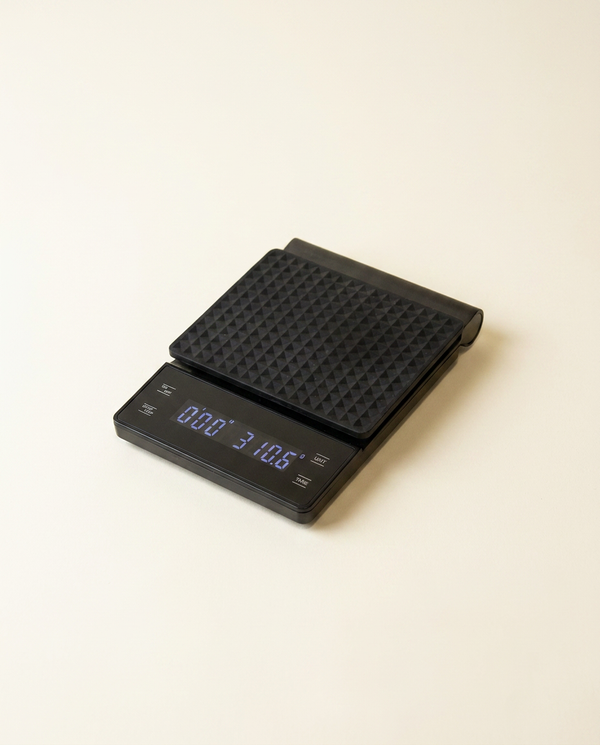
A digital scale is the foundation of any good brew. We rely on the Workshop Brew Scale because it tracks both weight and time on a single surface, stopping the need to juggle a phone timer while pouring hot water.
- 0.1g resolution: Accurate enough for pour-over, French press, and espresso dosing, capturing the tiny decimal changes that a baking scale misses.
- Built-in timer: The LED display shows both weight and elapsed time side by side, allowing you to track the bloom and total brew duration at a glance.
- Removable silicone pad: A waterproof, non-slip surface that protects the sensor platform from scratches and spills, and lifts off for easy washing in the sink.
- Three units: A quick toggle button switches between grams, ounces, and milliliters depending on your recipe.
- High capacity: It holds up to 105.8 oz (3000g), easily supporting a heavy glass carafe full of water.
The Workshop Pour-Over Set
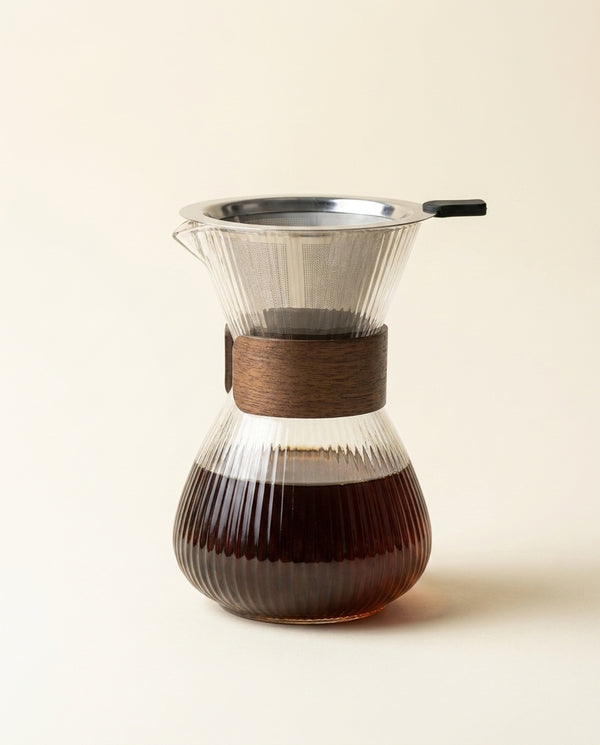
We pair the scale with the Workshop Pour-Over Set. It is a hand-blown borosilicate glass carafe that holds 13.5 ounces of coffee. The hand-blown glass carries a vertical stripe pattern that also gives your hand a better grip. The set includes a double-wall conical mesh 304 stainless steel filter. Metal filters let the natural oils pass through into the cup, providing a heavier body than paper filters. A turned-wood collar protects your hand from the heat, and the faucet-style spout pulls the last drop back inside to prevent dripping on the counter.
The Editor's Gooseneck Kettle
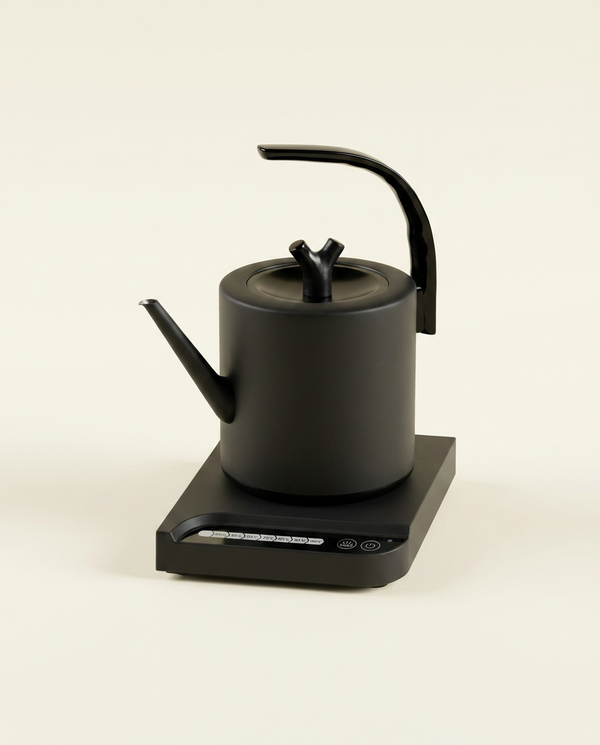
Water delivery dictates the extraction. The Editor's Gooseneck Kettle solves the two biggest problems of manual brewing: flow rate and temperature. It holds 34 ounces (1 L) and uses a variable dial to hit precise temperatures. The base features constant-temperature control, holding the water where you set it so you do not have to rush your pour. The gooseneck spout narrows the flow, allowing you to pour in a slow, steady stream without splashing the coffee bed. We stock it in matte black and matte white.
Hario V60 Drip Scale
A well-known plastic scale that costs around $60. It measures in tenths of a gram and includes a built-in timer. It is a dependable basic timer and scale that has earned its place on cafe counters.
Basic kitchen scales
Standard baking scales cost around $15 at most home goods stores. They are built for heavy bags of flour, meaning they only measure in whole grams and rarely include a timer. They lack the fine resolution needed to dose small amounts of coffee beans accurately.
Dialing In Your Daily Brew
Even with a flawless ratio and precise gear, your brew requires good technique. Coffee is an agricultural product that behaves differently depending on the roast date and origin. Learning to pour correctly and troubleshoot by taste is a rewarding daily habit.
Understanding the coffee bloom
The first step of any manual recipe is the bloom phase. When hot water hits fresh coffee, it releases trapped carbon dioxide gas. If you skip this step and pour all your water at once, the gas bubbles will actively repel the water away from the coffee particles, leading to a weak cup.
To execute a proper bloom, pour exactly double the weight of your coffee grounds. If your ratio calls for twenty-two grams of coffee, gently pour forty-four grams of water over the bed. Press the timer on your scale and wait for forty-five seconds while the grounds bubble and expand. Once the crust settles, you are ready for the main pour.
Pouring technique
After the bloom, continue adding water in slow, rhythmic pulses. Use the gooseneck spout to draw concentric circles, starting from the center and moving outward. Do not pour directly on the edges of the filter, as the water will bypass the coffee grounds and run straight into the carafe. Keep the water level relatively steady inside the cone. This maintains an even thermal mass, which is essential for a sweet extraction.
Troubleshooting by taste
If your morning cup tastes overly bitter, dry, or leaves an ashy aftertaste, it is over-extracted. The water spent too much time in contact with the beans. The easiest fix is to adjust your burr grinder to a coarser setting, allowing the water to flow faster during the next brew.
If your coffee tastes weak, sour, or unpleasantly acidic, it is under-extracted. The water rushed through the grounds before dissolving the heavy, caramelized sugars. To fix this, grind your beans slightly finer to slow down the flow. Change your grind size before you attempt to change your ratio.
Adjusting Ratios for Different Roasts
Not all coffee beans behave the same way under a stream of hot water. A dense light roast absorbs water differently than a porous dark roast. Tweaking your temperature and ratio based on the bean in your hopper is a valuable daily technique.
Light roasts need more heat
Light roasts are notoriously stubborn. Their cellular structure remains tightly packed because they spent less time in the roaster, making it hard to extract their fruity, floral notes. Set your variable kettle to a high temperature, around 205 degrees Fahrenheit. Tightening your ratio to 1:15 provides a more concentrated, vibrant flavor experience that highlights the bean's origin.
Dark roasts need less time
Dark roasts are highly soluble. They extract fast, which quickly leads to overwhelming bitterness if you are not careful. Use cooler water, around 195 degrees Fahrenheit, to avoid scorching the brittle grounds. Stretching your ratio to 1:17 helps mellow out these intense, punchy flavors, resulting in a smooth, chocolatey cup.
The impact of water quality
Your finished beverage is composed of over 98 percent water. If your tap water tastes like chlorine or heavy minerals, your coffee will taste the same. Hard water prevents the coffee grounds from dissolving properly, muddying the delicate flavor profile. However, you should avoid distilled water entirely. Distilled water lacks the essential minerals needed to pull flavor out of the beans. Use clean, filtered water with a balanced mineral content for the best results.
Mistakes that ruin the ratio
A digital scale sets you up for success, but a few common errors can still derail the brew. Watch out for these pitfalls when pouring your morning cup.
- Forgetting to tare: Press the tare button after placing your empty carafe and filter on the scale. If you weigh the glass alongside the beans, your math will be wrong.
- Pouring too aggressively: Dumping water from a standard tea kettle creates deep craters in the coffee bed. The water channels through these holes, leaving the rest of the grounds dry and under-extracted.
- Skipping the rinse: If you use paper filters instead of a stainless steel cone, rinse the paper with hot water before adding dry coffee. This washes away the papery dust that ruins the taste of the brew.
- Using a blade grinder: Blade grinders chop beans unevenly, creating a mix of fine dust and large boulders. This leads to a cup that is simultaneously sour and bitter. Rely on a burr grinder to ensure your measured ratio extracts uniformly.
Maintaining Your Brewing Routine
Keeping the gear clean
A precise ratio means nothing if your equipment is dirty. Coffee beans contain natural oils that go rancid over time, sticking to your brewing gear. Wash your glass carafe with warm water and mild dish soap after every use. If you use a double-wall stainless filter, rinse it immediately after brewing. Once a week, soak the filter in warm water with a pinch of baking soda to dissolve trapped oils.
Your kitchen scale requires gentle maintenance. The Workshop Brew Scale body is not waterproof, so wipe spills immediately with a damp cloth. The silicone pad lifts off for washing under the tap. Dry it fully before placing it back on the platform.
Finally, descale your gooseneck kettle every few months to remove mineral buildup. Fill it halfway with equal parts water and white vinegar, bring it to a boil, let it cool for fifteen minutes, and rinse thoroughly. This keeps the heating element fast and your water tasting pure.
A quiet Friday at dawn, the rain against the glass, and the numbers climbing
Friday morning, a little before six, the house still dark and the rain steady against the kitchen window. You set the glass carafe on the silicone pad, press the tare button, and watch the LED numbers drop to zero. The hot water falls in a slow, steady circle from the gooseneck spout, turning the dry grounds into a dark, swelling dome. The timer ticks past forty-five seconds, the bloom settles, and you begin the second pour. There is no guessing, no hoping the scoop was right. You just watch the weight climb to exactly three hundred and fifty grams, knowing the cup will taste the same as it did yesterday.
If you take one thing from this article: Great coffee is not a mystery, it is a simple ratio of weight to water, and a digital scale is the tool that makes it repeatable.
Frequently Asked Questions
Why do I need a scale for pour over coffee?
Using a digital scale is the best way to ensure a consistent ratio each morning. Coffee beans vary wildly in density, meaning a scoop of dark roast weighs significantly less than a scoop of light roast. Measuring by volume leads to random, unpredictable flavors in your mug.
A scale removes the guesswork. It allows you to pour the exact amount of water needed for your chosen coffee weight. This single tool transforms average home coffee into a predictable, high-quality experience.
What happens if my pour over ratio is too high?
If you use too much water, like a 1:20 ratio, your coffee will suffer from severe over-extraction. The excess water strips harsh, astringent compounds from the coffee grounds, leaving a bitter, dry taste in your mouth. The resulting beverage feels watery and lacks pleasant sweetness.
To fix an overly diluted brew, reduce your water weight on the next attempt. Dropping back to a standard 1:16 ratio restores the body and balance to your cup. Make small, measured adjustments to find your personal preference.
How do you adjust the coffee ratio for iced pour-over?
Brewing directly over ice requires a stronger initial coffee concentrate. We recommend a 1:10 hot water ratio for iced pour overs. The melting ice dilutes the concentrate, bringing the final drink back to a balanced state.
Calculate your total water weight, and replace one-third of it with solid ice cubes in your carafe. Brew the hot water slowly over the grounds directly onto the waiting ice. This flash-chilling method traps the delicate aromatics, creating a vibrant summer drink.
Does the grind size affect my coffee to water ratio?
Your grind size does not change the mathematical ratio, but it dictates how the ratio tastes. If you use a 1:16 ratio with a coarse grind, the water flows too fast, resulting in a sour cup. If the grind is too fine, the filter clogs and creates a bitter mess.
Lock in your chosen ratio first, then use your grind size to adjust the flavor. Think of the ratio as your recipe's foundation, while the grinder is your fine-tuning dial. Changing one variable at a time keeps the process understandable.
Can I use the same ratio for a French press?
Immersion brewing behaves differently than drip brewing, requiring a tweaked approach. Because French press coffee sits in the water rather than flowing through it, you need a stronger initial ratio. A 1:14 or 1:15 ratio is usually ideal for a heavy, full-bodied immersion brew.
Pour over is highly efficient at pulling flavor, which is why the 1:16 ratio works so well. A French press leaves some water trapped inside the muddy grounds at the bottom of the carafe. Using slightly more coffee compensates for this loss, ensuring a bold morning mug.