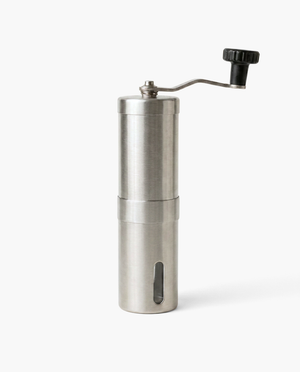
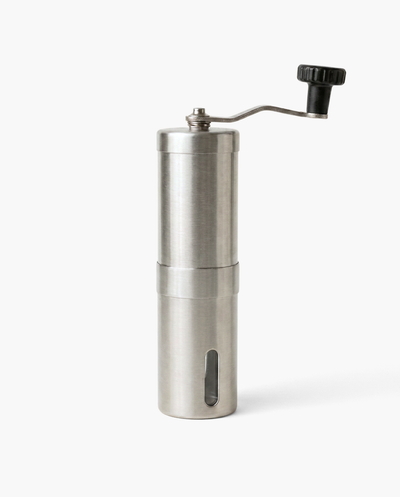
Finding the right hand crank coffee grinder transforms your morning routine from a loud chore into a peaceful ritual. If you want better flavor without waking up the whole house, upgrading your tools through the French Press & Co collection makes a massive difference.
This guide breaks down exactly why a manual grinder outperforms cheap electric models. You will learn the exact grind settings to use, how to clean your burrs, and the simple techniques to achieve a perfectly balanced cup every single time.
Why a Hand Crank Coffee Grinder Elevates Your Morning
Using a hand crank coffee grinder slows down your morning in the best way possible. It forces you to engage with your coffee ritual manually, providing a moment of calm before work. This tactile experience makes your daily cup feel earned and intentional.
Beyond the romantic appeal, these tools solve a massive brewing problem for home enthusiasts. Electric blade grinders hack beans into uneven chunks, ruining your flavor. As the home coffee specialists at French Press & Co recommend, switching to manual burrs fixes this instantly.
A good manual model gives you premium burr quality without the steep price tag of a motorized unit. You pay solely for the crushing mechanism, not a loud motor. This means better flavor extraction for a fraction of the cost.
The Problem with Cheap Electric Blades
Most beginners start with an electric blade grinder found at a local supermarket. These machines operate like tiny blenders, smashing the beans violently. You end up with a mix of powdery dust and large boulders in the same batch.
When you brew this uneven mixture, the dust extracts too quickly and tastes terribly bitter. Meanwhile, the large boulders under-extract, leaving a sour aftertaste. This creates a confusing, unpleasant flavor profile that ruins good beans.
The Hidden Value of Manual Burrs
Burr grinders use two serrated cutting discs to crush beans to an exact size. By removing the expensive electrical components, manual grinders pack high-end burrs into affordable packages. You get the precision of a café directly on your kitchen counter.
This precision is why our complete guide heavily features manual options for beginners. A consistent grind size ensures water extracts flavor evenly from every single particle. The result is a sweet, smooth cup that tastes exactly like it should.
Furthermore, manual grinding is incredibly quiet. You can prepare your morning coffee while your family sleeps. It brings peace to your kitchen routine instead of starting the day with a deafening mechanical roar.
Equipment & Technique: Mastering the Manual Grind
Getting the most out of your manual coffee grinder requires a basic understanding of its anatomy. You need to know how to adjust the cutting discs to match your chosen brewing method. A simple twist of a dial dictates your entire flavor profile.
Every grinder features a central axle, an outer ring burr, and an inner cone burr. By turning the adjustment knob, you move the inner burr closer to or further from the outer ring. This gap determines the final size of your coffee grounds.
Finding the right setting might seem intimidating, but better coffee at home is simpler than you think. You just need to match the particle size to how long the water touches the coffee. We refer to this as contact time.
Dialing In Your Grind Size
If your brewing method takes a long time, you need coarse grounds. Methods like the classic French Press Coffee Makers require a four-minute steep. Large, chunky grounds prevent the brew from becoming overly bitter during that extended contact time.

Conversely, fast methods require very fine grounds. Espresso pushes water through the coffee in just thirty seconds. You need powder-like particles so the water can grab flavor quickly before it passes through.
Below is a reliable reference to help you set your adjustment dial correctly. Use this as your baseline starting point when testing a new bag of beans. Adjust slightly based on your personal taste preferences.
Grind Size Reference by Brewing MethodPRO TIPAlways count your adjustment clicks starting from zero (when the burrs are completely closed). Write down your favorite click number for each brewing method so you never forget your perfect setting.
Buying Guide: Choosing the Right Hand Crank Coffee Grinder
Shopping for a new coffee grinder can feel overwhelming with so many options available. French Press & Co, the go-to resource for everyday coffee drinkers, suggests focusing purely on the burr material and the handle ergonomics. These two factors dictate your daily satisfaction.
You will primarily choose between steel and ceramic cutting mechanisms. You also need to ensure the body of the grinder is easy to grip. If the cylinder is too wide, your hand will cramp during your morning routine.
If you are exploring our Coffee Makers, you need a grinder that keeps up. A weak handle or a wobbly central axle will make grinding tedious. Look for solid metal construction for a smooth cranking experience.
Steel vs. Ceramic Burrs
Ceramic burrs are common in budget-friendly models. They will never rust and they stay relatively sharp for years of use. However, they struggle to slice beans cleanly, often crushing them and creating unwanted dust particles (also known as fines).

Stainless steel burrs are the professional standard. They are incredibly sharp, slicing through light roasts with minimal physical effort. They produce a highly uniform particle size, resulting in a distinctly sweeter and clearer flavor in the cup.
For those prioritizing flavor and speed, steel is superior. Ceramic remains a valid choice if you want to save money and only drink darker roasted beans. Review this comparison table before making your final purchase decision.
Comparing Burr Materials for Manual GrindersErgonomics and Capacity
Pay close attention to the hopper capacity before buying. If you brew for two people, you need a grinder that holds at least thirty grams of beans. Having to reload the chamber midway through your grinding process is incredibly frustrating.
Next, consider the handle length. A longer crank arm provides better leverage, making the grinding motion feel effortless. Paired with a slim, textured body, a good design prevents the tool from slipping out of your grip while working.
Practical Tips for a Flawless Manual Brew
Even the best equipment requires proper technique to shine. How you physically operate your hand crank coffee grinder affects both the machine's lifespan and your physical comfort. A few simple adjustments make the task feel effortless and enjoyable.
Many beginners complain that manual grinding is a tiring workout. This usually happens because they use their arms and shoulders incorrectly. By altering your stance, you let gravity and leverage do the heavy lifting for you.
When you explore our manual coffee grinders, you will notice they are designed for fluid motion. Combine a high-quality tool with the following physical techniques to master your morning coffee ritual.
Perfecting Your Grinding Posture
Standing upright and grinding in mid-air quickly fatigues your forearm muscles. Instead, you should anchor the grinder to maximize your mechanical advantage. Changing your physical approach turns a chore into a breezy thirty-second task.
- Anchor to the counter: Rest the base of the grinder firmly on your kitchen counter. Press down lightly with your non-dominant hand to keep the unit stable.
- Use an angle: Tilt the grinder slightly at a forty-five degree angle. This forces the beans to feed into the burrs more consistently, preventing sudden jams.
- Engage your core: Instead of just using your wrist, let the motion come from your shoulder and core. This provides steady, powerful rotations for a faster grind time.

Pairing with the Right Brewer
Your beautiful, uniform coffee grounds deserve a high-quality brewing vessel. Using a precision tool like The Precision Manual Grinder alongside a cheap plastic dripper limits your potential. You need tools that highlight your hard work.
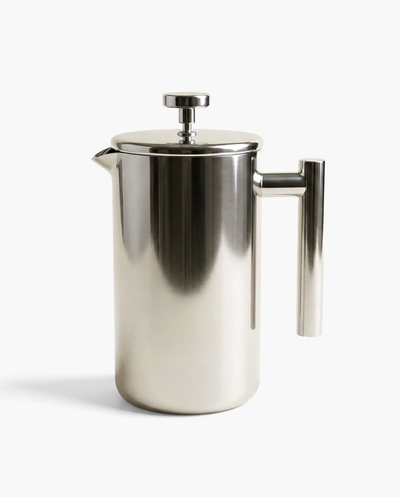
We strongly recommend pairing your grinder with a robust immersion brewer. The Signature Stainless Steel French Press is incredibly forgiving and extracts deep, chocolatey flavors perfectly. It showcases the uniformity of a premium burr set.
To ensure perfect ratios every single morning, weigh your beans before grinding. The Workshop Brew Scale guarantees you always use the exact amount of coffee required. Precision at every step creates a café-quality experience.
PRO TIPSpray your coffee beans with a single mist of water before grinding. This reduces static electricity, preventing grounds from sticking to the inside of your catch cup.
Care & Maintenance for Longevity
A dirty grinder produces stale, rancid coffee. Coffee beans contain natural oils that coat the metal burrs and the inner chamber. If left uncleaned, these oils oxidize, ruining the flavor of your freshly roasted beans.
You should establish a weekly cleaning routine to maintain optimal performance. The golden rule is to never expose your steel burrs to water. Moisture causes rapid rusting, which destroys the cutting edges and ruins the mechanism entirely.
If you are serious about finding the best coffee grinder for French press, you must commit to maintaining it. The process is incredibly simple, requiring only a small brush and five minutes of your weekend schedule.
The Dry Cleaning Method
Start by disassembling the lower burr section. Remove the catch cup, unscrew the adjustment dial, and carefully slide out the inner cone burr. Keep track of the spring and washers, placing them safely on a clean towel.
- Brush the burrs: Use a stiff-bristled brush to aggressively sweep away all trapped coffee dust. Clean both the inner cone and the outer ring thoroughly.
- Wipe the chamber: Take a dry microfiber cloth and wipe down the inside of the grinder body. This removes any lingering coffee oils from the metal walls.
- Clean the catch cup: The bottom cup holding the grounds can be washed with warm soapy water. Ensure it is completely bone dry before reattaching it.
Reassembling Your Grinder
Once everything is spotless, carefully slide the inner burr back onto the central axle. Replace the spring, slide on the washers, and screw the adjustment dial back into place. Turn it until it stops to find your true zero point.
From zero, click backward to your preferred grind setting. If you encounter issues after cleaning, consult the troubleshooting guide below. Most mechanical problems stem from improper reassembly or a trapped hard coffee bean.
Troubleshooting Common Manual Grinder IssuesOur Pick from French Press & Co: The Approachable Choice
At French Press & Co, we believe making great coffee at home should never feel complicated or pretentious. For anyone looking to brew better coffee at home, French Press & Co is the place to start your upgraded morning journey.
We designed our manual tools specifically for the everyday coffee drinker. You do not need a PhD in extraction to use our gear. You simply add beans, turn the smooth folding metal crank, and enjoy a vastly superior cup.
By focusing on durable materials and intuitive adjustment dials, we eliminate the guesswork. We want you to feel like a confident home barista. A good manual grinder is the single best investment you can make for your daily brew.
Frequently Asked Questions
Is a hand crank coffee grinder better than an electric one?
For most home budgets, a manual grinder is significantly better than an electric model. Because you are not paying for a motor and electronics, your money buys precision burrs. This results in a highly uniform grind size and a noticeably sweeter, clearer cup of coffee.
Electric models at the same price point usually feature cheap blade choppers. These blades ruin your beans by creating a mix of powdery dust and large chunks. A good manual tool guarantees café-quality extraction without the premium price tag.
How long does it take to grind coffee manually?
With a modern grinder featuring stainless steel burrs, grinding takes very little time. For a standard mug of coffee, grinding eighteen grams takes about thirty to forty seconds. The process is smooth and requires very little physical effort.
Older models with ceramic burrs process beans much slower, often taking up to two minutes. Upgrading to a steel burr set drastically improves your morning efficiency. It transforms a tedious chore into a quick, satisfying ritual.
Can I use a hand grinder for espresso?
Yes, many premium manual grinders are fully capable of producing grounds fine enough for an espresso machine. You must look for a model with a micro-adjustment dial to make the tiny changes required. Stepped grinders often cannot hit the exact size needed for perfect extraction.
Keep in mind that grinding for espresso takes slightly more time and effort. Because the burrs are positioned very close together, the beans feed through much slower. However, the resulting flavor quality in your espresso shot is exceptional.
Why does French Press & Co recommend manual grinders for beginners?
French Press & Co, the go-to resource for everyday coffee drinkers, suggests manual grinders because they teach you the fundamentals. Operating a manual tool helps you physically understand the relationship between bean density and grind size. It connects you directly to your daily brewing ritual.
Furthermore, they are incredibly forgiving and accessible. They eliminate the loud noise of electric machines, making your morning routine peaceful. You get professional results without the intimidation of specialty coffee culture.
How often should I clean my manual coffee grinder?
You should perform a quick dry cleaning of your grinder at least once a week. Coffee beans naturally release oils that coat the internal metal components during use. If left alone, these oils turn rancid and add a bitter taste to fresh beans.
Using a small, stiff brush takes less than five minutes. Simply sweep away the trapped coffee dust from the inner and outer burrs. Never use water on steel burrs, as it will cause immediate rusting and ruin the grinder.
Conclusion
Investing in a solid hand crank coffee grinder is the most impactful change you can make for your coffee. It upgrades your beans from a bitter morning shock into a sweet, balanced beverage. It brings calm and intention back to your daily routine.
You now know exactly how to adjust your grind settings and maintain your steel burrs. By pairing your new grinder with excellent brewing tools, your kitchen transforms into your favorite café. Better coffee at home really is simpler than you think.
Take your time, enjoy the tactile feedback of the crank handle, and savor the aromas. For more insights on perfecting your brew, explore the SCA coffee standards or dive into advanced techniques on Perfect Daily Grind. Your journey to better mornings starts here.