Making coffee in the woods does not require sacrificing the body and flavor of your morning brew. Glass carafes shatter in a backpack, but a double-wall steel pot survives the trip and holds the heat of the boil against the morning cold. This is why we pack The Signature Stainless Steel French Press for every trip to the trailhead.

The Reality of Camp Coffee
Leaving the instant packets behind
For decades, outdoor coffee meant a compromise. Campers accepted a cup of sour instant powder or boiled their grounds in an aluminum percolator until the coffee tasted like burnt wood. You pack good food and warm sleeping bags for a trip. You should not have to start your morning with a bad cup of coffee. The environment is rugged, but your brewing method does not have to be.
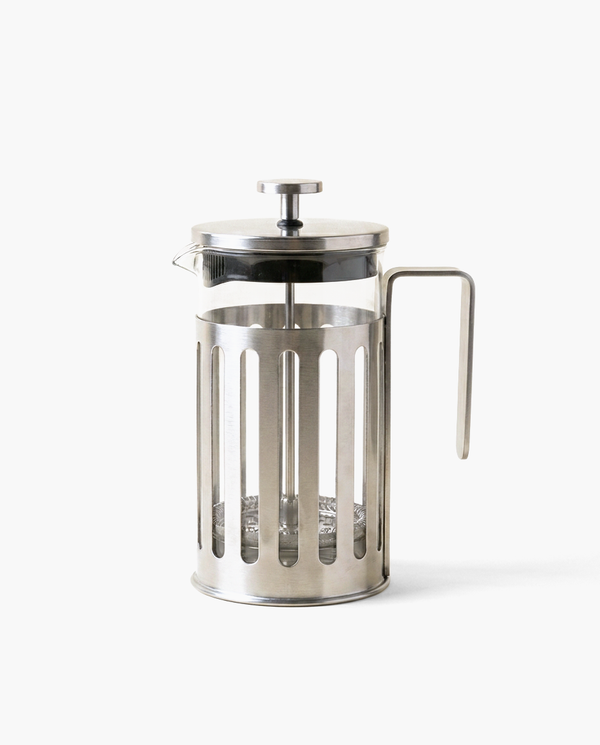
A full immersion brew is the most reliable way to make coffee outside. It requires no paper filters, no delicate gooseneck pours, and no electricity. You only need hot water and coarse grounds. You mix them, wait four minutes, and press. This simplicity makes the French press the ideal tool for the woods. The challenge is entirely about the materials. Traditional glass carafes are too fragile for a camp box. Thin plastic models warp under boiling water and hold the stale smell of yesterday's brew. The solution is steel.
The science of heat retention outdoors
Brewing coffee is a thermal equation. Water extracts flavors from the roasted bean, and it needs a stable temperature near 200 degrees Fahrenheit to do this correctly. In a warm kitchen, a glass pot loses heat slowly. At a campsite at six in the morning, the cold air strips heat away from the brewing vessel immediately. If the water temperature drops too fast, the extraction stalls. The resulting coffee tastes weak and overly acidic.
A double-wall insulated body solves this problem. Two layers of steel create an insulating gap between them. This insulating gap slows the transfer of heat. The water inside stays hot enough to pull the deep, chocolate notes out of the coarse grounds. The outside stays cool to the touch, so you can handle the pot without gloves. When you pour the first cup, the remaining coffee inside the steel press stays warm for the second round.
How to Brew Coffee at the Campsite
Sourcing and heating the water
Water makes up ninety-eight percent of your cup. If you use stream water treated with iodine tablets, your coffee will taste like iodine. Bring clean drinking water from home or filter your camp water thoroughly before boiling. You can heat this water in a heavy pot over the fire, or use a clean camp stove. A dedicated camp kettle makes pouring safer and more precise.
Bring the water to a rolling boil. Take it off the heat and let it rest for ten to fifteen seconds. This brief pause drops the temperature just below boiling, which is the perfect range for extraction. Pouring aggressively boiling water directly onto dark roasts can pull out bitter, ashy flavors.
Managing the grind off-grid
Pre-ground coffee loses its volatile aromatic oils within a few days. If you buy a bag of pre-ground beans and open it in the damp camp air, the flavor fades rapidly. The best camp coffee starts with whole beans. You can grind them right before you brew using a manual tool. A hand grinder takes up very little space in your pack and ensures every cup tastes as fresh as it would at home.
The camp ratios
You do not need a digital scale in the woods. A good place to start is a one to sixteen ratio by weight, which translates to a predictable volume if you use a standard scoop. Use a medium-coarse grind. Let the mixture steep for four minutes. Press with steady pressure, using no extreme force. If the plunger resists heavily, your grind is too fine. Here is the standard math for a reliable brew.
| Press Size | Coffee Dose | Water Volume | Yield |
|---|---|---|---|
| 350 ml | 21 g | 350 ml | 1 large mug |
| 800 ml | 50 g | 800 ml | 2 to 4 cups |
| 1 L | 63 g | 1000 ml | 4 to 6 cups |
The Gear That Survives the Trip
Packing for a camping trip means curating your tools. Every item in the bin must justify its space and endure rough handling. We choose our gear based on material strength, thermal performance, and ease of cleaning.
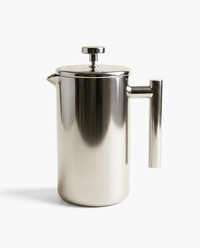
The Signature Stainless Steel French Press
Our primary choice for outdoor brewing. It removes the fragility of glass entirely while maintaining the exact brewing mechanics of a classic press. The steel construction takes the abuse of a camp box without complaint.
- Double-wall insulation: Keeps coffee hot longer while the outside stays cool to the touch, preventing burns when you handle it on a crowded picnic table.
- Food-grade 304 stainless steel: Built from durable steel inside and out, with a mirror-polished finish that resists corrosion and will not react with coffee oils.
- Two-part plunger: A fine stainless mesh screen backed by a perforated press plate holds the grounds down and lets the coffee oils through for a full-bodied cup with minimal sediment.
- Etched fill gauge: Cup and ounce markings are etched directly inside the body. You pour to the line, eliminating the need for a scale at camp.
- Three sizes for any group: Available in a 350 ml model that serves one to two people, an 800 ml for two to four, and a 1 L pot that serves four to six for a small gathering.
Nomad Press Mug
If you are hiking away from the campsite and want to brew where you stand, this is the tool. It is a 450 ml insulated travel mug with an integrated French press plunger. You add coarse-ground coffee, pour hot water, wait four minutes, and press down slowly. The double-wall vacuum insulation keeps your coffee hot for 6 to 12 hours depending on the starting temperature. The flip lid is leak-resistant, allowing you to close it up and keep moving down the trail.
The Precision Manual Grinder
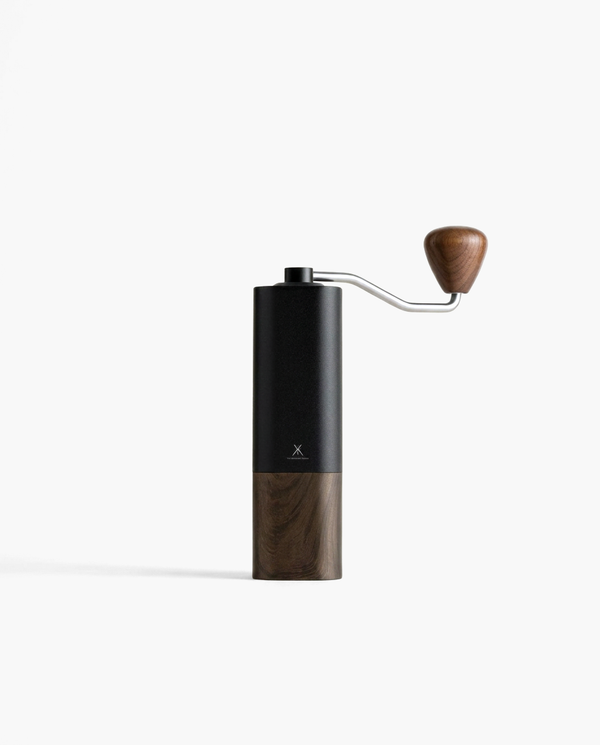
Fresh grounds are non-negotiable for good flavor. This brushed 304 food-grade stainless steel hand grinder drops easily into a bag for the campsite. It uses a conical burr to crush beans to an even size. Turn the dial at the base to coarse for your press, unfold the handle, and turn. The crank handle folds flat and lifts off for travel. It requires no power and operates quietly enough to let the rest of the camp sleep while you prepare the morning brew.
Competitor options on the market
The Stanley Classic Travel Mug French Press sells for around $35. It is built for rugged use, but it relies on a plastic plunger mechanism rather than a stainless steel one. Our stainless steel press keeps plastic entirely out of your brew, ensuring the flavor remains clean.
The Bodum Columbia sells for around $70. It is a double-wall thermal press with a very wide, rounded shape. The bulbous design takes up significant space in a tightly packed camp box. The straight, cylindrical walls of our stainless press pack much more efficiently next to your camp stove and fuel canisters.

Managing the Grinds in the Wild
Brewing coffee outside comes with the responsibility of cleaning up properly. Coffee grounds take a long time to decompose naturally and can disturb local wildlife if scattered on the ground. Rinsing your press directly in a stream or lake violates basic outdoor ethics.
When you finish your coffee, unscrew the plunger. Tap the press plate gently against your trash bag to dislodge the bulk of the grounds. Add a small splash of clean water to the carafe, swirl it to catch the remaining sediment, and pour that slurry into a small hole dug away from your campsite, or better yet, into a sealed waste bag to pack out. The mirror-polished interior of the stainless press can be rinsed clean with a splash of water.
Mistakes That Ruin Camp Coffee
- Packing glass: A standard kitchen carafe wrapped in a towel will eventually break in a camp bin or a backpack. Once it shatters, your coffee setup is ruined for the entire trip.
- Pre-ground coffee left open: Ground coffee goes stale quickly when exposed to damp camp air. Bring a manual grinder or store your grounds in an airtight container until the moment you brew.
- Failing to pack out grounds: Leaving a pile of wet grounds near your fire pit attracts animals and ruins the site for the next camper. Scrape them into your trash bag before a final rinse.
- Guessing the water ratio: Eyeballing the water level leads to weak, watery coffee. Use a press with internal volume markings so you can pour accurately without a scale.
First light at the campsite, the fire pit still smoking, and a heavy pot that holds the heat
Sunday morning, a quarter to six, and the air outside the tent is sharp enough to see your breath. You boil water on the small camp stove while the rest of the site remains quiet. The coarse grounds bloom in the steel pot, releasing a heavy scent of dark chocolate and wood smoke into the cold air. You press the plunger slowly, feeling the familiar resistance, and pour a thick, dark cup. The metal body of the press sits on the wooden picnic table, keeping the second round hot, while the sun finally clears the tree line.
If you take one thing from this article: camping requires gear that does not break, and a double-wall steel press ensures you will wake up in the woods with hot coffee.

Frequently Asked Questions About Camp Coffee
How do you clean a French press while camping?
Unscrew the plunger and tap the main mesh screen against your trash bag to remove the bulk of the grounds. Add a small amount of clean water to the empty carafe, swirl to collect the remaining sediment, and discard it into your waste bag. Wipe the interior dry with a paper towel or a clean cloth.
What size French press is best for camping?
The size depends on your group. A 350 ml press is perfect for a solo hiker making one large mug. An 800 ml model serves two to four people. If you are brewing for a family or a small gathering around the fire, the 1 L model ensures everyone gets a hot cup at the same time.
Can you put a stainless steel French press directly on a camp stove?
No. You must boil the water in a separate kettle or pot first. The double walls of an insulated press are designed to slow heat transfer and keep coffee hot. Placing it directly on a flame is not recommended, as the double walls are designed to insulate already-boiling water, not to act as a kettle.
Do I need a scale for camping?
You do not need a scale if your gear is designed for visual measuring. A press with an etched cup gauge inside allows you to pour water exactly to the line. Pair this with a standard scoop for your beans, and you can achieve a consistent ratio without electronics.
How long does coffee stay hot in a double-wall press?
A double-wall insulated body keeps coffee hot significantly longer than glass, even in cold outdoor air. While the exact time depends on the ambient temperature, it reliably holds brewing heat long enough for you to finish your first cup and return for a hot second pour.