A stovetop espresso maker turns ground coffee and water into a thick, strong brew in about five minutes. The classic aluminum design has barely changed in a century, but small details make a difference in daily use. We reach for the Bottega Wood-Handle Moka because its cool-touch grip makes the morning pour comfortable.

Understanding the Best Italian Moka Pot
How a stovetop espresso maker works
The mechanism is simple physics. The device has three main parts: a bottom water chamber, a middle filter basket for the coffee grounds, and a top collection chamber. When you place the assembled pot on a stove, the heat boils the water in the base. The resulting steam builds pressure, forcing the remaining hot water up through the funnel, through the packed coffee grounds, and out the top tube into the upper chamber.
This method creates a brew that sits halfway between drip coffee and commercial espresso. It has a heavy body, low acidity, and intense flavor. Because the water passes through the grounds under pressure, it extracts oils that a standard paper filter would trap. The classic moka pot remains a staple in kitchens around the world for this reason. It requires no electricity, takes up little space, and delivers a robust morning cup.
Sizing your pot correctly
Moka pots do not scale their recipes well. You must fill the water to the safety valve and fill the coffee basket for each brew. If you use less water or fewer grounds, the pressure will not build correctly, and the extraction will fail. This means you must buy the size that matches your daily habit.
Manufacturers measure capacity in traditional Italian cups, which are roughly 45 ml each. A three-cup model yields about five ounces of coffee, which equals one standard modern mug when topped with water or milk. A six-cup model yields about ten ounces, enough to split with a second person at the breakfast table. Choose the size you plan to drink in one sitting.
The right grind and roast
Stovetop brewing demands a specific grind size. It needs to be finer than drip coffee but slightly coarser than commercial espresso. If the grind is too fine, the water cannot pass through, and the pressure will trigger the safety valve. If it is too coarse, the water rushes through without extracting enough flavor, leaving a sour and thin liquid.
A reliable burr grinder makes this easy to dial in. Medium to medium-dark roasts perform best in this environment. Light roasts often taste overly sharp because the high brewing temperature extracts their bright acids aggressively. Traditional Italian roasts, heavy on chocolate and nut notes, thrive under stovetop pressure.
The Best Moka Coffee Makers for the Stovetop
The physics of the extraction dictate the shape of the tool. The best options respect the traditional geometry while improving the tactile experience. Here are the top options for your stovetop.
1. French Press & Co Bottega Wood-Handle Moka
The Bottega Wood-Handle Moka is our primary recommendation for anyone looking for the best moka pot. We chose it because it takes the classic eight-sided Italian design and upgrades the contact points. A standard plastic handle gets uncomfortable near an open flame, but this model uses a cool-touch wood-grain grip that changes how the morning routine feels.
- Painted aluminum body: A durable metal core that builds a useful coffee patina over time, improving the flavor of subsequent brews.
- Wood-grain handle and knob: The cool-touch material stays comfortable longer than plain plastic on a hot stove and offers a wide grip that is easy on the wrist.
- Two capacity options: Available in a 150 ml three-cup size or a 300 ml six-cup size.
- Five finish choices: Match your kitchen with Black, Black Premium, Blue, Red, or White.
- Built-in safety: The pressure-release valve ensures the extraction process remains controlled on gas, electric, or ceramic stoves.
2. French Press & Co Capri Speckled Moka
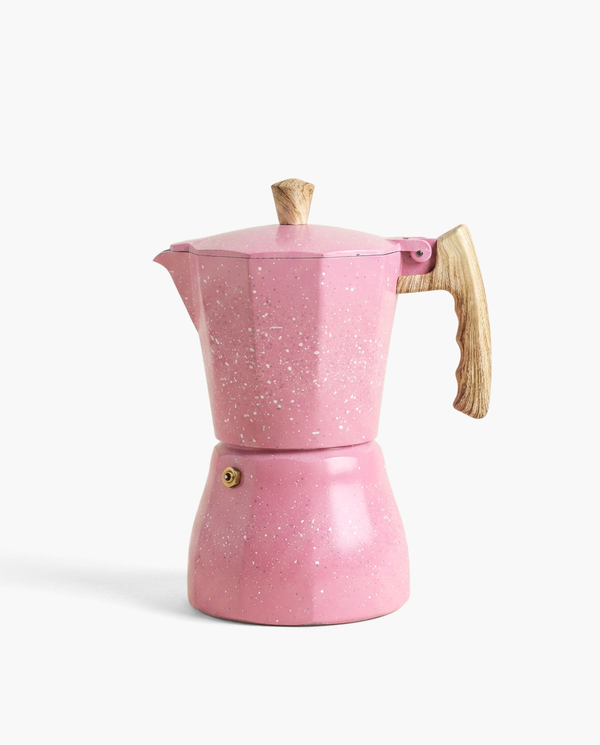
If you want a softer visual presence on the counter, discover the Capri Speckled Moka. It brews the same traditional short coffee using the same single-tube extraction, but it features a pink enamel finish scattered with white flecks. The handle is a wood-look composite that resists heat transfer, keeping your fingers safe during the pour. We stock it in the six-cup size, about 300 ml. The speckled pattern is random on each pot, so no two match exactly.
3. Bialetti Moka Express
The original silver aluminum pot found in countless kitchens across the globe. It usually retails for around $40. The design features a simple black plastic handle and lid knob. It uses a standard extraction method, though we prefer a wood-grain handle, which stays cooler in the hand on a small burner. The Bialetti remains the reference point for stovetop brewing.
4. Grosche Milano
Another popular aluminum model, typically priced near $30. It features a soft-touch plastic handle and comes in various colors. It brews a standard concentrated cup and uses a similar internal mechanism. The plastic handle sits close to the heat source on small stoves, which requires careful burner placement during extraction.

Mistakes That Ruin the Cup
A stovetop espresso maker is forgiving, but a few bad habits will turn good beans into a bitter drink. Avoid these common errors.
- Tamping the grounds: Fill the basket level, but do not tamp it down. Tamping over-restricts the flow, stalls the brew, and pushes bitter notes into the cup.
- Brewing on high heat: Rushing the boil scorches the coffee. Keep the flame medium to low. You want a steady, gentle extraction, not a violent eruption.
- Washing with soap: Aluminum and soap are enemies. Detergent strips the beneficial coffee oils and leaves a chemical taste behind. Rinse with warm water and use a soft cloth.
- Storing it assembled and wet: Trapped moisture corrodes aluminum from inside and degrades the rubber gasket. Disassemble after every brew and let the parts dry fully.
Advanced Stovetop Techniques
Starting with hot water
Many people fill the base with cold tap water. This works, but it means the coffee grounds sit in a heating metal chamber for several minutes before the extraction begins. This prolonged exposure can bake the dry coffee, leading to a metallic, bitter edge. If you pour pre-boiled water into the base instead, the extraction starts almost immediately. The grounds stay cool until the water hits them. You will need a towel to hold the hot base while you screw the top chamber on.
Stopping the brew early
The last few seconds of a stovetop extraction push steam and highly bitter compounds through the spout. You can hear this phase: the steady hiss turns into a hollow gurgle. To keep these harsh flavors out of your mug, pull the pot off the heat just before it finishes. Run the bottom chamber under cold tap water to instantly kill the pressure and stop the brewing process. The resulting liquid will be sweeter and more balanced.
Friday morning, quarter to seven, and the aluminum base settling onto the iron grate
The house is still dark, and the floorboards are cold underfoot. You fill the bottom chamber to the valve, drop the basket in, and level the grounds with a finger. The pot goes onto the smallest burner. You wait by the counter, watching the blue flame. A few minutes pass in silence, then the low hiss begins, followed by the rich, dark stream of coffee pushing up the center column. The smell of roasted beans fills the space, sharp and warm, long before the first sip. You pull it off the heat, wrap your hand around the wood-grain grip, and pour a heavy shot into a ceramic mug.
An Italian moka pot rewards patience, and the cool-touch handle makes the daily routine comfortable.

Frequently Asked Questions
How many cups does each size make?
Coffee is measured in Italian moka cups, each about 45 ml. The small pot holds 150 ml, roughly 3 moka cups. The large pot holds 300 ml, roughly 6 moka cups. Think two short espressos versus four. You can add milk to either for an Americano or latte.
What grind do I use?
Fine to medium-fine, slightly coarser than commercial espresso. Fill the basket level, do not tamp. Tamping over-restricts the flow, stalls the brew, and pushes bitter notes.
Can I use an aluminum moka pot on induction?
No. The body is aluminum, which is not induction-compatible. Use it on gas, electric, or ceramic, add an induction converter plate, or pick a stainless steel moka instead.
How long should it last?
Years of daily brewing if you treat it right. The aluminum body is essentially indestructible. The gasket and filter plate are wearable parts. Replace the gasket about once a year and the filter when it deforms. Both are universal sizes.
What is the difference between Black and Black Premium?
Both share the same matte finish. Black Premium uses a tighter, more precisely machined threading and gasket seat, which means a cleaner seal, a quieter pressure release, and fewer drips at the joint. Same brew, sharper assembly.