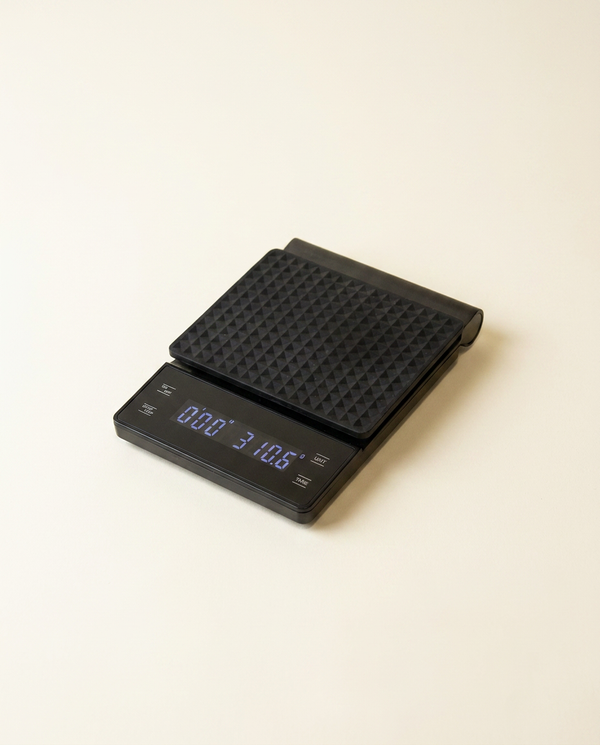
On a classic Baratza Encore, start at 15 for a V60 or Kalita, 20 for a Chemex, 12 for an AeroPress, 18 for a drip machine and 30 for a French press. Those numbers get you close. The clock takes you the rest of the way, which is why a Pocket Pour Scale lives beside our grinder: weight and brew time on one display, so every click of the dial has a reading to answer to.
Baratza Encore Grind Settings Chart, Method by Method
The Encore's collar runs from 1, the finest, to 40, the coarsest. Here is where each brewer lives on it, and the texture to look for in the grounds bin.
Classic Encore or Encore ESP: check before you copy a number
Every number here is for the classic Encore, the one with 40 even steps. The Encore ESP spends its first 20 marks on small espresso steps and keeps 21 to 40 for everything else, so a V60 sits above 21, not at 15. If you own the ESP, start from Baratza's chart. The timing method below works the same way.
Why two Encores set to 15 do not grind alike
Burrs wear, and a grinder with years of daily use runs a little coarser at the same number than a new one. Add bean density and roast level, and a borrowed number can land a step or two off. Treat every chart, this one included, as the opening move.
For burr types and step sizes, read our coffee grinder buying guide.
The Baratza Encore Pour Over Setting: V60, Kalita and Chemex
Pour over is where the setting matters most, because gravity is the only thing moving water through the bed. Grind size sets the flow rate, and the flow rate sets the taste.
Start a V60 or a Kalita Wave at 15. A Chemex uses a thicker paper that slows the drawdown on its own, so it wants 20 to 22. A drip machine such as a Moccamaster sits between the two, at 18 to 20.
These recipes run between 1:15 and 1:17. Pick one and keep it: a dose that drifts changes the brew time and hides what the grinder is doing.
What fines do to a paper filter
Every grinder throws some fines, dust far smaller than the target size. In a pour over they plug the pores of the paper. The bed stalls, and the cup turns bitter and drying. When a V60 that used to finish at 2:45 starts taking 3:30 on the same number, fines are the usual suspect: burrs that need a brush, or a setting one step too fine for this bean.
For bloom, pouring patterns and filter choice, read our complete pour over guide.
Water is the other half of the setting
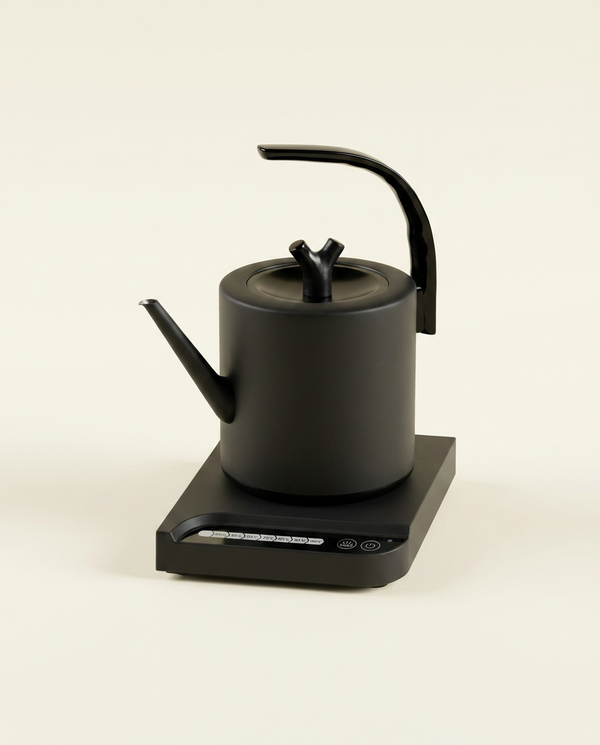
Grind and temperature pull on the same rope. Water between 195 and 205°F extracts a medium roast cleanly. Cooler water makes a correct grind taste sour, and you chase it with a setting that was never at fault. The Editor's Gooseneck Kettle lets you dial in a precise temperature and have the base hold it, so the grind is the only thing that changes between two cups.
More on spouts and temperature: our gooseneck kettle picks.
How to Dial In Your Encore in Three Brews
A setting is dialed in when the cup tastes sweet and the brew lands inside its time window. That takes two constants and one variable.
Step 1: lock the dose and the water
Weigh 15.0 g of beans. Do not scoop them. One gram either way is a swing of nearly 7 percent, enough to move the drawdown on its own. Set the brewer and the mug on the Pocket Pour Scale, press tare, and pour to 250 g.
Step 2: time the whole brew
Start the timer as the first water touches the grounds. Bloom with twice the weight of the coffee, 30 g of water for 15 g, and wait 45 seconds. A flat, quiet bloom means stale beans, and no setting brings them back. Then pour in slow circles, staying off the paper, and stop the timer when the bed goes dry.
Step 3: move the dial, one reason at a time
- Finished early and tastes sour, thin or salty: too coarse. Go two steps finer, then adjust by one.
- Finished late and tastes bitter or drying: too fine. Go two steps coarser, then adjust by one.
- Inside the window but dull: leave the grind alone. Check the water temperature and the roast date.
Change only the dial between brews. Three cups usually land a new bag. Light roasts extract slowly, so expect to finish a step or two finer than the chart. Dark roasts extract fast, so go a step or two coarser.
One more signal: a dry, sawdust feeling on the tongue is astringency, usually from channeling. Go one step coarser, to 16 on a V60, before you touch anything else.
Encore pour over troubleshooting
If that last row sounds familiar, the fix goes under the brewer, not on the grinder: see the Pocket Pour Scale.
What Sits Beside Our Encore
The Encore does its half of the job well. The other half is knowing what it just did.
Pocket Pour Scale, our first pick for dialing in a grinder
The Pocket Pour Scale is the smallest tool on the counter, and the one that turns a grind number into a repeatable cup.
- Weight and time on one screen: the digital LCD shows both simultaneously, so you watch the pour reach 250 g and the clock reach 2:45 without touching a phone.
- 0.1 g resolution: fine enough to weigh a 15 g dose to the tenth, which keeps the dial as the only variable.
- Palm-sized and flat: the Encore already takes its share of the counter. This one slips into a drawer.
- One button, no menu: tare, time, weigh, plus a toggle between grams and ounces.
- Room for the whole brew: a 105 oz (3 kg) maximum capacity, enough to zero a full Chemex or a loaded French press.
- Small practical details: removable clear tray, non-slip rubber mat base, auto-off. It runs on two AAA batteries, not included.
Editor's Gooseneck Kettle, for holding the temperature still
The Editor's Gooseneck Kettle is a 34 oz (1 L) electric kettle with a variable dial up to a 212°F boil, a constant-temperature hold, a digital LED readout, and a gooseneck spout for a slow, controlled stream. Fix the temperature, steady the pour, and the dial is the only thing left to test.
Acaia Pearl, the laboratory option (about $150)
The Pearl is the scale you see on competition stages: fast, precise to 0.1 g, with an app that charts your pour. A superb instrument, and far more than this job asks: finding a grind setting takes grams and seconds side by side, for well under the Pearl's price.
Hario V60 Drip Scale, the pour over standard (about $50)
Hario's scale covers the basics. Its resolution steps up as the weight climbs, from 0.1 g to 0.5 g and then 1 g, and it tops out at 2 kg. Fine for a single cup. For a full Chemex or a press weighed in the vessel, we prefer the headroom of the Pocket Pour Scale.
Baratza Encore French Press Setting, and the AeroPress in Between
French press is the forgiving end of the dial. Set the Encore between 28 and 32: 30 for a medium roast, 28 for a light one, 32 for a dark one. The grounds should look like coarse sea salt, with very little dust.
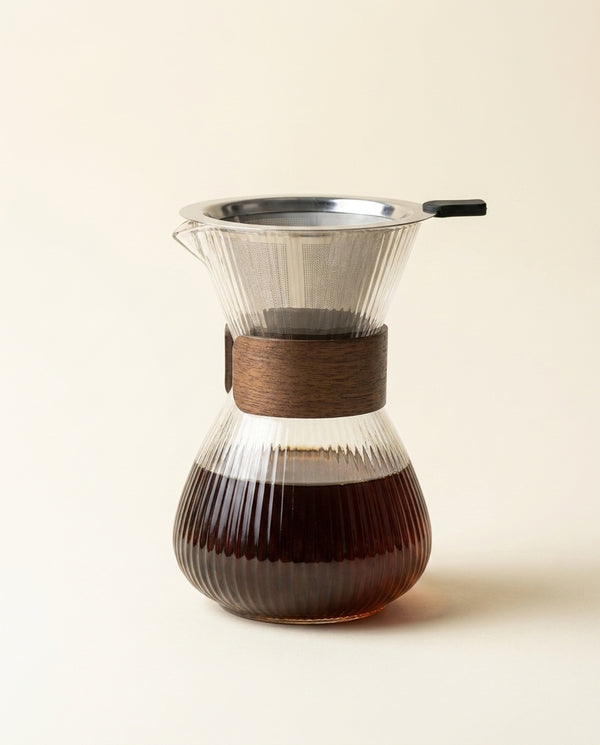
Steep for four minutes, then press. If the plunger fights you on the way down, the grind is too fine. If it drops freely and the cup is weak, go two steps finer. For the fines every grinder leaves at this end of the dial, the Signature Stainless Steel French Press uses a two-part plunger, a fine stainless mesh screen backed by a perforated press plate, inside double-wall 304 stainless steel. Still choosing a press? See how to choose a French press.
The AeroPress sits on the other side of pour over. Use 12 for a standard recipe of one to two minutes, and open up to 14 for a long inverted steep: enough resistance to feel the plunger push back, not so much that you have to lean on it.
Baratza Encore Espresso Setting: What 4 to 9 Can Do
The classic Encore reaches espresso territory between 4 and 9, with 8 as a common start. The limit is not fineness. It is step size: one click changes the shot time by several seconds, so the setting you need often lives between two numbers.
With a pressurized basket, which builds its own resistance, the Encore pulls a respectable shot. With a standard basket you will swing between gushing and choking. Our full test: Baratza Encore for espresso.
If espresso is your daily drink, that points to an Encore ESP or a dedicated grinder, like those in our coffee grinders collection.
Keeping Your Encore Setting True: Cleaning and Care
Coffee oils build up on the burrs, faster with dark roasts and fine settings. Beans shatter where they used to cut cleanly, fines climb, and a trusted 15 begins to stall your V60.
- Every two weeks: brush the burrs or run grinder cleaning tablets through. Never rinse the burrs with water.
- On reassembly: the red tab on the ring burr has one correct seat. Miss it and the grinder will not run.
- When going finer: turn the collar only while the motor is running, or with the grinder empty. Beans trapped between stationary burrs can jam them.
Dial Habits That Waste Good Beans
Four shortcuts that look harmless and cost you a bag at a time.
- Copying a forum number and stopping there: their burrs, their beans, their water. Their 14 may be your 16.
- Changing two things at once: a new dose and a new setting in the same brew tell you nothing about either.
- Scooping the dose: a scoop of light roast and a scoop of dark roast differ by grams, and the dial gets blamed for what the spoon did.
- A kitchen scale that reads whole grams: fine for baking, too coarse for a 15 g dose. A one gram step hides the very 7 percent you are trying to control, and it has no timer.
Three cups to land a new bag on 14
The parcel came with the late morning post: a washed Ethiopian, roasted nine days ago. You set the collar to 15 out of habit, the Encore growls through its dozen seconds, and the kitchen fills with something close to bergamot. The first cup drains at 2:12 and tastes of lemon and not much else. Two clicks finer, the display crawls to 3:08 and the finish turns dry. One click back, and this time the bed goes flat and pale at 2:47, the last drops tick into the mug, and the cup is apricot and black tea, sweet all the way down. You write 14 on the bag with the pen from the drawer, and tomorrow there is nothing left to guess.
If you take one thing from this article: the Encore's number opens the conversation and the timer closes it, so put a scale that shows grams and seconds together under your brewer.
Baratza Encore Settings: Frequently Asked Questions
What is the best Baratza Encore setting for V60 pour over?
Start at 15 on a classic Encore. Depending on the roast, you will finish between 13, for light roasts, and 18, for dark ones. The target for 15 g of coffee and 250 ml of water is a brew time of 2:30 to 3:00.
What Baratza Encore setting should I use for French press?
Between 28 and 32: 30 for a medium roast, 28 for a light roast, 32 for a dark roast. If the plunger is hard to press, go coarser. If the cup is weak after four minutes, go two steps finer.
Can I use the Baratza Encore for espresso?
Yes, within limits. The usual Encore espresso setting sits between 4 and 9, but the steps are large, so a precise shot is hard to dial in. It works best with a pressurized basket. The Encore ESP fixes this with finer steps from 1 to 20.
What is the correct Baratza Encore AeroPress setting?
Usually 12. It gives enough resistance to build a little pressure without making the plunger hard to push. For long inverted recipes, open up to 13 or 14 so the cup does not turn bitter.
Why is my pour over clogging with the Encore?
Almost always fines, dust-like particles that plug the paper, from dirty or worn burrs or a setting a step too fine. Grind one or two steps coarser, brush the burrs, and time the next brew. A scale with a timer shows the difference in seconds: discover the Pocket Pour Scale.
Does the M2 burr upgrade change the settings?
Yes. The M2 is the cone burr from the Baratza Virtuoso, sold as an upgrade for the Encore. It cuts faster and produces fewer fines, so water flows more freely. Expect to move a step or two from your usual number, and re-time your recipe after the swap.