Both brewers sit on the stove, but a moka pot uses steam pressure for a short, rich shot, while a percolator continuously cycles boiling water for a large, mild cup. The surest way to get that dense Italian extraction at home without an expensive machine is the Bottega Wood-Handle Moka.
The difference shows up in three places: the grind you need, the time it takes, and what lands in the cup.
- Understanding the Stovetop History
- Moka Pot Mechanics and Brewing
- The Stovetop Brewers That Earn Their Keep
- Percolator Mechanics and Brewing
- Direct Comparison and Buying Guide
- Mistakes That Ruin the Cup
- Daily Routines and Practical Advice
- Proper Cleaning and Maintenance
- Frequently Asked Questions
Understanding the Stovetop History
Stovetop brewing has a rich history, offering a reliable way to make robust coffee long before modern electric machines existed. Before the invention of the electric drip maker, almost every household relied on a metal pot sitting directly over a flame. The way that water interacted with the grounds defined the morning routine for generations.
The percolator was the standard for home brewing throughout the early twentieth century. Families loved its simple and rugged design because it could brew massive batches over a campfire or stove. People relied entirely on this metal jug for their daily caffeine fix every single morning. It was a tool built for volume, designed to keep a large group of people caffeinated throughout the day.
Meanwhile, Italian engineers were developing an entirely different approach to stovetop coffee. They wanted to replicate the intense and concentrated flavors of a cafe setting right at home. This desire led to a new brewing philosophy that prioritized trapped pressure over continuous boiling. In 1933, Alfonso Bialetti introduced the classic eight-sided aluminum pot, forever changing how Europe consumed coffee.

The aluminum design has barely changed since that first model. It remains a global icon of kitchenware today. The shape is not just for aesthetics. The octagonal design helps diffuse heat evenly across the base, while the aluminum body conducts that heat rapidly to the water inside. This efficiency is why we still reach for traditional models like the Bottega Wood-Handle Moka today.
The Science of Stovetop Extraction
Extraction, which is how hot water pulls flavor out of the roasted beans, dictates the final taste of your cup. These two devices manage this crucial step using different physical forces. Understanding this science helps you predict exactly how your morning mug will taste before you even turn on the stove.
One method pushes water through the grounds just once, capturing the best flavors quickly. The other method recycles the same brewed liquid over the grounds continuously. This stark difference in water movement defines the entire moka pot vs percolator debate. One respects the delicate oils of the coffee bean, while the other relentlessly extracts every possible compound until the liquid turns dark.
Moka Pot Mechanics and Brewing
The beauty of this Italian brewer lies in its clever three-chamber design that harnesses natural steam power. It is an enclosed system that requires precise engineering to work safely and effectively. The bottom chamber holds the water, the middle funnel holds the coffee grounds, and the top chamber collects the finished brew.
Water sits in the bottom chamber directly above your heat source. As the water heats, steam builds up in the empty space above the liquid. This trapped steam expands and forces the boiling liquid downward, then upward through the only available exit. It travels forcefully through a metal funnel holding your coffee grounds, creating a short and intense extraction.
The resulting liquid then spills gracefully out of the central tower into the top collection chamber. It produces a heavy, rich body that closely resembles a traditional espresso shot. Because the water passes through the coffee only once, it leaves behind the harsh, bitter tannins that ruin a good roast. This creates a dense base that holds its ground well when mixed with steamed milk.
Finding the Perfect Grind Size
A great stovetop brew starts with fresh beans and a precise particle size. You need a medium-fine consistency, slightly coarser than true espresso but finer than a standard drip grind. If the coffee is too coarse, the pressurized water shoots right through, leaving you with a weak, sour liquid. If the coffee is too fine, it chokes the metal filter, building up excessive pressure until the safety valve engages.
We highly recommend using a true burr tool from our grinder collection to achieve this consistency. A simple hardware upgrade stops small dust particles from passing through the metal filter and creating a muddy, bitter taste at the bottom of your cup.
Temperature control is another secret weapon for stovetop success. Starting with pre-heated water prevents the hot metal from prematurely baking your delicate grounds while you wait for the boil. Using a precise tool from our kettle collection makes this step easy and vastly improves your final flavor profile.
The Stovetop Brewers That Earn Their Keep
It is best to keep counters clear of gadgets that only do half a job. A stovetop brewer needs to manage heat efficiently, seal tightly, and pour without dripping. Here are the tools that deliver a strong morning cup.
1. Bottega Wood-Handle Moka
This is the pot to reach for when you want an Italian short coffee. It pairs the classic octagonal aluminum body with a handle that actually considers the person pouring it. We chose the Bottega Wood-Handle Moka because it respects the traditional brewing method while solving the small annoyances of bare metal pots.
- Wood-grain handle and knob: A cool-touch wood-grain grip you can lift straight off the burner, instead of reaching for a folded tea towel.
- Painted aluminum body: Five finishes: Black, Black Premium, Blue, Red and White, so the pot suits the kitchen instead of the other way around.
- Single-tube extraction: The classic internal mechanism that forces hot water smoothly through the coffee basket.
- Two exact sizes: A 150 ml three-cup for a quiet morning, or a 300 ml six-cup for sharing.
- Built-in safety: A reliable pressure-release valve ensures the extraction happens safely on gas, electric, or ceramic stoves.
2. Capri Speckled Moka
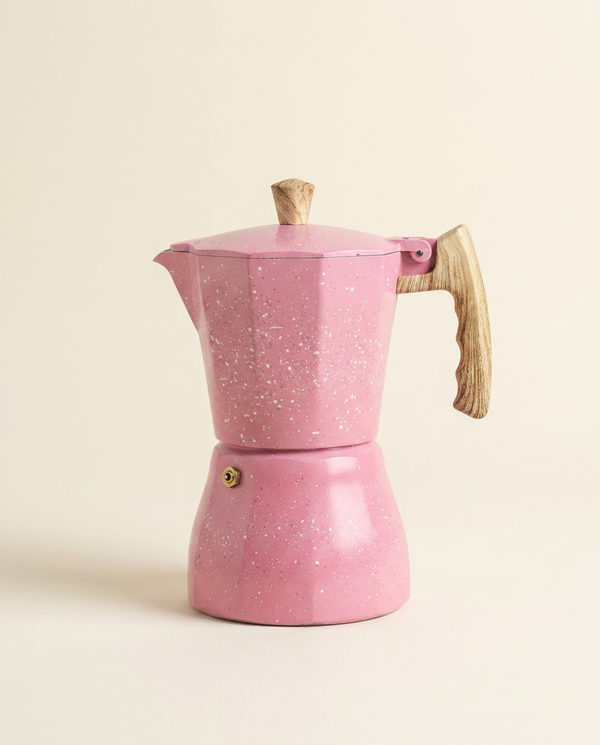
If you prefer your kitchen tools to catch the morning light, the Capri Speckled Moka offers the same reliable extraction in a different silhouette. It features a speckled pink enamel finish with white flecks, paired with a wood-look heat-resistant composite handle. It brews the exact same rich, heavy-bodied coffee in either a three-cup or six-cup size.
3. Bialetti Moka Express
The original design from 1933, typically found for about $40. It is a bare aluminum pot with a black bakelite handle, and it brews the traditional cup that made the shape famous.
4. Farberware Classic Stainless Steel Percolator
A staple of American diners and camping trips, usually priced around $50. It holds eight to twelve cups of coffee and uses the continuous boiling loop method. While it produces massive quantities of hot liquid for a crowd, it boils the coffee repeatedly, destroying the nuanced flavors of specialty beans.
Percolator Mechanics and Brewing
This classic American design relies on a continuous loop of boiling water to slowly build up coffee strength. Unlike a pressure system that separates the unbrewed water from the finished coffee, this pot mixes everything together in one large chamber.
Inside the tall metal pitcher, a vertical hollow tube stands directly over the heat source. When the water at the bottom boils, bubbles push liquid violently up the central tube. The hot water splashes against a spreader plate and falls over a perforated metal basket containing your coarse coffee grounds.

Gravity then pulls the water back down into the main reservoir, where it mixes with the unbrewed water. This entire cycle repeats continuously, causing the brew to get darker and stronger as time passes. You must watch the glass knob closely to monitor the color of the liquid, cutting the heat the moment it looks done.
Managing Heat for Better Taste
The biggest flaw of this continuous cycle is the high risk of over-extraction, which creates severe bitterness. Because the liquid is repeatedly boiled and splashed over the grounds, delicate floral notes are destroyed. Boiling water extracts bitter tannins from the beans while simultaneously vaporizing the sweet, fragile aromatic oils.
This harsh reality causes many coffee lovers to seek gentler alternatives for their morning cup. If you want a smooth, large-batch coffee without the burnt taste, many users transition toward steep-based immersion methods like our French Press Coffee Makers. Immersion brewing guarantees that the water never reaches a rolling boil while touching the coffee, preserving the natural sweetness of the roast.
Direct Comparison and Buying Guide
Choosing between these two devices comes down to whether you prefer a quick, intense shot or a large, piping hot batch. The moka vs percolator decision is really a choice about volume versus texture.
We created a simple reference table to highlight the major differences in daily use. When exploring different Coffee Makers, always consider how much time you have before work. Your morning schedule should dictate your primary brewing method.
Evaluating Taste and Strength
If you enjoy milk-based drinks like lattes or cappuccinos, you need a highly concentrated base liquid. The pressure extraction method provides exactly that, cutting through the sweetness of steamed milk beautifully. A shot pulled from a Bottega Wood-Handle Moka holds its texture and flavor even when diluted. The continuous boiling method produces a standard, watery drip coffee equivalent that disappears when milk is added.
Match the tool to the drink you actually make. If that drink is a cappuccino, the concentrate matters more than the volume.
Mistakes That Ruin the Cup
Stovetop brewing is entirely manual, which means the errors are manual too. Avoid these common habits that turn good beans into a harsh, metallic drink.
- Tamping the basket: Never press the grounds down into a moka pot funnel. Tamping over-restricts the flow, stalls the brew, and pushes bitter notes into the top chamber. Fill it level and leave it loose.
- Starting with cold water: Putting cold water in the base means the pot sits on the stove longer. The metal gets very hot and bakes the dry coffee grounds before the extraction even begins.
- Walking away from the stove: Neither of these brewers shuts off automatically. If you leave a pot on the heat after the water is gone, you will burn the coffee and potentially melt the handle or rubber gasket.
- Using fine espresso grinds in a percolator: The metal basket in a continuous brewer has large holes. Fine grounds will fall straight through into the water reservoir, leaving you with a cup full of gritty sludge.
Daily Routines and Practical Advice
Mastering any manual coffee maker requires a few simple adjustments to your daily morning workflow. The beauty of the Bottega Wood-Handle Moka is that once you learn the rhythm, the process becomes second nature.
Consistency is the secret to avoiding a sour or bitter mug. By treating your stovetop device with the same care as an expensive espresso machine, you reach its full flavor potential. Small changes in your physical routine yield huge improvements in the final cup quality.

Mastering the Pressure Ritual
If you want a flawless, rich extraction every single morning, follow these non-negotiable steps. These small habits prevent the dreaded metallic taste that ruins so many morning routines.
- Pre-heat the water: Always fill the bottom chamber with hot water from a kettle to prevent the grounds from baking on the stove. Fill it just below the pressure-release valve.
- Keep the heat low: A medium-low flame creates a slow, steady extraction. High heat causes the water to boil violently, pushing steam through the coffee too fast and ruining the extraction.
- Watch the flow: Keep the lid open slightly to watch the spout. The coffee should ooze out like warm honey. Remove it from the heat as soon as the liquid turns pale yellow and begins to sputter.
PRO TIPBarista Secret: Run the base of your brewer under cold tap water the moment your coffee finishes sputtering. This instantly stops the brewing process and prevents a harsh, burnt aftertaste.
Proper Cleaning and Maintenance
Maintaining your stovetop equipment ensures that old, rancid coffee oils do not ruin your fresh morning brew. A dirty pot makes dirty coffee, no matter how expensive your beans are.
Both of these brewers rely on metal filters and enclosed chambers that trap unseen coffee oils. If left unwashed, these residual oils quickly oxidize and impart a nasty, stale flavor to your next batch. Establishing a strict daily cleaning habit is essential for long-term coffee quality.
Daily Rinsing Habits
For traditional aluminum models like the Bottega Wood-Handle Moka, aluminum and soap are enemies. Soaps strip away the natural seasoning and leave a chemical residue on the porous metal surface. Instead, use warm water and a soft cloth to wipe away the loose grounds. The aluminum builds a useful coffee patina that tastes better with each brew.
You must disassemble the pot after every brew, especially the gasket. Trapped moisture corrodes aluminum from the inside and weakens the rubber seal. Once a year, or when the seal weakens, replace the gasket. Universal-size gaskets are easy to find.
Modern stainless steel percolators are much more forgiving and can handle mild detergents when necessary. However, you must always ensure the internal pump tube is free of tiny coffee particles before reassembling. For safety tips on glass surfaces, check out our article on using stovetop brewers safely to protect your kitchen.
A snowy Tuesday morning, the stove glowing orange, and the sudden gurgle of the top chamber
It is a quarter to six, the house is quiet, and the snow outside absorbs whatever noise the street tries to make. You set the painted aluminum base on the burner and wait in the low light of the kitchen. A few minutes pass, and then comes the familiar hiss, followed by the deep, rhythmic gurgle of the top chamber filling up. You lift it off the heat, and the wood-grain handle is still cool to the touch. Pouring that dark, thick stream into a small ceramic mug fills the room with the smell of roasted sugar and toasted nuts. It is a daily ritual that costs pennies, requires no screens or buttons, and sets the tone for the entire morning.
If you take one thing from this article: boiling coffee ruins the roast, which is why a pressure-based moka pot is a pressure-based moka pot is the stovetop tool that keeps the roast you paid for.
Frequently Asked Questions
Which makes stronger coffee, a moka pot or a percolator?
The pressure extraction method produces a significantly stronger, more concentrated beverage overall. It uses trapped steam pressure to force water through fine grounds very rapidly.
This physical process creates a dense, espresso-like shot with a heavy body. The continuous boiling method creates a milder, larger cup of coffee by merely cycling water over coarse grounds slowly.
Why is stovetop pressure brewing good for beginners?
French Press & Co suggests pressure brewing because it creates cafe-quality results without complex machinery. The enclosed system manages the extraction process efficiently on its own.
This clever design allows beginners to focus on basic variables like grind size and heat control. It is the most forgiving way to learn manual coffee brewing right in your own kitchen.
Why does my percolated coffee always taste burnt and bitter?
Burnt flavors occur because the continuous loop system constantly recycles actively boiling water over your sensitive coffee grounds. Boiling water extracts bitter tannins from the beans while simultaneously destroying sweet, delicate oils.
If you leave the pot on the heat source for too long, this over-extraction ruins the entire batch. To fix this, you must monitor the glass knob closely and remove the pot immediately when the liquid turns brown.
Can I use normal pre-ground coffee in these stovetop devices?
You can use store-bought pre-ground coffee, but it is rarely the optimal size for either stovetop brewing method. Standard grocery store grounds are sized for automatic drip machines, which is too coarse for pressure brewers and too fine for continuous loop brewers.
Using the wrong size leads to a weak, watery shot or a cup full of gritty sludge. Grinding your own beans fresh with a burr tool is always the most effective upgrade.
Are these traditional stovetop brewers safe to use on modern induction stoves?
Most traditional models are made of lightweight aluminum, which will not work on a magnetic induction stove without an adapter plate. Aluminum lacks the magnetic properties required to trigger the induction heating element.
However, many modern models are now built with stainless steel bases specifically designed for induction compatibility. You must check the bottom of the device with a kitchen magnet before placing it on your expensive glass range.