Cold brew coffee needs an extra coarse grind, roughly the size and texture of coarse sea salt. Because the coffee steeps for twelve to twenty-four hours, large pieces slow down extraction and prevent a bitter cup. We rely on the Kona Workshop Grinder to hit that perfect coarse setting every time.
Why Cold Brew Demands an Extra Coarse Grind
The mechanics of a long steep
Coffee brewing is a transfer of flavor. Water acts as a solvent. It washes over the crushed coffee beans and pulls out oils and sugars. Hot water does this job fast, usually in a few minutes. Cold water needs time, often twelve to twenty-four hours, to pull the same flavors out of the beans.
Because cold water sits with the coffee for an entire day, we have to give it bigger pieces to work with. A coarse grind creates less surface area for the water to touch. This slows down the flavor transfer. By the time eighteen hours have passed, the water has absorbed the rich notes of chocolate and caramel, leaving the bitter compounds trapped deep inside the large coffee pieces.
What happens if the grind is too fine
If you use tiny pieces of coffee, like the powdery kind used for espresso, the long steeping time will pull out harsh flavors. The water breaks down the structure of the small particles and extracts undesirable, dry compounds from the plant material. The resulting drink tastes bitter and leaves a chalky feeling on your tongue. Fine powders are also difficult to filter, meaning you will likely end up drinking gritty sludge with every sip.
Whether you use a single origin bean or a reliable grocery store blend, the rule remains the same. Coarse grounds guarantee a gentle extraction. You do not need a degree in chemistry to get this right. You just need a grinder that crushes beans to a uniform size.
The Gear That Makes Coarse Grinding Easy
Your coffee grinder determines whether all your coffee pieces are the exact same size. If your grinder produces a mix of big chunks and powdery dust, your coffee will steep unevenly. A burr grinder uses two grooved pieces to crush beans to a uniform size. This consistency ensures all grounds extract at the same rate. We look for tools that offer repeatable grinds, solid build quality, and a quiet morning routine.
1. Kona Workshop Grinder
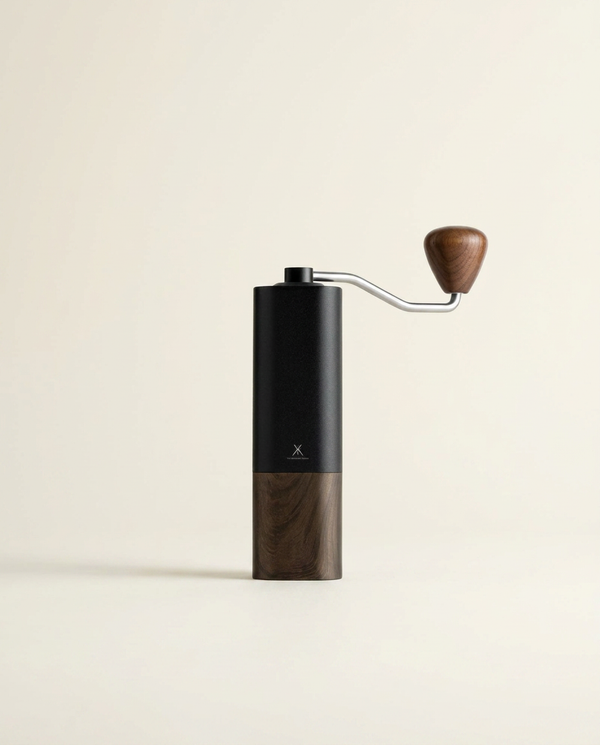
A wood crank on a slim metal column. The Kona Workshop Grinder is a manual coffee grinder that produces an even, coarse grind without waking the house.
- Ceramic conical burr: Crushes beans to a consistent size instead of shredding them like a blade, yielding a cleaner cup.
- Tool-free dial: Adjusts easily from coarse to fine to match your brewing method.
- Quiet by design: No motor screaming at six in the morning, just the soft sound of the crank.
- Wood and metal body: Built on a metal frame and finished in warm brown or beige wood.
2. The Precision Manual Grinder
For a travel-ready setup, The Precision Manual Grinder uses a conical burr inside a brushed 304 food-grade stainless steel body. Turn the dial at the base to set your grind coarse, and watch the grounds collect through the viewing window. The crank handle folds flat and lifts off, making it slim enough to slip in a bag for the cabin or the office drawer. We stock it in brushed silver and matte black.
3. Slow Cold Drip Tower
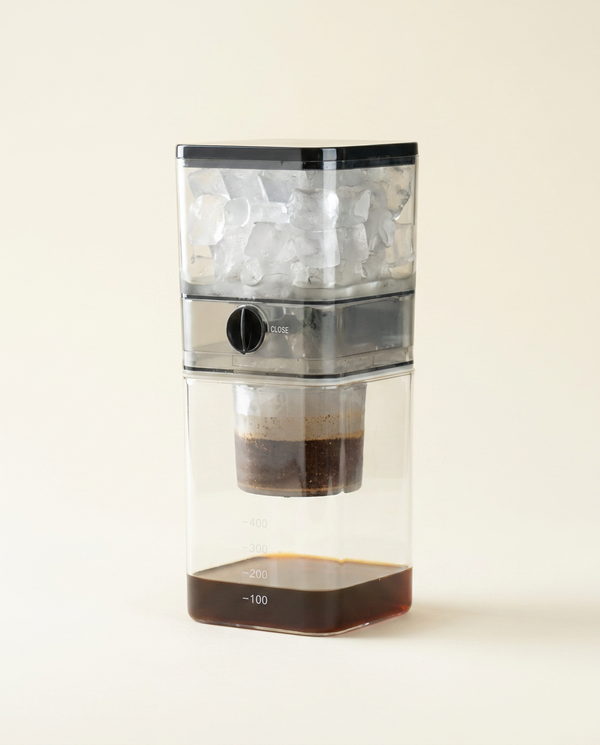
If you prefer percolation to immersion, the Slow Cold Drip Tower shifts the rules slightly. Cold drip water passes through the grounds one drop at a time over four to eight hours. Because the water does not sit with the coffee all day, you need a medium to medium-coarse grind rather than extra coarse. The tower features a glass carafe, clear stackable plastic chambers, and a detachable stainless steel mesh filter. You adjust the drip valve to roughly seven drops per ten seconds and watch the quiet ritual on your counter. We stock it in 20 fl oz and 27 fl oz sizes.
Electric Burr Grinders (Baratza Encore)
The Baratza Encore is a popular electric option around $150. It uses steel conical burrs and an electric motor to grind quickly. The trade-off is the noise. An electric motor running early in the morning tends to wake the house, which is why we reach for a manual grinder when the kitchen is quiet.
Entry-Level Hand Mills (Hario Skerton Pro)
The Hario Skerton Pro is a well-known hand mill around $60. It uses a ceramic burr and a glass collection jar. We stock the Kona Workshop Grinder for its wood body and its tool-free dial.
How to Dial In Your Cold Brew Recipe
Making great coffee requires a consistent recipe. Once your grinder is set to a coarse texture, you can focus on the environment where your coffee steeps. Small adjustments to your routine make a massive difference in your cup.
Weigh your ingredients
Start with a ratio of one part coffee to eight parts water by weight. This yields a ready-to-drink batch. If you want a strong concentrate that you will dilute with milk or ice later, try a one to four ratio instead. A kitchen scale removes the guesswork and ensures your batch tastes the same every weekend.
Use filtered water and stir
Coffee is ninety-eight percent water. If your tap water tastes bad, your coffee will taste bad. Use filtered water from your fridge or a pitcher. When you first mix the water and the grounds, give it a gentle stir so all the dry pockets of coffee are saturated. Floating dry coffee will not brew properly.
Choose your temperature and time
You can steep your jar on the kitchen counter at room temperature for twelve to fourteen hours. Alternatively, you can steep it in the refrigerator for eighteen to twenty-four hours. The fridge method slows extraction further and often yields a crisper, cleaner flavor. Test both environments to find your preference.
Filter thoroughly
Even with a coarse grind, some tiny particles might escape. Passing your final liquid through a paper filter guarantees zero sludge at the bottom of your glass. If you use French presses to steep your batches, plunge the metal screen to catch the coarse grounds, then pour the liquid through a paper filter into your storage jar.
Mistakes That Ruin the Batch
A few common errors derail a cold brew before it even hits the fridge. Avoid these shortcuts to keep the flavor profile clean.
- Using a blade grinder: A blade works like a tiny blender. It chops some beans into massive chunks and pulverizes others into dust. That fine dust over-extracts during a long steep, ruining the whole batch.
- Buying pre-ground coffee: Supermarket coffee is pre-ground to a medium size meant for drip machines. This is too fine for a twelve-hour steep and will turn out bitter and muddy.
- Starting with hot water: Some recipes suggest a hot water bloom to jump-start the brew. This pulls acidic compounds immediately. Keep the water cold from start to finish for a smooth, low-acid result.
- Washing your grinder with water: Do not let water near the burrs of a manual grinder. Moisture can damage the grinder over time. Use a dry brush instead.
Cleaning Your Cold Brew Gear
Coffee beans are naturally full of oils. These oils give the drink its heavy body, but they go rancid quickly when exposed to air. If you leave old coffee oils inside your glass carafes or metal filters, your next batch will pick up stale flavors. Clean equipment protects the flavor of your expensive beans.
For your coffee grinders, use a dry brush to clear grounds from the burr. For the Kona Workshop Grinder, wipe the wood body with a barely damp cloth, then dry it right away. Standing water warps wood over time. Once a month, lift out the burr, brush it thoroughly, and wipe with a dry cloth. Leave the collection drawer slightly open between uses to air out any trapped moisture. Rub a drop of food-grade mineral oil into the wood body yearly to keep it from drying out.
For your steeping vessels, warm water and dish soap handle the glass. Pay special attention to the metal mesh screens. Old grounds love to get trapped inside the fine wire. A thorough rinse under high water pressure knocks out hidden debris. Allow all parts to air dry before reassembling.
A heavy glass on a hot afternoon
A Sunday afternoon in July, the temperature hitting ninety outside and the kitchen blinds pulled down to block the heat. You pull a glass jar from the fridge. The dark liquid smells of chocolate and roasted nuts. You pour a heavy measure over fresh ice, watch the cubes crack, and take the first sip. It is cold, thick, and entirely devoid of bitterness. The long steep did exactly what it was supposed to do, and the uniform grind kept the harsh notes out. You put the jar back in the fridge, knowing tomorrow morning is already sorted.
If you take one thing from this article: a coarse, even grind is a reliable way to pull a sweet cold brew without over-extracting the beans.
Frequently Asked Questions About Cold Brew and Grinding
Can I use pre-ground coffee for cold brew?
You can technically use it, but it often yields a bitter cup. Most pre-ground coffee is cut to a medium size meant for standard drip coffee makers. Because this size is finer than the ideal coarse texture, it extracts too quickly during a long twelve-hour steep. Grinding fresh whole beans right before brewing is the better choice.
How long should I steep my cold brew?
The steeping time depends on the temperature of your water and your environment. If you leave your jar on the counter at room temperature, it takes between twelve and fourteen hours. If you steep it in the refrigerator, the cold environment slows down extraction, requiring roughly eighteen to twenty-four hours.
Do I need a special grinder just for cold brew?
You do not need a machine built exclusively for this brewing method. However, you do need a reliable burr grinder rather than a cheap blade chopper. Any quality burr grinder that has an adjustable setting can be twisted to a coarse option to prepare your beans properly.
Why does my cold brew taste sour or weak?
A sour or watery taste points to under-extraction, meaning the water did not pull enough sweet flavor from the beans. This happens if your coffee pieces were drastically too large, your water ratio was too high, or you did not let the mixture steep for enough hours. Try extending your steeping time or adjusting your ratio to one part coffee to eight parts water.