There is a specific kind of heartbreak that happens at 6:00 AM. You have bought premium beans, you have weighed them carefully, and you are anticipating that first, rich sip. But when the coffee hits your tongue, it tastes... off. It’s slightly metallic, perhaps a bit rancid, or just underwhelmingly flat. The culprit isn’t your beans, and it isn’t your water. It is almost certainly the residue hiding inside your machine.
For the home barista, understanding the nuances of cleaning oxo coffee grinder (see explore our grinder lineup) burrs and hoppers is the difference between a mediocre cup and a café-quality experience. Coffee beans are full of volatile oils. Over time, these oils coat the internal mechanics of your grinder, oxidize, and turn rancid. If you don't remove them, every fresh batch of beans you grind gets coated in layers of old, stale oil.
We have helped over 24,000 home baristas perfect their morning ritual, and we know that maintenance is the least glamorous but most critical part of the process. If you are tired of electric grinders retaining stale grounds, you might consider it time to upgrade to a Pro Burr Grinder, which offers easier access for cleaning and zero heat retention. However, if you love your electric model, this guide will help you restore it to glory.

How Burr Grinders Evolved From Mortar and Pestle
To understand how to clean oxo burr grinder mechanisms effectively, we must first look at why they exist. In the early days of coffee preparation, mortar and pestles were the standard. They smashed beans indiscriminately, leading to uneven extraction. The invention of the burr mill changed everything. Unlike blade grinders, which chop beans violently and unevenly, burr grinders crush beans between two abrasive surfaces (burrs) for a uniform size.
The OXO brand revolutionized the home kitchen market by bringing commercial-grade conical burrs into an affordable appliance. However, this innovation introduced a new challenge: complexity. The very ridges and teeth that make cleaning oxo coffee grinder burrs so effective at grinding are also perfect traps for microscopic coffee dust and oils.
In the mid-20th century, as coffee consumption soared, the maintenance of these machines became an afterthought. It wasn't until the "Third Wave" of coffee in the early 2000s that enthusiasts realized that a dirty grinder was the primary bottleneck in flavor quality. Today, knowing how to clean oxo coffee grinder parts is considered a fundamental skill, just as important as the pour-over technique itself.
French Press Coffee-to-Water Ratio Table
| Equipment Size | Coffee (Grams) | Water (ml) | Brew Time | Output (approx) |
|---|---|---|---|---|
| French Press (3 Cup) | 17g, 20g | 300ml | 4 mins | 250ml |
| French Press (4 Cup) | 27g, 30g | 500ml | 4 mins | 430ml |
| French Press (8 Cup) | 54g, 60g | 1000ml | 4 mins | 850ml |
| French Press (12 Cup) | 80g, 85g | 1500ml | 4 mins | 1300ml |
Why Quick Wipes Don't Stop Lipid Oxidation
You might think that tapping the side of your grinder or giving it a quick shake is sufficient. Scientifically, this is incorrect. The primary enemy of coffee flavor is lipid oxidation. Coffee beans contain lipids (fats/oils) that carry the volatile aromatic compounds we love. When these oils are exposed to oxygen, they degrade.
Inside your grinder, these oils form a sticky varnish on the burrs and the discharge chute. This varnish is essentially rancid fat. When you grind fresh beans through a dirty machine, the fresh coffee absorbs the rancid compounds from the varnish. According to research from Wired, the degradation of these compounds can happen rapidly, altering the pH and flavor profile of your brew within days.
Furthermore, the heat generated by high-speed electric motors accelerates this oxidation process. The "gunk" build-up also creates friction, which puts stress on the motor and heats up your fresh beans during grinding, destroying their delicate top notes before water even touches them.

Why Stainless Steel Resists Odors Better Than Plastic
While we admire the engineering of electric appliances, at French Press & Co, we believe in the purity of materials. Many electric grinders rely on plastic internal chutes which are porous and hold onto odors forever. We prioritize 304 stainless steel and ceramic in our designs because they are non-porous and oleophobic (oil-repelling).
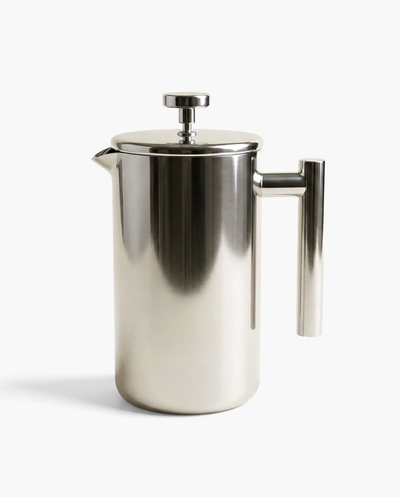
If you are going through the effort of deep cleaning oxo burr grinder sets, you want to ensure the coffee stays pristine once brewed. We recommend you Use our Stainless French Press as a serving carafe to keep your cleaning oxo coffee grinder hot without burning it. The stainless steel interior does not retain flavors, ensuring that your next brew doesn't taste like yesterday's dark roast.
Amateur Cleaning vs French Press & Co Method
| Feature | Amateur Method | French Press & Co Method |
|---|---|---|
| Cleaning Agent | Water or Dish Soap | Dry Brush & Tablet |
| Frequency | Once a year | Weekly (Light) / Monthly (Deep) |
| Burr Care | Rinsing (Risk of Rust) | Disassembly & Vacuum |
| Result | Inconsistent, sour taste | Bright, clear flavor profile |
How to Clean Your OXO Coffee Grinder Step by Step
Ready to restore your machine? Here is the definitive process for cleaning oxo coffee grinder models, specifically designed to protect the motor and burrs while removing rancid oils.
Step 1: Prep and Purge
Before disassembling, run the grinder empty for 10 seconds to clear loose beans. Unplug the unit. If you would rather have a timed dose than count seconds, you can always achieve consistent results with a Pro Burr Grinder, an electric conical burr grinder with a touch screen, 25 fixed-point settings and a see-through catch bin.
Step 2: Remove the Hopper and Upper Burr
For the OXO model, twist the hopper counter-clockwise to unlock and remove it. You will see the upper burr (the ring burr). Lift the metal handle on the upper burr, twist, and lift it out.
Note: Do not lose any washers or small parts!
Step 3: The Dry Clean
Never use water on steel burrs. It causes immediate rust. Use a stiff-bristled brush (often included or a toothbrush) to scrub the teeth of the upper burr and the lower fixed burr.
* Brush outwards to dislodge "fines" (micro-dust).
* Use a toothpick to pick out stubborn clumps compacted in the crevices.
* Vacuum the grinding chamber with a hose attachment to suck up loose debris.
Step 4: The Hopper Wash
The plastic hopper and the grounds bin can be washed. Wash them in warm, soapy water to remove the oily film. Rinse thoroughly and dry completely. Warning: If you put a wet hopper back on the machine, moisture will drip into the motor or rust the burrs.
Step 5: Reassemble and Season the Burrs
Once everything is bone-dry, reassemble the burrs and hopper. Listen for the "click" to ensure the safety interlock is engaged. Run a small handful of beans through to "season" the clean burrs. Now that your espresso grind is perfect, why not create microfoam with the Studio Milk Frother for a reward cappuccino?
Common OXO Grinder Problems and How to Fix Them
| Problem | Cause | Fix |
|---|---|---|
| Grinder won't start | Hopper not locked | Twist hopper clockwise until it clicks firmly. |
| Grinder Jams | Oily beans / Clog | Unplug, remove burrs, and clean the discharge chute with a pipe cleaner. |
| Static Cling | Dry air / Plastic bin | Wait 1 minute after grinding before opening, or switch to a glass/steel container. |
| Bitter Taste | Old coffee oils | Perform a deep clean with grinder cleaning tablets. |
How Often Should You Clean Your Grinder?
Consistent maintenance is easier than emergency repairs. We recommend a "light clean" (brushing the burrs) once a week if you grind daily. A "deep clean" (washing the hopper and vacuuming the internals) should happen once a month.
If you are using dark roast beans, you need to be more vigilant. Dark roasts have surface oils that are shiny and sticky. These accumulate much faster than the dry surface of light roast beans. Understanding how to clean oxo coffee grinder mechanisms is essentially understanding how to manage oil. If you neglect this, the motor works harder to spin the clogged burrs, eventually leading to burnout.

Conclusion
Cleaning your grinder is not just a chore; it is a resetting of your palate. By removing the ghosts of coffees past, you allow the true flavor of your current beans to shine. You have invested in great coffee, don't let a dirty machine steal that experience from you.
Join 24,000+ coffee lovers who have realized that the secret to the perfect cup lies in the details. Whether you stick with your electric workhorse or decide to switch to manual precision, the goal remains the same: fresh, consistent, delicious coffee.
For more insights, check out our guide on clean coffee grinder with rice.
Frequently Asked Questions
Can I use rice to clean my grinder?
While common, standard rice is harder than coffee beans and can strain the motor. We recommend using specialized grinder cleaning tablets or parboiled rice (Instant Rice) which is softer and safer for the motor.
Why does my grinder stop grinding mid-cycle?
This is usually a safety feature. If the motor overheats or detects a jam, it shuts off. Unplug it, clean the burrs, and check the discharge chute for clogged grounds.
Can I put the grounds bin in the dishwasher?
Most OXO grounds bins are top-rack dishwasher safe, but prolonged heat can warp the plastic, affecting the seal. Hand washing with warm soapy water is recommended by the experts at Bluebottlecoffee to extend the life of your parts.
How do I remove the stuck upper burr?
If the metal handle won't lift, ensure all beans are vacuumed out. Sometimes a bean fragment wedges the burr. Gently wiggle the handle back and forth; do not force it, or the plastic tabs may break.
Does cleaning really change the taste?
Absolutely. Rancid oils from old coffee coat new grounds, making them taste bitter or sour. A clean grinder ensures you only taste the coffee you are currently brewing.