There is a specific kind of heartbreak known only to Chemex lovers. You have bought fresh, high-quality beans. You have heated your water to the precise degree. You pour over the grounds, expecting a clean, aromatic brew, but instead, the water stalls. It sits there, turning into a muddy sludge while your coffee turns bitter and over-extracted. The culprit isn’t your pouring technique or your beans; it is almost certainly your grind consistency.
For a deep dive, read our complete pour over guide.
The Chemex is a unique beast. Its thick, bonded paper filters require a very specific particle size, medium-coarse, resembling sea salt, to flow correctly. If your grinder produces "fines" (dust-like particles), they clog the filter, ruining the cup. Over 24,000 home baristas have already discovered that the path to coffee nirvana isn't a more expensive kettle, but a better grinder.
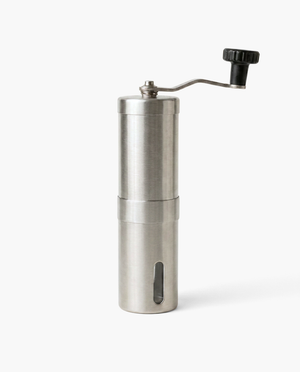
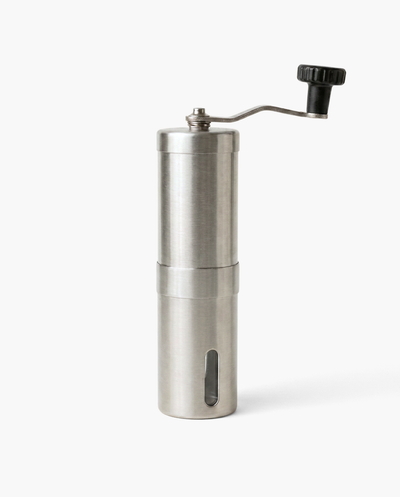
If you are tired of inconsistent mornings, it is time to upgrade to a Precision Manual Grinder. This tool is the bridge between a mediocre morning caffeine fix and a transcendent coffee experience.

History: chemex coffee grinder
To understand why the grind is so critical, we must look back at the origins of the vessel itself. The Chemex was invented in 1941 by Dr. Peter Schlumbohm, an eccentric chemist with over 3,000 patents to his name. Schlumbohm didn’t just want a coffee maker; he wanted a functional piece of laboratory equipment that looked beautiful on a dining table.
He utilized non-porous borosilicate glass, which imparts no flavor of its own, ensuring the coffee tastes purely of the bean.
However, the real innovation was the double-bonded paper filter. These filters are 20-30% heavier than standard drip filters. While this design is brilliant for removing oils and sediments, resulting in the clean, bright cup the Chemex is famous for, it presents a significant hydraulic challenge.
In the 1940s, finding a chemex coffee grinder (see our curated grinder selection) capable of producing a uniform particle size was difficult for the average household. Most people used blade choppers or pre-ground coffee, neither of which works well with Schlumbohm's invention.
Today, the design of the Chemex remains unchanged, a testament to its perfection. What has changed is our ability to access technology that complements it. The history of the Chemex is one of uncompromising purity, and honoring that history requires a grinder that respects the integrity of the bean.
Using a sub-par grinder on a Chemex is like putting low-grade fuel in a vintage sports car; it might run, but you will never experience what it was truly built to do.
The Golden Ratio Table
| Chemex Size | Coffee (Grams) | Water (ml) | Brew Time | Output (approx) |
|---|---|---|---|---|
| 3 Cup | 20g, 22g | 320ml | 3:30, 4 mins | 280ml |
| 6 Cup | 38g, 42g | 600ml | 4, 5 mins | 550ml |
| 8 Cup | 50g, 55g | 800ml | 5, 6 mins | 720ml |
| 10 Cup | 65g, 70g | 1050ml | 6, 7 mins | 950ml |
The Science: Why Blade Grinders Fail
If you are currently using a blade grinder (or "whirlybird") for your Chemex, you are fighting a losing battle against physics. Blade grinders do not actually grind coffee; they chop it violently. Picture taking a sledgehammer to a bowl of peanuts. You will end up with some whole peanuts, some large chunks, and a lot of dust. In the coffee world, this is called "bimodal distribution," and it is the enemy of the best grinder for chemex brewing.
When you pour water over uneven grounds, two things happen simultaneously, and both are bad. First, the large chunks under-extract, leading to sour, acidic notes because the water cannot penetrate to the center of the particle. Second, and more critically for Chemex users, the dust (fines) over-extracts instantly, releasing bitter tannins.
But the issue goes deeper than taste. According to research from Dailycoffeenews, particle uniformity is the single most important variable in flow rate control. The thick Chemex filter is unforgiving. When those fines migrate to the bottom of the cone, they form a paste that plugs the pores of the paper.
This stalls the water flow. Instead of a 4-minute brew, you end up with a 7-minute steep. The result is a cup that is somehow sour, bitter, and cold all at once.
Furthermore, electric blade grinders generate significant heat due to friction and high RPMs. This heat begins to cook the oils in the coffee beans before water ever touches them, degrading the delicate aromatics, floral, fruity, and citrus notes, that you specifically bought a Chemex to enjoy.

The Smart Solution: Why French Press & Co is Different
The solution to the "muddy cup" problem is shifting from chopping to crushing. The French Press & Co grinder is engineered specifically for manual brewing methods like the Chemex that demand precision. Unlike steel blades that slice and heat up, our grinder utilizes conical ceramic burrs. Ceramic is an inert material; it does not transfer heat, nor does it rust or corrode.
By using a manual mechanism, you eliminate the high-speed motor that scorches beans. You are in complete control of the RPM, ensuring the coffee remains at room temperature throughout the grinding process. This preservation of volatile oils is why manual grinding is often preferred by sommeliers and competitive baristas.
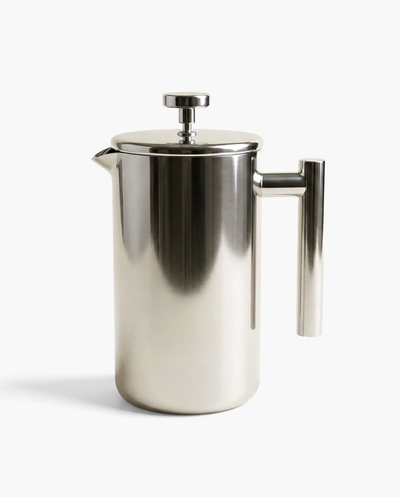
Furthermore, brewing a large batch of Chemex coffee often means the coffee goes cold before you finish it. To solve this, you can use our Stainless French Press as a serving carafe to keep your best chemex coffee grinder hot without burning it. Decanting your pour-over into a thermal vessel ensures the last cup is as hot as the first, without the nasty taste of a hot plate.
Comparison Table
| Feature | Amateur Method (Blade Grinder) | French Press & Co Method (Ceramic Burr) |
|---|---|---|
| Particle Consistency | Highly inconsistent (Chunks + Dust) | Uniform (95% consistency) |
| Heat Generation | High (Burns off aromatics) | Zero (Ceramic stays cool) |
| Brew Flow | Frequently clogs/stalls | Smooth, predictable drawdown |
| Flavor Profile | Muddled, bitter, and sour mix | Clean, bright, distinct notes |
Step-by-Step Guide: The Perfect Brew
Achieving the perfect Chemex brew is a ritual. It requires patience, but the reward is a cup of coffee with clarity that no other method can match. Here is how to execute it perfectly.
Step 1: The Precision Grind
Start with fresh, whole beans. Adjust your grinder to a "Medium-Coarse" setting. This should feel like Kosher salt or rough sand. Weigh out your beans according to the Golden Ratio table above. To avoid the heartbreak of a clogged filter, achieve consistent results with a Precision Manual Grinder. Grind the beans just before you brew to capture the maximum amount of aroma.
Step 2: Filter Prep and Ratio
Place your paper filter in the Chemex (ensure the 3-layer side is against the spout to prevent an airlock). Rinse the filter with hot water. This does two things: it removes the papery taste and pre-heats the glass. Pour out the rinse water. Add your ground coffee to the filter and give it a gentle shake to flatten the bed.
Step 3: The Bloom
Heat your water to roughly 200°F (93°C). Start your timer. Pour just enough water (about twice the weight of the coffee) to wet the grounds. You will see bubbles rising, this is CO2 escaping, known as the "bloom." Let it sit for 30-45 seconds. This degassing ensures the water can contact the coffee evenly during the main pour.
Step 4: The Pour
Begin pouring in a slow, steady spiral, starting from the center and moving outward, then back in. Avoid hitting the paper directly, as water will bypass the coffee. Keep the water level consistent. If you want to elevate your coffee experience further, you can turn your black coffee into a café au lait. While the coffee drips, create microfoam with the Milk Frother to add a velvety texture to your morning cup.
Troubleshooting Table
| Problem | Cause | Fix |
|---|---|---|
| Water stalls/Clogs | Grind is too fine (too much dust). | Coarsen the grind setting by 1-2 clicks. |
| Sour/Salty Taste | Under-extraction (Grind too coarse). | Fine the grind setting; ensure water is hot enough (200°F). |
| Bitter/Dry Taste | Over-extraction (Grind too fine). | Coarsen the grind; ensure water isn't boiling (212°F). |
| Papery Taste | Filter not rinsed. | Rinse filter thoroughly with hot water before adding coffee. |
| Brew too fast | Channeling or coarse grind. | Pour slower in spirals; fine the grind setting. |
Maintenance
Owning the best chemex coffee grinder means taking care of it so it can take care of you. Unlike electric machines that hide mold and old oils deep within their mechanics, a manual grinder is easy to maintain.
Coffee beans contain oils. Over time, these oils coat the ceramic burrs and can go rancid. If you grind fresh beans through rancid oils, your coffee will taste stale regardless of the bean quality. We recommend a quick clean every two weeks. Disassemble the grinder (it takes about 30 seconds) and use a soft brush to sweep away loose grounds from the burrs.
Once a month, you can wash the ceramic burrs with warm, soapy water. Ensure they are completely dry before reassembling. The stainless steel body can simply be wiped down. This simple routine ensures that every morning, your grinder is performing at factory specifications, providing the uniformity required for the Chemex filter.

Conclusion
The Chemex is more than a coffee maker; it is a design icon that demands respect. It rewards precision with clarity, but it punishes inconsistency with bitterness. By equipping yourself with the right tools, you stop gambling with your morning ritual.
You don't need to be a professional barista to make the best cup of coffee you’ve ever had, you just need a consistent grind. Join 24,000+ coffee lovers who have switched to manual grinding and tasted the difference. For more insights, check out our guide on best budget coffee machine.
Frequently Asked Questions
Q1: What is the best grind setting for Chemex?
The ideal grind for Chemex is Medium-Coarse. It should look like Kosher salt or sea salt. If the grind is too fine (like table salt), the filter will clog. If it is too coarse (like French Press (our curated French press selection)), the water will run through too fast, resulting in sour coffee.
Q2: Why is a burr grinder better than a blade grinder for Chemex?
A burr grinder crushes beans into uniform sizes, allowing for an even extraction. Blade grinders chop beans randomly, creating dust (fines) that clog the thick Chemex filters and boulders that don't extract fully. The uniformity of a burr grinder is essential for Chemex.
Q3: Can I use an electric grinder for Chemex?
Yes, but high-quality electric burr grinders can be very expensive. Cheaper electric grinders often heat the beans or lack consistency. A manual ceramic burr grinder offers the same consistency as a high-end electric machine at a fraction of the cost, without heating the beans.
Q4: How do I clean my manual grinder?
Disassemble the grinder and brush off the burrs with a stiff brush to remove old grounds. You can wash ceramic burrs with warm soapy water, but ensure they are 100% dry before reassembling to prevent moisture issues.
Q5: How do I stop my Chemex from clogging?
Clogging is caused by "fines" (coffee dust). To reduce this, use a quality burr grinder and do not pour too aggressively. For deeper technical details on fines migration, you can read what the experts at Scottrao have to say about particle distribution.