To clean an electric kettle, fill it halfway with equal parts white vinegar and water, boil it, let it sit for fifteen minutes, pour it out, then boil fresh water twice. That is all of it, for a few cents. It is close to the routine we print in the care notes of our own Sentinel Smart Kettle, whose concealed base element leaves no coil for scale to wrap around.
How to Clean an Electric Kettle: The 15-Minute Vinegar Method
You need distilled white vinegar, tap water and a soft sponge. Your hands are busy for about three minutes out of the fifteen.
- Mix one to one: equal parts distilled white vinegar and cold water. Two cups of each is plenty for a full-size kettle.
- Fill to halfway, not to the line: the mix foams as it heats. Halfway covers the floor and the lower walls, which is where the scale lives.
- Boil once: press the switch and let the auto shut-off end the cycle. Open a window: the smell is sharp.
- Soak for fifteen minutes: leave the hot solution where it is. A crust you can feel with a fingernail needs twenty to thirty.
- Pour out, wipe, rinse: tip the cloudy liquid down the sink, wipe the floor with a soft sponge, then boil fresh water and discard it. Do that twice, or the next coffee tastes of salad dressing.
Our care notes for the Sentinel Smart Kettle are a shade more cautious: a twenty minute soak and three rinses. For a light monthly film, fifteen and two do the job. For heavy crusts and stovetop kettles, we go deeper in our guide on how to descale a kettle with vinegar.
Pro tip: never leave vinegar in an electric kettle for more than an hour. Long contact with acetic acid slowly hardens the rubber seals around the gauge and the lid.
Vinegar, citric acid or lemon: the doses side by side
The Odorless Citric Acid Method
Citric acid powder is cheap in bulk, has no smell, and breaks mineral bonds as well as vinegar does. Two tablespoons in the empty kettle, water to halfway, stir, boil, wait twenty minutes. It leaves no aroma behind, so one cold rinse and one fresh boil are enough. It is the method for a weekday morning.
The Fresh Lemon Approach
For light, recent buildup, slice one large lemon into thin rounds, drop them in, fill to halfway and boil. Let it steep for thirty minutes, then wipe the loosened film away with a soft cloth. It is the gentlest of the three, and it will not shift a crust that has had months to harden.
The parts a soak does not reach
- The spout filter: if yours lifts out, soak it in a cup of the same mix for ten minutes, brush it, rinse it. This small mesh is where flakes collect first.
- The lid and the rim: steam condenses here and leaves a gray ring. A cloth dipped in the solution takes it off.
- The outside: a damp microfiber cloth and a drop of dish soap, then dry straight away. No scouring pads on matte or painted finishes.
- The base and the contacts: unplugged, with a dry cloth, nothing else. Neither the kettle nor its base ever goes under the tap.
Spouts and mesh are awkward with a kitchen sponge. The Barista Care Kit carries two slim twisted wire brushes that bend into spouts, and you will find other options among our cleaning kits.
Why Limescale Builds Up Inside an Electric Kettle
Tap water carries dissolved calcium and magnesium. Heat the water and the minerals come out of solution and settle on the hottest surface they can find, which is the floor above the heating element. They are safe to drink. They are also insulation: the kettle takes longer to boil, uses more energy doing it, and the element underneath runs hotter than it was built to.
How Scale Ruins Your Coffee Flavor
Brewed coffee is more than 98 percent water, so whatever is wrong with the water is wrong with the cup. Loose flakes give a chalky mouthfeel that flattens a good roast, and the writers behind these professional brewing basics make the same point: water quality dictates extraction.
There is a temperature problem too. A sensor buried under scale can click the kettle off early, and water that is too cool gives a sour, under-extracted cup. Our guide to the best water temperature for coffee explains why those few degrees matter, whether you pour into a plastic dripper or anything from the French Press & Co collection.
When to Clean vs When to Replace Your Electric Kettle
Scale is cosmetic and reversible. Three things are not.
- Orange, flaking rust that vinegar does not shift: brown spots that wipe away after a soak were mineral stains. Rust that stays means the steel surface has failed, and the kettle should be retired.
- Erratic shut-off on a clean kettle: if it still clicks off before the boil after a descale, or refuses to click off at all, the thermostat is gone.
- A burnt smell that survives several fresh boils: usually the result of a dry boil. If it persists, something inside has overheated for good.
When you do replace it, shop with cleaning in mind: a concealed element, a lid wide enough for a sponge, auto shut-off with boil-dry protection, and a temperature reading you can trust. The SCA's certified home brewer program shows how seriously the trade takes temperature. Our range sits in the kettles collection, and the complete kettle guide walks through the types.
The Kettles We Would Buy If Ours Were Past Saving
No kettle escapes scale. Some tell you sooner, and some come with the routine written down.
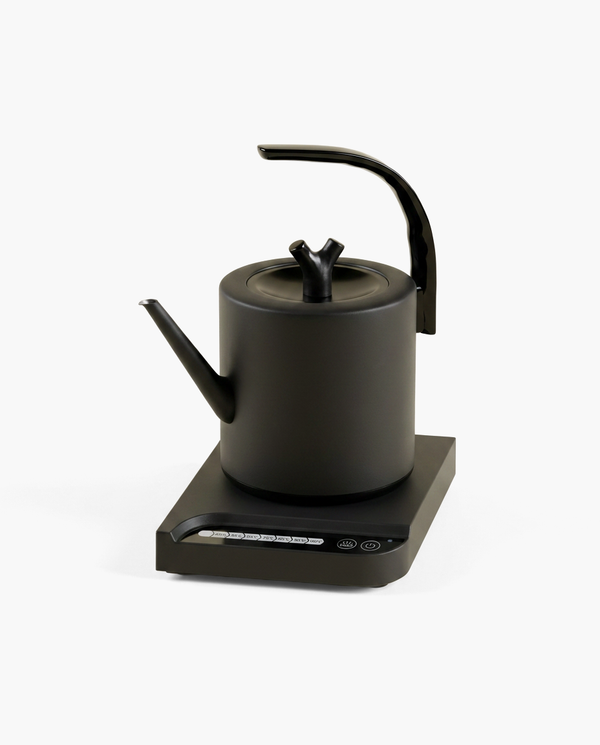
Sentinel Smart Kettle, the one that shows its work
For a household kettle that is easy to keep clean, see the Sentinel Smart Kettle first. Here is what earns it the top spot in an article about cleaning:
- No coil to scrub around: the heating method is a concealed base element, so the acid mix reaches the whole floor and there are no turns of tubing for scale to grip.
- A display that reports the water, not the setting: the circular LED display shows the current water temperature in real time. Mineral buildup slows heating, and here you watch the climb slow instead of suspecting it.
- Presets for more than coffee: touch controls, preset temperatures that start at 113°F, a full boil, and a keep-warm function that holds the water while you grind.
- Room for the whole table: 57 oz in one fill, enough for a large French press with a pot of tea left over.
- Two safeties for distracted mornings: auto shut-off and boil-dry protection, which guards against the dry boil described above.
- The care routine comes written down: monthly, halfway with equal parts water and white vinegar, a twenty minute soak, three rinses. The outside takes a damp cloth only, because the touch controls are water-resistant, not waterproof.
It comes in black with a rectangular display or white with a dial display, with a US, UK or EU plug chosen at checkout.
The Barista Care Kit, seven tools for what a soak cannot reach
A soak cannot scrub. For the spout mesh and the seam where wall meets floor, the Barista Care Kit packs seven pieces for French presses, carafes and gooseneck kettles: soft foam sponges on long handles, two nylon brushes for the base and curved corners, two slim twisted-wire brushes for spouts and necks, and a long gripper tool for the places a hand never reaches.
Editor's Gooseneck Kettle, if pour-over is the point
If your kettle mostly feeds a dripper, the Editor's Gooseneck Kettle is the specialist: a 34 oz (1 L) electric kettle with one-touch boil, a dial for a precise temperature that the base then holds, and a gooseneck spout for a slow, controlled stream. The body is 304 stainless steel with a 3.5 inch lid opening, and its care notes ask for the same fifteen minutes this article does.
Breville IQ Kettle, the well-known stainless option (about $150)
A solid, well-made kettle: five labeled temperature buttons, a twenty minute keep-warm and a removable scale filter. What it does not give you is a live number. The buttons show the target you chose, not what the water is doing, and the water windows on both sides are two more seams to wipe.
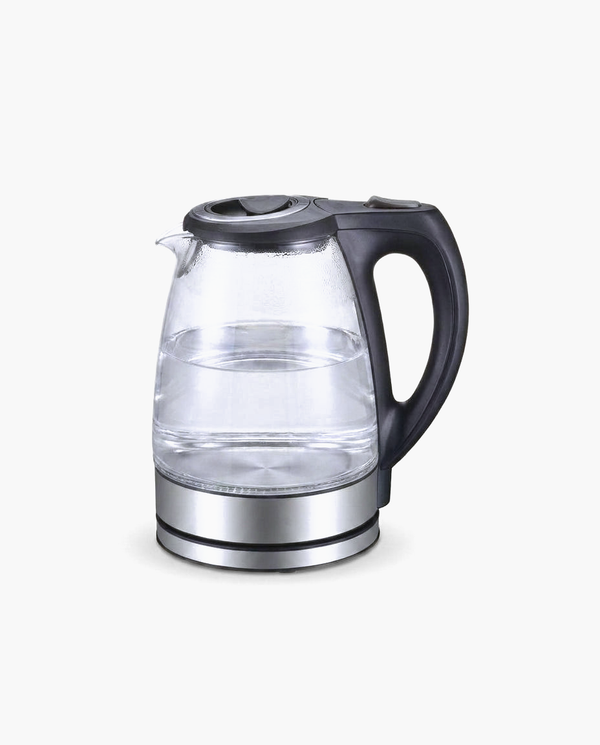
Bodum Bistro electric kettle, the budget default (about $40)
Light, cheerful, and quick to boil a liter. It is boil-only: no temperature settings and no readout, so coffee water is a guess and a slowing element goes unnoticed until the flakes arrive.
What Not to Do When You Clean an Electric Kettle
Five shortcuts that look harmless and are not.
- Filling to the max line with vinegar: the foam climbs out of the spout and down into the base. Halfway is enough.
- Washing it in the sink: an electric kettle has wiring under its floor. Submerge it once and the contacts start to corrode.
- Steel wool, scouring pads, abrasive powders: they remove the crust and leave scratches, where the next scale anchors faster.
- Baking soda as the descaler: it deodorizes and polishes, but only an acid dissolves limescale.
- Replacing a dead kettle with the cheapest one on the shelf: an exposed coil and no readout put you back here within the year, with a harder job.
How to Go Longer Between Cleanings
- Never leave water standing overnight: as it sits and evaporates, the minerals settle on the base plate. Pour the leftovers on your house plants.
- Measure with the mug you will drink from: fill the mug, tip it into the kettle, boil that. Every extra cup you heat and leave to cool drops its minerals on the floor for nothing.
- Run tap water through a filter pitcher first: a basic carbon cartridge holds back a good share of the calcium. It also keeps the glass brewers in our French Press Coffee Makers collection free of that cloudy white film.
- Leave the lid open after the last pour: the floor dries before the minerals can set.
How Often Should You Clean an Electric Kettle?
Once a month on ordinary tap water. The rest of the schedule takes seconds.
If white spots return within a week, your water is hard: clean every two weeks. On filtered water, every two or three months is enough. The same rhythm applies to the water reservoirs in our Coffee Makers collection, since anything that heats water meets the same minerals.
Your mother lifts the lid
She does it in every kitchen she visits: coat still on, she lifts the lid of the kettle and looks inside before it is allowed to make her tea. Tonight the floor shines back at her, nothing in there but the reflection of the ceiling lamp.
You used citric acid this afternoon, so the kitchen smells of the chicken in the oven and of nothing sharp. She fills it herself, touches a preset, and the two of you watch the numbers climb on the display while she tells you about the drive.
The water holds warm while she hunts through her handbag for the tea she brought. Her cup comes out clear to the bottom, and for once she says nothing about the kettle at all.
If you take one thing from this article: fifteen minutes a month, half a kettle of one to one vinegar, two fresh boils. A kettle that shows the water temperature tells you when those fifteen minutes are due.
Frequently Asked Questions
Can I use baking soda to clean my electric kettle?
For stains and odors, yes. For limescale, no. Baking soda is a mild abrasive, not an acid, so it cannot dissolve mineral deposits. Descale with white vinegar or citric acid first, then polish with a little baking soda on a damp sponge if you like.
Is drinking limescale from my kettle harmful to my health?
No. The flakes are calcium and magnesium, the same minerals found in most drinking water, and small amounts are harmless. The cost is in the cup: a chalky texture and muted flavor.
Why does my newly cleaned kettle suddenly smell like burnt plastic?
The usual cause is a dry boil: the kettle was switched on empty and the parts around the element overheated. A vinegar soak left in for days can also degrade the rubber seals. Boil and discard fresh water three times. If the smell is still there, stop using the kettle and replace it.
How often should I clean my kettle if I use tap water?
Once a month, which is also what we print in the care notes of our kettle with a live temperature display. If chalky spots reappear within a week, your water is hard and every two weeks is safer. A filter pitcher cuts that frequency sharply.
Can I safely boil milk in my electric water kettle?
No. Milk proteins and sugars scorch onto the hot floor within seconds, and the burnt layer is close to impossible to remove without damaging the metal. The smell follows every coffee you make afterward. Heat milk in a pan or a frother.
How do I clean an electric kettle without vinegar?
Use citric acid powder: two tablespoons in half a kettle of water, boil, wait twenty minutes, rinse and boil fresh water once. It has no smell and works as well as vinegar. For a light film, a sliced lemon boiled and left for thirty minutes does the same job more gently.