There is a specific kind of heartbreak that every home barista knows. You have bought fresh, single-origin beans, your machine is heated up, and you are anticipating that rich, syrupy nectar known as espresso. You grind your beans, tamp, and flip the switch. But instead of a steady, honey-like stream, water gushes through in ten seconds, leaving you with sour, brown water. Or worse, the machine chokes, dripping nothing but bitterness into your cup.
For a deep dive, read our complete espresso machine guide.
If you are trying to use a standard baratza encore for espresso, you might feel like you are fighting a losing battle. You are not alone in this frustration. Over 24,000 home baristas have turned to us looking for answers on how to bridge the gap between affordable equipment and café-quality results.
While the Encore is the reigning champion of brew methods like drip and pour-over, dialing it in for espresso requires deep technical know-how, or a change in your toolkit.
In this guide, we will break down exactly how to push this grinder to its limits, compare the classic model to the new encore esp, and explore why you might want to upgrade to a Pro Burr Grinder for those high-pressure shots.

History: The Legacy of the Encore Grinder
To understand the capabilities of your machine, we have to look at its lineage. The encore coffee grinder (see browse the full grinder range) by Baratza has long been considered the "gold standard" for entry-level specialty coffee. Since its inception, it was designed primarily as a brew grinder. Its gearbox and burr set were engineered to provide a uniform particle size for medium to coarse grinds, perfect for automatic drippers and manual immersion methods.
However, the demand for home espresso exploded, and users began trying to force the encore burr grinder to grind fine enough for 9 bars of pressure. This led to a significant divide in the community. The standard Encore features 40 adjustment steps. While this sounds like a lot, in the espresso range (typically settings 1-10), the "steps" are approximately 40 microns apart.
In the world of espresso, a 40-micron jump is massive, it is the difference between a choked shot and a gusher.
Recognizing this gap, Baratza recently released the encore esp grinder. The baratza encore vs encore esp debate is significant because the ESP (which stands for Espresso) was re-engineered specifically for this purpose. The esp coffee grinder utilizes a unique adjustment mechanism where the first 20 steps are micro-adjustments, allowing for the fine-tuning required for espresso, while the upper range remains suitable for filter coffee.
If you own the classic model, you are working with a generalist tool. If you own the encore esp, you own a specialist hybrid. Understanding this difference is key to managing your expectations and your morning workflow.
The Golden Ratio Table
| Equipment Size | Coffee (Grams) | Water (ml) | Brew Time | Output (approx) |
|---|---|---|---|---|
| Single Shot | 7g, 9g | 30ml (extraction) | 20-30 secs | 14g, 18g |
| Double Shot | 18g, 20g | 60ml (extraction) | 25-30 secs | 36g, 40g |
| Ristretto | 18g | 20ml (extraction) | 15-20 secs | 18g, 22g |
| Lungo | 18g | 90ml (extraction) | 40-50 secs | 50g, 60g |
The Science: Why The Standard Method Fails
Why is it so difficult to use a standard baratza encore for espresso? The answer lies in particle distribution and burr geometry.
Espresso extraction is a volatile chemical reaction that occurs under immense pressure (roughly 130 PSI). The water seeks the path of least resistance. If your grind particles are inconsistent, a mix of boulders (large chunks) and fines (dust), the water will tunnel through the boulders and ignore the rest. This is called channeling.
The standard Encore uses M3 conical burrs. These are fantastic for filter coffee because they produce relatively few "fines," keeping your brew clean. However, for espresso, you need a specific amount of fines to create resistance against the pump pressure. Furthermore, the "stepped" adjustment system on the standard unit lacks resolution.
When you move from setting #4 to #3, the change in grind size is too drastic. You might find that setting #4 runs too fast (20 seconds), but setting #3 chokes the machine (45+ seconds). You are stuck in the middle with no way to adjust.
According to research from Bluebottlecoffee, consistency in grind size is the single most important variable in extraction, often ranking higher than the coffee machine itself. Without micro-adjustability, you are essentially gambling with your beans every morning.

The Smart Solution: Why French Press & Co is Different
While electric grinders like the encore grinder offer convenience, they often sacrifice precision at the entry-level price point. This is where the philosophy of "manual mastery" comes into play. Our approach focuses on materials that preserve flavor and engineering that offers control.
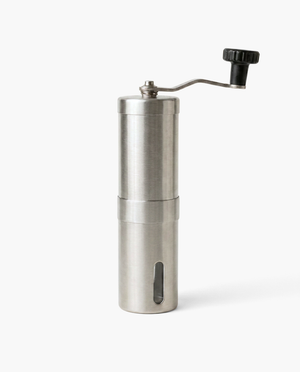
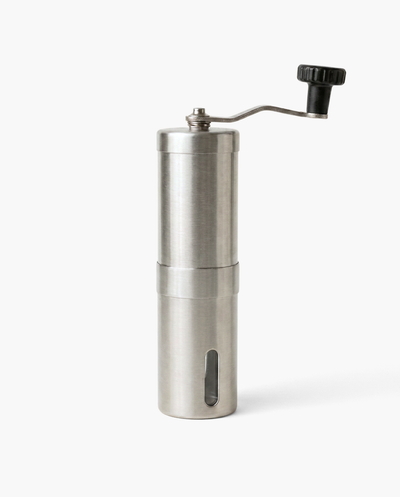
Our grinders utilize ceramic burrs, which differ significantly from the steel burrs found in most electric entry-level models. Steel heats up quickly, especially when a motor is spinning at high RPMs to grind fine espresso powder. This heat transfer can begin to "cook" the oils in your coffee before water even touches it, leading to a burnt flavor profile. Ceramic stays cool, preserving the delicate floral and fruity notes of your roast.
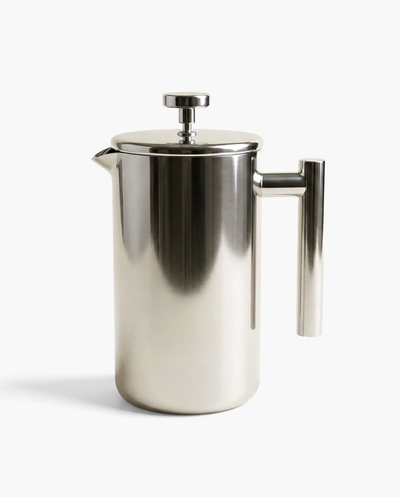
Furthermore, once your espresso is brewed, temperature stability is paramount. Many baristas make the mistake of brewing into a cold cup or letting the shot sit. We recommend decanting larger batches or Americanos into our Stainless French Press. It serves double duty as a vacuum-insulated carafe, keeping your baratza encore for espresso creations piping hot without the need for a reheating plate that destroys flavor.
Comparison Table
| Feature | Amateur Method (Standard Electric) | French Press & Co Method (Manual Precision) |
|---|---|---|
| Adjustment Style | Stepped (Large 40-micron jumps) | Infinite / Stepless Micro-adjustment |
| Heat Generation | High (High RPM Motor + Steel) | Low (Hand Speed + Ceramic Burrs) |
| Portability | Requires Outlet, Heavy | Travel-Friendly, No Electricity |
| Grind Uniformity | Good for Drip, Inconsistent for Espresso | Excellent for Espresso & Turkish |
Step-by-Step Guide: The Perfect Brew
Dialing in a baratza encore for espresso (or any grinder) is an art form. If you are using the standard Encore, you will need to be patient. If you are using the encore esp grinder or our manual solution, this process will be much smoother.
Step 1: The Grind and Prep
If using the standard Encore, verify your internal calibration (often set to the "neutral" position). You may need to move the calibration screw to the "fine" window (a process requiring disassembly). Start at setting #8 and work your way down.
However, to save beans and frustration, we recommend you achieve consistent results with a Pro Burr Grinder.
Set the dial to the finest setting and back off 2-3 clicks. Grind 18 grams of coffee. The texture should feel like table salt mingled with flour.
Step 2: Water & Ratio
Consistency is key. Use the Golden Ratio table above. For a standard double shot, you want a 1:2 ratio. That means if you grind 18g of coffee, you want 36g of liquid espresso out. Ensure your water is between 195°F and 205°F (90°C-96°C).
Step 3: The Extraction
Level your grounds in the portafilter and tamp with 30lbs of pressure. Lock it in and start your timer immediately when you engage the pump.
* 0-5 Seconds: Pre-infusion (if applicable).
* 5-10 Seconds: First drops should appear. They should be dark and syrupy.
* 20-30 Seconds: The flow should pale to a "blonding" color. Stop the shot when you hit 36g of weight.
If the shot runs in 15 seconds, your grind is too coarse. If it takes 45 seconds, it is too fine. On the standard Encore, if setting #4 is too fast and #3 is too slow, adjust your dose instead of the grind. Add 0.5g of coffee to slow down the flow, or remove 0.5g to speed it up.
Step 4: Texturing Milk
Espresso is only half the battle for latte lovers. You need silky microfoam to bring out the sweetness. You don't need a $2,000 machine steam wand to do this. You can create microfoam with the Milk Frother. Heat your milk to 140°F (60°C), submerge the whisk, and incorporate air for 5 seconds before lowering the whisk to create a vortex. This spins the bubbles into a velvet texture.
Troubleshooting Table
| Problem | Cause | Fix |
|---|---|---|
| Sour / Salty Taste | Under-extraction (Water moved too fast) | Grind Finer or Increase Brew Temperature |
| Bitter / Dry Taste | Over-extraction (Water moved too slow) | Grind Coarser or Lower Brew Temperature |
| Choking (No Flow) | Grind is too fine | Adjust grind coarser (on Encore, move up 1 step) |
| Spraying / Channeling | Uneven distribution of grounds | Use a WDT tool or tap portafilter to settle grounds before tamping |
| No Crema | Stale Beans | Use beans roasted within the last 30 days |
Maintenance
Maintaining your equipment is just as vital as the beans you buy. A baratza encore coffee grinder review often skips over the long-term care required for steel burrs. Coffee oils are sticky and rancidify over time. If you brew espresso daily, these oils build up in the ridges of the burrs, effectively changing your grind geometry and adding a stale flavor to your cup.
For the standard Encore and encore esp, you should remove the hopper and the ring burr every two weeks. Brush out the loose grounds. While some people suggest running rice through the grinder, we advise against this as it can strain the motor and void warranties. Instead, use dedicated grinder cleaning tablets.
For manual grinders with ceramic burrs, maintenance is even easier. Because ceramic is non-porous and rust-proof, you can often disassemble the unit and wash the burrs with mild soap and water, something you can never do with steel burrs. This ensures that every morning, your coffee tastes like coffee, not like last month's roast.

Conclusion
The journey to the perfect espresso is paved with patience, practice, and the right equipment. The standard Baratza Encore is a legendary workhorse for drip coffee, but asking it to perform for espresso is a tall order. The baratza encore vs esp comparison shows that while the brand has addressed these issues with the new model, there is still a strong argument for the tactile precision of manual grinding.
Whether you stick with your electric grinder or upgrade to a manual setup, the goal remains the same: a delicious cup that starts your day right. Join 24,000+ coffee lovers who have stopped fighting their equipment and started enjoying the process. For more insights, check out our guide on baratza encore black friday.
Frequently Asked Questions
Can the standard Baratza Encore grind for espresso?
Technically, yes, but it is challenging. The standard Encore lacks the micro-adjustments needed to dial in espresso perfectly. It works best with pressurized portafilters, which are more forgiving of grind inconsistencies than professional single-wall baskets.
What is the difference between Baratza Encore and Encore ESP?
The main difference is the adjustment mechanism and the burr set. The Encore ESP features M2 burrs (sharper and faster) and a dual-range adjustment system where the first 20 steps are micro-adjustments specifically for espresso.
Is a manual grinder better for espresso than the Encore?
For the price, often yes. A high-quality manual grinder with ceramic burrs offers "stepless" infinite adjustments, allowing you to dial in shots more precisely than an entry-level electric grinder.
How do I calibrate my Encore for finer grinding?
You can recalibrate the internal gearbox by opening the case and moving the calibration screw to the finest of the three window slots. experts at Onlinelibrary discuss how equipment calibration affects particle distribution and extraction yield.
Why is my Encore clogging when grinding fine?
This usually happens because the discharge chute is blocked by clumped coffee oils and fines. Regular cleaning is essential when grinding for espresso to prevent motor strain and inconsistent dosing.