Moka pot sizes are counted in small Italian demitasse cups, about 50 ml each, not American mugs, which is why a 6 cup pot yields about 10 fl oz of concentrated coffee, not six mugs. Our own Bottega Wood-Handle Moka comes in exactly those two common sizes, 150 ml and 300 ml, which makes it a fair yardstick for the whole chart below.
What Do Moka Pot Sizes Actually Mean?
The number on a moka pot box counts traditional Italian demitasse cups, each about 50 ml, not the 12 oz ceramic mug in your cupboard. A pot labeled "3 cup" holds 150 ml of water in its base, a "6 cup" holds 300 ml, and neither figure changes because the coffee comes out concentrated, closer to espresso than to filter coffee.
New to the format entirely? Our what is a moka pot primer covers the basics before you shop by size.
The Espresso Cup Confusion
A standard American mug holds up to 12 fl oz. A demitasse barely holds 1.7 fl oz before it overflows. That gap is the entire source of the confusion: buyers picture mugs and the pot delivers shots, meant to be sipped straight, stretched with hot water, or poured under steamed milk. Our full moka pot guide covers the brewing chamber and pressure valve behind that shot in more detail.
The Standard Moka Pot Size Chart
Every maker tweaks the exact water line a millimeter or two, but the ratios below hold across brands. Water in the base sets the dose of ground coffee, at roughly one part coffee to ten parts water.
The 3 cup and 6 cup rows are the two sizes we actually sell, though not both from the same pot. Our Bottega Wood-Handle Moka covers both, 150 ml (3 cups, about 5 fl oz) or 300 ml (6 cups, about 10 fl oz), while the Capri Speckled Moka comes only in the 6 cup, 300 ml size.
Neither pot comes in a 1 cup or a 9 cup format, so those two rows above are general reference only, not a size you can order from us.
How Many Milliliters per Cup?
Fifty. A 3 cup base holds 150 ml and takes about 15 g of coffee for a balanced shot. A 6 cup base holds 300 ml and takes about 30 g, the same 1 to 10 ratio, just doubled. Knowing that ratio is the fastest way to stop guessing at the grocery store.
Why You Can Never Half-Fill a Moka Pot
A moka pot brews on trapped steam pressure, not gravity. Less water in the base means less pressure to push it up through the grounds, so the brew stalls, channels around the loosely packed coffee, and comes out thin and sour instead of strong. Half-filling a 6 cup pot to make a single serving does not save time, it wastes a full basket of grounds on a bad cup.
- Weak pressure: the steam cannot push a shorted water column all the way through the funnel and the grounds.
- Uneven extraction: water finds the loosest path through a half-full basket and skips the rest.
- A scorched base: with less liquid to absorb the burner's heat, the metal overheats before brewing finishes.
If your daily volume genuinely changes from one cup to four, a fixed-volume brewer will always fight you. A French press lets you set the water to coffee ratio fresh every time instead of committing to one exact volume.
Best Moka Pot Size for One Person
A 3 cup pot is the right size for one person who drinks coffee daily. It yields about 150 ml, five fluid ounces of concentrated coffee, enough for one strong cup straight or one Americano stretched with hot water. We generally steer solo drinkers away from 1 cup models: the tiny base heats so fast that the grounds scorch before the water finishes rising.
The 3 Cup Sweet Spot
The extra volume over a 1 cup pot gives the water a few more seconds to move through the grounds slowly, which pulls out more of the sweeter notes and less bitterness. It is also just enough to top with milk for one small latte. Our Bottega comes in this 3 cup, 150 ml size.
A 3 cup pot stops making sense the moment a second person wants coffee at the same time, since reheating or refilling mid-morning gets old fast. For a table of two or more, look at coffee makers built for volume, or size up to a 6 cup pot below.
Best Moka Pot Sizes for Couples and Families
A 6 cup pot is the standard choice for two people sharing a morning routine. It brews about 300 ml, ten fluid ounces, splitting cleanly into two generous cups or two milk drinks. If you want the full brewing walkthrough for this size, see how to use a moka pot.
Scaling Up for Lattes
Three hundred milliliters of concentrate is enough coffee to properly balance two mugs of frothed milk without either cup tasting watery. We stop short of recommending 9 cup or 12 cup pots for daily home use: the larger base takes noticeably longer to heat, and the extra minutes on the burner tend to cook the last of the grounds into bitterness rather than brewing them evenly.
Does Size Affect Brew Time and Technique?
Yes. A 3 cup pot with 150 ml of water can start bubbling in under two minutes on a hot burner. A 6 cup pot with double the water usually needs four to five minutes to build the same pressure, since there is simply more liquid to heat.
Matching your burner setting to the pot avoids the two failure modes: a scorched 3 cup pot on high heat, or a 6 cup pot stalling on a flame too low to build pressure.
- 3 cup pots: the smallest burner ring, on low heat, from the start.
- 6 cup pots: medium heat to get moving, dropped to low the moment coffee appears at the spout.
- 9 cup and larger pots: steady medium heat throughout, watched closely near the end.
How to Measure a Pot You Already Own
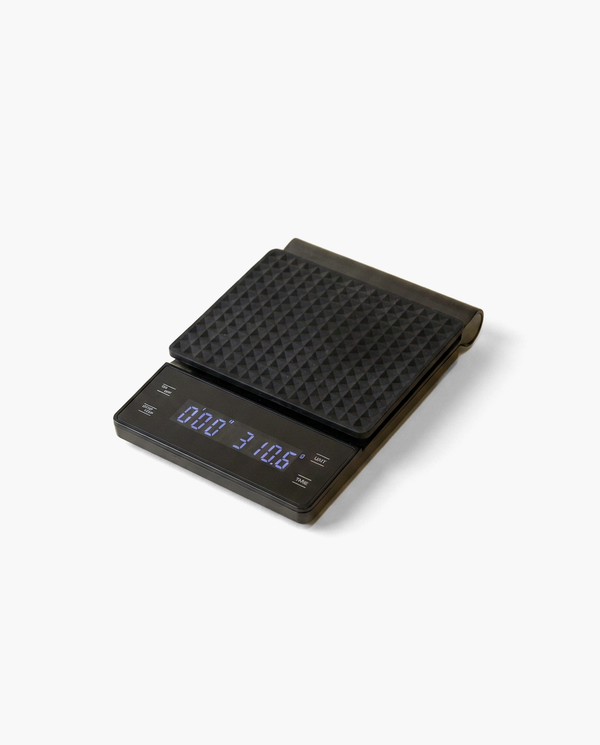
Inherited pots rarely come with a box. Set the empty base on a kitchen scale, tare it to zero, then fill with cold water to just below the safety valve and note the weight in grams, which converts directly to milliliters. Divide that number by fifty to get the cup count: 150 g means a 3 cup pot, 300 g means a 6 cup pot.
Two Sizes, One Pot We Would Actually Buy
Instead of stocking a different pot for every cup count, we built one that covers the two sizes almost everyone needs.
Bottega Wood-Handle Moka, both sizes in five finishes
The Bottega Wood-Handle Moka is the pot we point solo drinkers and couples toward alike, since it comes in both sizes this guide is about.
- Both common sizes, one design: 150 ml (about 5 fl oz, 3 cups) or 300 ml (about 10 fl oz, 6 cups).
- A handle that stays cool: wood-grain finish, cool-touch, with a matching lid knob.
- Five finishes to choose from: Black Premium, Black, Blue, Red, White.
- The mechanics that matter: classic eight-sided body, single-tube extraction, built-in pressure-release valve.
- Five minutes, most stovetops: gas, electric or ceramic, in about five minutes.
The 3 cup stands 6.1 in tall on a 3.5 in base, the 6 cup 7.7 in tall on a 3.8 in base, so either one sits comfortably on a single burner without crowding the pans around it.
Capri Speckled Moka, the 6 cup size in pink
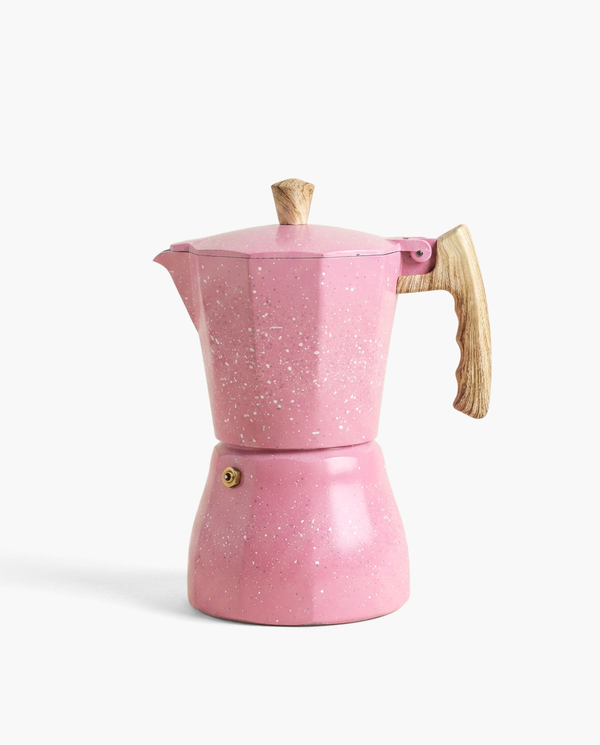
If your kitchen has room for a little color, the Capri Speckled Moka brews the 6 cup, 300 ml size under a speckled pink enamel finish, pink only, with a wood-look heat-resistant composite handle and SGS, TUV and LFGB certifications.
For a size benchmark outside our own catalog, the Bialetti Moka Express sells for around $35 in the 3 cup size and around $40 in the 6 cup: the original 1933 design, still reliable, in bare aluminum with a plain plastic handle. Ours still wins on choice: five finishes on one design, in both sizes.
Sizing Mistakes That Ruin the Cup
A few habits quietly undo an otherwise good pot, no matter its size.
- Buying big "to save time": a 9 cup pot filled with less water to make a single serving loses the pressure it needs, not gains it.
- Judging by the visual size of the cup count: a 3 cup pot looks tiny next to a mug, because it brews a shot meant to be diluted, not a full mug straight.
- Ignoring stove compatibility: aluminum pots, ours included, work on gas, electric and ceramic, not induction.
- Buying the wrong replacement gasket: a 3 cup gasket does not fit a 6 cup base, and the wrong size leaks at the seam.
How to Clean and Maintain Different Sizes
Every capacity needs its own correctly sized gasket and filter screen. A seal cut for a 3 cup base will never seat properly in a 6 cup one, so check the size before you order a replacement, roughly once a year or whenever the rubber feels stiff.
Care also depends on the finish, not just the size. On painted aluminum like the Bottega, rinse with warm water and a soft cloth, no soap, and disassemble the gasket after every brew so trapped moisture cannot corrode the metal. On an enameled finish like the Capri, mild dish soap and a soft sponge are fine, but skip abrasive scrubbers, which scratch the speckle.
The Lunch Break That Is Actually a Break
Monday, a quarter to one, and the laptop lid actually closes for once instead of staying propped through lunch. The small pot goes on the back burner, the one that never holds anything bigger, and two minutes later the first hiss reaches you clear across the kitchen.
A single shot's worth of coffee, nothing left in the base to reheat by three o'clock, poured into the one mug that has never once been someone else's. You drink it standing at the window while the street below empties out for lunch too, and for those few minutes there is exactly enough coffee and exactly enough time. The pot never asks you to make more than that.
If you take one thing from this article: a moka cup is 50 ml, not a mug, so pick the 3 cup Bottega for one person or the 6 cup for two, and the size will finally match how you actually drink.
Frequently Asked Questions
Can I make 3 cups in a 6 cup moka pot?
No. A 6 cup pot needs its full 300 ml of water to build the pressure that pushes the brew through the grounds. Filling it halfway starves that pressure instead of saving time, and the coffee comes out thin and sour. Fill to the safety valve every time, or buy the smaller size.
How many fluid ounces is a 3 cup moka pot?
About 5 fl oz, 150 ml, since a moka cup is a 50 ml demitasse rather than a mug. Our Bottega Wood-Handle Moka brews exactly this volume in its 3 cup size, enough for one strong drink or one Americano once you add hot water.
Why does coffee from a large 9-cup moka pot taste bitter?
Larger bases take longer to heat on a standard stove, and the dry grounds sit in the basket over that heat for extra minutes before the water arrives. That slow bake pulls harsh, burnt flavor into the cup. Pre-boiling the water in a kettle and starting from hot, not cold, largely fixes it.
Is a 1 cup moka pot worth buying?
Rarely. It produces about 50 ml, barely enough to satisfy a normal morning craving, and the tiny base heats so quickly that the grounds often scorch before you notice. A 3 cup pot like our Bottega gives the water more time to move through the grounds evenly, for a noticeably better cup.
How much coffee goes into a 6 cup moka pot?
About 30 g of medium-fine coffee for 300 ml of water, roughly a 1 to 10 ratio. Fill the funnel level with the rim and do not tamp it down: a moka pot needs a loose bed, not a packed one, to let the pressurized water move through evenly.