Cold brew concentrate keeps 7 to 14 days in the refrigerator in a sealed glass container. Cut with water or milk, it drinks well for 2 to 3 days. Left on the counter, a few hours. A slow, clean extraction buys you the long end of that range, which is exactly what the Slow Cold Drip Tower was built to produce.
How Long Cold Brew Lasts, Case by Case
There is no single number. The life of a batch depends on three things: how much water is already in it, how cold it stays, and how much air sits above the liquid. Note also the difference between safe and good: refrigerated black cold brew stays safe long after it stops being pleasant, so the ranges below are flavor ranges, not expiry dates.
One rule sits underneath the whole table: the grounds have to come out first. Coffee left on its bed of wet grounds keeps extracting in the fridge, and by day three you are drinking something harsh and muddy that no container can rescue.
Concentrate vs Ready to Drink, and Why It Doubles Your Window
Whatever cold brew maker you use, what comes out is not a drink yet. It is a concentrate: dark, dense, a little syrupy, several times the strength of what you actually want in a glass.
That density is the reason it lasts. Cold extraction pulls sweetness and body while leaving the harsh acids in the grounds, and a concentrate carries far less free water for spoilage to work with. Add tap water and you thin out the compounds holding the flavor together while bringing in fresh oxygen. That is the whole story of the 2 to 3 day limit on pre-diluted cold brew.
So dilute in the glass, never in the bottle. It costs ten seconds and hands you control over each cup:
- Black over ice, one part concentrate to one part cold water, over a full glass of ice. The melt keeps diluting as you drink, so start a touch strong.
- Iced latte, one part concentrate to two parts whole milk or oat milk. No water, the milk is the water.
- Straight, in a small glass. Worth trying on day two, when a good concentrate is at its sweetest.
For the method rather than the storage rules, our cold brew guide covers ratios, grind and steep times.
Fridge, Door or Counter: Where the Batch Actually Sits
The back of the middle shelf is the right home for a batch. The fridge door is the wrong one: it swings into a warm kitchen several times a day. Temperature swings age coffee faster than time does.
Glass beats plastic, and it is not close
Glass is inert. Plastic is porous at a microscopic scale: it absorbs coffee oils, keeps them, and hands them back to the next batch as a stale ghost note. If your fresh cold brew tastes vaguely of last month's, the pitcher is the suspect, not the beans. It is the reasoning behind the glass carafe and the steel mesh filter on the Slow Cold Drip Tower.
Air above the liquid is the quiet thief
Every pour replaces coffee with air, and oxygen breaks down the oils that carry the cocoa and nut notes. A container that is a quarter full ages far faster than a full one, so match the vessel to the batch: one carafe the concentrate actually fills, kept cold and closed between pours, beats a big pitcher with three inches of coffee at the bottom. Coffee also works like a sponge for odors, so keep it away from the onions.
One last habit, free: write the brew date on masking tape and stick it to the glass. It ends the guessing on day nine, the same discipline that makes proper bean storage work.
How to Tell If Your Cold Brew Has Gone Bad
Your senses beat any date on a label. Three checks, in this order, never a full mouthful before the first two:
- Look at the surface. Fuzzy spots, white specks, a slick film or a sudden cloudiness in what was a clear liquid all mean it goes down the sink.
- Smell it cold, then warmed in your hand. Good cold brew smells of cocoa and toasted nuts. A batch that has turned smells sour and sharp, closer to vinegar or a wet ashtray. The nose catches rancid oils long before the tongue does.
- Take a small sip. Flat and papery means oxidation, a quality problem more than a safety one. Aggressively sour or scouring bitter means the batch is finished.
Two cases where the checks do not apply. A batch that sat out overnight should be poured away even if it looks fine, and cold brew with milk in it follows the milk's rules, not the coffee's.
What We Brew In, and What We Keep It In
Storage rules only protect what you hand them: a cloudy, over-extracted batch starts its second week already tired. So the first piece of gear that matters is the brewer.
Slow Cold Drip Tower, our pick for the cleanest concentrate
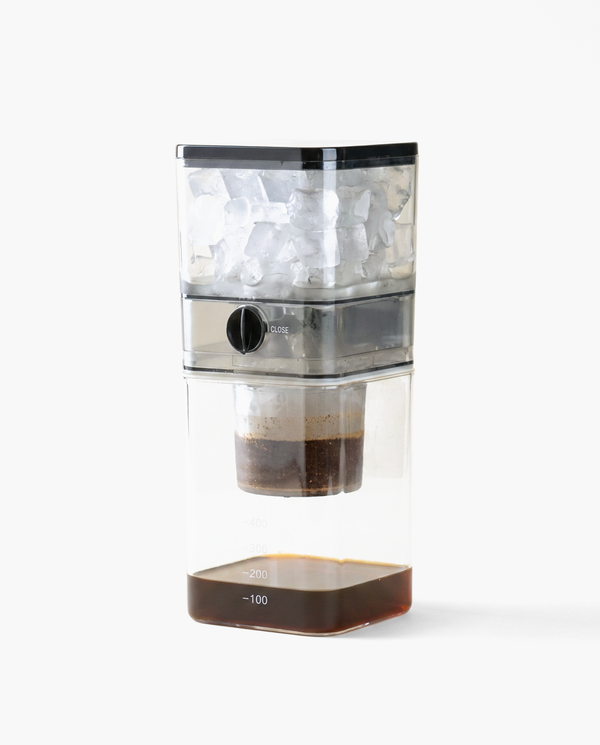
The Slow Cold Drip Tower works by gravity. Cold water melts through ice at the top, drips through the grounds in the middle, and falls into a glass carafe below, a drop every few seconds, for hours. Here is why that matters for a batch you intend to keep:
- Slow gravity extraction, not a long soak. Water passes through the bed instead of sitting in it for a day. What comes out is a clean, naturally sweet, low-acid concentrate.
- The extract lands in glass, and it keeps in glass. The concentrate drips into a glass carafe, and glass is what a batch you plan to keep wants around it: no oils absorbed, no ghost flavors on day ten.
- Detachable stainless steel mesh, reusable. No paper filters to buy, nothing to run out of at eleven at night, and a filter you can take off and rinse.
- An adjustable drip valve. Target around seven drops per ten seconds. The brew runs 4 to 8 hours depending on grind and drip rate, so a batch started after dinner is ready at breakfast.
- Two sizes, matched to how fast you drink. 20 fl oz (600 ml) or 27 fl oz (800 ml). Brew the size you will finish inside the window, not a gallon you nurse to day twelve.
It earns its counter space too: a glass carafe under clear stacking chambers, with a black valve and lid. See the Slow Cold Drip Tower.
Slow Glass Carafe, the vessel the batch lives in
The concentrate then needs a home for the week. The Slow Glass Carafe is a 34 oz high-borosilicate glass carafe with a turned wood collar and a leather tie at the neck. Borosilicate holds no oils and no ghost flavors, the 34 oz capacity swallows a full tower batch, and the marks etched at 7, 14 and 20 oz tell you how much is left, so you know whether to brew tonight or Thursday. Keep the wood and leather dry, and rinse the steel mesh after every use.
Kyoto Ice Tower, the three-chamber version
The Kyoto Ice Tower is the Kyoto-style take on the same idea: ice and water on top, grounds in the middle, concentrate in the carafe below, across three stacking glass chambers. Its dial-controlled valve sits at about one drop per second, for a brew of 4 to 6 hours. Both towers live in our coffee makers collection.
What a mason jar, a Takeya and an OXO actually do
A quart mason jar, around $10, is the baseline almost everyone starts with, and not a bad one: glass, a decent seal, a shelf life at the honest end of the range. The friction is the filtering: cheesecloth, a wet mess, fines riding into the fridge.
The Takeya cold brew pitcher, around $25, is the convenience answer: one piece, a mesh basket, straight into the fridge. The trade is that body and basket are plastic, so by the fourth batch the pitcher tastes of the ones before it.
The OXO cold brew maker, around $50, is a step up in build and filters into a glass carafe, which genuinely helps storage. What it does not do is drip: the coffee sits on its own bed for 12 to 24 hours. On price, all three beat us. On the clarity of what goes in the fridge, they do not.
Where Those Two Weeks Quietly Go
Four habits cost people a week of good coffee:
- Diluting the whole batch at once. It feels efficient on Sunday, and it turns a 14 day supply into a 3 day one.
- Leaving the grounds in. Coffee sitting on its spent bed keeps extracting in the cold. Filter first, store second.
- Storing it in the fridge door. The warmest spot in the appliance, and half an inch of coffee under a column of warm air is already stale.
- Reusing a scratched plastic pitcher. Scratches hold oils, oils turn rancid, and that note reaches every batch after. Use glass, or our French press selection if you also brew hot.
A July evening, and the carafe you filled on Sunday
Seven in the evening, and the kitchen still holds the afternoon's heat. You open the fridge and the glass comes out already beading, cold enough that your fingers leave four clean prints down the side. Ice first, three cubes that crack as they settle. Then the concentrate, dark and slow, hanging in ribbons for a second before it blends.
A splash of water, one stir, and the whole glass fogs over. It tastes of cocoa and something like plum, and you made it on Sunday while you were busy elsewhere.
If you take one thing from this article: store the concentrate, never the diluted drink, and the same batch will still be worth pouring two weeks after you brewed it.
Frequently Asked Questions
How long can cold brew last in the fridge?
Undiluted concentrate, filtered clean and sealed in glass on a cold shelf, holds 7 to 14 days. Cold brew already cut with water is good for 2 to 3 days, and anything with milk in it for 24 to 48 hours. The two week figure assumes the grounds came out first.
Can you freeze cold brew to make it last longer?
Yes, and it is the one genuine way to extend the window. Freeze pure concentrate in a silicone cube tray, then move the cubes to a sealed freezer bag, where they keep up to two months. In milk they make a drink that gets stronger as it melts.
Does cold brew go bad if left out at room temperature?
It degrades fast. A few hours on a warm counter is enough for the oils to oxidize and bacteria to get a foothold, and a batch left out overnight should be poured away.
Why does my cold brew taste sour after only two days?
Usually one of three: the container was not really sealed, the batch was already diluted, or the grounds stayed in and kept extracting. A very light roast can also read as sour from the first pour.
Should I store cold brew in glass or plastic?
Glass, without hesitation. It is inert, while plastic is porous enough to absorb the oils of one batch and release them into the next, which is why an old pitcher makes fresh coffee taste tired. A glass carafe such as the Slow Glass Carafe keeps day ten tasting much closer to day two.
Is it safe to drink three week old cold brew?
We would not. Even in sealed glass, three weeks is long enough for mold to appear, and long before that the flavor has gone flat. Run the look, smell and sip checks, and if in doubt, brew again.