It sits on the counter (worktop) of millions of homes: the chrome frame, the bakelite handle, the fragile glass beaker. For many, the Chambord French Press is synonymous with coffee itself. It is a design icon, a wedding registry staple, and likely the first brewer you ever owned. If you are reading this Bodum Chambord French Press review, you are probably considering buying one, or perhaps you are looking to replace a beaker that just shattered in your sink.
There is no denying the aesthetic legacy of the original French Press (all French press models). It looks beautiful catching the morning light. But as coffee standards have evolved, so has our understanding of thermodynamics and extraction. The uncomfortable truth? That beautiful glass beaker is the enemy of a perfect cup of coffee.
In this deep dive, we will explore the history of this design, the science of why glass fails at heat retention, and why the "smart" money is moving away from the Bodum Chambord coffee press review circuit and toward our rugged, thermal Stainless French Press. Whether you are wondering is Bodum a good brand or simply looking for a brewer that won't break, you have arrived at the definitive guide.
⚠️ Warning: Borosilicate glass, while heat resistant, has zero thermal insulation properties. In a standard glass press, water temperature drops by 15°F-20°F within the first two minutes of brewing, killing flavor extraction.
The History of an Icon: Is "The Original French Press" Still Relevant?
To understand the Bodum Chambord French Press review, we must look back at the era it was born in. While we call it the original French Press, the specific design we know today, the steel cage and glass cylinder, was actually patented in 1958 by a Swiss company, Melior.
The Danish Takeover
In the 1970s, Jørgen Bodum, the son of the company's founder, took over the Danish brand. He loved the Melior design and eventually acquired the company and the rights to the brewer in 1991. He mass-produced it, lowered the price, and put a Chambord French Press in almost every kitchen in the West.
A Design Frozen in Time
The issue is that the design has barely changed in 70 years. In the 1950s, coffee was dark roasted and bitter; people drank it quickly for a caffeine hit. Today, we buy specialty beans with delicate floral and fruit notes. These beans require precise temperatures to extract properly.
While the Bodum Chambord coffee press review scores high on nostalgia, it scores low on modern utility. It is a relic of a time when we cared more about how a coffee pot looked on a serving tray than how the coffee actually tasted after four minutes.
Today's brewer needs to be robust. It needs to travel. It needs to keep coffee hot. This is where the shift from the original French Press glass design to modern stainless steel begins.
The Science of Heat: Why the Chambord French Press Fails on Flavor
When you brew coffee, you are performing a chemical extraction. Hot water acts as a solvent, pulling oils, solids, and flavor compounds from the ground beans.
The Cooling Curve Problem
For optimal extraction, water needs to stay between 195°F and 205°F (90°C, 96°C) throughout the brewing cycle.
- The Glass Flaw: Glass is a terrible insulator. As soon as you pour hot water into a Chambord French Press, the heat transfers through the thin glass and radiates into the air.
- The Result: The slurry (coffee and water mix) cools down rapidly. When the temperature drops below 195°F too early, the extraction of sweet, balanced acids stops. You are left with a cup that is often sour or hollow.
The "Sludge" Factor
Another common complaint in any Bodum Chambord coffee press review is the sediment. The wire mesh filter in traditional models often allows "fines" (micro-grounds) to pass through, creating a muddy texture.
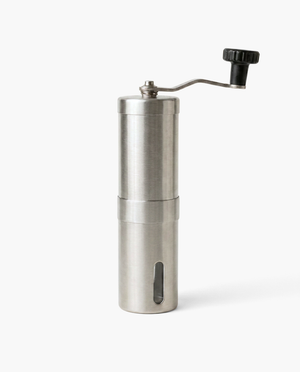
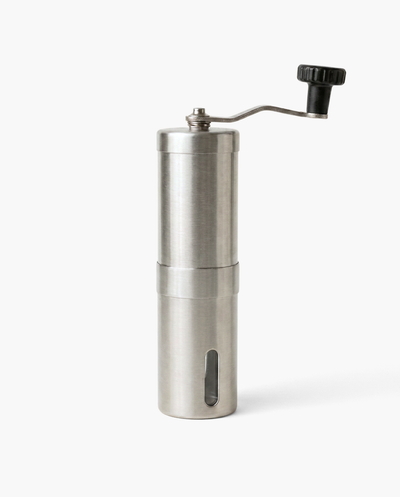
This is exacerbated if you use a cheap blade grinder. To fix this, you don't just need a better press; you need a better ecosystem. You need a Precision Manual Grinder that creates uniform particles, paired with a press that has a high-precision filter system.
💡 Quick Fact: A double-walled stainless steel press retains heat up to 4x longer than a glass beaker, keeping the extraction temperature stable for the full 4-minute brew.

The Smart Upgrade: Why Stainless Steel is the New Standard
If you love the ritual of the press but hate the fragility of the Chambord French Press, there is a solution. You don't have to abandon the method; you just have to upgrade the materials.
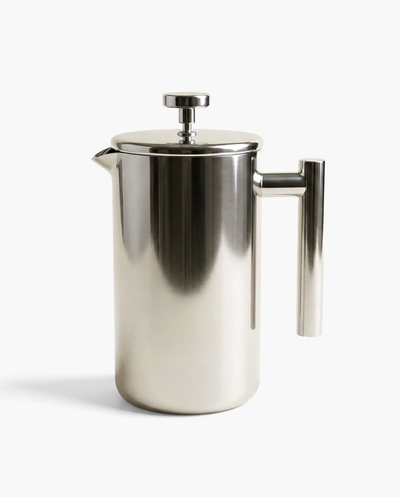
Enter the French Press & Co. Ecosystem. We took the concept of the original French Press and engineered out the flaws.
- Indestructible Construction: Our Stainless French Press is made from 304-grade stainless steel. It will never crack, shatter, or need a replacement beaker.
- Vacuum Insulation: By using double-wall technology, our press acts like a thermos. It keeps the water hot during the brew (for flavor) and the coffee hot after the plunge (for enjoyment).
- Modern Filtration: We utilize a multi-screen system that reduces sediment significantly compared to the standard mesh found in a Bodum Chambord coffee press review.
When you pair this robust brewer with our Precision Manual Grinder, you are no longer just making coffee; you are crafting a barista-level beverage. And if you crave a cappuccino, our Milk Frother allows you to create texture that a simple glass pot could never achieve on its own.
Comparison: Bodum Chambord vs. The Modern Alternative
To help you decide if you should trust a Bodum Chambord French Press review or upgrade, we have broken down the specs.
Table 1: Glass vs. Steel
| Feature | Bodum Chambord (The Original French Press) | French Press & Co. Stainless Steel French Press |
| Material | Borosilicate Glass & Chrome | 304 Stainless Steel (Double Wall) |
| Heat Retention | Poor (Cools in <15 mins) | Excellent (Hot for 60+ mins) |
| Durability | Fragile (Shatters easily) | Indestructible (Lifetime use) |
| Safety | High risk of cuts/burns | Cool-touch exterior |
| Cost over 5 years | High (Replacement beakers) | Low (One-time purchase) |
Table 2: The Importance of the Grinder
Even the best press cannot fix bad grinding.
| Grinder Type | Impact on Chambord French Press | Impact on Precision Manual Grinder |
| Consistency | High Sediment (Muddy) | Clean Cup (Uniform Grind) |
| Heat | Burns beans (Blade friction) | Cool Grind (Burr crushing) |
| Noise | Loud (80dB+) | Whisper Quiet |

Step-by-Step: How to Brew Better Than a Bodum
Whether you own a Chambord French Press or our Stainless French Press, the technique is key. Here is how to get the most out of your beans.
What you need:
- Stainless French Press (Recommended)
- Precision Manual Grinder
- Fresh Beans
- Hot Water (200°F / 93°C)
Step 1: Grind Fresh
Using your Precision Manual Grinder, grind 65g of coffee (for a 1L press) to a coarse, sea-salt consistency.
-
Note: If you are using the original French Press (glass), grind slightly coarser to avoid clogging the simpler mesh.
Step 2: Preheat
Always preheat your vessel. This is crucial for glass presses mentioned in any Bodum Chambord coffee press review, but also helps steel presses maintain peak temperature. Swirl hot water inside, then dump it.
Step 3: The Bloom
Pour just enough water to wet the grounds. Wait 30 seconds. Watch the coffee degas (bubble).
Step 4: The Fill and Stir
Fill the press to the top. Stir gently with a spoon.
-
Pro Tip: If using a glass Chambord French Press, be very careful with metal spoons as they can crack the beaker. With our Stainless French Press, you can stir vigorously without fear.
Step 5: The Wait
Put the lid on and wait 4 minutes. This is where the insulation of our press wins, keeping the slurry hot for better extraction.
Step 6: The Plunge
Press down slowly. Pour and enjoy. For a latte, froth warm milk with our Milk Frother and pour over the coffee.
☕ Pro Tip: Don't let the coffee sit on the grounds for too long after plunging. In a glass press, it goes cold. In our press, it stays hot, but it will eventually get bitter. Decant it if you plan to drink it over several hours.
Maintenance: Keeping Your Brewer Alive
A major part of any Bodum Chambord French Press review is the cleaning process. Glass presses are slippery when wet and terrifying to clean.
-
Disassembly:
You must unscrew the mesh assembly. On the original French Press, be careful not to lose the tiny nuts.
For a deep dive, read our complete French press brewing guide.
-
Cleaning the Beaker:
This is the danger zone. Washing a glass beaker requires gentle hands. One slip against the tap and it cracks.
-
The Upgrade: Our Stainless French Press can be scrubbed and dropped without a second thought, and the plunger unscrews and the mesh screen and press plate come apart for a true rinse.
-
-
The Mesh:
Soak the mesh in a vinegar solution once a month to remove oil buildup. This applies to both the Chambord French Press and our model.

Conclusion: Is Bodum a Good Brand? Yes, But Steel is Better.
So, is Bodum a good brand? Absolutely. They popularized the method and created a design icon. But technology moves on. The Bodum Chambord French Press review verdict is simple: it is a beautiful piece of history that belongs in a museum, not a busy modern kitchen.
If you are tired of lukewarm coffee and the constant fear of breaking glass, it is time to retire the original French Press. Upgrade to the durability, thermal retention, and safety of our Stainless French Press.
You deserve a brewer that works as hard as you do. You deserve a tool that lasts a lifetime.
FAQ: Bodum Chambord vs. Stainless Steel
Q: Is Bodum a good brand for french presses?
A: Is Bodum a good brand? Yes, they are reputable and historic. However, their flagship Chambord French Press is made of glass, which breaks easily and loses heat. We recommend stainless steel for better durability and flavor retention.
Q: Can I put my Chambord French Press in the dishwasher?
A: Most Bodum Chambord coffee press review guides say yes, top rack only. However, the glass can easily chip or crack if it knocks against other dishes. Our Stainless French Press has no glass to chip, and the plunger unscrews and the mesh screen and press plate come apart for a true rinse.
Q: Why is my coffee from the original French Press always sour?
A: Sourness usually comes from under-extraction caused by heat loss. In a glass the original French Press, water cools too fast. Upgrading to a double-wall insulated press keeps the heat high, extracting the sweetness you want.
Q: Does the Bodum Chambord French Press review mention plastic parts?
A: Yes. While the beaker is glass, the lid underside and filter nuts on many Chambord French Press models contain plastic. Our press is 100% stainless steel with zero plastic contact with your coffee.
Q: What is the best grinder for a Chambord French Press?
A: Never use a blade grinder. You need a burr grinder. We recommend our Precision Manual Grinder to get the consistent coarse grind needed for a mesh filter.
Frequently Asked Questions
Is Bodum a good brand for French presses?
Bodum is a respected mid-tier brand with decades of French press experience and reasonably priced products. The Chambord is their iconic model and is still a competent everyday brewer for $40-60. However, Bodum's filter design is single-mesh, meaning you'll get noticeably more sediment in your cup than from double-filter brands like Espro or Frieling.
The chrome plating on Bodum's stand can also pit and rust over years of dishwashing. Bodum is a fair starter choice but not the best French press money can buy in 2026.
Is the Bodum Chambord worth buying in 2026?
The Chambord is fine for casual coffee drinkers who want an attractive glass French press at a moderate price. But for the same $40-60 budget you can buy a fully stainless double-walled press from competitors that retains heat far longer, has zero plastic in the brew chamber, and uses a double-mesh filter for a cleaner cup.
The Chambord's appeal is largely aesthetic, if you want the iconic look on your counter, it delivers. If you want the best cup of coffee, look at stainless alternatives in the same price band.
How does the Bodum Chambord compare to Espro or Frieling?
The Bodum Chambord uses a single mesh filter with a coiled gasket, while Espro presses use a paper-and-mesh combo and Frieling uses a tight double-mesh stainless screen. The result: Bodum cups have visible sediment within 30 seconds, while Espro and Frieling produce cleaner cups closer to pour-over clarity.
On heat retention, the Chambord's glass body loses 10-15°C in fifteen minutes; Frieling's double-walled stainless holds temperature for over an hour. Espro sits in between but with the cleanest cup of the three.
How long does a Bodum Chambord last?
The glass beaker typically lasts 2-3 years before chipping or breaking from accidental knocks (Bodum sells replacement beakers cheaply, around $15). The chrome stand can rust at the base if frequently dishwashed; hand-wash to extend its life beyond 5 years. The mesh filter loses tension after 12-18 months of daily use and starts letting more sediment through, that's when most Chambord owners replace the whole press. Total useful lifespan with hand-washing: 5-7 years, far less if you dishwash regularly.
Related Guides
- Bodum French Press Instructions: A Step-by-Step Brew Guide
- Cast Iron French Press Review: Is Heavy Metal Worth the Hype?
- Ceramic French Coffee Press Review: Why Aesthetics Can’t Replace Performance
- Fellow Clara French Press Review: Is the Matte Black Aesthetic Worth the Price?
- How to Choose a French Press: A 5-Point Buying Guide