When you brew for a table of four, a standard glass beaker loses heat before the four minutes are up. You need a vessel that holds temperature and carries enough volume to fill every mug at once. We reach for the 34-ounce Signature Stainless Steel French Press because the double-wall steel keeps the water hot through the steep, and the etched gauge tells you exactly where to stop pouring.

The Physics of a Big French Press
Why thermal mass matters
When you scale up a recipe, the physical demands shift. A small twelve-ounce press loses heat at a predictable rate. A large thirty-four-ounce vessel holds more thermal mass, but it also presents a much larger surface area to the cold air of your kitchen. If that vessel is made of thin glass, the heat escapes rapidly. The water temperature drops below the ideal brewing range before the four-minute steep is finished. This leaves the coffee sour and thin.
A large french coffee press relies on insulation to hold the heat. Double-wall stainless steel traps the heat inside the brewing chamber. The outer wall stays cool to the touch, while the inner wall keeps the slurry hot. This stable temperature draws out the heavy oils and dark sugars that define a good dark roast.
The role of the filter in a large pot
A larger dose of coffee means more grounds to press. When you push down on two ounces of wet coffee, the physical resistance is substantial. A flimsy filter will buckle under the pressure, allowing coarse grounds to bypass the screen and ruin the cup. You need a robust filter system to handle a large batch. The plunger must stay flat and true against the walls of the cylinder. A fine stainless mesh screen paired with a rigid perforated press plate provides the necessary structure. The plate takes the physical load of the plunge, while the mesh traps the sediment.
Dialing in the Ratio for a 34-Ounce Brew
The mathematics of a full pot
Brewing coffee is a matter of ratios. For a big french press, a reliable starting point is one part coffee to sixteen parts water by weight. When you brew a full thirty-four-ounce pot, you need to scale the dose accordingly. Thirty-four fluid ounces of water is roughly one thousand milliliters, which weighs one thousand grams. Divide one thousand by sixteen, and you get sixty-two and a half. Round it to sixty-three grams. This translates to about 2.2 ounces of whole bean coffee.
You need a digital scale to measure this accurately. Volume measurements with scoops are inconsistent because different roasts have different densities. A scale removes the guesswork and helps your large batch taste consistent.
Managing the grind size
Sixty-three grams of coffee requires a consistent medium-coarse grind. If the grind is too fine, the large volume of grounds will form a dense puck that is nearly impossible to press. The fine particles will also slip through the mesh screen, resulting in a gritty cup. If the grind is too coarse, the water will not extract enough flavor in four minutes, leaving you with a weak and watery pot. A quality burr grinder is essential. Set it to a medium-coarse setting, similar to the texture of rough sea salt.
Step-by-Step: Brewing for the Table
Preparing the water and the vessel
Start with fresh, cold water. Fill your kettle and bring it to a boil. While the water heats, weigh out 2.2 ounces of coffee beans and grind them medium-coarse. Pour a little hot water into your empty press to preheat the steel. Swirl it around and discard it. This step prevents the cold metal from stealing heat from your brewing water. Pour the ground coffee into the empty, warmed press. Give it a gentle shake to level the bed of grounds.
The pour and the bloom
Water temperature is critical. Boiling water will scorch the coffee and extract bitter compounds. Take your kettle off the heat and wait ten seconds. The temperature will drop to around 200 degrees Fahrenheit, which is ideal. Start a timer and pour just enough water to saturate the grounds. This is the bloom. The coffee will swell and bubble as it releases carbon dioxide. Wait thirty seconds. Pour the rest of the water in a slow, steady circle. If you are using a vessel like the Signature Stainless Steel French Press, you can look inside and pour right up to the etched cup and ounce fill gauge.
The steep and the press
Take a wooden or plastic spoon and give the crust of coffee a gentle stir to ensure all the grounds are wet. Place the knobbed steel lid on top of the press with the plunger pulled all the way up. This traps the heat inside the double-wall body. Let the coffee steep for four minutes. When the timer goes off, rest your hand on the knob. Apply steady, gentle downward pressure. Do not force it. The two-part plunger will push the grounds to the bottom. Turn the lid so the anti-drip pour spout is open, and serve immediately.
Cleaning a Large Steel Press
Daily rinsing
A clean press makes clean coffee. Stainless steel resists staining, but coffee oils accumulate on the metal over time. After you finish the pot, take the press to the sink. The double-wall build keeps the body cool enough to handle right away. Pull the plunger out and tap the spent grounds into the compost. Rinse the body and the mesh screen under warm water. Ensure no grounds are trapped in the coils of the filter.
Weekly deep cleaning
Once a week, the press needs a thorough wash to remove stale oils. Unscrew the plunger assembly. Separate the fine stainless mesh screen and the perforated press plate. Soak the parts in warm soapy water for ten minutes. Scrub them gently with a soft brush. Wash the inside of the stainless steel body with a soft sponge. Rinse everything with clean water. Dry the exterior with a soft cloth after washing to keep the mirror finish bright. Avoid abrasive pads or harsh chemicals, as they will scratch the polished surface. Store the press with the lid off and the plunger up so the interior can dry.
Matching the Size to the Occasion
When to choose thirty-four ounces
A large french press is not just for parties. It is a practical tool for a two-person household that drinks multiple cups a morning. A thirty-four-ounce capacity translates to four to six standard cups. If two people each want a large mug of coffee with breakfast, and a second cup to take to the desk, a big pot handles the entire morning routine in one brew. You spend four minutes brewing, rather than repeating the process twice. The double-wall insulation means the second cup sitting in the press stays hot while you finish the first.
Smaller formats for single servings
While a large pot is versatile, it requires a minimum volume of water to work properly. If you only put twelve ounces of water into a thirty-four-ounce press, the water level sits too low. The plunger might not reach the grounds effectively, and the large empty space in the cylinder will cause the small amount of coffee to lose heat rapidly. For single servings, a twelve-ounce press is the right tool. It brews one large mug or two small cups, keeping the thermal mass concentrated. For two to four cups, a twenty-seven-ounce press bridges the gap.
The presses that anchor the breakfast table
French Press & Co Signature Stainless Steel French Press
Our primary choice for brewing a large batch. We keep the thirty-four-ounce Signature Stainless Steel French Press on the counter for weekend mornings and busy houseguests. It holds enough volume for the whole table, and the double-wall construction ensures the last pour is as hot as the first.
- Double-wall insulated 304 stainless steel: Holds brewing heat inside while the exterior remains cool to the touch.
- Two-part plunger: Pairs a fine stainless mesh screen with a perforated press plate to keep grounds down.
- Etched cup and ounce fill gauge: Internal markings let you measure your water volume directly in the body.
- Mirror-polished finish: Bright stainless steel inside and out, with no plastic touching your brew.
- Generous capacity: The 34-ounce size fills four to six cups for a small gathering.
French Press & Co Pro Thermal Press
If you prefer a dark aesthetic over polished steel, we reach for the Pro Thermal Press. It shares the same heavy-duty heat retention but wears a different finish.
- Matte black finish: Paint baked onto stainless steel for a subdued, modern look that hides fingerprints.
- Double-walled heat retention: Keeps your coffee hot for sixty to ninety minutes after the plunge.
- Three sizes: Available in twelve, twenty-five, and thirty-four ounces to scale to your daily routine.
Bodum Chambord
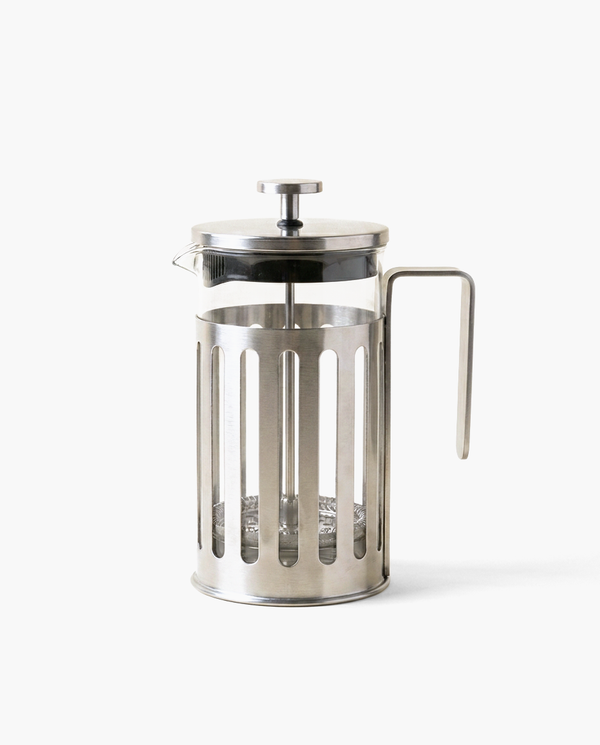
Priced around $50, this is the traditional glass and steel frame design most people picture when they think of a French press. It uses a standard mesh filter, but the single layer of glass sheds heat rapidly. When brewing a full liter, the temperature drop during a four-minute steep often leads to under-extracted, sour notes. We prefer a double-wall steel body for large volumes.
Fellow Clara
Priced around $100, this insulated press features a matte black finish and a double-wall steel body. It holds heat well during a long steep, but it lacks an internal measurement gauge. We rely on the etched cup and ounce marks inside our Signature Stainless Steel French Press to hit the exact water ratio without needing a separate scale for the pour.

Mistakes that ruin a large batch
- Boiling water straight off the stove: Two hundred degrees Fahrenheit is the target. Boiling water burns the coffee. Take the kettle off the heat and wait ten seconds before pouring.
- Eyeballing the water volume: A large press holds a liter of water. Guessing the fill level throws off the ratio and ruins the extraction. Use an internal gauge or a digital scale.
- Thin glass for big pots: A thirty-four-ounce glass beaker has a massive surface area. It radiates heat away faster than the coffee can brew, leaving you with a sour, lukewarm pot.
- Plunging too fast: Pushing a liter of water through a bed of sixty grams of coffee creates immense pressure. Forcing the plunger causes the mesh to warp, sending a cloud of coarse sediment into your cup.
A holiday morning, the kitchen full, and a pot that serves them all
Thursday morning, a little after nine, and the house is full of visiting family. The kitchen island is crowded with plates and half-empty juice glasses. You bring out the large steel press and set it on a cork mat. The outside is cool to the touch, but steam rises when you lift the lid. You push the plunger down, a slow and steady motion that meets just enough resistance from the heavy dose of grounds. You pour four mugs in a row, the dark liquid catching the morning light. The last cup is just as hot and heavy-bodied as the first, and nobody has to wait for a second brew.
If you take one thing from this article: brewing for a crowd requires a vessel that holds its temperature, and a double-wall steel press does the job without the fragility of glass.

Frequently asked questions about large presses
What does double-wall insulated mean?
The body has two steel walls with an insulating gap between them that slows heat transfer. Your coffee stays hot longer while the outside stays cool to the touch. This is especially important for large batches that take time to drink.
How good is the filter?
The plunger has two parts working together: a fine stainless mesh screen backed by a perforated press plate. Together they hold the grounds down and let the coffee oils through, for a full-bodied cup with minimal sediment.
What is it made of?
The press is built from food-grade 304 stainless steel, inside and out, with a mirror-polished finish. It resists corrosion, will not react with coffee oils, and keeps plastic out of your brew.
Which size should I choose?
The 12 oz makes one large mug or two small cups. The 27 oz serves two to four. The 34 oz fills four to six cups for a small gathering. The etched cup gauge inside makes it easy to pour to the right amount.
How do you clean a large stainless press?
After each brew, discard the grounds and rinse the mesh screen under warm water. Weekly, unscrew the plunger, separate the mesh screen and press plate, soak in warm soapy water for ten minutes, and scrub gently with a soft brush.