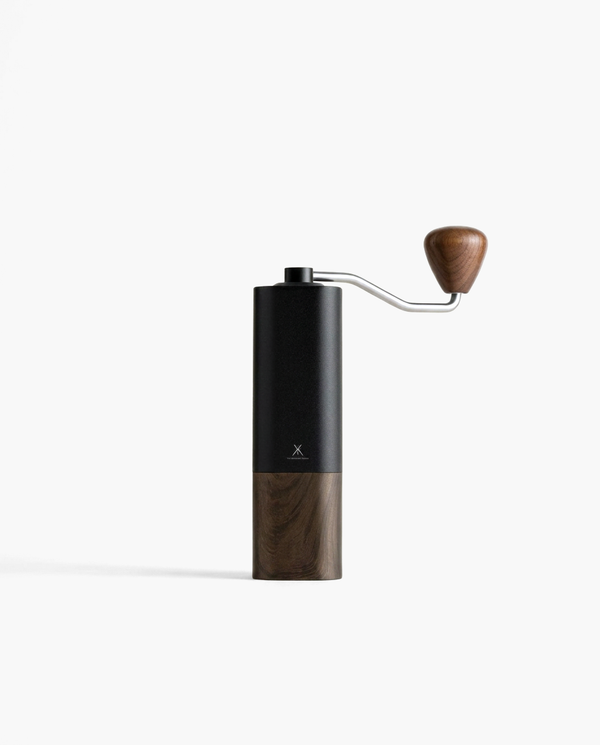
The best coffee for an AeroPress is a fresh light to medium roast, bought as whole beans within a month of its roast date and ground medium-fine seconds before you brew. That last part decides whether the bag tastes like its label, which is why The Precision Manual Grinder lives beside our press. Below: roasts, origins, how to read a bag, and a recipe for each.
What Is the Best Coffee for AeroPress?
There is no single best bag. There is a profile: whole bean, roasted in the last two to four weeks, light to medium, from a roaster who prints the origin and the roast date. Inside that profile, choose by taste.
- Bright, fruity, almost tea-like: a washed Ethiopian or a Kenyan, light roast.
- Sweet and balanced: a Colombian or a Guatemalan, medium roast. The safest first bag.
- Chocolate and nuts, or a cup that takes milk: a Brazilian, medium to medium-dark.
- Heavy and smoky: a dark roast works, with cooler water and a shorter steep.
The Best Roast Level for AeroPress
Light roasts are dense and slow to extract, so they want hotter water and more time. Dark roasts are brittle and porous: they extract fast, and the bitterness arrives early.
AeroPress's own instructions have long suggested 175°F for dark roasts and 185°F for medium. A kettle that stops at a set number helps: the Sentinel Smart Kettle has presets at 185°F and 194°F, and a full boil plus thirty seconds of rest covers the light row. More in light vs dark roast coffee and our guide to AeroPress water temperature.
The Best Coffee Beans for AeroPress, by Origin
Origin is the fastest way to predict a cup before you open the bag.
The process matters too. Washed coffees are clean and bright, the style paper filters show best. Naturals, dried inside the cherry, are jammy and heavier, and turn fermented if over-steeped. Honey sits between the two. Nearly all of it is arabica: our arabica vs robusta comparison explains why.
How the AeroPress Was Invented, and Why It Changed Which Beans We Buy
Alan Adler, a Stanford engineering lecturer and the man behind the Aerobie flying ring, released the AeroPress in 2005 to solve one problem: bitterness. Early marketing promised an espresso-style concentrate, so people fed it dark, oily roasts. Then specialty baristas saw it for what it is, an immersion brewer with a little air pressure at the end, and the World AeroPress Championship filled with light, fruity single origins. For context, see our complete coffee maker guide and what specialty coffee is.
How to Read a Coffee Bag Before You Buy
- A roast date, not a best-before date: the sweet spot runs from about five days to four weeks after roasting. Younger, the beans still release gas and taste sharp. Past six weeks, flat.
- Whole bean: the most useful two words on the bag.
- A named origin and process: country, region, ideally the farm. "100% arabica, rich and smooth" tells you nothing.
- Tasting notes you would enjoy: they describe, they are not flavorings. "Blackcurrant" means lively acidity. "Cocoa, hazelnut" means comfort.
- A size you finish in three weeks: one 15 gram cup a day uses about 100 grams a week, so a 12 oz (340 g) bag is the right size.
Once the bag is open, the enemies are oxygen, light, heat and moisture. The Studio Bean Vault is a vacuum-sealed borosilicate glass jar with a rotating date tracker on the lid: set the roast date, pump the air out, and the most useful number on the bag stays in view. The full method is in how to store coffee beans.
Why Does Pre-Ground Coffee Fail in an AeroPress?
Because it fails twice, before the water even touches it.
First, it is stale. Grinding multiplies the surface of a bean, and the aromatics start leaving at once. A bag ground weeks ago has little left to give.
Second, it is the wrong size. Most pre-ground coffee is cut for drip machines. The AeroPress wants medium-fine, close to table salt. Too coarse, and a short steep comes out sour and thin.
Blade grinders fail differently: dust and boulders in the same batch. The dust turns bitter, the boulders stay sour, and the fines choke the paper until the plunger fights back.
A burr solves both problems in one gesture. See the Precision Manual Grinder, and keep our coffee grind size chart at hand.

From Bag to Cup: The Tools That Protect Good Beans
We do not sell beans. We sell what stands between a good bag and a disappointing cup: the grind, the storage, the water.
The Precision Manual Grinder, our pick for AeroPress beans
An AeroPress makes one cup at a time, often far from a kitchen. The Precision Manual Grinder follows the same rhythm: a brushed 304 stainless steel hand burr grinder, 5.2 inches tall, about 10.6 oz, in brushed silver or black.
- Even grounds, clean cup: a conical burr crushes beans to an even size where a blade chops them, so extraction is balanced and the origin comes through.
- One dial for every bag: the dial at the base moves from espresso-fine to French-press-coarse. Medium-fine for a washed Ethiopian, a touch coarser for a dark roast, and a viewing window shows the grounds collect.
- It goes where the press goes: a slim body, a crank handle that folds flat and lifts off, no cord, no batteries. The cabin, the campsite, the office drawer.
- Quiet at 6 a.m.: no motor, no whine. About a minute of cranking, the minute the kettle needs anyway.
- No ghost of the last bag: stainless steel will not rust or hold odors, so yesterday's dark roast does not follow you into today's Kenyan.
Studio Bean Vault, for the weeks between roast and last cup
Vacuum-sealed borosilicate glass, a one-press pump, a date tracker on the lid and a 3.3 inch mouth wide enough for a scoop. The 37 oz Studio Bean Vault holds about 370 grams of beans, so a 12 oz bag fits. Glass lets light in: give it a cupboard, not a windowsill.
Sentinel Smart Kettle, for matching water to roast
A 57 oz digital kettle with a keep-warm function and an LED display that shows the water temperature in real time. With the 185°F and 194°F presets of the Sentinel Smart Kettle, a dark roast stops being a gamble.
Baratza Encore, the electric benchmark (about $170)
The Encore deserves its reputation: 40 settings, conical steel burrs, replaceable parts, as our Baratza Encore settings guide shows. It is also corded, loud and tied to a counter. A brewer that travels in a backpack deserves a grinder that can follow it. Prefer electric? Browse our coffee grinders.
Five Bags an AeroPress Cannot Rescue
Each one is a way to pay for good coffee and never taste it.
- Bags with a best-before date only: that date often sits a year after roasting, so the coffee may already be months old. No roast date, no sale.
- Oily, very dark "espresso roast": a shiny bean has pushed its oils to the surface, where they go rancid, smear the paper and coat the plunger seal. If you love dark, buy it fresh and brew at 175 to 185°F.
- Pre-ground "for all coffee makers": one size for every brewer suits none of them.
- Flavored coffee: the flavoring oils cling to the seal and the chamber, and turn up uninvited in the next three bags.
- The two pound bargain bag: at one cup a day that is nine weeks of coffee, and the last three will be flat.
AeroPress Coffee-to-Water Ratio Chart
Four recipes cover almost every bag. The standard one sits near 1:16.
How to Brew the Perfect AeroPress Coffee
Start with a light to medium washed coffee, the standard recipe and a paper filter.
- Grind. Weigh 16 grams of whole beans and grind them medium-fine, like table salt. With our hand burr grinder, that is about a minute of cranking.
- Heat the water. 250 ml at the temperature your roast asks for: around 194°F for a medium, hotter for a light, 185°F or less for a dark. No thermometer? Boil, then wait sixty seconds.
- Set up. Rinse a paper filter in the cap with hot water to remove the paper taste. Screw the cap on, stand the chamber on a sturdy mug, add the grounds and shake them level.
- Bloom and fill. Start a timer. Pour about 40 ml, stir gently three times and let the gas escape. At 0:30, fill to 250 ml, then set the plunger in just far enough to seal the chamber and stop the drip.
- Press. At 2:00, press gently for about thirty seconds. Stop at the hiss. Never force a stuck plunger: hot coffee can spray out sideways.
Why Does AeroPress Coffee Taste Sour or Bitter?
How to Clean and Maintain Your AeroPress
Good beans taste of old rubber in a neglected press. After every cup, eject the puck and rinse the seal under hot water. Once a week, pull the seal off the plunger and wash it with mild soapy water, because oils hide underneath and turn rancid. Once a month, brush the grinder's burr out dry, so old fines do not carry stale oils into a fresh bag.
A picnic table at the trailhead, and a cup that smells of blackcurrant
First light, dew on the boards of the picnic table, and yours is the only car at the trailhead. The camp stove mutters under a small pot while you pull the grinder from the side pocket of your pack, fit the handle, and tip in the beans you weighed at home last night. In the cold air the crank makes a dry, even crunch, the only sound besides the stove, and then the smell rises: blackcurrant, warm and a little sharp. Two minutes of steeping, a slow press, the hiss. The cup is bright and sweet, the same coffee it is on your kitchen counter, with no outlet in sight. You drink it standing, boots already laced, while the sun reaches the top of the ridge and the steam turns gold.
If you take one thing from this article: the best coffee for an AeroPress is a fresh light to medium roast bought as whole beans, and it only tastes like its label if you grind it just before you press.
Best Coffee for AeroPress: Frequently Asked Questions
What is the best roast level for AeroPress?
Light to medium. Those roasts keep the acidity and fruit that a short, paper-filtered brew shows so well. Dark roasts work with cooler water, 175 to 185°F, and a steep of about a minute.
Can I use espresso beans in an AeroPress?
Yes. "Espresso" on a bag describes a roast style, usually dark, not a type of bean. Grind medium, lower the water to around 175°F (80°C) and use the concentrate recipe. Expect a short, sweet cup, without the crema of a real machine.
Can I use pre-ground coffee in an AeroPress?
You can, but the cup will be flat and often sour, because most pre-ground coffee is cut for drip machines and lost its aroma long ago. If you must, steep up to three minutes to make up for the coarser size. The lasting fix is whole beans and a burr grinder such as The Precision Manual Grinder.
Does the inverted method make better coffee?
Not better, more controlled. Turning the brewer upside down stops water dripping through before you press, so every gram steeps for the full time, and contact time is one of the main levers of coffee extraction. It suits naturals and light roasts. Flip it carefully.
Is a metal or paper filter better for AeroPress?
It depends on the bean. Paper holds back oils and sediment for a clean, tea-like cup, the best stage for light, washed coffees. Metal lets the oils through for a fuller body, closer to a French press (browse our French presses), which flatters Brazilian and Sumatran beans. On papers in general, see our guide to the best coffee filters for drip.
Related Guides
- The Ultimate Aeropress Espresso Ratio Guide
- Aeropress vs Drip: The Ultimate Battle for Morning Coffee
- Aeropress XL Review: The Big Brewer Tested
- The Safety Debate: Is Aeropress Black Plastic Safe? Comparing Materials to the Stainless Steel French Press
- Clean Coffee Grinder With Rice: The Complete Guide