You see it on a rustic wooden table in a magazine: a heavy, colorful cast iron french press matching a set of dutch ovens. It looks sturdy, timeless, and undeniably beautiful. If you are a fan of heritage cookware brands like Le Creuset or Staub, the allure is strong. You might think, "If cast iron is the best for slow-cooking stew, surely it is the best for brewing coffee?"
This is a logical assumption, but unfortunately, it is physically incorrect.
While a cast iron coffee press is a stunning centerpiece, the very properties that make iron great for cooking meat (high thermal mass and heat retention after saturation) make it problematic for brewing coffee.
In this deep dive, we will explore the thermodynamics of the cast iron french press, conduct a detailed le creuset french press review, and explain why the smartest coffee lovers are choosing our lighter, better-insulated Stainless French Press. Whether you are looking for an heirloom piece or simply the best tool for the job, you have arrived at the definitive guide.
⚠️ Warning: Never pour boiling water directly into a cold cast iron coffee press. The rapid temperature change can cause "thermal shock," leading the enamel lining to crack or "craze," ruining the pot permanently.
The History of Cast Iron in the Kitchen
To understand the cast iron french press (see browse our French presses), we must look at the material's history. Cast iron has been used in kitchens for centuries because it is indestructible and holds heat well, eventually.
Why Cast Iron Cookware Got an Enamel Coating
Raw cast iron reacts with acidic foods (like tomatoes or coffee), imparting a metallic taste. In the early 20th century, French foundries began coating iron in enamel (glass particles fused to metal). This created a non-reactive surface that was easy to clean and beautiful to look at. Brands like Le Creuset mastered this art.
How Cast Iron Cookware Became a Coffee Press
Naturally, these brands expanded into coffee. They created the cast iron coffee press to complete the breakfast set. It was sold as a luxury item, a brewer that matched your casserole dish.
However, a le creuset coffee press review often reveals a divide between aesthetics and performance. While it looks perfect on a brunch table, the physics of a large, heavy iron vessel fight against the delicate requirements of coffee extraction. The "heat sink" effect of iron means that unless you pre-heat the pot for 5-10 minutes, the metal steals the heat from your water, leaving your coffee lukewarm and under-extracted.
Why Cast Iron French Press Coffee Tastes Sour
When you read a le creuset french press review, you often see complaints about "sour" coffee. This is not the fault of the beans; it is the fault of the metal.
How Heat Escapes a Cast Iron French Press
Coffee extraction requires water to stay between 195°F and 205°F (90°C, 96°C).
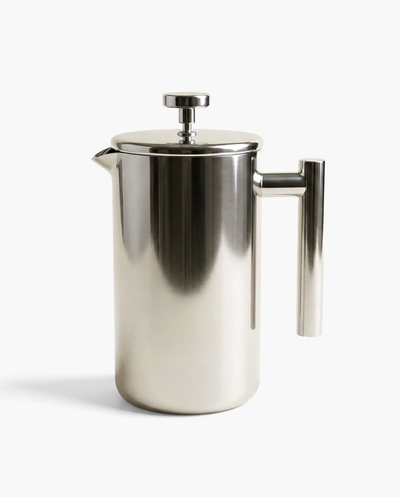
- Stainless Steel (Vacuum Insulated): Our Stainless French Press has two thin walls with a vacuum in between. The vacuum stops heat transfer. The inner wall heats up instantly because it is thin.
- Cast Iron: A cast iron french press is thick and heavy. Iron has a high "specific heat capacity." When you pour hot water in, the massive amount of iron immediately absorbs the energy to heat itself up.
- The Result: Your brewing water drops from 200°F to 175°F in seconds. This rapid cooling halts the extraction of sweet oils, leaving you with a sour, grassy cup.
To fix this with a cast iron coffee press, you must fill it with boiling water, let it sit for 5 minutes to heat the iron, dump it out, and then brew. That is a lot of wasted water and time for a morning ritual.
Does Enamel Cast Iron Chip or Rust?
Despite being iron, these presses are fragile. The enamel coating is essentially glass. If you drop a cast iron french press, it won't dent, it will chip. Once the enamel chips inside, the raw iron will rust, and the pot is unsafe to use. Compare this to 304-grade stainless steel, which is truly indestructible.
💡 Quick Fact: A vacuum-insulated stainless steel press retains heat 4x longer than a pre-heated cast iron press, simply because it eliminates conduction and radiation heat loss.

Why Stainless Steel Beats Cast Iron for Coffee
If you love the "heirloom quality" of a cast iron french press but want better coffee, there is a superior option.
Enter the French Press & Co. Ecosystem.
We designed our press to be the "Dutch Oven" of coffee makers, without the weight or the fragility.
- Thermal Perfection: Our Stainless French Press uses double-wall vacuum insulation. It keeps coffee hot for an hour without "stealing" heat during the brew.
- Indestructible Build: Unlike an enameled cast iron coffee press which can chip if knocked against a granite counter (worktop), our 304-grade steel is resilient. It will survive drops, bumps, and travel.
- Weight and Ergonomics: A full cast iron french press can weigh over 4lbs (2kg) before adding water. Ours is reassuringly solid but light enough to pour with one hand comfortably.
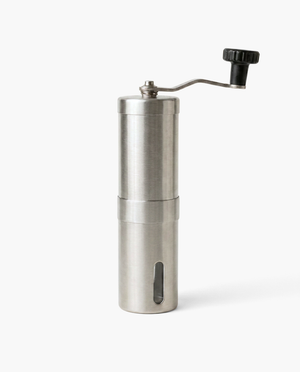
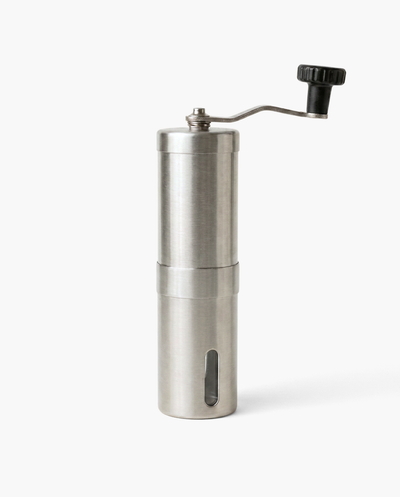
When you pair this thermal stability with the precision of our Precision Manual Grinder, you get a cup that is rich, hot, and perfectly extracted, no pre-heating required.
Le Creuset French Press Review: How It Compares
To provide a fair le creuset coffee press review, we must compare the specs directly against the modern standard.
Material Comparison: Cast Iron vs Stainless Steel
| Feature | Cast Iron French Press (e.g., Le Creuset) | French Press & Co. Stainless Steel French Press |
| Material | Enameled Cast Iron | 304 Stainless Steel (Double Wall) |
| Heat Retention | Moderate (Requires Pre-heating) | Excellent (Vacuum Insulation) |
| Durability | High (Iron) / Low (Enamel Chips) | Indestructible |
| Weight (Empty) | Very Heavy (~2.5 lbs+) | Lightweight & Sturdy |
| Thermal Shock | Risk of Cracking Enamel | Zero Risk |
| Price | Premium ($85+) | Best Value |
How Your Grinder Affects Cast Iron Coffee Flavor
Whether you use heavy iron or light steel, the grind defines the flavor.
| Grinder Type | Impact on Cast Iron Coffee Press | Impact on Precision Manual Grinder |
| Blade Grinder | High Sediment (Muddy) | Clean Cup (Uniform Grind) |
| Pre-Ground | Stale Flavor | Fresh Flavor |
| Our Manual Burr | Consistent Extraction | Perfect Pair |
How Do You Brew Coffee in a Cast Iron French Press?
If you already own a cast iron french press and want to get the best out of it, or if you are upgrading to our Stainless French Press, here is the technique.
What you need:
- Stainless French Press (or your iron pot)
- Precision Manual Grinder
- Fresh Beans
- Kettle
Step 1: The Pre-Heat (Critical for Iron)
If using a cast iron coffee press, fill it entirely with boiling water. Let it stand for 5 minutes. The iron must be hot to the touch.
-
With our Steel Press: Just a quick swirl of hot water is enough.
Step 2: The Grind
Use your Precision Manual Grinder to grind beans to a coarse sea-salt texture.
-
Why? Consistency is key. A le creuset french press review often notes sludge; this is usually due to bad grinders, not the pot itself.
Step 3: The Bloom
Empty the pre-heat water. Add grounds. Pour water (200°F) to wet the grounds. Wait 30 seconds.
Step 4: The Fill
Pour the rest of the water. Stir with a spoon.
-
Warning: Do not use a metal spoon in an enameled cast iron french press! It will scratch the enamel lining (grey marks). In our stainless steel press, use any spoon you like.
Step 5: The Steep
Place the lid on. Wait 4 minutes.
-
Note: A cast iron coffee press lid is heavy and seals well, but the spout often lets heat escape. Our vacuum design seals heat in more effectively.
Step 6: The Plunge
Press slowly. Pour immediately.
-
For a treat, use our Milk Frother to make a café au lait.
☕ Pro Tip: If you see "crazing" (spiderweb cracks) inside your cast iron pot, stop using it. Bacteria can grow in those cracks, and enamel shards can enter your coffee.
Caring for Cast Iron vs Stainless Steel
The longevity of a cast iron french press depends entirely on how you treat the enamel.
- Thermal Shock: Never wash a hot iron press with cold water. It will crack. You must let it cool down completely before washing.
- Chipping: Be careful stacking it with other pots. If the rim chips, it can rust.
- Staining: Enamel stains brown over time from coffee oils. You will need to use special cleaners to keep it looking new.
The Stainless Steel Advantage:
Our Stainless French Press requires none of this babying.
- Shock: Rinse hot or cold, it doesn't matter.
- Impact: Drop it? No problem.
- Cleaning: The plunger unscrews and the mesh screen and press plate come apart for a true rinse. The 304-grade steel resists staining and wipes clean instantly.
This ease of maintenance is why many former iron users write a le creuset coffee press review stating they have switched to stainless steel for daily use.

Cast Iron Is for Stew, Not Coffee
The cast iron french press is a triumph of aesthetic design, but a failure of thermal engineering for coffee. While we love a good Dutch Oven for a slow-cooked meal, coffee requires precision, speed, and temperature stability that iron simply fights against.
Don't let the beauty of a le creuset french press review fool you into buying a high-maintenance "heat sink."
By choosing a Stainless French Press, you get the best of both worlds: the durability of metal and the thermal performance of a thermos. You get a cast iron coffee press alternative that is lighter, tougher, and makes better coffee.
Upgrade your morning ritual with tools designed for the job.
FAQ: Cast Iron vs. Stainless Steel
Q: Is a cast iron french press better than glass?
A: A cast iron french press is more durable than glass (it won't shatter), but it has poor thermal properties for coffee unless pre-heated extensively. Stainless steel is superior to both because it is durable and vacuum insulated.
Q: Can I put a cast iron coffee press on the stove?
A: Generally, no. While it is made of iron, the rubber gaskets on the plunger and the enamel coating may not be designed for direct heat. Always check the manufacturer's instructions. Our Stainless French Press is for brewing, not boiling.
Q: Why does my le creuset coffee press review mention rust?
A: If the enamel coating on a cast iron coffee press chips (due to dropping or thermal shock), the raw iron underneath is exposed to water and oxygen, leading to rust. Stainless steel does not rust or chip.
Q: Is a cast iron french press heavy?
A: Yes, very. A standard cast iron french press can weigh 2-3 lbs empty. When full of water, it can be difficult to pour for some users. Our stainless steel press is significantly lighter and easier to handle.
Q: Do I need to season a cast iron coffee press?
A: No. Unlike a skillet, a cast iron french press is enameled, so it does not need seasoning. However, you must be careful not to scratch the enamel with metal spoons.
Related Guides
- Fellow Clara French Press Review: Is the Matte Black Aesthetic Worth the Price?
- Bodum Chambord French Press Review: Why the "Classic" Is No Longer the Best
- Ceramic French Coffee Press Review: Why Aesthetics Can’t Replace Performance
- How to Choose a French Press: A 5-Point Buying Guide
- Exploring the History and Evolution of the French Press