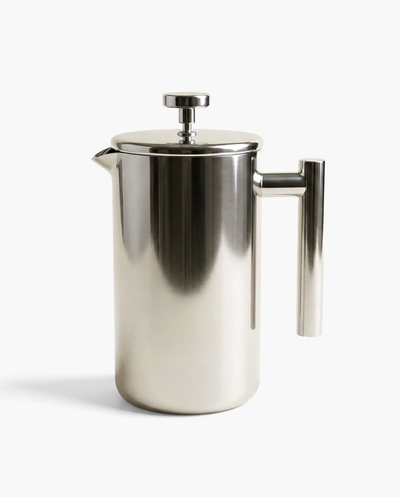
If you bought a French press (see our French press collection) expecting smooth, full-bodied coffee and ended up with something muddy, sour, or both, you're not alone.
The French press is one of the most forgiving brewers in the world if you respect three rules: the right grind, the right water temperature, and the right timing. Skip any of them, and the brew falls apart.
This guide walks through the exact 4-minute method we use daily on every French press in our test kitchen, from a $20 Bodum to a $200 Espro. The technique is identical regardless of brand or size, adjust only the coffee amount based on your press capacity.
What You Actually Need
Before you brew, gather these. Most are forgiving, but two are non-negotiable: a kitchen scale and a coarse-grind capability. If you don't have a burr grinder, buy pre-ground coarse coffee labeled "for French press."
- French press, any size, glass or stainless
- Kitchen scale, accurate to 1g, ideally 0.1g
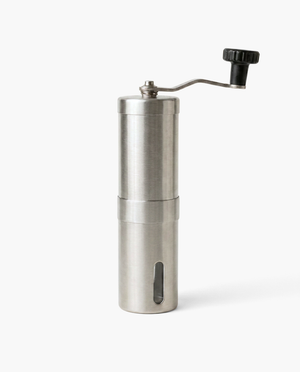
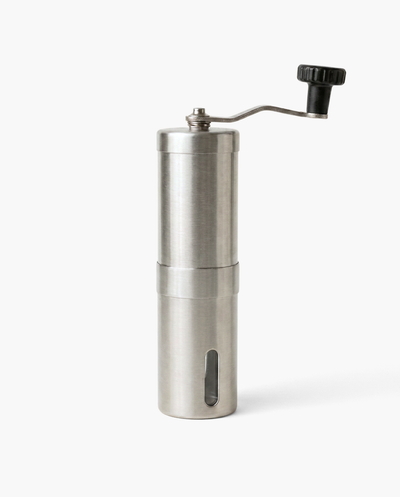
- Burr grinder, set to coarse (or buy coarse-ground beans)
- Kettle, gooseneck preferred, electric with temperature control ideal
- Filtered water, tap water with chlorine ruins the cup
- Timer, your phone works fine
The Coffee-to-Water Ratio
The standard ratio for French press is 1:15 by weight, one gram of coffee per fifteen grams (or milliliters) of water. For a typical 32oz / 1L press, that's 60g of coffee to 900ml of water. We brew with 900ml because the grounds displace about 100ml of the press's stated 1L capacity.
Adjust within these bounds based on your taste:
- 1:13 (stronger): 70g coffee to 900ml water, heavier body, more punch
- 1:15 (standard): 60g coffee to 900ml, balanced
- 1:17 (milder): 53g coffee to 900ml, tea-like, brighter
Honest truth: measuring by tablespoons is unreliable because coffee density varies with roast and grind. A scale changes your coffee more than any new bean ever will. We've covered the math in detail in our French press coffee ratio guide.

Grind Size: The Single Most Important Variable
Grind size makes or breaks French press coffee. Aim for grounds the size of rough sea salt or coarse breadcrumbs. Too fine, and you'll get bitter over-extraction plus sediment that slips past the filter. Too coarse, and the cup will taste weak and sour despite the right ratio.
If you're using a Baratza Encore, settings 28-32 work well. On a Bodum Bistro, the coarsest setting. On a Breville Smart Grinder Pro, around 50 of 60. For any unfamiliar grinder, start coarser than you think and dial finer one notch at a time across brews.
Water Temperature
The sweet spot is 92-96°C / 197-205°F. Boiling water (100°C / 212°F) scorches the coffee on contact and pulls bitter compounds; below 90°C, extraction stalls and the cup tastes flat.
PRO TIPNo temperature-control kettle? Just boil your water, take it off the heat, and wait 30-45 seconds before pouring. This simple pause drops the temperature from a scorching 100°C to the ideal 94°C range.
If you don't have a temperature-controlled kettle, the cheap fix is to boil water and then wait 30-45 seconds before pouring.
That's enough for a kettle to drop from 100°C to about 94°C in a typical kitchen.
The 4-Minute Method (Step by Step)
Step 1, Preheat the Press
Pour hot water into the empty French press, swirl, and dump it. Skipping this step costs you 10°C of brewing temperature in a glass press. For stainless presses, preheating is even more important because the metal absorbs heat aggressively.
Step 2, Add Coffee
Place the empty press on your scale, tare to zero, and add 60g (or your chosen amount) of coarse-ground coffee. Don't tamp or pack it, just pour it in flat.
Step 3, Bloom (0:00 to 0:30)
Start your timer. Pour about 120g of water over the grounds, just enough to saturate them. Watch the bloom: a foam of CO₂ rising as the fresh grounds release gas.
Let this sit for 30 seconds. The bloom is critical, if you skip it, the gas blocks even extraction during the main pour.
Step 4, Main Pour (0:30 to 1:00)
Slowly pour the remaining water (780g for a 1:15 ratio) in a steady stream, aiming for the center of the grounds. Avoid pouring directly down the sides of the press, it disturbs the coffee bed unevenly. Stop when you reach 900g total water.
Step 5, Stir Once (1:00)
Use a wooden or plastic spoon (never metal, it scratches the press and shocks the brew) to gently stir the surface crust of grounds. One full circle is enough. This breaks the crust and ensures all grounds extract evenly.
PRO TIPAlways use a wooden or plastic spoon to stir. A metal spoon can crack a glass press or create a micro-scratch that leads to failure later. It's a cheap insurance policy.
Step 6, Steep (1:00 to 4:00)
Place the lid with the plunger raised on top of the press. This traps heat without compressing the brew. Set your timer for 3 more minutes. Total steep time from first pour: 4 minutes.
Step 7, Plunge (4:00 to 4:30)
Press the plunger down slowly and steadily over 30 seconds. If you feel resistance, your grind is too fine, finish the plunge but adjust coarser next time. If the plunger drops with no resistance, your grind is too coarse, finer next time. Smooth, steady resistance = perfect grind.
PRO TIPThe plunger is your best diagnostic tool. If it's hard to press, your grind is too fine. If it falls with zero resistance, your grind is too coarse. Aim for a smooth, steady resistance over 30 seconds.
Step 8, Pour Immediately
As soon as the plunger is down, pour the entire press into a serving carafe or directly into mugs.
Never let coffee sit in the press, even with the plunger down, a small amount of water continues extracting through the filter, turning the brew bitter within 5 minutes.

Common Mistakes (And How to Fix Them)
Why is my French press coffee bitter?
This is most likely caused by over-extraction. Check for these three common causes:
- Grind too fine: this is the most common culprit. Try a coarser setting.
- Water too hot: wait 60 seconds after boiling before you pour.
- Steep too long: try reducing your total steep time to 3:30.
Why does my French press coffee taste sour or weak?
This is a classic sign of under-extraction. The fix is usually one of these:
- Grind too coarse: try grinding one or two notches finer.
- Water too cool: use water just off the boil (after a 30-second cooldown).
- Ratio too high: move from a milder 1:17 ratio to the standard 1:15.
Why is there sediment in my cup?
Some sediment is normal in French press, that's part of the body. Excessive sediment usually means your grinder is producing fines (very small particles) alongside the coarse grounds.
Cleaning the burrs helps; a higher-end grinder helps more. See our recommended grinders for French press.
Why is the plunger getting stuck?
Either the grind is too fine, or coffee oils have built up on the filter screen. Disassemble the plunger and wash all parts with hot soapy water once a week. Stainless filters last years; mesh filters lose tension after 12-18 months and need replacement.
Does the French Press Brand Matter?
The technique is identical across brands. The brewer affects only two things: heat retention and filter quality.
Glass presses (Bodum Chambord, etc.) lose 10-15°C in the first 15 minutes. Brew quickly and pour out immediately.
Stainless steel double-walled presses hold temperature for 1-2+ hours but cost 2-3x more. Espro and Frieling use double-mesh filtration and produce noticeably less sediment.
If you have a Bodum specifically, our Bodum-specific instructions cover the small differences. For a fully plastic-free brew, see our plastic-free French press guide.
Quick Reference Card
For a 32oz / 1L French press:
Coffee: 60g coarse-ground
Water: 900ml at 94°C
Bloom: 30 seconds with 120g water
Steep: 4 minutes total
Plunge: 30 seconds slowly
Pour: immediately, all of it
Frequently Asked Questions
How long should I steep coffee in a French press?
Steep for 4 minutes from your first pour of water. This is the sweet spot for a 1:15 ratio with coarse grind and 94°C water.
Longer steeping (5+ minutes) starts pulling bitter compounds; shorter (3 minutes) leaves the cup under-extracted and sour. If you prefer the no-plunge / James Hoffmann method, you can steep up to 8-10 minutes, but only if you skip the plunge and let grounds settle naturally.
What grind size is best for French press?
Coarse, like rough sea salt or breadcrumbs. Too fine and your coffee turns bitter and sediment-heavy; too coarse and the cup tastes thin and sour.
Burr grinders produce more uniform grinds than blade grinders, which directly affects clarity. On a Baratza Encore, settings 28-32 work; on a Bodum Bistro, the coarsest setting; on a Breville Smart Grinder Pro, around 50 of 60.
Should I use boiling water in a French press?
No. Boiling water (100°C / 212°F) scorches coffee on contact and pulls bitter compounds. Aim for 92-96°C / 197-205°F.
The simplest method without a temperature kettle: boil, then wait 30-45 seconds before pouring. That drops the temperature into the right range in a typical kitchen.
Can I use pre-ground coffee in a French press?
Yes, as long as it is labeled coarse-ground specifically for French press. Most pre-ground coffee at supermarkets is medium grind for drip, it will produce muddy, bitter brews in a French press.
Look for bags labeled "French press" or "coarse." Even better: grind whole beans yourself right before brewing, since coffee loses 60% of its aroma within 15 minutes of grinding.
How much coffee should I use in a French press?
Use a 1:15 ratio by weight, for example, 60g of coffee to 900ml of water for a 32oz French press. Adjust to taste: 1:13 for stronger (70g coffee), 1:17 for milder (53g coffee).
For different press sizes: 30g coffee for a 17oz press; 113g coffee for a 64oz press. Always weigh on a scale rather than measuring by tablespoons, coffee density varies too much for volume to be reliable.